by M. K. Sudarshan
September 25, 2026: Chennai, India
The Irony of the Monoculture
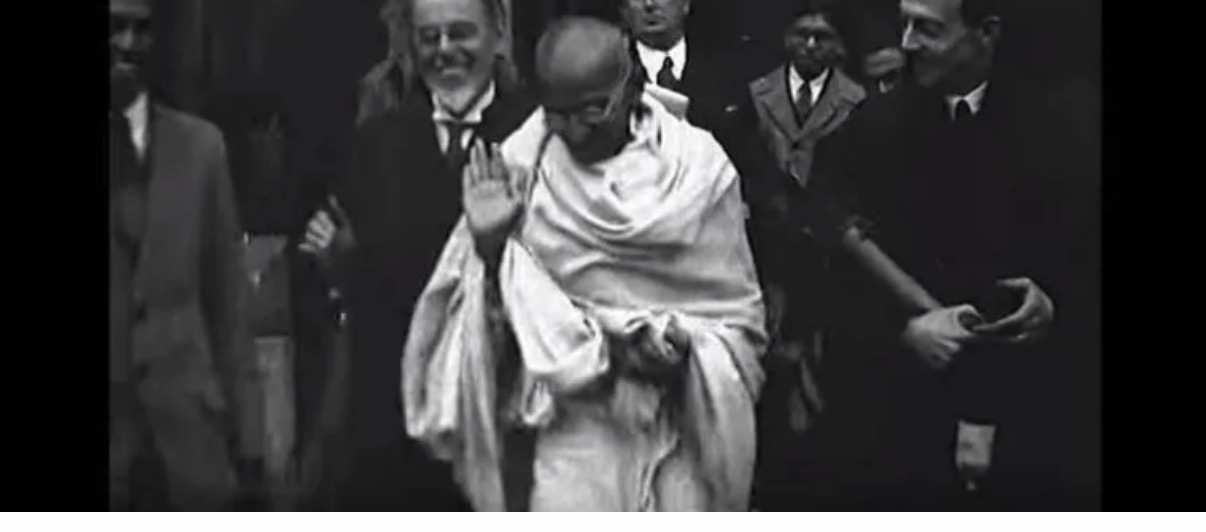
A century ago, a press correspondent approached Mahatma Gandhi with a question wrapped in the quiet condescension of an empire at its zenith: “Mr. Gandhi, what do you think of Western Civilisation?”
The British were ruling India. To the imperial mind, the peoples of the subcontinent were heathens in need of redemption by the White Man. Western Civilisation was deemed inherently superior, and the newspaperman fully expected the Mahatma—whom Winston Churchill had once dismissed as a “half-naked fakir”—to acknowledge that supremacy. Instead, Gandhi delivered one of history’s most devastatingly sardonic rhetorical counters: “I think it’s a good idea.”

Today, much water has flown under the London and the Howrah Bridges. The Empire on which the sun was believed to never set has shrunk to a pale, desiccated remnant of its old imperious self. Western Civilisation finds itself floundering in the twilight zone of imperial decline. In hindsight, perhaps the Mahatma’s retort should have been: “I think it’s not such a good idea.” Or perhaps, less pungently: “It’s an idea whose time maybe has come, but whose time to go won’t be very far off in the future.”
The Pre-Industrial Reality vs. The Civilising Myth
To understand how this civilisational template became a global monoculture, one must take a bird’s-eye view of the last half-millennium. The version of Western Civilisation exported to the colonies in the 19th and 20th centuries as an enlightened enterprise was, in truth, a very recent invention. Before the Industrial Revolution, Western Europe was a landscape of endless wars, barbarism, feudalism, religious crusades, tyrannical monarchies, loot, and plunder.
There were, of course, pockets of high cultural and civilisational achievement—Greek Philosophy, Germanic astronomy, the Italian Renaissance, and the Magna Carta. But these were merely episodic reliefs in what was otherwise a recorded history of war, bloodshed, and misery for the common people. The 17th century alone witnessed the horrors of the Thirty Years’ War, which wiped out massive percentages of Central Europe’s population under the twin banners of religious intolerance and dynastic ambition. High culture belonged to a microscopic elite; for the average peasant, life remained solitary, poor, nasty, brutish, and short.
It was only after the Industrial Revolution, powered by the spectacular triumph of the Age of Reason, that Western societies became self-conscious of their own “Civilisation.” World-transformative advances in science, technology, medicine, manufacturing, trade, and commerce gave Europeans unprecedented mastery over nature. Armed with steam, steel, and sudden material wealth, they rewrote their own history. They viewed their technological supremacy not as a recent stroke of material luck, but as proof of an inherent cultural and intellectual superiority.
The Dual-Faced Imprint of Expansion
Over the next 400 to 500 years, the footprint of Western Civilisation was stamped across the globe. This expansion relied on six core instruments, each carrying a sharp, double-edged legacy:
1. The Printing Press: It spread literacy and scientific inquiry globally, but was simultaneously used to institutionalise colonial bureaucracy and censor indigenous thought.
2. The Vaccine: It eradicated ancient, deadly diseases, yet served as a tool for managing and preserving colonial labor forces.
3. Gunpowder: It drove military innovation but facilitated the brutal subjugation of entire continents and the erasure of indigenous empires.
4. Ocean-Going Ships: They mapped and connected global trade networks, while simultaneously enabling the horrors of the transatlantic slave trade.
5. Christian Missionaries: They built schools and hospitals, but systematically eroded local cultures, faiths, and social structures.
6. Mercantile Banking: It established modern global finance while extracting unimaginable wealth from colonized territories.
Every society that was colonised underwent deeply traumatic, turbulent, and transformative changes. Old cultures crumbled in the poetic manner of “the old order changeth yielding place to new.” The Camelots and Round Table Knights of older, enduring civilisations—Indian, Chinese, Islamic, and Aboriginal—withered away. They were forcibly replaced by values glorified as “Western Civilisation,” which became the de facto world civilisation.
Mackinder and the Blueprint of Geopolitical Toxicity
Beyond material extraction, Western Civilisation taught the world a deeply toxic doctrine: the zero-sum game of geopolitics and geo-economic power-seeking. The intellectual father of this tenet was the British geographer Sir Halford Mackinder, who famously posited in 1919 his “Heartland Theory” encapsulated in this mantra:
“Who rules the Heartland commands the World-Island; Who rules the World-Island commands the world.”
The Mackinder Theory viewed the world as a giant chessboard of “Heartlands,” “World-Islands,” and “Crescents”.
Mackinder stripped human societies of their cultural, spiritual, and organic realities. He reduced whole civilisations to mere spatial variables, resources to be locked down, and choke points to be controlled. His theory introduced the final, most cold-blooded dimension of the Western monoculture: the reduction of the human experience to a mathematical equation of raw power and territorial containment.
When Mackinder published his Heartland Theory, he wasn’t just making a geographic observation; he was providing an intellectual justification for endless global management. This framework directly shaped the next century of Western foreign policy:
- The Blueprint for Containment: During the Cold War, American strategists took Mackinder’s thesis and used it to construct the “Containment” policy. The proxy wars in Vietnam, Korea, and Afghanistan, alongside the creation of alliances like NATO, were all practical applications of trying to block any single power from consolidating control over the Eurasian landmass.
- The “Grand Chessboard”: Decades later, Western strategists like Zbigniew Brzezinski openly referred to Eurasia as a “chessboard” where the United States had to maintain dominance to prevent a rival hegemon from rising.
The Ultimate Poison: Zero-Sum Logic
The toxicity of this doctrine lies in its absolute refusal to see international relations as anything other than a zero-sum power game. In Mackinder’s world, peace is never a natural state or a spiritual aspiration; it is merely a temporary, fragile equilibrium maintained by a “balance of power” or total hegemony. This framework became the hidden architecture behind Western foreign policy for the next century, giving birth to the Cold War policy of “Containment,” proxy wars in Korea, Vietnam, and Afghanistan, and the expansion of military alliances like NATO.
Decades later, strategists like Zbigniew Brzezinski openly continued this tradition, explicitly framing global politics as a “Grand Chessboard” where the West had to manipulate Eurasian rivals ( “the heartlands”) to maintain its hegemony.
Before this hyper-materialistic doctrine colonized global thought, older civilisations approached statecraft through entirely different ethical lenses—such as India’s Vedic philosophy of Vasudhaiva Kutumbakam (“The World is One Family”) or traditional Chinese concepts of cosmic balance.
Western realpolitik completely overrode those organic frameworks, hardwiring global politics into an endless loop of paranoia and containment.
The grand historical irony, however, is that the West successfully taught the rest of the world how to play its cold, cynical game. Today, as the global center of gravity shifts, non-Western powers are consolidating the Eurasian Heartland through sweeping infrastructure networks and energy pipelines, using the West’s own geopolitical rulebook with devastating proficiency.
(Continued in Part II)