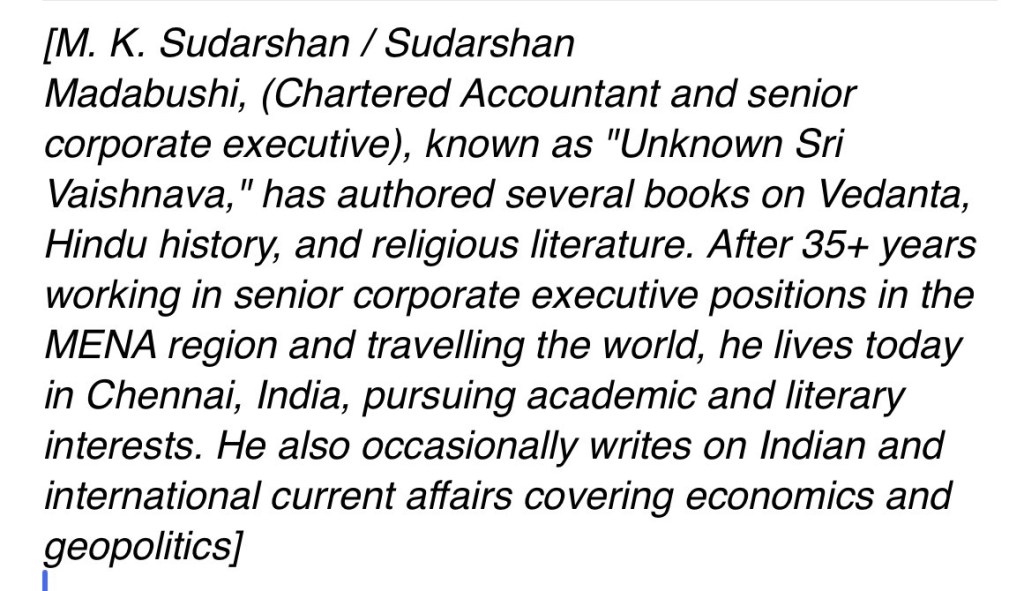
By M. K. Sudarshan
October 17, 2026: Chennai, India

Huntington Is Not Dead: Why the Wars in Iran and Ukraine Are Going Exactly as Planned
Contrary to media narratives of Western tactical failure in Ukraine and Iran, these conflicts are progressing exactly as planned.
Driven by an oligarchic deep state of global bankers, the transactional geography of modern warfare hides a deeper civilisational blueprint—proving that Samuel Huntington’s “Clash of Civilisations” is far from dead.
The Mask of Populism
In March 2016, during a now-famous CNN interview, Anderson Cooper asked Donald Trump if he believed Islam was “at war with the West.” Trump’s response was characteristically blunt: “I think Islam hates us.” When Cooper pushed him to separate radical factions from the mainstream faith, Trump refused the lifeline, declaring the distinction “very hard to separate.” The next evening, he doubled down on a debate stage, insisting the hatred encompassed “a lot of them.”
Mainstream political commentators routinely dismissed this rhetoric as the raw, unpolished populism of a political outsider. Yet, to any historian or political scientist who has read Samuel Huntington’s The Clash of Civilizations, Trump was simply stripping away the polite veneer of Western diplomacy to articulate a structural reality. He was describing an immutable fault line between distinct civilisations—a worldview that treats foreign cultures not as partners in a rules-based order, but as existential adversaries to be contained, fragmented, or decimated. When Trump talks of “annihilating a civilisation”, he isn’t really talking about an individual nation-state; he is implying the decimation of an entire civilizational empire by the West, much as the West decimated the Soviet Empire after fifty long years of Cold War confrontations.
The Changing Paradigm of Realism
Today, as wars rage across Ukraine and the Middle East, the standard analytical tools offered by universities and think tanks seem increasingly inadequate. We are told by the classical realist school of geopolitics that these conflicts are merely the messy, unintended consequences of nation-state friction. Realists argue that the war in Ukraine is a tragic Western miscalculation that accidentally pushed Russia into the arms of China. In the Middle East, we are told that the conflict with Iran is a standard balance-of-power struggle, and that the internal fractures tearing West Asia apart—Iran versus the Gulf states, Saudi Arabia versus Yemen—are merely indigenous rivalries.
Yet, the paradigm is shifting. Today, even Realist school thinkers like John Mearsheimer and Glenn Diesen, alongside prominent financial analysts like Alex Krainer and Peter Schiff, do not deny the probable existence of an oligarchic deep state that looms as a dark spectre over the machinery of Western international relations policy making. This emerging consensus between hardheaded political realists and market analysts suggests that focusing solely on short-term diplomatic blunders ignores the deeper reality behind the appearance. It may be opaque, but it is not altogether impossible to see through the hidden motives and strategic agenda of the Israeli-American-European coalition in waging these current wars. The ostensible goals of preventing nuclear proliferation or protecting state sovereignty are mere fronts; the real geopolitical objectives are unstated, distant, and designed to be realized as a long-term game through short-term missions.
The Mechanisms of Monetary Warfare
The precise mechanism of this oligarchic control is not found in overt military decrees, but in the sophisticated weaponisation of the global financial architecture. When the West enforced the “maximum pressure” doctrine against Iran and later locked Russia out of its sovereign reserves, it was not deploying a temporary diplomatic lever. It was leveraging its monopoly over the SWIFT banking network and the global bond markets to execute structural warfare.
By converting everyday transaction systems into tools of total economic exclusion, the shadow master-planners can target the lifeblood of entire nations. Under this architecture, the bond markets dictate state compliance, while disconnection from international clearing networks functions as a modern siege mechanism. This strategy represents a long-game play to destroy a rival civilization gradually but inexorably through military campaigns of grinding attrition, the spread of chaos and confusion, and asymmetrical strikes through economic, trade, and financial aggression.
Engineering Regional Fractures
Consider how this financial enforcement breathes life into Huntingtonian structures. The war against Iran might not appear to be going well for the West or as planned, but the war plans are going exactly as per plan when looked at from the standpoint of the long game: to keep the entire Islamic world politically divided, confused, and in a state of strategic limbo, or mired in precarious military and economic insecurity. Even a cursory glance at the map of West Asia today confirms this deliberate fragmentation: Iran vs. GCC, Saudi Arabia vs. Yemen, Iraq vs. Kuwait, Iran vs. Syria, Syria vs. Lebanon, Iran vs. Türkiye, Egypt vs. Libya, Egypt vs. Sudan, and Pakistan vs. Afghanistan.
The whole point of this conflict in the Persian Gulf is not so much to militarily defeat an individual nation as it is to create geo-strategic conditions conducive to the realization of the long-term objective. The Abraham Accords, framed to the public as a brilliant series of transactional business deals, were, in truth, the rapid construction of this permanent civilisational architecture. By legally, technologically, and financially anchoring the wealthy Gulf monarchies to Israel’s military apparatus, the West did not bring peace; it formalized a permanent chasm within the Islamic world, ensuring it remains strategically paralyzed.
This same pattern defines the frontline in Eastern Europe. The gradual, inexorable expansion of NATO eastward between 1994 and the final frontier of Ukraine represents the unfinished business of a fully resurrected and prosperous West, prepared to complete the strategic destruction of the Russian Federation. While the short-term goal may be only to sunder Russia and alienate it from its historic kinship ties with Europe, the long-term objective is really to deal death to the Slavic Empire just as with the Islamic Empire.
The Authors of the Architecture
So, let the rest of the world not fool itself into thinking that America and Israel are floundering about in the ongoing wars in Ukraine and Iran. They are not. The wars are going exactly as per plan, paving the way to attain the unstated but clear long-term objectives of Western Civilisation. However, the true authors of this plan are not the transient politicians who appear on CNN.
The reality points to a “deep state” of bankers and financial oligarchs operating quietly from the global financial capitals of Wall Street, the City of London, Brussels, and Berlin. These are the shadow master-planners who maintain oligarchic control over the world’s asset-collaterals, and they will never willingly surrender their historic right to script the world order according to their own scheme of things entire. While they may never openly articulate a grand Huntingtonian worldview, their immense investment in the powerful financial structure within which they wish to see its architecture embedded gives them a very strong motivation to use the grammar of geopolitical transaction to camouflage civilisational ambition.
Ultimately, this convergence of realist geopolitics and macro-finance exposes the ultimate illusion of modern international relations: power is loudest when it speaks the language of a transactional “deal,” but it is absolute when it controls the infrastructure of global exchange. As the 21st century unfolds, the theatrical politics of elected leaders will fade, but the rigid financial and military infrastructure being built through these ongoing wars will remain—firmly holding the levers of global power in a grip that is entirely by design.
(Concluded)