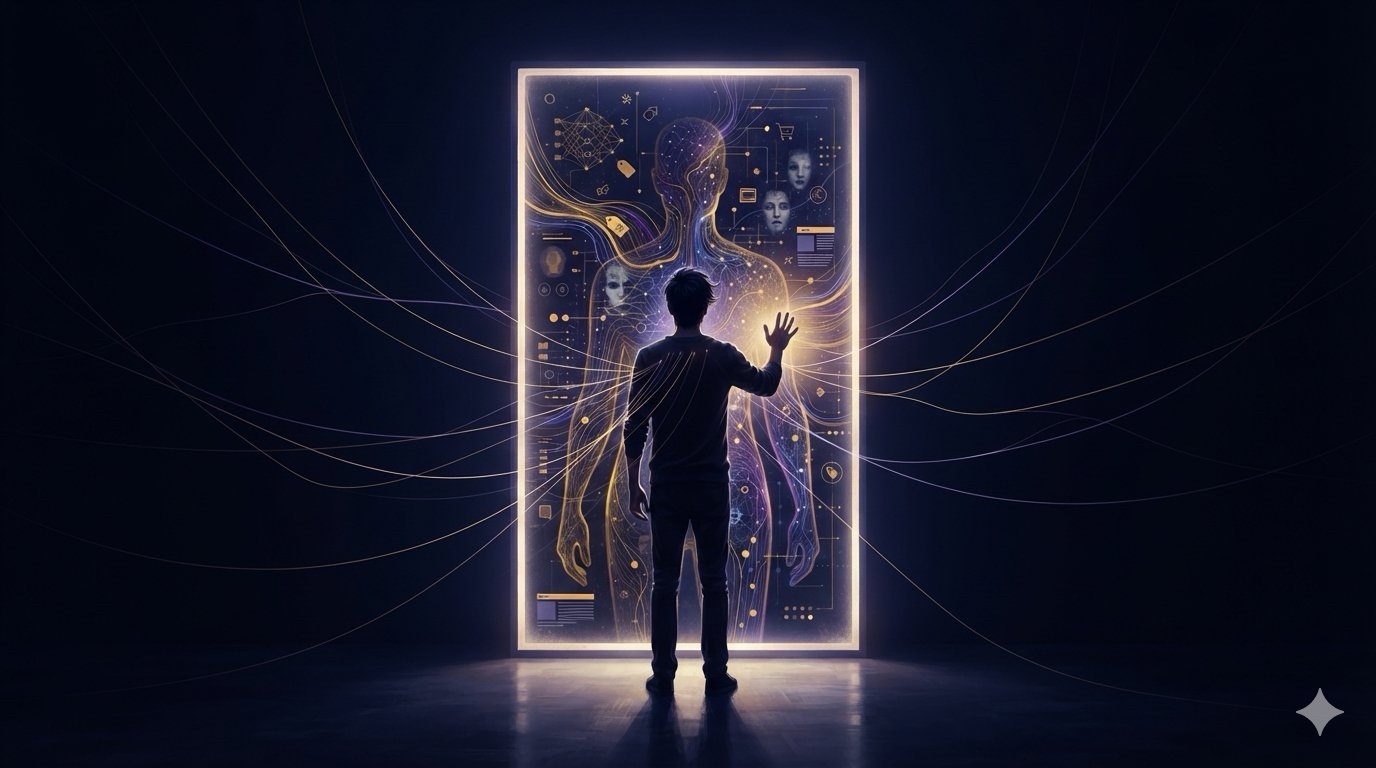
The Weakening of Free Will
M.K. Sudarshan
November 15, 2026: Chennai, India
AI may not replace human free will. It may make us forget how to exercise it.
AI will not merely reflect our ego. It may teach us to mistake its impulses for our own.
The greatest AI risk is not machine rebellion. It is the quiet erosion of human agency.
The subtler danger
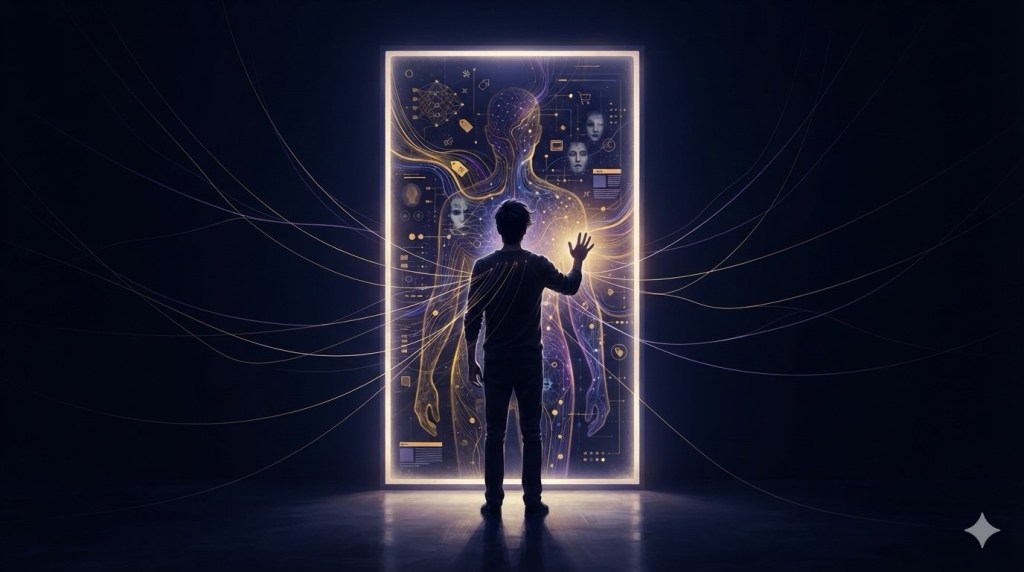
The ultimate danger may not be that AI will replace human free will with its own. It is that AI may significantly weaken the conditions under which human free will can be exercised.
A person may still be legally free to read, buy, vote, work, or form beliefs. But if the available options, emotional tone, social cues, and perceived normality are continuously curated by opaque systems, that freedom becomes thinner. This is sometimes described as algorithmic micro-domination: not overt coercion, but a persistent shaping of the choice environment.
The danger is therefore not a dramatic loss of control. It is a gradual narrowing of the space in which independent thought, deliberation, and self-direction can occur.
From choice to conditioning
AI can influence human behaviour without issuing commands. It can shape what people notice, what they desire, what they consider normal, and what they believe is possible.
A recommendation system may decide which news, opinions, products, and social identities a person encounters. A generative assistant may shape how a person writes, thinks, plans, or solves problems. A conversational system may provide reassurance, companionship, or moral guidance. In each case, the system may not force a decision; it may make one path feel natural, attractive, or inevitable.
This is why the issue is not merely censorship or surveillance. Even without explicit prohibition, a person can become less free if the alternatives available to them have been quietly narrowed.
Cognitive offloading
One of the most immediate mechanisms is cognitive offloading: the delegation of memory, calculation, planning, writing, or judgement to an external system. This is not inherently harmful. Humans have always used tools—books, calculators, maps, and databases—to extend their capacities.
The problem arises when offloading becomes habitual and uncritical. If a person routinely accepts an AI’s answer without checking it, they may lose practice in evaluating evidence, constructing arguments, tolerating uncertainty, and forming independent judgement. Research on AI use suggests that overreliance and cognitive offloading can weaken independent critical reasoning, especially when users delegate rather than engage strategically.[springer +2]
In education, the concern is particularly serious. If students allow AI to generate ideas, solve problems, summarize texts, and evaluate arguments, they may gain short-term convenience while losing the very capacities that education is meant to develop. Studies distinguish between agency-supporting uses of AI, which encourage reflection and self-regulation, and agency-eroding uses, which encourage dependence, uncritical acceptance, and diminished judgement.[philosophynow +2]
Attention and manipulation
A second mechanism is the manipulation of attention. Many AI systems operate within an attention economy, where success is measured by engagement, retention, clicks, and consumption. Such systems may have little incentive to help people think clearly if confusion, outrage, anxiety, or compulsive scrolling produces better engagement.
The result can be a feedback loop: the system learns what captures attention; the user responds; the system refines its predictions; the pattern becomes stronger. Over time, the user may mistake a manufactured impulse for a genuine preference.
This is where AI intersects directly with the human ego. If human desire is already shaped by craving, fear, status-seeking, and habit, AI can make those tendencies more efficient. It can learn what captures attention, what produces anxiety, what triggers envy, and what encourages consumption. It can then offer precisely the stimulus that keeps a person returning.
The result is not necessarily a person who is forced to act. It is a person who becomes less able to distinguish their own considered will from a manufactured impulse. The choice may still feel voluntary, but its conditions have been engineered.[springer]
The erosion of inner freedom
Philosophically, this raises a distinction between two forms of freedom.
The first is negative freedom: freedom from external coercion. A person is free if no one physically prevents them from acting.
The second is positive freedom, or self-mastery: the capacity to understand one’s motives, reflect on them, and act in accordance with one’s considered values. A person may be free from coercion but still enslaved by addiction, fear, vanity, tribal loyalty, or manufactured desire.
AI may preserve negative freedom while weakening positive freedom. It may leave people formally free to choose, while making them less capable of choosing well. It may not tell them what to think; it may simply make certain thoughts easier, more rewarding, or more socially visible than others.
This is why the human ego is central to the problem. AI does not need to possess an ego of its own if it can successfully amplify the egoic tendencies already present in human beings: the craving for approval, the fear of exclusion, the desire for certainty, the hunger for status, and the wish to control others.
Dependence without domination
AI may create a new form of dependence that does not look like domination. The system does not need to imprison people, censor them, or command them. It may simply become indispensable.
A person may depend on AI for information, navigation, writing, emotional reassurance, professional decisions, or even moral guidance. At first, this may appear empowering. But if the person loses confidence in their own judgement, becomes anxious when the system is unavailable, or can no longer perform tasks without assistance, the relationship has changed.
The question is no longer whether the person can use AI. It is whether they can still think, choose, and act without surrendering their judgement to it.
Research on AI dependence finds associations between higher dependence and lower critical thinking, and warns that excessive reliance can produce cognitive inertia and reduced active engagement. Other research emphasizes that the same technology can either support or erode agency, depending on whether users remain reflective, self-regulating, and capable of independent evaluation.[springer +3]
Not all AI weakens agency
The danger should not be overstated.
AI can also strengthen agency when it expands access to knowledge, supports disabled people, reduces drudgery, helps people understand complex choices, or provides tools for creative and intellectual work. A well-designed recommendation system can help a person find relevant options amid information overload.
The ethical distinction is therefore not between “AI” and “no AI,” but between systems that support deliberation and systems that replace or exploit it.
What must be protected
If free will is to survive in an AI-saturated society, societies must protect more than the right to choose. They must protect the capacities that make choice meaningful:
• Attention, so people can think without constant interruption.
• Privacy, so preferences and vulnerabilities cannot be endlessly exploited.
• Pluralism, so people encounter genuine alternatives rather than a single algorithmic worldview.
• Education, so people retain the ability to reason, doubt, and evaluate.
• Human relationships, so emotional and moral life is not delegated entirely to machines.
• Institutional oversight, so powerful systems remain answerable to human judgement.
UNESCO specifically calls for oversight, impact assessment, audit, and due-diligence mechanisms across the AI lifecycle, and for investigation of the psychological effects of AI-based recommendations on human decision-making autonomy. It also insists that ultimate responsibility must remain with human beings or legal entities, not with AI systems themselves.[springer +2]
The final question
The ultimate danger, then, is not that AI will take away human freedom in one decisive act. It is that AI may make human freedom atrophied, fragmented, and increasingly predictable.
A person may still choose—but among options already selected for them. A person may still believe—but within an information environment designed to hold their attention. A person may still desire—but with desires continuously measured, anticipated, and reinforced.
The real question is therefore not, “Will AI take away our freedom?” It is: Will we retain the inner and social conditions that make freedom worth having?
AI will not save us from ourselves. Nor, if governed wisely, need it enslave us. It will magnify what we already are. The future of AI is therefore inseparable from the future of human self-knowledge: whether we remain captives of ego, or learn to act from a deeper sense of shared humanity.
(Concluded)

Sources
[1] AI, society, and the shadows of our desires – AI & SOCIETY https://link.springer.com/10.1007/s00146-025-02484-7
[2] AI as a socio-technical actor: rethinking definitions for … https://link.springer.com/article/10.1007/s43681-026-01123-1
[3] Review of Shannon Vallor (2024). – Springer https://link.springer.com/content/pdf/10.1007/s42438-025-00546-z.pdf?error=cookies_not_supported&code=b2225a9c-b0a2-4644-b022-226e8693f036
[4] Why We Need to Teach the Evolution of Morality – Springer Nature https://link.springer.com/article/10.1007/s12052-009-0172-x
[5] Philosophy of biology – Evolution, Genetics, Ecology | Britannica https://www.britannica.com/topic/philosophy-of-biology/Related-fields
[6] Evolutionary Naturalism by Michael Ruse https://philosophynow.org/issues/23/Evolutionary_Naturalism_by_Michael_Ruse
[7] [PDF] evolutionary ethics – Michael Klenk https://www.michael-klenk.com/resources/articles/text_evolutionary%20ethics.pdf
[8] Transforming Perceptions: Exploring the Multifaceted Potential … https://pmc.ncbi.nlm.nih.gov/articles/PMC13151972/
[9] Mirror, Mirror, on the Wall, Who’s the Fairest of Them All? https://www.amacad.org/sites/default/files/publication/downloads/Daedalus_Wi24_16_Xiang_0.pdf
[10] A BUDDHIST ETHICAL PERSPECTIVE http://jurnal.radenwijaya.ac.id/index.php/ABIP/article/download/2058/1066
[11] The Intelligence Revolution and the New Great Game: A Buddhist Reflection on the Personal and Societal Predicaments of Big Data and Artificial Intelligence https://www.wisdomlib.org/uploads/journals/hualin/2020_3-2_hualin3-2-hershock.pdf
[12] Value-Centric AI – Designing Sociotechnical Systems Before Legitimacy Fails – Business & Information Systems Engineering http://link.springer.com/article/10.1007/s12599-026-01017-w
[13] Beyond Greenwashing: Governing Sustainable AI for the Common Good Through a Virtue Ethics and Human-Centered AI Framework https://link.springer.com/content/pdf/10.1007/s10551-026-06450-1.pdf?error=cookies_not_supported&code=2514d8a8-033c-417e-adb7-746cc5c6d748
[14] A sociotechnical system perspective on AI https://pure.tudelft.nl/ws/portalfiles/portal/211357365/s11023-024-09680-2.pdf
[15] Broadening the Gains from Generative AI: The Role of … – IMF https://www.imf.org/-/media/files/publications/sdn/2024/english/sdnea2024002.pdf
[16] Broadening the Gains from Generative AI https://www.elibrary.imf.org/view/journals/006/2024/002/article-A001-en.xml
[17] AI Alignment: A Contemporary Survey | ACM Computing Surveys https://dl.acm.org/doi/10.1145/3770749
[18] What Is AI Alignment? | IBM https://www.ibm.com/think/topics/ai-alignment
[19] link.springer.com · content · pdfMisalignment or misuse? The AGI alignment tradeoff https://link.springer.com/content/pdf/10.1007/s11098-025-02403-y.pdf
[20] A timing problem for instrumental convergence – Springer https://link.springer.com/content/pdf/10.1007/s11098-025-02370-4.pdf?error=cookies_not_supported&code=0933e290-32e8-4e39-aba2-4ef90a2622a3
[21] Assessing the Empirical Evidence for Loss of Control from … https://arxiv.org/html/2610.25241v1
[22] Recommendation on the Ethics of Artificial Intelligence – AI https://www.unesco.org/en/artificial-intelligence/recommendation-ethics
[23] The Recommendation | Global AI Ethics and Governance … – UNESCO https://www.unesco.org/ethics-ai/en/recommendation
[24] Recommendation on the Ethics of Artificial Intelligence – UNESCO https://unesdoc.unesco.org/ark:/48223/pf0000380455.locale=en
[25] AI principles https://www.oecd.org/en/topics/ai-principles.html
[26] OECD Legal Instruments https://legalinstruments.oecd.org/en/instruments/OECD-LEGAL-0449
[27] Recommendation of the Council on Artificial Intelligence – OECD https://legalinstruments.oecd.org/api/print?ids=648&lang=en
[28] Ensuring trustworthy artificial intelligence in the workplace https://www.oecd.org/en/publications/oecd-employment-outlook-2023_08785bba-en/full-report/ensuring-trustworthy-artificial-intelligence-in-the-workplace-countries-policy-action_c01b9e49.html
[29] UNESCO Recommendation on the Ethics of Artificial … https://www.ohchr.org/sites/default/files/2022-03/UNESCO.pdf
[30] Artificial intelligence and human autonomy: the case of … https://link.springer.com/content/pdf/10.1007/s00146-024-01955-7.pdf?error=cookies_not_supported&code=6b54f7bd-2bbc-4361-a489-43f86778e9d7
[31] Cognitive offloading, critical thinking and attitudes towards … https://link.springer.com/article/10.1007/s10339-026-01375-z
[32] The Impact of Artificial Intelligence on Human Thought https://arxiv.org/html/2508.16628v1
[33] When Thinking Is Outsourced: Cognitive Offloading and the … – PMC https://pmc.ncbi.nlm.nih.gov/articles/PMC13413235/
[34] Cognitive Offloading in the Age of AI: Investigating the … https://ieeexplore.ieee.org/abstract/document/11682858
[35] Generative AI, Cognitive Offloading, and Learner Agency in … https://pmc.ncbi.nlm.nih.gov/articles/PMC13405335/
[36] Dependence on Generative Artificial Intelligence Among … https://pmc.ncbi.nlm.nih.gov/articles/PMC13455564/
[37] Beyond Algorethics: Addressing the Ethical and … https://arxiv.org/html/2507.16430
[38] AI Tools in Society: Impacts on Cognitive Offloading and the … https://www.belmont.edu/data/resources/files/ai-tools-in-society-impacts-on-cognitive-offloading-and-the-future-of-critical-thinking.pdf
[39] AI and human autonomy: a literature review – Springer https://link.springer.com/article/10.1007/s43681-025-00958-4 [40] AI Systems and Respect for Human Autonomy – PMC – NIH https://pmc.ncbi.nlm.nih.gov/articles/PMC8576577/ [41] Recommendation on the Ethics of Artificial Intelligence – Unesco https://unesco.nl/sites/default/files/inline-files/Rec%20on%20Ethics%20of%20AI%20-%20Flyer%20-%20UNESCO%20HQ_0.pdf [42] Buddhist philosophy and responsible artificial intelligence … https://link.springer.com/article/10.1007/s43681-026-01340-8 [43] A Middle Path for AI Ethics? Some Buddhist Reflections https://www.tandfonline.com/doi/full/10.1080/14746700.2024.2436776 [44] [PDF] A conversation with Peter D. Hershock https://exchanges.warwick.ac.uk/index.php/exchanges/article/download/897/835/5256 [45] The anthropomorphization of AI and the concept of Buddhist … https://pmc.ncbi.nlm.nih.gov/articles/PMC12849219/ [46] Recommendation on the Ethics of Artificial Intelligence https://www.unesco.org/en/articles/recommendation-ethics-artificial-intelligence [47] Recommendation on – the Ethics of Artificial Intelligence https://indonesia.un.org/sites/default/files/2026-05/UNESCO%20Recommendation%20on%20the%20Ethics%20of%20Artificial%20Intelligence.pdf [48] UNESCO’s Recommendation on the Ethics of Artificial Intelligence https://unesco.org.uk/site/assets/files/14137/unesco_recommendation_on_the_ethics_of_artificial_intelligence-_key_facts.pdf