Is “In God We Trust” a prayer—or a confession?
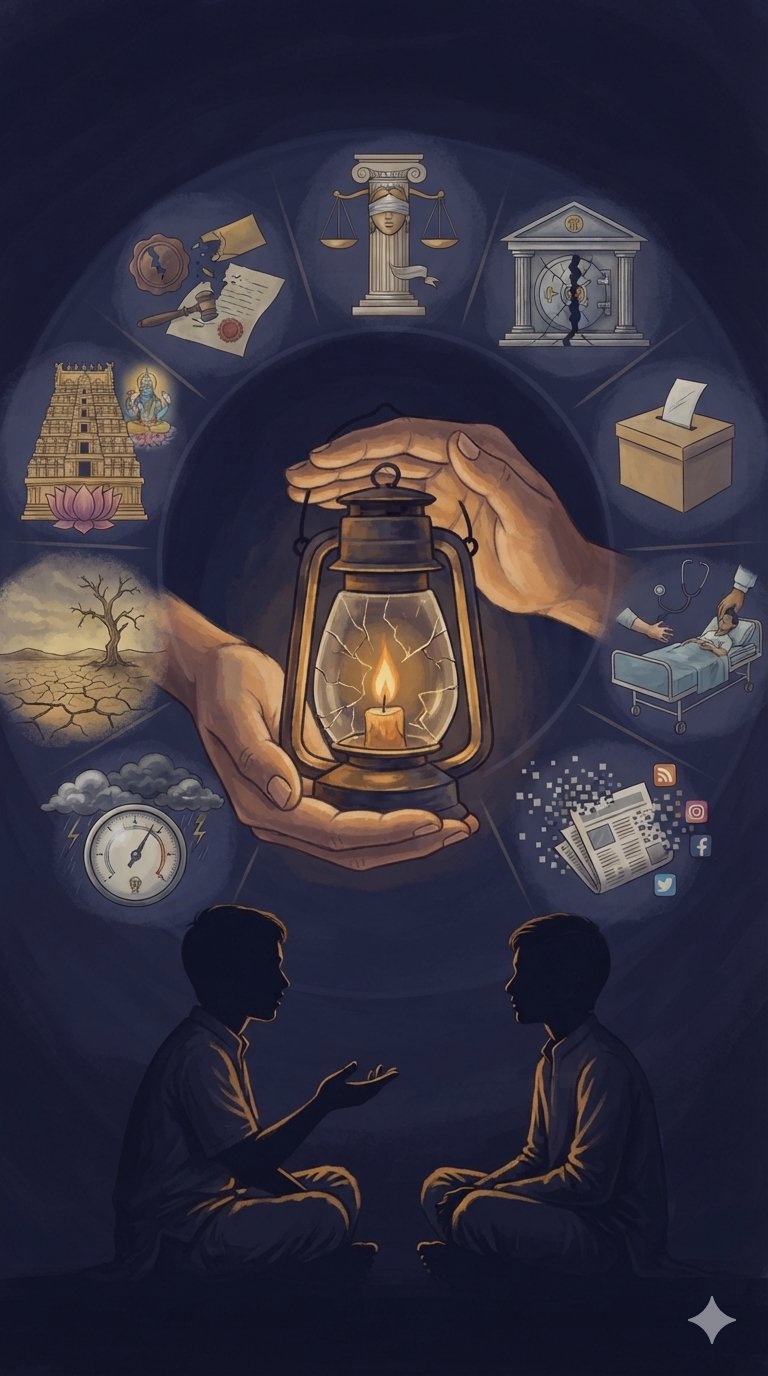
We print trust on currency, promise it in elections, demand it from banks, courts, doctors, journalists, and algorithms—then watch it thin beneath the winds of betrayal, spin, and institutional failure.
Beginning tomorrow: “In God We Trust: The Mother of All Trust Deficits—and the Death and Resurrection of Trust.”
Nine dialogues between two students of a Vedic university in South India—Ānanda, the restless sceptic, and Madhava, the contemplative Vedāntin—move from Eden’s first broken trust to the modern crisis of credibility, media, democracy, and institutional entropy.
At the centre lies a Sri Vaishnava question: when every earthly refuge trembles, can the soul find its final shelter in mahāviśvāsam—unshakeable trust in the Lord’s grace?
Nine days. Nine dialogues. One question: can Trust rise again?
Narayana! Narayana! Narayana!