
The Geopolitical Trap That Will Break America, Iran, and the Entire Middle East
By M.K. Sudarshan
The Middle East stands at a precipice. Three scenarios are unfolding simultaneously, each more consequential than the last:
1. Netanyahu’s political collapse and the likely defeat of Likud in Israel’s upcoming October 2026 elections;
2. a potential U.S.-Iran modus vivendi over the Strait of Hormuz that defers all other disagreements;
3. and the apparent collapse of the Greater Israel project itself.
Together, these developments point toward a tectonic shift in regional power—one that will reshape not just the Middle East, but American hegemony itself.
Yet here lies the paradox that few dare to articulate: no matter how these outcomes pan out, the Greater Israel project will not be defeated. It will only mutate.
The Strategic Wedge That Keeps the Region Fractured
To understand why, we must first recognize what the Greater Israel project actually is.
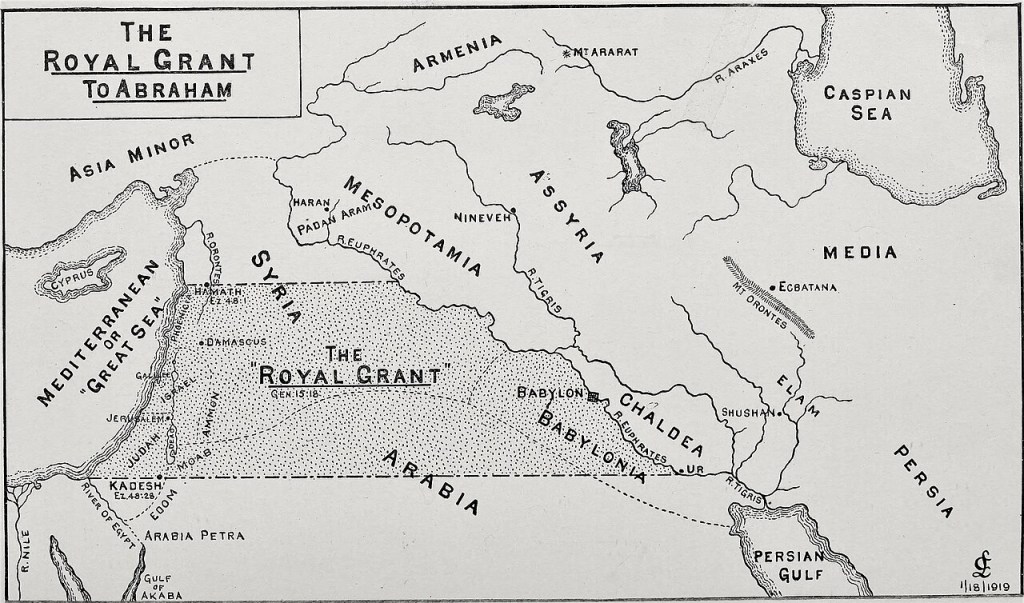
It is not a specific territorial map stretching from the Nile to the Euphrates. It is not even primarily about Israeli security or Jewish self-determination. It is a geopolitical architecture designed to keep the Middle East fractured, dependent, and unable to unite.
The logic is brutally simple: a divided Middle East needs American protection. Sunni Arab states align with Israel against Iran. Iran positions itself as Palestine’s defender, gaining moral leverage despite its Shia minority status. The U.S. maintains military bases in Qatar, Bahrain, Kuwait, and previously Saudi Arabia, justified as “anti-terrorism” and “anti-Iran” operations. Oil flows through U.S.-controlled chokepoints. The dollar dominates energy trade. NATO and EU follow American Middle East policy.
All this is not speculation. Netanyahu himself admitted it in February 2026, when he announced efforts to form a regional “alliance against Sunni and Shia axes, including Arab states.” He was openly acknowledging the divide-and-conquer strategy that has governed U.S.-Israel policy for decades.
The Coming Rebalancing
Now just imagine what might happen if the structural supports are removed.
If Netanyahu is convicted and jailed, if Likud loses the October 2026 elections, if a centrist or security-first government takes power in Jerusalem, then the far-right settlement agenda loses state backing. Polls already show Netanyahu losing—polls conducted after the Iran crisis that will be key to salvaging his legacy.
If the Greater Israel project collapses—as Steve Bannon declared in October 2025, asserting it is “defunct”—then Turkey reemerges as Gaza’s security broker alongside Egypt, possibly with Saudi and UAE participation. The century-old order dismantles.
If the U.S. and Iran reach a modus vivendi over Hormuz—accepting Iranian control of the strait rather than risking war—the Strait stays open, but America accepts limitation. Then Iran will gain strategic breathing room without needing to close the waterway.
The consequences can be immediate and cascading.
A. Turkey becomes the dominant regional broker in Gaza and the Levant, replacing Israel’s security role.
B. Arab states (Saudi Arabia, UAE, Egypt) coordinate more closely with Turkey rather than aligning with Israel against Iran.
C. Iran gains strategic parity without a full nuclear deal.
D. Palestinian statehood becomes credible again, unblocked by expansionist projects.
E. The axis of resistance (Iran, Hezbollah, Hamas) faces less existential pressure;
F. Israel focuses on internal security rather than expansion.
The International Crisis Group has already noted that the Middle East has been “transformed by seismic events” since October 2023, with the old U.S.-backed order shaking. So, these scenarios will accelerate this transformation into a new multipolar reality.
The Real Losers: America, Iran, and the Entire MENA
But here is the tragedy that no single actor wants to acknowledge: America, Iran, and the entire Middle East can all be losers in this ongoing conflict in the Persian Gulf.
For America, the loss is hegemony itself. A unified Middle East needs no U.S. protection. The military bases lose their pretext. The $3.8 billion in annual military aid to Israel becomes politically toxic. The dollar’s dominance in energy trade erodes as regional currencies and de-dollarization accelerate. The moral authority that justified intervention evaporates.
For Iran, the loss is development. Sanctions remain, youth remain unemployed, regional prestige remains contested, and the revolutionary ideology that justified decades of sacrifice becomes harder to sustain when the enemy is no longer existential.
For the Arab Sunnis, the loss is solidarity. Palestinian hope fades generation by generation. Islamic leadership becomes contested between Saudi Arabia, Turkey, and Egypt. Economic integration stalls. Young people lose faith in the entire order.
For Israel itself, the loss is paradoxically security. The more fortified the island becomes, the more isolated it grows. The more dependent on U.S. protection, the more vulnerable when that protection falters. The more democratic character erodes, the more the state loses its moral legitimacy abroad and its soul at home.
The only thing that doesn’t lose is the Greater Israel project itself.
( to be continued)