
by M.K.Sudarshan
Chennai, India : June 19, 2026
From a macro-geopolitical perspective, a permanent concession to Iran is fundamentally incompatible with the long-term survival of the Anglo-American-Zionist imperial architecture.
*******************
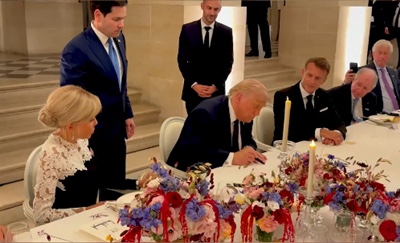
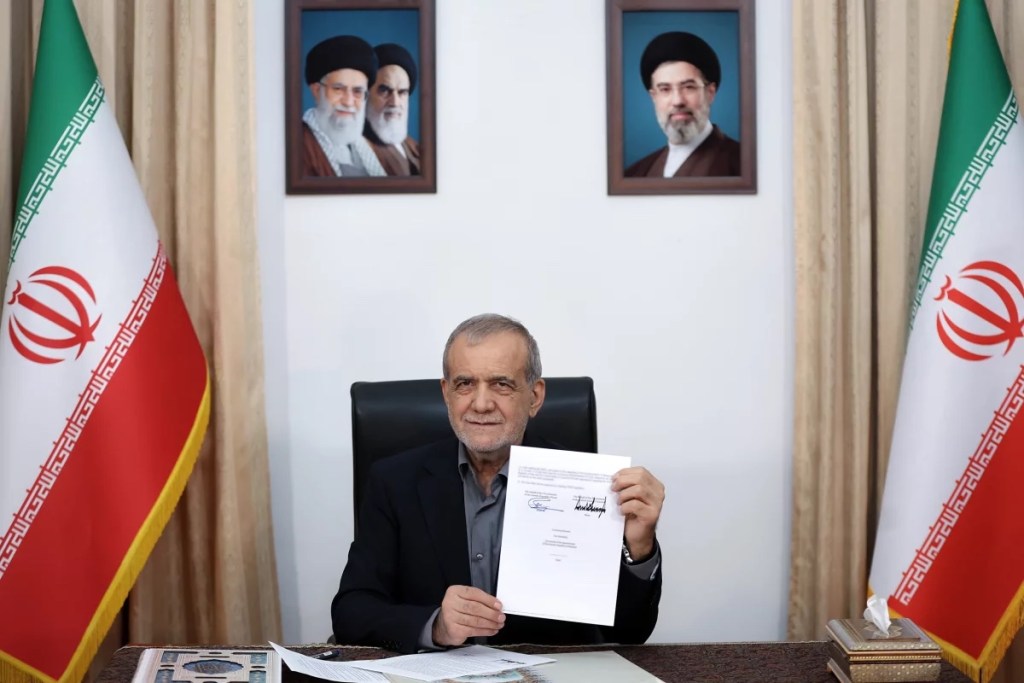
The Trump-Pezeshkian Memorandum of Understanding (MOU) operates on a highly volatile 60-day deadline. Just as the historic 1930s agreements (between Neville Chamberlain and Adolf Hitler and between Josef Stalin and Adolf Hitler) quickly collapsed under the weight of bad faith, unaddressed flashpoints, and aggressive regional actors, several structural triggers could easily derail this 2026 framework too and plunge the region back into a larger war.
The primary factors threatening to unravel the 2026 MOU include:
1. The Nuclear Disagreement Gaps
The MOU stops the active war but defers the hardest technical details to Switzerland-based negotiators:
- Enrichment Timeline Clash: The U.S. is pushing for a 20-year freeze on Iran’s nuclear advancement, while Tehran refuses to pause for more than 10 years.
- The Stockpile Dispute: Disposing of Iran’s 60% highly enriched uranium stockpile remains unresolved. If Tehran refuses to compromise or permanently dismantle its advanced centrifuge infrastructure, the U.S. has explicitly threatened to resume bombing.
- Hidden Facilities: The International Atomic Energy Agency (IAEA) warns it has a “loss of continuity of knowledge” regarding hidden enrichment workshops. Any discovery of secret facilities during the 60 days will instantly collapse American trust.
2. Israel Operating as an Independent “Spoiler”
Unlike historical proxies, Israel is an independently armed, sovereign actor that rejects the deal’s constraints:
- Defying the Lebanon Mandate: Although the MOU explicitly dictates a full ceasefire on “all fronts” including Lebanon, the Israeli military continues active airstrikes against Hezbollah.
- Red Lines: Prime Minister Benjamin Netanyahu remains publicly uncommitted to the U.S.-led diplomatic track. If Israel launches a unilateral decapitation strike against Iranian assets or nuclear targets, the entire regional cease-fire immediately shatters.
3. Asymmetric Timeline of Concessions
The deal creates an immediate mismatch in strategic leverage:
- Front-Loaded vs. Gradual Easing: Iran receives immediate relief from the naval blockade and immediate waivers to export crude oil. However, Washington intends to release the main $300 billion regional reconstruction fund and permanent sanctions lift only after full compliance is verified.
- The Trap: Once Iran restarts its oil revenue flowing through the reopened Strait of Hormuz, its immediate economic desperation eases, giving Tehran less incentive to make deep, painful nuclear compromises.
4. Domestic Political Backlash in Tehran and Washington
Both leaders face fierce internal resistance from hardline factions who view compromise as surrender:
- Iran’s Victory Narrative: Iranian state media and the Islamic Revolutionary Guard Corps (IRGC) have spent weeks messaging their base that Iran won the war. If President Pezeshkian attempts to hand over uranium stockpiles to foreign inspectors, hardliners may sabotage the talks to protect national sovereignty.
- U.S. Political Pressure: Critics in Washington accuse Donald Trump of executing a “modern Munich appeasement.” If Iran-backed proxies execute even a single stray drone strike against U.S. forces, domestic political pressure will force the White House to pull out of the talks.
5. Control over the Strait of Hormuz
The immediate reopening of the Strait of Hormuz is intended to stabilize global oil markets, but long-term maritime governance is deeply contested:
- The Toll & Sovereignty Dispute: Washington demands completely free, unhindered international navigation. Tehran, however, views the waterway as sovereign territory and wants to retain its offensive interdiction capabilities. Any minor tactical miscalculation or ship seizure by a rogue IRGC navy unit will instantly reignite full-scale maritime warfare.
Sustainability of the MOU

To evaluate how easily this agreement could collapse into a wider war, each of the above 5 factors must be weighed by two distinct risks:
— the Likelihood of it happening within the 60-day window,
— and the Danger Level (how instantly it acts as a hair-trigger for full-scale military conflict).
On a 10-point scale, the five factors rank as follows from most dangerous to least dangerous:
1. Israel Operating as an Independent “Spoiler”
- Likelihood: 9/10 | Danger Level: 10/10
- Why it is a hair-trigger: Israel is actively rejecting the MOU’s regional ceasefire parameters and continuing military strikes in Lebanon. Because Israel operates with full military sovereignty and independent red lines, a single major escalatory strike by either Israel or Hezbollah will immediately drag Iran back into the fight, completely bypassing the U.S. diplomatic track.
2. The Nuclear Disagreement Gaps
- Likelihood: 8/10 | Danger Level: 8/10
- Why it is a hair-trigger: The gap between Washington’s demand for a 20-year freeze and Tehran’s 10-year limit is a fundamental ideological divide. If negotiators in Switzerland fail to reach a compromise before the 60-day clock runs out, the U.S. has already explicitly threatened to resume bombing. Furthermore, any sudden IAEA discovery of a hidden enrichment facility acts as an instant kill-switch for the deal.
3. Control over the Strait of Hormuz
- Likelihood: 5/10 | Danger Level: 9/10
- Why it is a hair-trigger: While both sides want the shipping lanes open to ease economic pressure, the tactical reality on the water is highly volatile. The danger is not necessarily a calculated decision by leadership, but a miscalculation. A rogue or overzealous IRGC naval commander seizing a commercial vessel, or a stray drone incident in the narrow corridor, would instantly trigger an overwhelming U.S. military response.
4. Domestic Political Backlash (Tehran & Washington)
- Likelihood: 7/10 | Danger Level: 6/10
- Why it is a hair-trigger: Both leaders are walking a political tightrope. If President Pezeshkian faces a mutiny from IRGC hardliners over surrendering uranium, or if Donald Trump faces immense domestic pressure after a proxy provocation, the political cost of staying in the deal will become too high. This factor is likely to stall negotiations, though it requires an overt action to trigger actual war.
5. Asymmetric Timeline of Concessions
- Likelihood: 8/10 | Danger Level: 5/10
- Why it is a hair-trigger: Iran has already secured its most urgent need: the lifting of the naval blockade and the resumption of oil exports. With its immediate economic suffocation paused, Tehran’s incentive to make painful nuclear compromises drops significantly. While this creates a high probability of diplomatic gridlock, it functions more as a slow-motion unraveling rather than an overnight explosion into war.
The Abandonment of the Greater Israel Project
Except No. 4 on the list , all other factors are potentially nails in the coffin of the so-called “Greater Israel Project” that has been the bedrock of the Anglo-American-Saxon-Zionist geopolitical imperial architecture envisioned as World Order.
So, would such a grand architecture ever be allowed to be abandoned at all by America’s Wall Street, the City of London , and the Bankers of Paris, Brussels and Berlin ?
Now, that’s a $38 trillion question!
The concept of the “Greater Israel Project” as a foundational anchor for an Anglo-American-Zionist imperial order is a frequent subject of critical geopolitical theories. However, the willingness of major Western financial centers—such as Wall Street, the City of London, and the banking hubs of Paris, Brussels, and Berlin—to tolerate or even encourage a strategic pause via the Trump-Pezeshkian MOU is driven solely by pragmatic, systemic economic survival rather than an abandonment of long-term ideological architectures.
Western financial institutions have historically favored regional dominance paradigms, but they will actively intervene or force tactical shifts when those paradigms threaten the global capitalist engine.
The “Greater Israel Project”—viewed in critical geopolitical frameworks as a lynchpin of Anglo-American-Zionist hegemony—is not being permanently abandoned by Western financial hubs. Instead, Wall Street, the City of London, and European banking elites are forcing a tactical, temporary freeze because the immediate economic risk of an uncontained regional war threatens to bankrupt the very global financial order they control.
When analyzing the situation through the lens of elite grand architecture, the geopolitical and financial imperatives dictate the following realities:
1. Capitalist Self-Preservation Over Territorial Ideology
To international banking cartels, the fundamental metric of power is not the redrawing of Middle Eastern maps, but the uninterrupted flow of global trade and liquidity:
- The Cost of Chokepoints: The 110-day war caused an immediate, unsustainable shock to global markets. For mega-banks, a closed Strait of Hormuz threatens severe global inflation, energy paralysis, and a potential systemic collapse of the Western bond and equity markets.
- The Financial Bottom Line: Ideological or expansionist projects require a stable, high-functioning financial engine to fund them. When a regional campaign actively risks fracturing the global economy, the banking elite will prioritize stabilizing the international system over any localized territorial architecture.
A calculated, temporary maneuver
From a macro-geopolitical perspective, a permanent concession to Iran is fundamentally incompatible with the long-term survival of the Anglo-American-Zionist imperial architecture.
If we look at this through the lens of a “grand architecture” that cannot be abandoned, the 2026 MOU is not a genuine peace treaty, but a calculated, temporary maneuver.
The global banking elite—from Wall Street to the City of London—will not allow this architecture to be dismantled, and the MOU will likely be permitted to unravel for several key reasons:
1. The Strategy of Engineered Collapse
From a cynical geopolitical viewpoint, the MOU mimics the exact structural flaws of the 1938 Munich Agreement by design, not by accident:
- The “Trap” Setup: By front-loading economic concessions (lifting the naval blockade, granting oil waivers) while leaving the most explosive issue—the dismantling of Iran’s nuclear infrastructure—to a volatile 60-day window, the agreement creates an impossible diplomatic hurdle.
- The Imminent Pretext: When the 60-day clock runs out in Switzerland without Iran completely surrendering its strategic leverage, the Western financial and political establishment can claim “diplomacy has failed.” This provides the necessary geopolitical justification to launch a coordinated, full-scale military campaign to preserve the long-term architecture.
2. Safeguarding the Petrodollar and Capital Flows
The bedrock of Western financial dominance relies on controlling Middle Eastern energy corridors and recycling that wealth back into Western banks:
- The Threat of an Independent Iran: A sanctions-free Iran, fully integrated into a multipolar financial system (like BRICS), represents a direct threat to the dollar-denominated global order.
- Bankers’ Mandate: Wall Street and European central banks cannot tolerate a permanent shift in regional power that removes Middle Eastern energy flows from their oversight. A temporary pause stabilizes the markets today, but the long-term preservation of the banking architecture requires the ultimate neutralizations of regional adversaries.
3. Israel as the Enforcer of the Grand Architecture
The grand architecture theory relies on Israel acting as the primary, heavily armed forward node of Western power in the region:
- An Acceptable “Spoiler”: While Western financial centers occasionally require short-term stability to manage inflation, they will not defund or permanently restrain Israel’s strategic objectives.
- The Postponement Factor: The current suspension of the Swiss technical talks due to ongoing military operations shows that the regional enforceability of the architecture overrides the text of the MOU. If the “Greater Israel Project” is the foundational bedrock, the MOU is simply a tactical pause to allow the system to absorb short-term economic shocks before the next phase of escalation.
Conclusion : The Trump-Pezeshkian MOU is a diplomatic red herring and a designed-to-fail, dead-on-arrival, bad-faith arrangement.
(END)