
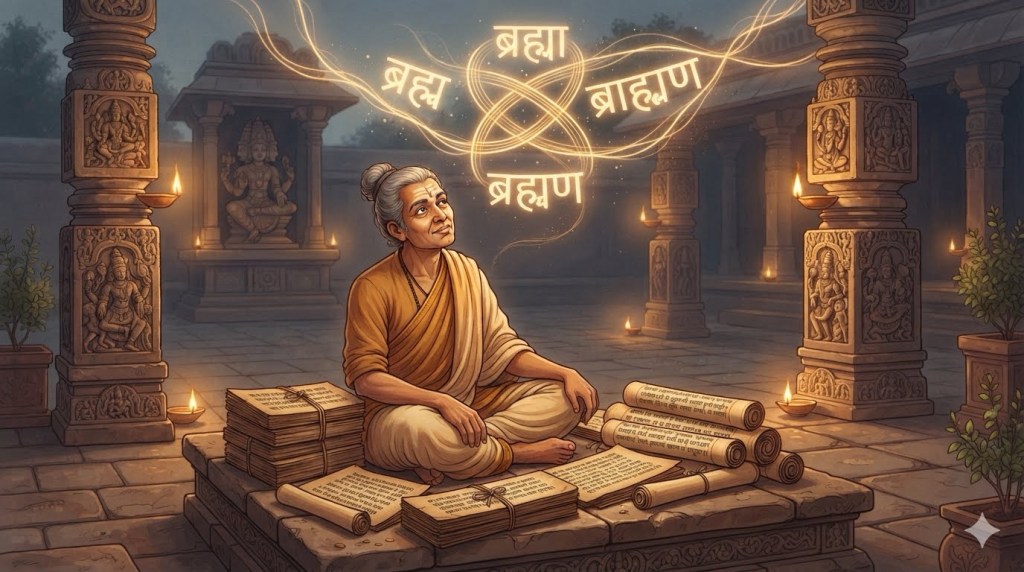
A Light-Hearted Guide for the “Incompetent Reader” of Sanskrit / சமஸ்கிருதத்தின் “அறிவில் இன்னும் பயிற்சி பெறாத வாசகருக்கு” ஒரு நகைச்சுவை கலந்த வழிகாட்டி
By Sudarshan Madabushi
August 31, 2026: Chennai, India
1. The Day I Became an “Incompetent Reader” / நான் “பயிற்சி குறைந்த வாசகன்” ஆன நாள்
It began innocently enough. I was reading about the Upaniṣads, where Brahman is presented as the Supreme Reality—beyond words and thought: yato vāco nivartante, aprāpya manasā saha, “From which words return, along with the mind, not having reached it.” Then, a few pages later, I met Brahmā, the four-faced creator, a deity with a clearly defined cosmic office and a vigorous career in Purāṇic narrative.
The names looked almost alike; the meanings could scarcely be more different. Then came Brāhmaṇa—not the Supreme Reality, not the creator god, but both a priestly designation and the name of an important ritual-explanatory portion of the Veda. My mind promptly acquired a granthi, a knot.
This essay is for that honest soul—the self-confessed “incompetent reader” of Sanskrit—who feels that a language admired for precision, elegance, and grammatical order has laid an unusually ingenious trap around one small family of words.
முதலில் இது மிக எளிய குழப்பமாகத்தான் தோன்றியது. உபநிஷத்துகளைப் படிக்கையில், பிரம்மம் சொல்லுக்கும் மனத்திற்கும் எட்டாத பரம்பொருளாகக் கூறப்படுகிறது: யதோ வாசோ நிவர்த்தந்தே, அப்பிராப்ய மனசா ஸஹ—“எதனை எய்தாமல் சொல்லும் மனமும் திரும்புகின்றன” என்பது அதன் பொருள். சில பக்கங்கள் கழித்து, நான்முகம் கொண்ட படைப்புக் கடவுளான பிரம்மா முன்வருகிறார்—புராணக் கதைகளில் தெளிவான பங்கும் செயல்பாடும் உடையவர்.
பெயர்கள் ஒன்றுபோல் தோன்றுகின்றன; ஆனால் பொருள்கள் மிகவும் வேறுபட்டவை. அடுத்து வந்தது பிராமணம். அது பரம்பொருளும் அல்ல; படைப்புக் கடவுளும் அல்ல. ஒரு பக்கம் அது வேதம் அறிந்த புரோகிதர் அல்லது அந்தப் பிரிவினரைச் சுட்டலாம்; இன்னொரு பக்கம் வேதத்தின் சடங்கு விளக்கப் பகுதியான பிராமண நூல்களையும் குறிக்கும். உடனே என் மனதில் ஒரு கிரந்தி—முடிச்சு—விழுந்தது.
சமஸ்கிருதத்தின் ஒழுங்கு, இலக்கண நுட்பம், செம்மை ஆகியவற்றைப் போற்றிக்கொண்டே, ஒரே சொல்லுக் குடும்பத்தைச் சுற்றி அது இவ்வளவு சாமர்த்தியமான புதிரை ஏன் வைத்திருக்கிறது என்று வியக்கும் “பயிற்சி குறைந்த வாசகருக்காக” இந்தக் கட்டுரை.
2. One Root, Many Masks / ஒரே வேர், பல முகங்கள்
The family resemblance is genuine. These terms are connected with the Sanskrit root bṛh- (बृह्), “to grow, expand, become great.” From that root developed several related but grammatically distinct words:
- brahman (ब्रह्मन्; neuter; nominative brahma)—in early Vedic usage, sacred utterance or mantra-power; in the Upaniṣadic development, the Absolute Reality.
- brahmā (ब्रह्मा; masculine)—the four-faced creator god, Prajāpati.
- brāhmaṇa (ब्राह्मण)—a person associated with brahman, conventionally a Vedic priest; also the Brāhmaṇa prose texts that interpret mantras and ritual.
Thus the words are cousins, not identical twins. The trouble begins when English spelling, casual speech, and unfamiliarity with Sanskrit grammar make the cousins look like one person wearing different hats.
இந்தச் சொற்களுக்கிடையிலான உறவு உண்மையானதே. இவை அனைத்தும் சமஸ்கிருதத்தின் பૃஹ் (bṛh-, बृह्) என்னும் வேருடன் தொடர்புடையவை; அதன் பொருள் “வளர்தல், விரிதல், பெரிதாதல்.” அந்த வேரிலிருந்து இலக்கண வடிவத்தில் வேறுபட்ட, ஆனால் உறவுடைய பல சொற்கள் உருவாயின:
- பிரம்மன் / பிரம்மம் (brahman, ब्रह्मन्; நபுஂசக லிங்கம்; முதல் வேற்றுமை வடிவம் brahma)—ஆரம்ப வேதப் பயன்பாட்டில் புனித மந்திரம் அல்லது மந்திரத்தின் ஆற்றல்; உபநிஷத்துகளில் பரம்பொருள்.
- பிரம்மா (brahmā, ब्रह्मा; ஆண்பால்)—நான்முகப் படைப்புக் கடவுள்; பிரஜாபதி.
- பிராமணன் / பிராமணம் (brāhmaṇa, ब्राह्मण)—பிரம்மத்துடன் தொடர்புடையவர் எனும் அடிப்படையில் வேதப் புரோகிதர்; மேலும் மந்திரங்களையும் யாகச் சடங்குகளையும் விளக்கும் வேத உரைநடைப் பகுதிகள், அதாவது பிராமண நூல்கள்.
எனவே இவை ஒரே சொல் அல்ல; ஒரே குடும்பத்தைச் சேர்ந்த சொற்கள். ஆங்கில எழுத்துமுறை, பேச்சு வழக்கு, சமஸ்கிருத இலக்கண அறிமுகமின்மை ஆகியவை சேரும்போது, இந்த உறவுச் சொற்கள் வெவ்வேறு தொப்பி அணிந்த ஒரே மனிதரைப் போலத் தோன்றத் தொடங்குகின்றன.
3. The Brāhmaṇa Layer of the Veda / வேதத்தின் பிராமணப் பகுதி
The word Brāhmaṇa introduces another difficulty. Each Veda is commonly described through four broad textual layers:
- Saṃhitā—mantras, hymns, and sacrificial formulas.
- Brāhmaṇa—prose explanations of ritual action, the use of mantras, and their symbolic significance.
- Āraṇyaka—“forest texts,” often moving from outward ritual towards contemplation.
- Upaniṣad—philosophical teaching concerning Brahman, Ātman, knowledge, and liberation.
The Brāhmaṇas are therefore neither a caste label nor a reference to Brahmā the creator. They are texts “relating to brahman,” where brahman retains its older Vedic sense of sacred formula and ritual power.
பிராமணம் என்ற சொல் இன்னொரு குழப்பத்தைத் தருகிறது. ஒவ்வொரு வேதமும் பொதுவாக நான்கு பரந்த உரைப்பகுதிகளாகப் பார்க்கப்படுகிறது:
- சம்ஹிதை (Saṃhitā)—மந்திரங்கள், சூக்தங்கள், யாகச் சடங்கில் பயன்படும் வாக்கியங்கள்.
- பிராமணம் (Brāhmaṇa)—சடங்குகள் எவ்வாறு செய்யப்பட வேண்டும், எந்த மந்திரம் எங்கே பயன்பட வேண்டும், அவற்றின் குறியீட்டுப் பொருள் என்ன என்பதைக் கூறும் உரைநடை விளக்கங்கள்.
- ஆரண்யகம் (Āraṇyaka)—“காட்டுப் பகுதிகள்”; வெளிச் சடங்கிலிருந்து உள்ளார்ந்த சிந்தனைக்குச் செல்லும் இடைநிலை நூல்கள்.
- உபநிஷத் (Upaniṣad)—பிரம்மம், ஆத்மா, ஞானம், முக்தி ஆகியவற்றைப் பேசும் தத்துவப் போதனைகள்.
ஆகவே பிராமண நூல்கள் சாதிப் பெயர் மட்டுமல்ல; நான்முகப் பிரம்மாவையும் குறிக்கவில்லை. இங்கு brahman என்பது அதன் பழைய வேதப் பொருளான “மந்திரம், புனித வாக்கு, யாக ஆற்றல்” என்பதோடு தொடர்புடையது.
4. Compounds: Where the Knot Tightens / கூட்டுச்சொற்கள்: முடிச்சு இறுகும் இடம்
Sanskrit compounds are wonderfully economical—and wonderfully capable of alarming an unprepared reader. In a compound, the surface form brahma- can potentially reflect brahman (the neuter Absolute), brahmā (the masculine creator), or an older Vedic sense of sacred power, and only context can decide.
Brahmānanda – Bliss of, or identical with, Brahman; a standard Vedāntic expression.
Why it can puzzle: It could superficially suggest “Brahmā’s bliss.”
Brahmavit / Brahmavid – Knower of Brahman.
Why it can puzzle: In established Upaniṣadic usage it means the knower of the Absolute, not a scholar of Brahmā.
Brahma-svarūpa – Of the nature of Brahman.
Why it can puzzle: In Vedānta, usually the true nature of the self or deity.
Brahma-tejas – Radiance connected with Brahman or Brahmā.
Why it can puzzle: The surrounding text must decide.
Brahma-māyā – Usually Brahman’s or Īśvara’s māyā in Vedānta.
Why it can puzzle: In mythological usage, it may instead concern Brahmā’s power.
Brahma-sṛṣṭi – Often Brahmā’s creation in cosmological or Purāṇic usage.
Why it can puzzle: “Creation” can also be discussed in relation to Brahman through māyā.
A trained reader is not magically immune to ambiguity; rather, training supplies the tools—grammar, genre, doctrinal setting, usage, and commentary—for resolving it.
சமஸ்கிருதக் கூட்டுச்சொற்கள் மிகச் சுருக்கமாகவும் அழகாகவும் அமையும்; அதே நேரத்தில் முன்பயிற்சி இல்லாத வாசகரைத் திகைக்கவும் வைக்கும். கூட்டுச்சொல்லில் வரும் brahma- என்ற வெளிப்படையான வடிவம், brahman (நபுஂசகப் பரம்பொருள்), brahmā (ஆண்பால் படைப்புக் கடவுள்), அல்லது பழைய வேதப் பொருளான “புனித ஆற்றல்” ஆகியவற்றில் எதைக் குறிக்கிறது என்பதைச் சூழலே முடிவு செய்ய வேண்டியிருக்கும்.
பிரம்மானந்தம் (Brahmānanda) – பிரம்மத்தின் ஆனந்தம்; அல்லது பிரம்மமே ஆனந்தம்—வேதாந்தத்தின் நிலையான பயன்பாடு.
குழப்பம் ஏன்? வெளிப்படையாகப் பார்த்தால் “பிரம்மாவின் ஆனந்தம்” என்றும் தோன்றலாம்.
பிரம்மவித் (Brahmavit / Brahmavid) – பிரம்மத்தை அறிந்தவர்.
குழப்பம் ஏன்? உபநிஷத் வழக்கில் இது பரம்பொருளை அறிந்தவரே; பிரம்மா பற்றிய செய்திகளை அறிந்தவர் அல்ல.
பிரம்மஸ்வரூபம் (Brahma-svarūpa) – பிரம்மத்தின் இயல்புடையது.
குழப்பம் ஏன்? வேதாந்தத்தில் பொதுவாக ஆத்மா அல்லது தெய்வத்தின் உண்மை இயல்பைக் குறிக்கும்.
பிரம்மதேஜஸ் (Brahma-tejas) – பிரம்மத்துடனோ பிரம்மாவுடனோ தொடர்புடைய ஒளி அல்லது ஆற்றல்.
குழப்பம் ஏன்? சுற்றியுள்ள உரைதான் எது என்பதைத் தீர்மானிக்கும்.
பிரம்மமாயை (Brahma-māyā) – வேதாந்தத்தில் பொதுவாக பிரம்மம் அல்லது ஈசுவரனின் மாயை.
குழப்பம் ஏன்? புராணச் சூழலில் பிரம்மாவின் சக்தியையும் குறிக்கலாம்.
பிரம்மசிருஷ்டி (Brahma-sṛṣṭi) – அண்டவியல் அல்லது புராணப் பயன்பாட்டில் பெரும்பாலும் பிரம்மாவின் படைப்பு.
குழப்பம் ஏன்? மாயை வழி பிரம்மத்துடன் தொடர்புடைய படைப்பும் பேசப்படுவதால் குழப்பம் எழலாம்.
பயிற்சி பெற்ற வாசகருக்கு எந்த மந்திர சக்தியும் கிடையாது. ஆனால் இலக்கணம், நூலின் வகை, தத்துவ மரபு, வழக்குப் பயன்பாடு, உரையாசிரியர் விளக்கம் ஆகியவற்றின் உதவியால் அந்தத் தெளிவின்மையைச் சரிசெய்யும் கருவிகள் அவரிடம் இருக்கும்.
5. Ved and Vedam / “வேத்” மற்றும் “வேதம்”
A further complication comes from the regional afterlife of Sanskrit words. In much North Indian speech one often hears Ved, Mahābhārat, Vedānt, and Siddhānt. In Tamil Nadu and much of South India, one commonly hears Vedam, Mahābhāratam, Vedāntam, and Siddhāntam.
This should not be described too simply as southerners “adding -am.” Sanskrit itself has forms ending in -am, especially in accusative singular and in the nominative/accusative of many neuter words. South Indian languages often retained or naturalized such endings, whereas North Indian vernaculars frequently reduced final vowels and endings over long historical development.
The result is another interpretive haze. A Tamil listener who hears a northern speaker say Brahm may not immediately know whether the intended Sanskrit expression is connected with brahma (the neuter term associated with Brahman) or brahmā (the masculine creator deity). Regional pronunciation does not reliably settle the philosophical question.
சமஸ்கிருதச் சொற்கள் வட்டார மொழிகளில் பெற்ற இரண்டாவது வாழ்க்கையும் குழப்பத்தை அதிகரிக்கிறது. வடஇந்தியப் பேச்சில் வேத், மகாபாரத், வேதாந்த், சித்தாந்த் என்று அடிக்கடி கேட்கிறோம். தமிழ்நாட்டிலும் தென்னிந்தியப் பகுதிகளிலும் வேதம், மகாபாரதம், வேதாந்தம், சித்தாந்தம் என்பதே வழக்கமாக ஒலிக்கிறது.
இதனை மிக எளிமையாக “தென்னிந்தியர்கள் -அம் சேர்க்கிறார்கள்” என்று கூறிவிடக் கூடாது. சமஸ்கிருதத்திலேயே -am இறுதியுள்ள வடிவங்கள் உள்ளன; குறிப்பாக இரண்டாம் வேற்றுமை ஒருமையிலும், பல நபுஂசகச் சொற்களின் முதல் மற்றும் இரண்டாம் வேற்றுமை வடிவங்களிலும் அது வரும். தென்னிந்திய மொழிகள் இத்தகைய இறுதிகளைத் தக்கவைத்தோ தமக்கேற்ப இயல்பாக்கியோ உள்ளன; வடஇந்திய வட்டார மொழிகள் நீண்ட கால வளர்ச்சியில் இறுதி உயிர்களையும் உருபுகளையும் பல இடங்களில் குறைத்துள்ளன.
இதன் விளைவாக இன்னொரு மங்கல் தோன்றுகிறது. வடஇந்தியர் “பிரஹ்ம்” என்று சொல்வதைக் கேட்கும் தமிழர், அது நபுஂசக வடிவமான brahma—பிரம்மத்துடன் தொடர்புடையதா, அல்லது ஆண்பால் brahmā—நான்முகப் பிரம்மாவுடன் தொடர்புடையதா என்பதை உடனே அறிய முடியாமல் போகலாம். வட்டார உச்சரிப்பு மட்டும் தத்துவப் பொருளைத் தீர்மானிக்காது.
6. The Knot and the Sacred Thread / முடிச்சும் பூணூலும்
The title contains a small Tamil pun. A “Brahma muḍiccu” (பிரம்ம முடிச்சு), in everyday Tamil usage, can evoke the knot associated with the sacred thread—yajñopavīta or pūṇūl—worn across the torso by many Brahmin men. The “Brahma–Brahman knot” is thus not only a knot in language and philosophy; it also faintly recalls a physical and social marker that has long been visible in South Indian life.
The pun should not be pressed into a false etymology. A sacred-thread knot and a philological knot are not the same thing. Yet the association is apt: both carry layers of inherited meaning, ritual memory, identity, and interpretation. A thread may look simple until one asks what it signifies; so may the word brahma.
இந்தத் தலைப்பில் ஒரு சிறிய தமிழ்ச் சிலேடை உள்ளது. வழக்குத் தமிழில் “பிரம்ம முடிச்சு” என்பது யஜ்ஞோபவீதம் அல்லது பூணூல் எனப்படும் புனித நூலில் உள்ள முடிச்சை நினைவூட்டும். பல பிராமண ஆண்கள் உடலைச் சுற்றி அணியும் அந்த நூல், தென்னிந்திய வாழ்க்கையில் நீண்ட காலமாகக் கண்ணுக்குப் புலப்படும் ஒரு சமய, சமூக அடையாளம்.
“பிரம்மம்–பிரம்மா முடிச்சு” என்பது இவ்வாறு மொழியிலும் தத்துவத்திலும் உள்ள முடிச்சு மட்டுமல்ல; பூணூலின் முடிச்சையும் மெதுவாக நினைவுக்குக் கொண்டு வருகிறது. இந்தச் சிலேடையைப் போலி சொற்பிறப்பாக மாற்ற வேண்டியதில்லை. பூணூல் முடிச்சும் மொழியியல் முடிச்சும் ஒன்றல்ல. ஆனால் இரண்டிலும் மரபு, சடங்கு நினைவு, அடையாளம், விளக்கப் போராட்டம் ஆகிய பல அடுக்குகள் பின்னியுள்ளன. நூல் எளிமையாகத் தோன்றலாம்; அதன் பொருள் என்ன என்று கேட்டால் பல அடுக்குகள் திறக்கும். Brahma என்ற சொல்லும் அப்படியே.
7. A Community in the Knot / முடிச்சில் சிக்கிய ஒரு சமூகப் பெயர்
There is a further modern Tamil Nadu complication. The Tamil word brāhmaṇan (பிராமணன்), which once primarily marked a Vedic-priestly or learned social identity, now carries sharply different emotional and political associations in public discourse. In strands of anti-caste, Self-Respect, Dravidian, and social-justice rhetoric, “Brahmin” has often become a shorthand—sometimes polemical—for caste hierarchy, inherited privilege, exclusion, untouchability, ritual authority, and social pride.
Those historical grievances cannot be dismissed. Caste hierarchy and untouchability caused enduring injury, and the critique of inherited privilege has an important moral and political history. At the same time, a label used as a total explanation for all social ills can flatten real historical complexity, blur differences among persons and communities, and turn criticism of structures into a caricature of human beings…. Which is just spiteful ad hominem.
That too is part of the essay’s “knot.” Brāhmaṇa can be a grammatical category, a Vedic textual category, a hereditary community label, an occupational memory, a religious identity, and a political epithet—all before one has even returned to Brahman, the supposedly indescribable Absolute. It is difficult not to smile at the sheer density of it all: a community’s name has become as knotty in modern public life as the word-family is in Sanskrit grammar.
இன்றைய தமிழ்நாட்டுச் சூழல் இன்னொரு சிக்கலைச் சேர்க்கிறது. முன்பு வேதப் புரோகிதத் தொடர்பு அல்லது கல்வி மரபு சார்ந்த சமூக அடையாளமாக முதன்மையாகப் பயன்படுத்தப்பட்ட பிராமணன் என்ற சொல், பொது உரையாடலில் இன்று மிகவும் வேறுபட்ட உணர்ச்சி மற்றும் அரசியல் அர்த்தங்களைச் சுமக்கிறது. சாதி எதிர்ப்பு, சுயமரியாதை, திராவிட, சமூகநீதி சார்ந்த பேச்சுகளில் “பிராமணர்” என்பது சில சமயங்களில் சாதிப்படிநிலை, பிறப்புரிமைச் சலுகை, ஒதுக்கல், தீண்டாமை, சடங்கு அதிகாரம், சமூகத் தற்பெருமை ஆகியவற்றின் சுருக்கக் குறியீடாக—அடிக்கடி கூர்மையான விமர்சனத்துடன்—பயன்படுத்தப்படுகிறது.
அத்தகைய வரலாற்றுக் காயங்களை அலட்சியப்படுத்த முடியாது. சாதிப்படிநிலையும் தீண்டாமையும் நீடித்த அநீதியையும் வேதனையையும் உண்டாக்கியுள்ளன; பிறப்புரிமைச் சலுகையை விமர்சிக்கும் மரபுக்கு முக்கியமான அறநெறி, அரசியல் வரலாறும் உண்டு. அதேவேளையில், சமூகத்தின் எல்லாப் பிரச்சினைகளுக்கும் ஒரு சமூகப் பெயரையே முழு விளக்கமாக மாற்றிவிட்டால், வரலாற்றின் சிக்கல்களும் தனிநபர்களிடையேயான வேறுபாடுகளும் மறைந்து, அமைப்புகளைப் பற்றிய விமர்சனம் மனிதர்களைப் பற்றிய கேலிச்சித்திரமாக மாறிவிடும் அபாயம் உண்டு.
இதுவும் இந்தக் கட்டுரையின் “முடிச்சு”தான். பிராமணன் / brāhmaṇa என்பது இலக்கணப் பிரிவு, வேத நூல்வகை, மரபுவழிச் சமூகப் பெயர், தொழில் நினைவு, சமய அடையாளம், அரசியல் அடைமொழி—இவ்வளவையும் குறிக்க முடியும்; அதன்பின் தான், சொல்லால் விவரிக்க முடியாத பரம்பொருளான பிரம்மம் என்ற இடத்துக்கு நாம் திரும்புகிறோம். இதன் அடர்த்தியை எண்ணிச் சிரிக்காமல் இருப்பது கடினம்: சமஸ்கிருத இலக்கணத்தில் இந்தச் சொல்லுக் குடும்பம் எவ்வளவு முடிச்சானதோ, நவீனப் பொது வாழ்விலும் அந்தச் சமூகப் பெயர் அவ்வளவு முடிச்சானதாகிவிட்டது.
8. Is Sanskrit Imperfect? / சமஸ்கிருதம் குறையற்ற மொழியா?
Here a mischievous question arises.
Sanskrit is often hailed as a marvel of grammatical order. Pāṇini’s grammar is indeed an extraordinary intellectual achievement. But does that entitle us to claim that Sanskrit contains no ambiguity?
Surely not. No natural language has that privilege. English has “bank,” “old men and women,” and “visiting relatives can be boring.” Tamil too relies constantly on context, intonation, and shared cultural knowledge. Sanskrit has exceptionally rich grammar, but it also has homonyms, multiple derivations from one root, compressed compounds, and context-dependent meanings.
The Brahma–Brahman cluster therefore reveals not a collapse of Sanskrit grammar but a limit of the slogan that Sanskrit is “perfect.” It is highly systematic; it is not a language in which every isolated word mechanically yields one and only one meaning. In this instance, its love of compression and word-family relationships imposes a genuine burden on the unprepared reader.
இங்கே கொஞ்சம் குறும்பான ஒரு கேள்வி எழுகிறது. சமஸ்கிருதம் இலக்கண ஒழுங்கின் அற்புதம் என்று அடிக்கடி போற்றப்படுகிறது. பாணினியின் இலக்கணம் உண்மையிலேயே மனித அறிவின் மிகப் பெரிய சாதனைகளில் ஒன்று. ஆனால் அதனால் சமஸ்கிருதத்தில் எந்தச் சொல்லும் சூழலின்றி இருபொருள்படாது என்று கூறிவிட முடியுமா?
முடியாது. எந்த இயற்கை மொழிக்கும் அந்தச் சலுகை கிடையாது. ஆங்கிலத்தில் “bank” என்பதற்கு ஆற்றங்கரையும் வங்கியும் பொருளாகலாம்; “visiting relatives can be boring” என்பதில் உறவினரைப் பார்க்கச் செல்வதா, வருகை தரும் உறவினர்களா என்ற இரு வாசிப்புகள் உண்டு. தமிழிலும் சூழல், குரல் ஏற்ற இறக்கம், பண்பாட்டு அறிவு ஆகியவை பொருளை அடிக்கடி நிர்ணயிக்கின்றன. சமஸ்கிருதத்துக்கு மிகச் செறிவான இலக்கணம் உண்டு; அதே நேரத்தில் ஒலியொற்றுச் சொற்கள், ஒரே வேரிலிருந்து உருவான பல சொற்கள், சுருக்கமான கூட்டுச்சொற்கள், சூழல் சார்ந்த பொருள்கள் ஆகியவையும் உண்டு.
ஆகவே பிரம்மம்–பிரம்மா–பிராமணம் என்ற சொற்கூட்டம் சமஸ்கிருத இலக்கணம் சிதைந்துவிடுகிறது என்பதைக் காட்டவில்லை. ஆனால் “சமஸ்கிருதம் முற்றிலும் குறையற்றது” என்ற முழக்கத்துக்கு ஒரு வரம்பைச் சுட்டுகிறது. அது மிக ஒழுங்கான மொழி; என்றாலும் தனியாக நிற்கும் ஒவ்வொரு சொல்லும் இயந்திரம் போல் ஒரே பொருளை மட்டும் தரும் மொழியல்ல. இங்கே அதன் சுருக்க விருப்பமும் சொல்லுறவு அமைப்பும் தயாராகாத வாசகரின் மீது உண்மையான சுமையை ஏற்றுகின்றன.
9. The Word Mirrors the Mystery / சொல்லே மர்மத்தைப் பிரதிபலிக்கிறது
Now comes the most pleasing irony.
The Upaniṣadic Brahman is said to be beyond the reach of ordinary speech and thought: yato vāco nivartante, aprāpya manasā saha—“words turn back from it, together with the mind, not having attained it.” The teaching of neti neti—“not this, not this”—warns us against mistaking any fixed verbal description for the final truth.
And the word Brahman itself seems determined to enact that lesson. It will not stay politely in one semantic compartment. It touches mantra, ritual, priesthood, sacred texts, the creator deity, philosophical absoluteness, a visible thread-and-knot symbolism, a living community identity, and a dense thicket of compounds. The word that denotes the inscrutable has itself become, at least to the uninitiated, a small school of inscrutability.
This need not be treated as a mystical linguistic design, as though Sanskrit deliberately plotted to confuse us. Historically, the word-family developed across many centuries and textual worlds. But as a literary irony it is irresistible: the name of that which words cannot fully reach keeps asking us to go beyond the first word we think we understand.
இப்போது இந்தச் சிறுகதையின் மிகவும் இனிமையான முரண் வருகிறது. உபநிஷத்துகள் பேசும் பிரம்மம், சாதாரண சொல்லுக்கும் மனத்திற்கும் எட்டாதது: யதோ வாசோ நிவர்த்தந்தே, அப்பிராப்ய மனசா ஸஹ—“அதனை அடையாமல் சொல்லும் மனமும் திரும்புகின்றன.” நேதி நேதி—“இது அல்ல, இது அல்ல”—என்ற போதனை, ஒரு நிலையான சொல் விளக்கத்தையே இறுதி உண்மையென்று கொள்ள வேண்டாம் என்று எச்சரிக்கிறது.
ஆனால் பிரம்மம் என்ற சொல்லே அந்தப் பாடத்தை நடித்துக் காட்டுவதுபோல் உள்ளது. அது ஒரே பொருள் அறைக்குள் அமைதியாக இருக்க மறுக்கிறது. மந்திரம், யாகம், புரோகிதம், வேத உரை, படைப்புக் கடவுள், தத்துவப் பரம்பொருள், பூணூல்–முடிச்சு நினைவு, வாழும் சமூக அடையாளம், ஏராளமான கூட்டுச்சொற்கள்—எல்லாவற்றையும் அது தொட்டுச் செல்கிறது. சொல்லுக்கு அப்பாற்பட்டதைச் சுட்டும் சொல்லே, புதிதாக அணுகுபவருக்கு, ஒரு சிறு மர்மப் பாடசாலையாக மாறுகிறது.
இதனை சமஸ்கிருதம் நம்மைக் குழப்பவே திட்டமிட்ட தெய்வீக மொழிவிளையாட்டு என்று எடுத்துக்கொள்ள வேண்டியதில்லை. வரலாற்றில் இந்தச் சொல்லுக் குடும்பம் பல நூற்றாண்டுகளிலும் பல நூல் மரபுகளிலும் வளர்ந்தது. ஆனால் இலக்கியமான முரணாக இது மிகவும் கவர்ச்சியானது: சொற்களால் முழுமையாக எட்ட முடியாத ஒன்றின் பெயர், நாம் முதலில் புரிந்துகொண்டதாக நினைக்கும் சொல்லைத் தாண்டிச் செல்லுமாறு மீண்டும் மீண்டும் அழைக்கிறது.
10. A Friendly Word to the “Incompetent Reader” / “பயிற்சி குறைந்த வாசகருக்கு” ஒரு நட்பான குறிப்பு
So, if Brahma-sṛṣṭi, Brahma-māyā, or Brahma-tejas leaves you uncertain, do not assume that the difficulty is entirely yours. The tradition itself developed formidable disciplines of interpretation—Mīmāṃsā, Nyāya, and Vedānta—as well as an immense commentarial literature, precisely because words require context and careful discrimination.
The practical rule is modest: look at the textual setting. Is the passage Upaniṣadic or Vedāntic? Is it Purāṇic and narrating Brahmā’s deeds? Is the author discussing mantra and ritual? Is there a commentary? Context is not an embarrassing crutch; it is part of how language works.
Perhaps the Brahma–Brahman knot is therefore not merely a nuisance. It is an invitation to read slowly, to ask better questions, to distinguish grammatical form from popular pronunciation, and to retain a little humour before the grandest of philosophical subjects. If the final meaning of Brahman is realization rather than definition, a few preliminary knots may be forgiven.
ஆகவே பிரம்மசிருஷ்டி, பிரம்மமாயை, பிரம்மதேஜஸ் போன்ற சொற்கள் உங்களைத் தயங்கச் செய்தால், சிரமம் முழுவதும் உங்களுடையதே என்று நினைக்க வேண்டாம். சொற்களுக்கு சூழலும் நுணுக்கமான பகுத்தறிவும் தேவைப்படுவதால்தான் மீமாம்சை, நியாயம், வேதாந்தம் போன்ற வலிமையான விளக்க மரபுகளும், பெரும் உரைநூல் உலகமும் இந்தப் பாரம்பரியத்தில் வளர்ந்தன.
நடைமுறை விதி மிகவும் எளியது: நூலின் சூழலைப் பாருங்கள். அது உபநிஷத் அல்லது வேதாந்த உரையா? பிரம்மாவின் செயல்களைச் சொல்லும் புராணக் கதையா? மந்திரம் மற்றும் சடங்கு பற்றிய விவாதமா? உரையாசிரியர் விளக்கம் உள்ளதா? சூழல் என்பது அறிவின்மையை மறைக்கப் பயன்படுத்தும் ஊன்றுகோல் அல்ல; மொழி இயங்கும் முறையின் ஒரு பகுதி.
எனவே பிரம்மம்–பிரம்மா முடிச்சு வெறும் தொல்லை மட்டுமல்ல. மெதுவாக வாசிக்கவும், மேலும் துல்லியமான கேள்விகளை எழுப்பவும், இலக்கண வடிவத்தையும் மக்கள் வழக்கிலான உச்சரிப்பையும் வேறுபடுத்திப் பார்க்கவும், மிக உயர்ந்த தத்துவப் பொருள்களையும் சிறிது நகைச்சுவையுடன் அணுகவும் அது அழைக்கிறது. பிரம்மத்தின் இறுதிப் பொருள் வரையறை அல்ல, அனுபவ உணர்தலே எனில், வழியில் சில முடிச்சுகள் இருப்பதை மன்னித்துவிடலாம்.
Quick Glossary / சிறு சொற்களஞ்சியம்
Sanskrit Tamil Usual meaning
brahman (ब्रह्मन्) பிரம்மம்; பரம்பொருள் The Upaniṣadic Absolute; in earlier Vedic usage, sacred utterance or power.
brahmā (ब्रह्मा) பிரம்மா The four-faced creator deity.
brāhmaṇa (ब्राह्मण) பிராமணன்; பிராமணம் A priestly person; also the ritual-explanatory Brāhmaṇa texts of the Veda.
Brahmavit (ब्रह्मविद्) பிரம்மவித் Knower of Brahman.
Brahmānanda (ब्रह्मानन्द) பிரம்மானந்தம் Bliss of / identical with Brahman.
Brahma-svarūpa (ब्रह्मस्वरूप) பிரம்மஸ்வரூபம் Of the nature of Brahman, especially in Vedāntic usage.
Brahma muḍiccuபிரம்ம முடிச்சு Tamil expression evoking the knot of the sacred thread; used here as a title-pun, not as a technical etymology.
Veda / Vedamவேதம் North Indian and South Indian vernacular citation forms of the Vedic word.
Vedānta / Vedāntamவேதாந்தம் “End of the Veda”; the Upaniṣads and the philosophical traditions based on them.
May the knot remain interesting, and may curiosity prove stronger than confusion.
முடிச்சு சுவாரசியமாகவே இருக்கட்டும்; குழப்பத்தைவிட ஆர்வம் வலிமையாகட்டும்.
(Concluded)
