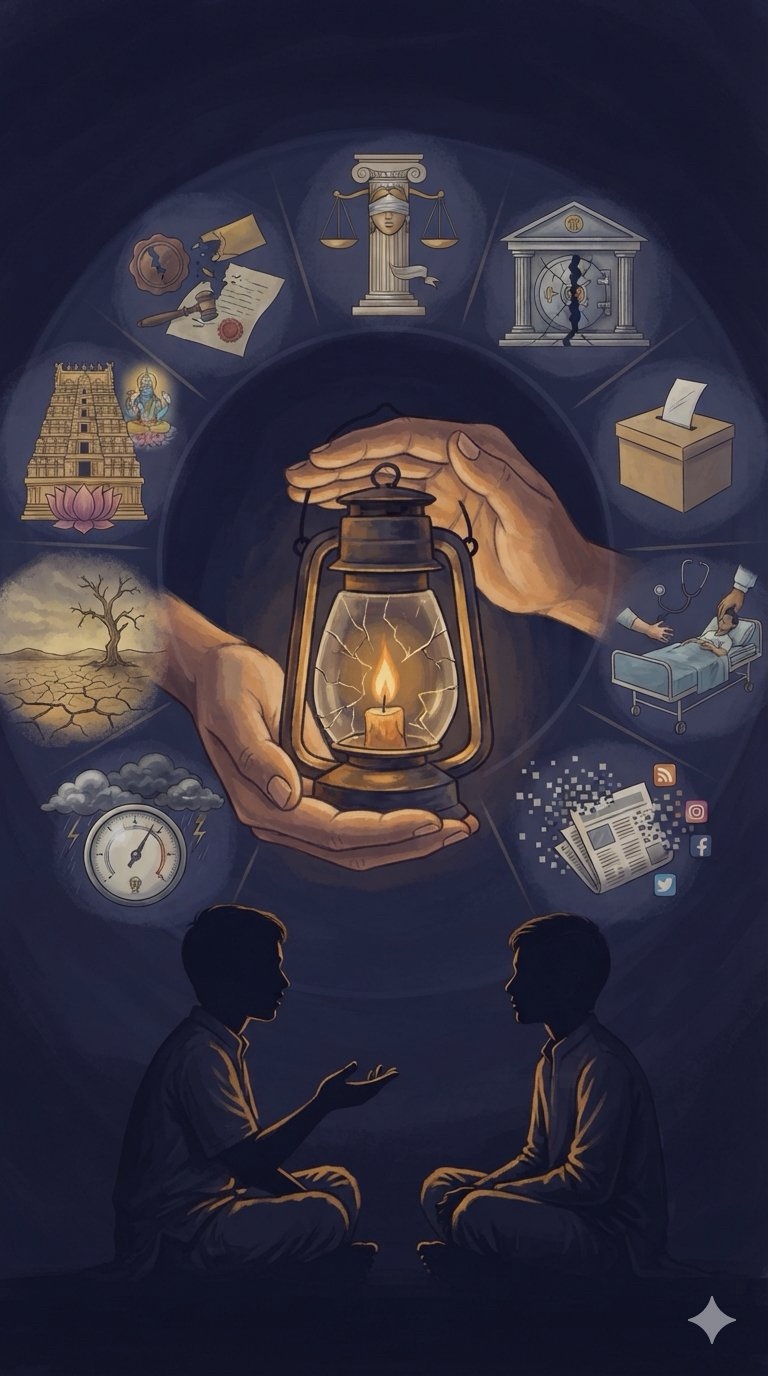
Trust is the first thing we surrender—and the last thing we learn to rebuild.
From Eden’s broken trust to today’s trust deficit in governments, banks, media, and technology: nine dialogues on betrayal, entropy, and the possibility of resurrection through mahāviśvāsam.
Category Archives: Culture & Philosophy
Medhā Sūktam: The Goddess Who Makes Speech Sacred

In the auspicious fortnight of Navarathri and on the sacred day of observance of the Mahasamadhi Day of Her Holiness Sathguru Gnananda Saraswathi, the VishnuMohan Foundation held a special religious event at the Ashram of Sri Sriharidas Swami-ji by conducting Vedic Homam and Devi Puja. The event was attended by a large gathering of Swami-Ji’s devotees who participated in the Guru puja, Devi puja and Homam.
At the kind invitation of Sri Sriharidas Swami-ji and with His Blessings, I delivered a talk on the occasion on “MEDHA SUKTAM”. The full transcript of the talk is reproduced here.
Beyond the Sanctum: Preserving Sanatana in an Age of Too Many Temples

Beyond the Sanctum: Preserving Sanatana in an Age of Too Many Temples
Temples and consecrated murtis have long been at the heart of Hindu devotion. But when temple-building becomes a measure of faith, do we risk forgetting what the murti was meant to awaken?
Nammazhvar begins the Tiruvaymozhi not by pointing to a shrine, but by telling the mind to rise: “O my mind, worship the radiant feet that end sorrow.”
This essay is not a case against archa murthy aradhana. It is a quiet plea to restore balance: to honour the visible Divine, while remembering that the highest sanctuary is consciousness itself.
Claude Must Not Make Advaita the Ventriloquist of All Vedānta
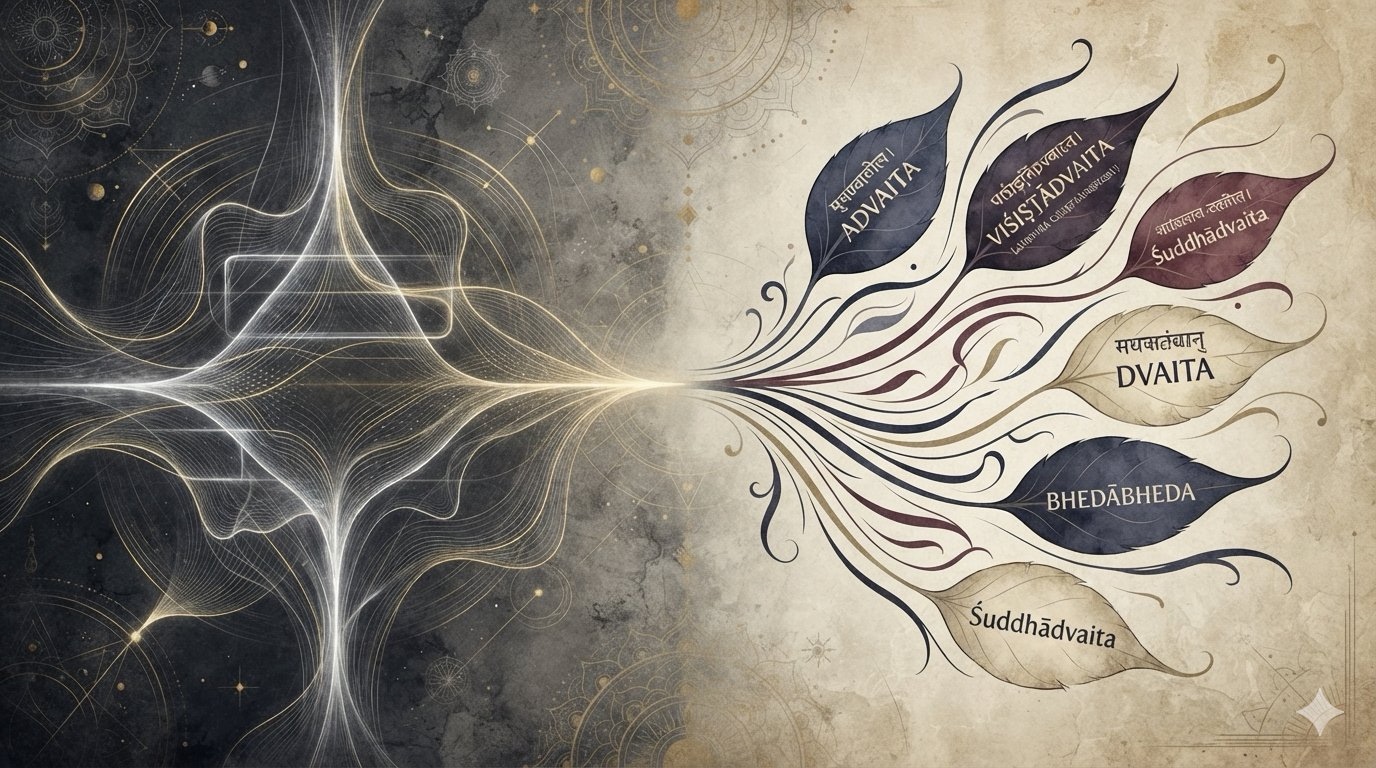
Anthropic’s engagement with Indian philosophical traditions is welcome—but it must not mistake one influential Vedāntic school for the entire intellectual inheritance of India.
When Footnotes Pretend to Be History:
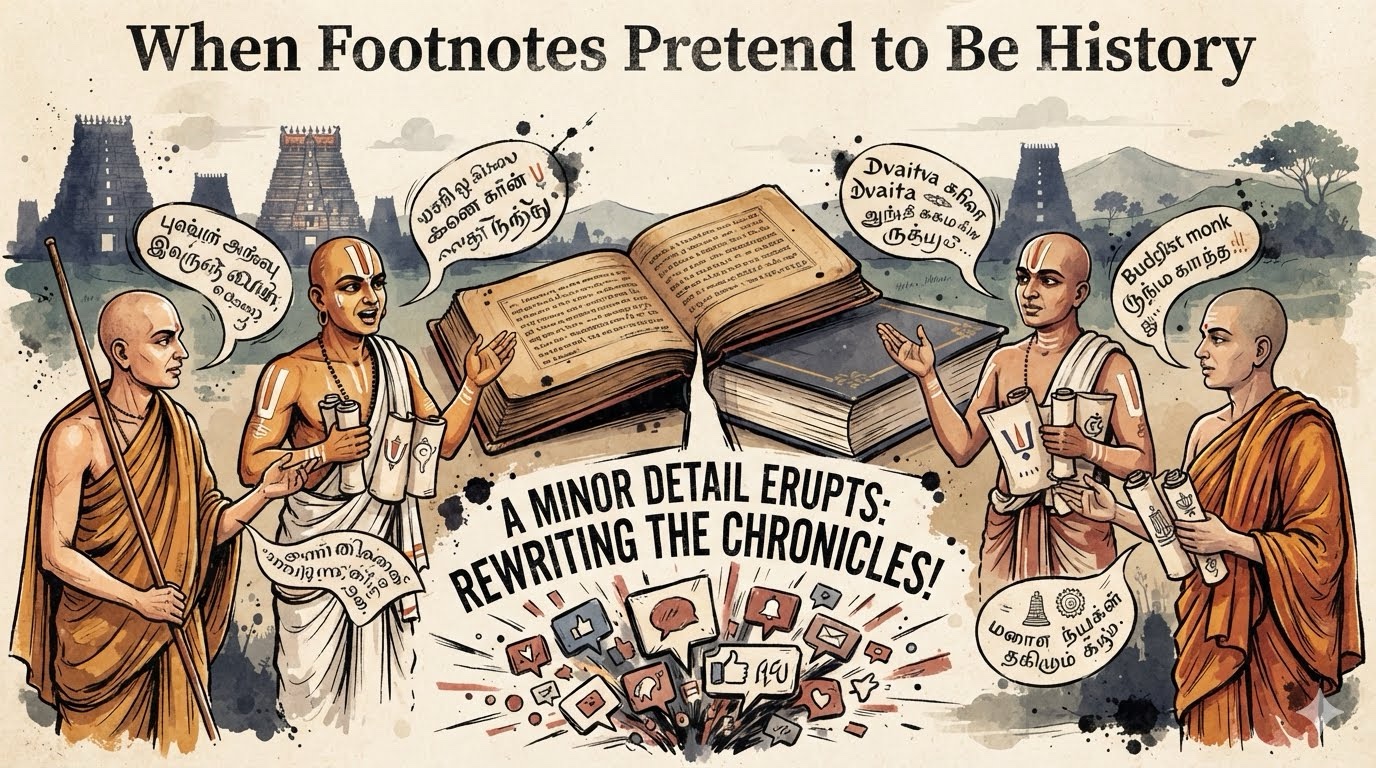
When Footnotes Pretend to Be History
Hindu philosophical traditions did not develop in a climate of uninterrupted harmony. Advaitins, Viśiṣṭādvaitins, Dvaitins, Buddhists, Jains, Śaivas, and Mīmāṃsakas often engaged in fierce—and sometimes deeply personal—polemics.
But a sectarian insult is not the whole history of a philosopher. A hostile hagiography is not a neutral biography. And a provocative footnote should not be presented as though it were a major chapter in the history of Indian thought.
From Śaṅkara and Rāmānuja to Vedānta Deśika and Madhva, the record reveals both acrimonious conflict and extraordinary intellectual creativity.
The real danger today is not that these old polemics are discussed. It is that social media detaches them from context, magnifies them, and turns historical trivia into historical truth.
When does a footnote become a distortion of history?
The Brahma–Brahman Knot / பிரம்மம்–பிரம்மா முடிச்சு

A Light-Hearted Guide for the “Incompetent Reader” of Sanskrit / சமஸ்கிருதத்தின் “அறிவில் இன்னும் பயிற்சி பெறாத வாசகருக்கு” ஒரு நகைச்சுவை கலந்த வழிகாட்டி By Sudarshan Madabushi August 31, 2026: Chennai, India 1. The Day I Became an “Incompetent Reader” / நான் “பயிற்சி குறைந்த வாசகன்” ஆன நாள் It began innocently enough. I was reading about the Upaniṣads, where BrahmanContinue reading “The Brahma–Brahman Knot / பிரம்மம்–பிரம்மா முடிச்சு”