📖 Reflections on South Indian Philosophy & Temple Realpolitik 📖
A casual theological riddle from legendary writer Sri Indira Parthasarathy led to my latest reflective piece. From the scaffolding of Advaita’s idol worship to the material turf wars of the Tenkalais and Vadakalais explored in my book “A Tale of Two Cities”, this essay reclaims historical truth over sectarian myths.
Contextual Preamble: A snippet of a Dialogue with “Eepa”
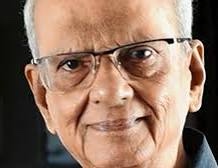
This essay finds its genesis in a compelling theological query posed by Sri Indira Parthasarathy (Eepa)—the venerable doyen of Tamil letters, celebrated novelist, dramatist, and Sahitya Akademi Award winner. During an intellectual exchange, Sri Indira Parthasarathy raised a fundamental historical riddle: “How did the Smartha Brahmins, who identify strictly as disciples of Adi Shankara’s absolute non-dualism, come to acquire Shiva as their personal deity, a choice visually anchored in their daily application of sacred ash?”
What began as a guarded, deferential response to an intellectual titan evolved into a multi-layered exploration of South Indian religious history. In crafting this response, it is impossible to separate the scholar from the artist; Sri Indira Parthasarathy’s own landmark stage play, “Ramanuja”, which resonated widely across the 1970s and 1980s, masterfully highlighted the great Acharya’s universalist-humanism and radical non-parochialism. It was a play that beautifully captured a vision of a faith unburdened by narrow, artificial boundaries.
Yet, historical realities often diverged from that theatrical and spiritual ideal. The fleeting conversation that I had with Eepa inevitably expanded into this lengthy essay — from the mechanics of the Smartha tradition to the structural parallels between Saiva Siddhanta and Visishtadvaita, the radical sociopolitical rupture of the Lingayats in Karnataka, and finally, the historic internal fractures within the community to which I myself and Eepa belong —the Ubhaya Vedantin Sri Vaishnavas.
The following three-part essay serves as a comprehensive, focused expatiation of those dialogues. It maps how lofty metaphysical frameworks across Shaivism and Vaishnavism interacted with the rigid realities of Varnashrama Dharma, and how, in the case of the Sri Vaishnavas, a transcendental spiritual legacy was eventually compromised by terrestrial battles over temple hegemony.
Beyond Sectarian Labels: Reclaiming the Metaphysical and Historical Truths of South Indian Philosophy
Part I: The Vedic-Agamic Confluence: Smartha Ritualism, Saiva Siddhanta, and the Scaffolding of Advaita
To understand the evolution of South Indian religious traditions, one must unpack the distinct historical and philosophical streams that are frequently conflated in popular discourse—chief among them being the Smartha tradition, Saivism, and Advaita Vedanta.
The term Smartha fundamentally denotes adherence to the Smritis (the texts authored by human sages, such as the Dharma Shastras and Kalpa Sutras). Historically, Smartha Brahmins are not “Saivites”; rather, they are rooted in the Srauta-Smartha tradition of domestic and sacrificial fire rituals (Agnihotra, Soma, and Paaka Yajnas). The sacred ash (vibhuti or ‘bhasma’) that defines their outward appearance is not originally an indicator of exclusive Saivite sectarianism. In its authentic Vedic context, vibhuti is the residual product of the sacrificial fire (Agni). It serves as a physical emblem of ritual purification and a stark reminder of the transient nature of material existence. Because Shiva is mythologically associated with the ultimate fire, asceticism, and cosmic ash, the public eye gradually synchronized the Smartha’s ritual ash with Saivism, obscuring a vital structural distinction.
The Scaffolding of Saguna Brahman
Philosophically, most Smarthas subscribe to Adi Shankara’s Advaita Vedanta. Under this strict non-dual framework, the ultimate reality is Nirguna Brahman—the formless, attributeless Absolute. Consequently, pure Advaita does not inherently ground itself in Saguna Upasana (the worship of a manifested God with attributes) or permanent idol worship (Murtipuja).
However, Shankara recognized an acute psychological reality: the unconditioned human mind cannot easily leap straight into meditating upon absolute formlessness. To bridge this gap, Advaita introduced a brilliant pedagogical device—the scaffolding of Saguna Brahman Upasana. Idol worship and ritualism (Karma Yoga and Bhakti Yoga) are actively encouraged, not as final destinations, but as indispensable tools for Chitta-Shuddhi (the purification of the mind).
To harmonize the aggressive, fragmented sectarian cults of his era, Shankara regularized the Panchayatana Puja—a decentralized system where five deities (Shiva, Vishnu, Devi, Surya, and Ganesha) are worshipped with equal theological weight as relative manifestations of the same underlying Brahman. For the Smartha-Advaitin, Shiva may be chosen as an Ishta Devata (personal deity), but this choice is entirely free of exclusive dogma. The idol is a vital stepping stone; once absolute non-dual realization (Aham Brahmasmi) is achieved, the scaffolding of the external ritual is naturally transitioned away from and left behind.
Part II: The Dual-Axial Traditions: Saiva Siddhanta, Visishtadvaita, and the Lingayat Rupture
When we pivot from the non-dual landscape of Advaita to the structured, devotional metaphysics of the South, we encounter an extraordinary structural parallel between Saiva Siddhanta and Ramanuja’s Visishtadvaita Vedanta. Despite worshipping different primary expressions of the Divine (Shiva versus Vishnu), both systems are architecturally built upon a dual-axial foundation (Ubhaya) that weaves vernacular devotion into orthodox Sanskrit philosophy.
Just as Sri Ramanujacharya integrated the Sanskrit Upanisads with the Tamil hymns of the Azhwars (Nalayira Divya Prabandham) to create Ubhaya Vedanta, Saiva Siddhanta systematically elevated the Tamil Thirumurai (the ecstatic compositions of the Nayanmars, such as the Thevaram and Thiruvasagam) alongside the Sanskrit Saiva Agamas. In both traditions, the vernacular language is elevated to the status of a Dravida Veda.
Metaphysically, Saiva Siddhanta is far closer to Visishtadvaita than it is to Shankara’s Advaita.
- Shankara’s Advaita resolves into absolute identity, viewing the individual soul (Jiva) and the world (Maya) as ultimately sublated in the one formless Brahman.
- Conversely, Saiva Siddhanta posits an eternal, distinct triad: Pati (the Lord/Shiva), Pasu (the individual soul), and Pasa (the bondage of the material world). Even in the state of ultimate liberation (mukti), the soul does not dissolve into nothingness or absolute identity; instead, it experiences the eternal bliss of Shiva while maintaining a qualitative distinction. This mirrors Ramanuja’s framework, where the universe and individual souls exist eternally as the inseparable “body” or attributes of the Supreme Divine (Sriman Narayana).
This raises the crucial question: Is Saiva Siddhanta Vedic or non-Vedic? Historically and textually, classical Saiva Siddhanta positions itself firmly within the Astika (orthodox/Vedic-accepting) fold. It views the Vedas and Agamas as two sides of a single coin, both emanating from Shiva. Its traditional priesthood follows Vedic-style strictures, maintaining an organic continuity with the historic socio-religious order.
Basava’s Radical Revolt
This stands in stark, revolutionary contrast to the Lingayats (Veerashaivas) of Karnataka, founded by Basaveshwara in the 12th century. The Lingayat claim to a completely non-Vedic, separate religious identity is anchored in a radical, total repudiation of the Vedic apparatus:
- Rejection of Varnashrama: Basava launched a direct assault on the Brahminical caste hierarchy and ritual purity laws, creating an egalitarian community through universal initiation (Deeksha).
- Rejection of Temple and Fire Rituals: While Saiva Siddhanta thrives on the external temple infrastructure and Agamic rituals curated by a hereditary priesthood, Lingayatism declared the human body itself to be the living temple. They rejected external Murtipuja, requiring adherents to wear and worship a personal, dynamic emblem of Shiva—the Ishtalinga—directly on their bodies without priestly intermediaries.
- Epistemological Autonomy: They derived their ultimate authority not from Vedic revelation, but from the Vachana Sahitya—the vernacular Kannada poetry of the Sharanas.
Part III: The Preservation of Order and the Anatomy of an Internal Turf War
The historical trajectories of the Visishtadvaitins (Sri Vaishnavas) and the Saivite Lingayats highlight a profound lesson in institutional longevity and social design. Why did the Sri Vaishnavas never experience a cataclysmic, structural breakaway group akin to the Lingayat separation?
The answer lies in Ramanuja’s social pragmatism. While Sri Ramanuja was a spiritual radical—celebrated so beautifully in Eepa’s theatrical masterpiece for his deep humanism—he never rejected Varnashrama Dharma as a binding framework for the secular, Vedic social order.
In the medieval landscape, Varnashrama was not merely a ritual system; it was the very fabric of economic, vocational, and municipal cohesion. Lacking an alternative, viable, and sustainable secular infrastructure that he could successfully implement, Ramanuja wisely chose to leave the structural casing of Varnashrama alone. Instead, he sought to purge it of its abuses, cruelty, and spiritual exclusions from within. By preserving the outer social contract while radicalizing the inner spiritual core, he ensured that his lineage remained structurally stable within mainstream orthodoxy, completely bypassing the historical necessity for an external, clean rupture. This resilient socio-religious contract remained functioning and cohesive for centuries, until the modern Indian Constitutional reset of 1948 legally dismantled the hereditary, village-based ecosystem.
However, the internal pressures generated by this dual identity—the universal, spiritual ideal of Tamil Bhakti versus the rigid, protective structures of Sanskrit Varna duties—did not disappear. They were simply internalized, eventually fracturing the community from within into the Tenkalai (Southern) and Vadakalai (Northern) schism.
The Litigious Trap of 1792

As extensively covered by M. K. Sudarshan in his historical work, “A Tale of Two Cities: The Decline and Fall of the ‘ubhaya-Vedantins'”, a clear-eyed, sociological analysis of this rift reveals a stark truth: the centuries-long feuding between the two sects was not a fundamental war over deep Siddhanthic substance, but a material turf-war for administrative dominance over temple assets, infrastructure, and institutional control.
When the Vijayanagara Empire poured immense material wealth, agricultural lands, and political patronage into major temple hubs like Srirangam and Kanchipuram, the stakes of spiritual leadership shifted from the metaphysical to the commercial. The 18 points of doctrinal variance (Ashtadasha Bhedas)—such as debates over the nature of divine grace—frequently acted as a highly sophisticated intellectual superstructure deployed to validate raw, terrestrial power-plays.
This was manifested through “competitive idolatry” and the construction of exclusive Acharya Paramparas. The installation of sectarian Acharyas as quasi-divine, worshipable icons within the main sanctums—Sri Manavala Mamuni for the Tenkalais and Sri Vedanta Desika for the Vadakalais—served as a means of planting flags of institutional sovereignty within the temple precincts.
The subsequent, tragic reliance on British colonial courts starting in 1792 to adjudicate petty ritual parameters (such as the physical shape of the Naamam mark or the order of precedence in chanting litanies) was a complete travesty of Ramanuja’s inclusive legacy. By handing over their internal autonomy to an external, secular judiciary, the community inadvertently hollowed out its own authority. It set the perfect stage for the post-Independence state to assume absolute control of the temple commonwealth via the HR&CE Act, effectively reducing a historically sovereign cultural elite to disenfranchised employees within their own ancestral sanctuaries.
Ultimately, the divisions that broke the Ubhaya Vedantin identity were driven by the age-old pursuit of administrative hegemony. To heal these historical fault-lines, the modern community must look past the superficial armor of sectarian labels and return to the unified, expansive, and transcendental vision of the Ramanuja Sampradaya.
As Hindu community as a whole and as spread right across this vast country, it is time we realised that the real legacy our ancient Rishis and Acharyas left behind for posterity is ideas and ideals, vision and values … and not so much the sacred land and holy real- estate that later got built upon it in their memory.
(Concluded)