
By M. K.Sudarshan
September 6, 2026: Chennai, India
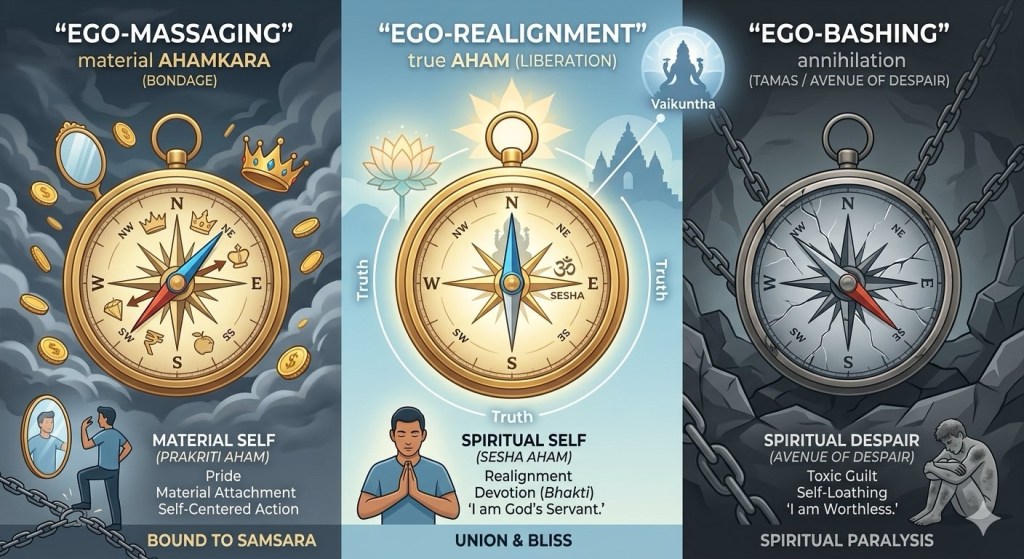
In the spiritual landscape, we are often told that the Ego is the ultimate enemy. “Crush your ego,” standard advice proclaims. Conversely, the modern world tells us to “celebrate ourselves,” which frequently devolves into feeding our vanity.
In the profound framework of Visishtadvaita Vedanta, formulated by Sri Ramanuja, both extremes—ego-bashing and ego-massaging—are recognized as spiritual dead-ends.
ஆன்மீக வழியில் அகந்தை (ஈகோ) என்பது மிகப்பெரிய எதிரி என்று நாம் அடிக்கடி கேள்விப்படுகிறோம். “உன் அகந்தையை நசுக்கு” என்று பொதுவான அறிவுரைகள் கூறுகின்றன. இதற்கு நேர்மாறாக, நவீன உலகம் “உன்னை நீயே கொண்டாடு” என்று கூறுகிறது, இது பல நேரங்களில் நமது கர்வத்திற்குத் தீனி போடுவதாக முடிந்துவிடுகிறது.
ஸ்ரீ ராமானுஜர் அருளிய விசிஷ்டாத்வைத வேதாந்தத்தின் ஆழமான கோட்பாட்டின்படி, இந்த இரண்டு தீவிரங்களும்—அகந்தையை ஒடுக்குவதும் (Ego-bashing) அல்லது அகந்தையை வளர்ப்பதும் (Ego-massaging)—ஆன்மீகப் பயணத்தில் முட்டுச்சந்துகள் ஆகும்.
The Two Errors: Massaging vs. Bashing
Ego-massaging is the path of Ahamkara (arrogance) and Mamakara (possessiveness). It is the false belief that “I am the independent doer” and “This is all mine.” It binds us to material existence through hubris.
Conversely, Ego-bashing—the violent attempt to annihilate the “I” entirely—is equally flawed. In Visishtadvaita, the soul (Atman) is eternally an individual knower (jnata) and an agent. To smash the “I” completely is to deny your eternal nature. If the “I” is totally destroyed, who remains to experience the bliss of liberation (Moksha) or feel devotion for the Divine?
இரு பெரும் பிழைகள்: வளர்த்தலும் ஒடுக்குதலும்
அகந்தையை வளர்ப்பது (Ego-massaging) என்பது ‘அகங்காரம்’ (யான் என்ற செருக்கு) மற்றும் ‘மமகாரம்’ (எனது என்ற பற்று) ஆகியவற்றின் பாதையாகும். “நானே சுதந்திரமாகச் செயல்படுபவன்”, “இது எல்லாம் என்னுடையது” என்ற தவறான நம்பிக்கையே இது. இது மனிதனை ஆணவத்தில் ஆழ்த்தி, சம்சார பந்தத்தில் பிணைக்கிறது.
அதற்கு நேர்மாறாக, அகந்தையை ஒடுக்குவது (Ego-bashing)—அதாவது “நான்” என்ற உணர்வை முற்றிலும் அழிப்பதற்கான வன்முறை முயற்சி—அதுவும் பிழையானதே. விசிஷ்டாத்வைதத்தில், ஆத்மா என்பது நித்தியமான ஒரு தனித்துவமான அறிபவன் (ஞாதா) மற்றும் செயல்படுபவன் ஆகும். “நான்” என்பதை முற்றிலும் சிதைப்பது உங்களது நித்தியமான ஆன்ம இயல்பை மறுப்பதாகும். “நான்” என்பதே முற்றிலும் அழிந்துவிட்டால், முக்தி இன்பத்தை அநுபவிப்பதற்கோ அல்லது இறைவனிடம் பக்தி செலுத்துவதற்கோ அங்கே யார் இருப்பார்?
The Secret Fuel of Free Will: Sankalpam, Vivekam, and the Trap of Spiritual Hubris
The Vedanta recognizes that the Ego is not inherently evil; it is an existential organ that serves a vital cosmic purpose. Without the “I,” there can be no exercising of free will (Sankalpam). It is this very sense of self that enables our choice of deeds, discriminates good from evil, and translates abstract thoughts into creative endeavors. Without the functional ego, even the attainment of spiritual wisdom (Vivekam) is impossible.
However, there lies a dangerous, ironic paradox in the spiritual pursuit. Advanced spiritual knowledge—acquired through long years of studying scriptures, practicing austerities (tapas), dhyana, and yogic meditation—can easily lead to an inflation of the Ego rather than its diminution. Intellectual and yogic accomplishment can breed a toxic spiritual hubris. Here, the soul becomes self-aware of its power, but instead of routing this toward total surrender (Saranagathi), it falls into what Sri Ramanuja warns against in his Gita Bhashya: the Kaivalya trap.
Kaivalya is the experience of the ego as a pure, isolated existential tattva. It is an ego intoxicated by its own spiritual purity and perceived independence, utterly failing to realize its true, consummative nature as an eternal servant (Dasabhuta) to the Divine. Without devotion, advanced jnana simply creates a refined monster of grandeur.
சுய விருப்பத்தின் உந்துசக்தி: ‘சங்கல்பம்’, ‘விவேகம்’ மற்றும் ஆன்மீகக் கர்வத்தின் ஆபத்து
வேதாந்தம் அகந்தையை ஒரு தீமையாகப் பார்ப்பதில்லை; அது ஆன்மாவின் ஆன்மீகப் பரிணாம வளர்ச்சிக்குத் தேவையான ஒரு இன்றியமையாத அங்கமாகும். “நான்” என்ற உணர்வு இல்லாவிட்டால், மனிதனால் தன் சுய விருப்பத்தை அல்லது தீர்மானத்தை (சங்கல்பம்) பயன்படுத்த முடியாது. நன்மை தீமைகளைப் பகுத்தறிந்து, நற்செயல்களைத் தேர்ந்தெடுப்பதற்கும், எண்ணங்களையும் கருத்துக்களையும் படைப்புத் திறனுள்ள செயல்களாக மாற்றுவதற்கும் இந்த சுய உணர்வே உதவுகிறது. இந்த அகந்தை இல்லாவிட்டால், ஆன்மீக ஞானத்தை (விவேகம்) அடைவது கூட சாத்தியமற்றதாகிவிடும்.
இருந்தபோதிலும், ஆன்மீகப் பாதையில் ஒரு ஆபத்தான முரண்பாடு ஒளிந்திருக்கிறது. நீண்ட கால வேதக் கல்வி, தவங்கள் (தபஸ்), தியானம் மற்றும் யோகப் பயிற்சிகள் மூலம் பெறப்படும் மேம்பட்ட ஆன்மீக அறிவு, அகந்தையைக் குறைப்பதற்குப் பதிலாக அதை மேலும் வீங்கச் செய்துவிடும். ஆன்மீக மற்றும் அறிவுசார் சாதனைகள் ஒருவித ‘ஆன்மீகக் கர்வத்தை’ (Spiritual Hubris) உருவாக்கிவிடுகிறது. இங்கே ஆன்மா தன் ஆற்றலை உணர்கிறது, ஆனால் அதைச் சரணாகதிப் பாதையில் செலுத்தாமல், ஸ்ரீ ராமானுஜர் தனது கீதா பாஷ்யத்தில் எச்சரிக்கும் கைவல்ய (Kaivalya) நிலையின் பேராபத்தில் சிக்கிக் கொள்கிறது.
கைவல்யம் என்பது ஆன்மாவின் தனித்துவத்தை மட்டும் உணரும் ஒரு நிலை; ஆனால் அது இறைவனுடன் இணையாத தனிமை. தன் ஆன்மீகத் தூய்மையைக் கண்டு தானே மயங்கி நிற்கும் இந்த அகந்தை, தான் இறைவனின் நித்திய அடியவன் (தாசபூதன்) என்ற விசிஷ்டாத்வைதத்தின் உன்னதமான இறுதி உண்மையை மறக்கிறது. பக்தி இல்லாத ஆன்மீகச் சாதனைகள் மனிதனைப் பேராணவம் கொண்ட அரக்கனாக மாற்றிவிடும்.
A Puranic Illustration: The Perverted Jnana of Ravana & Hiranyakasipu
The Puranas beautifully illustrate why both extremes fail, and what the true middle path of Ego-Realignment looks like.
1. The Massaged, Spiritually Inflated Ego: Ravana and Hiranyakasipu
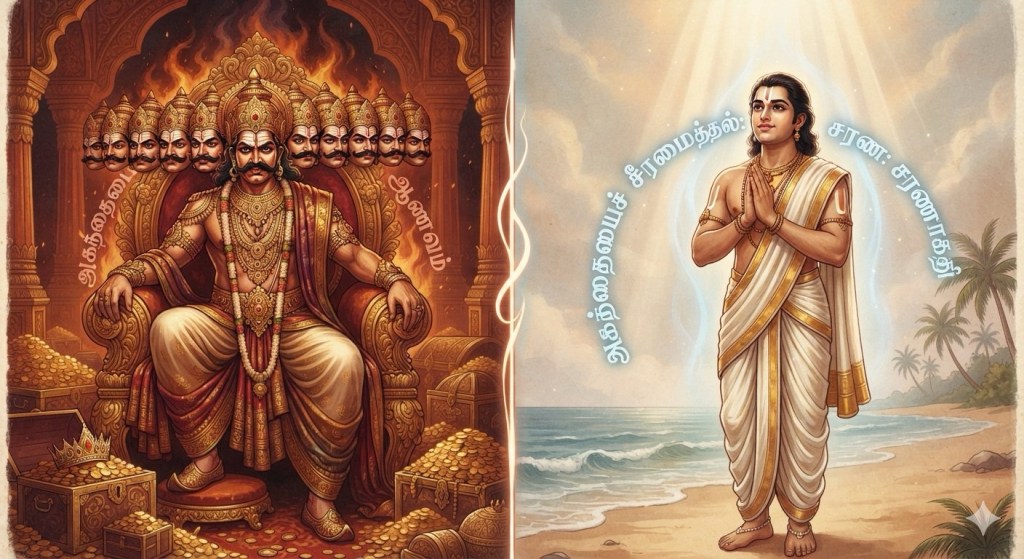
Ravana and Hiranyakasipu are the ultimate warnings of this perversion. They were not mere uneducated brutes; they were masters of immense tapas, Vedic scholarship, and severe yogic power. Yet, their advanced jnana was corrupted into a delusion of grandeur. Instead of fostering surrender, their achievements inflated their Ahamkara until they genuinely believed they were the ultimate cosmic supreme controllers. Their egos expanded under the guise of spiritual success until it consumed them completely.
2. The Bashed Ego: The Paralysis of Toxic Guilt
Consider the other extreme, often seen when a devotee falls into despair—convinced they are so sinful, so worthless, that they should not even exist. When we wallow in toxic self-loathing, we are still obsessed with ourselves (“Look how bad I am”). This is ego-bashing. It paralyzes spiritual action, creating a state of spiritual depression (tamas).
3. The Realized Ego: Vibhishana’s Surrender
The true path of Visishtadvaita is showcased by Ravana’s brother, Vibhishana. He did not massage his ego by staying with Ravana’s royal power. Nor did he bash his ego into non-existence through hopeless guilt over belonging to the demon clan. Instead, he redirected his “I.”
He flew to Sri Rama, stood before Him, and declared: “I am Vibhishana, the brother of Ravana. I leave everything behind and surrender unto You.” He preserved his identity (“I am Vibhishana”), used his free will (Sankalpam) driven by wisdom (Vivekam), and redefined his ego under the leash of true Svarupa-Jnana as an eternal instrument of the Divine (Seshatva).
புராணக் கதை: இராவணன், இரண்யகசிபுவின் அறிவுச் சீரழிவும் விபீஷண சரணாகதியும்
இந்த அணுகுமுறைகள் ஏன் தோற்கின்றன, மற்றும் அகந்தையைச் சீரமைக்கும் (Ego-Realignment) உண்மையான நடுவழி எப்படி இருக்கும் என்பதைப் புராணங்கள் அழகாக விளக்குகின்றன.
1. வளர்க்கப்பட்ட பேராணவம்: இராவணனும் இரண்யகசிபுவும்
புராணங்களில் வரும் இராவணனும், இரண்யகசிபுவும் இந்த ஆன்மீகச் சீரழிவிற்கு மிகச்சிறந்த எச்சரிக்கைகள் ஆவர். அவர்கள் வெறும் அறிவற்றவர்கள் அல்லர்; அளப்பரிய தவசக்தியும், வேத ஞானமும், யோக வலிமையும் பெற்றவர்கள். இருப்பினும், அவர்களது மேம்பட்ட அறிவு கர்வமாக மாறி, தங்களையே பிரபஞ்சத்தின் அதிபதியாக எண்ணும் பேராணவத்தில் (Delusion of grandeur) அவர்களை வீழ்த்தியது. ஆன்மீக வெற்றியின் முகமூடிக்குள் ஒளிந்திருந்த அவர்களின் அகந்தை, அவர்களை முற்றிலும் அழிக்கும் வரை வளர்ந்தது.
2. ஒடுக்கப்பட்ட அகந்தை: ஆன்மீகக் குற்ற உணர்ச்சி
இதன் மறுமுனையைக் கருத்தில் கொள்வோம். ஒரு பக்தன் தான் மிகவும் பாவி, லாயக்கற்றவன், தான் வாழ்வதற்கே தகுதியற்றவன் என்று ஆன்மீகக் குற்ற உணர்ச்சியில் மூழ்கும்போது இது நிகழ்கிறது. சுய வெறுப்பில் நாம் மூழ்கும்போது, அப்போதும் நமது கவனம் “நான் எவ்வளவு மோசமானவன்” என்று நம் மீதேதான் இருக்கிறது. இது அகந்தையை வன்முறையாக ஒடுக்குவதாகும். இது ஆன்மீகச் செயல்பாட்டை முடக்கி, தாமச நிலையை (மனச்சோர்வை) உருவாக்குகிறது.
3. சீரமைக்கப்பட்ட அகந்தை: விபீஷண சரணாகதி
விசிஷ்டாத்வைதம் காட்டும் உண்மையான வழியை இராவணனின் தம்பியான விபீஷணனிடம் காணலாம். அவன் இராவணனின் அரச அதிகாரத்தோடு இருந்து தன் அகந்தையை வளர்க்கவுமில்லை; அல்லது தான் ஓர் அரக்க குலத்தில் பிறந்துவிட்டோமே என்ற குற்ற உணர்ச்சியில் தன் சுயத்தை அழித்துக் கொள்ளவுமில்லை (Ego-bash). மாறாக, அவன் தன் “நான்” என்ற உணர்வை நல்வழிப்படுத்தினான்.
அவன் ஸ்ரீராமனிடம் பறந்து வந்து, அவனுக்கு முன்னால் நின்று: “நான் இராவணனின் தம்பியான விபீஷணன். எல்லாவற்றையும் துறந்து உன்னைச் சரணடைகிறேன்“ என்று பிரகடனம் செய்தான். அவன் தன் அடையாளத்தை அழிக்கவில்லை (“நான் விபீஷணன்”), மாறாகத் தன் விவேகத்தினால் தூண்டப்பட்ட சுய சங்கல்பத்தைப் பயன்படுத்தி, அதைச் சுவரூப ஞானத்தின் துணையோடு இறைவனுடன் தொடர்புபடுத்தி மறுவரையறை செய்தான். இதுவே ‘சேஷத்வம்’ (இறைவனுக்கு அடியவன் என்ற உணர்வு) ஆகும்.
The Ultimate Scriptural Anchor: Nammalvar’s Decisive Verdict
This profound Vedantic process of extracting the false ego and realigning the true self is not merely a theoretical exercise; it is the ecstatic realization of the Vaishnava saints. In his monumental Thiruvaimozhi, Nammalvar delivers the ultimate spiritual directive for the soul trapped between ego-massaging and ego-bashing:
“நீர் நுமதென்றிவை வேர் முதல் மாய்த்து
இறை சேர்மின், உயிர்க்கு அதன் நேர் நிறையில்லே.”“Uproot from the very depths of their roots the notions of ‘I’ (Neer) and ‘Mine’ (Numadh), and immediately unite yourself to the Lord; for the soul, there is no greater fulfillment or state equal to this.”
— Thiruvaimozhi (1-2-3)
Nammalvar outlines the exact sequence of Visishtadvaita soteriology. He does not stop at demanding that we tear away the roots of material Ahamkara and Mamakara (“நீர் நுமதென்றிவை வேர் முதல் மாய்த்து”). He recognizes that leaving the soul in a vacuum leads to toxic self-loathing or the isolated spiritual hubris of the Kaivalya trap. Therefore, he instantly commands an active, loving realignment: “Attach yourself to the Lord”(“இறை சேர்மின்”). It is only when the functional ego surrenders its independence to become God’s instrument that the soul finds its absolute, unparalleled fulfillment (“உயிர்க்கு அதன் நேர் நிறையில்லே”).
வேதாந்தத்தின் உச்சகட்ட சான்று: நம்மாழ்வாரின் தீர்ப்பு
தவறான அகந்தையை நீக்கி, உண்மையான சுயத்தை இறைவழியில் சீரமைக்கும் இந்த ஆழமான வேதாந்த செயல்முறை வெறும் தத்துவக் கோட்பாடு மட்டுமல்ல; இது ஆழ்வார்களின் அநுபவபூர்வமான பிரகடனமாகும். வைணவப் பெருந்தகையான நம்மாழ்வார், தனது திருவாய்மொழியில் அகந்தையை வளர்ப்பதற்கும் அதை வன்முறையாக ஒடுக்குவதற்கும் இடைப்பட்ட நல்வழியை மிகத் துல்லியமாகப் படம்பிடித்துக் காட்டுகிறார்:
“நீர் நுமதென்றிவை வேர் முதல் மாய்த்து
இறை சேர்மின், உயிர்க்கு அதன் நேர் நிறையில்லே.”
— திருவாய்மொழி (1-2-3)
விசிஷ்டாத்வைத சரணாகதித் தத்துவத்தின் ஒட்டுமொத்த வரிசையையும் ஆழ்வார் இப்பாசுரத்தில் சுருக்கமாகத் தருகிறார். பிரகிருதி சம்பந்தத்தால் உண்டாகும் ‘நான்’, ‘என்னுடையது’ என்ற அகங்கார, மமகாரங்களை அவற்றின் வாசனை (வேர்) முதற்கொண்டு அறுத்தெறிய வேண்டும் (“நீர் நுமதென்றிவை வேர் முதல் மாய்த்து”) என்று கூறும் ஆழ்வார், அதோடு நிறுத்திவிடவில்லை. அவ்வாறு நிறுத்தினால் ஆன்மா சுய வெறுப்பிலோ அல்லது தன் ஆன்மீகத் தூய்மையைக் கண்டு தானே மயங்கும் ‘கைவல்ய’ பேராபத்திலோ வீழ்ந்துவிடும் என்பதை அவர் அறிவார். எனவேதான், உடனடியாக அதை நல்வழிப்படுத்தும்படி “இறைவனைச் சென்று அடையுங்கள்“ (“இறை சேர்மின்”) என்று கட்டளையிடுகிறார். எப்போது ஆன்மா தன் சுதந்திரத்தை இறைவனிடம் சமர்ப்பித்து, அவனது நித்திய அடியவனாக மாறுகிறதோ, அப்போதுதான் அந்த உயிருக்கு ஈடிணையற்ற பேரின்பமும் உன்னத நிறைவும் கிட்டும் (“உயிர்க்கு அதன் நேர் நிறையில்லே”) என்று பாசுரம் நிறைவுபெறுகிறது.