Title: The Refineries That Saved India’s Pumps
Subtitle: While America and Europe face a looming refining-capacity crisis, self-sufficient India should thank its public sector—and Ambani
The article argues that India’s relative freedom from the diesel shortages now troubling the United States and Europe is not luck, but the result of a seven-decade effort to build domestic refining capacity. While Western economies face pump-level supply stress, India remains broadly self-sufficient in petrol and diesel, even though it imports most of its crude oil.
It traces India’s refining history from the first post-Independence refinery in 1954, through IndianOil’s creation in 1959 and the nationalisation of the oil industry in 1976, to the public-sector refinery network that still forms the backbone of national fuel supply.
The piece credits successive governments—especially those of Nehru, Indira Gandhi, P. V. Narasimha Rao, Vajpayee and Manmohan Singh—for building and expanding this capacity across very different political eras.
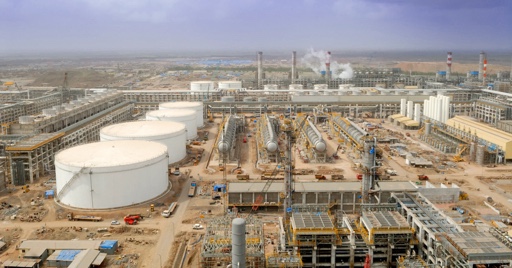
Reliance’s Jamnagar complex receives substantial but qualified praise. Commissioned in 1999 and expanded in 2008, it became the world’s largest single-site refinery, with about 1.4 million barrels per day of capacity, giving India export strength and flexibility during the current global diesel squeeze.
The article’s central argument is balanced: India should credit both the public sector, which built the foundation, and Reliance, which added world-scale private capacity. But it also cautions that Jamnagar’s success does not settle concerns about crony capitalism, market concentration or unequal access to state policy.
India’s energy security, it concludes, was built by long-term public and private investment—and must not be taken for granted in future crises.