The Refineries That Saved India’s Pumps

Title: The Refineries That Saved India’s Pumps

Subtitle: While America and Europe face a looming refining-capacity crisis, self-sufficient India should thank its public sector—and Ambani

The article argues that India’s relative freedom from the diesel shortages now troubling the United States and Europe is not luck, but the result of a seven-decade effort to build domestic refining capacity. While Western economies face pump-level supply stress, India remains broadly self-sufficient in petrol and diesel, even though it imports most of its crude oil.

It traces India’s refining history from the first post-Independence refinery in 1954, through IndianOil’s creation in 1959 and the nationalisation of the oil industry in 1976, to the public-sector refinery network that still forms the backbone of national fuel supply.

The piece credits successive governments—especially those of Nehru, Indira Gandhi, P. V. Narasimha Rao, Vajpayee and Manmohan Singh—for building and expanding this capacity across very different political eras.

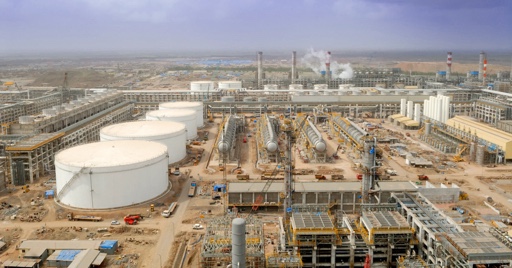
Reliance’s Jamnagar complex receives substantial but qualified praise. Commissioned in 1999 and expanded in 2008, it became the world’s largest single-site refinery, with about 1.4 million barrels per day of capacity, giving India export strength and flexibility during the current global diesel squeeze.

The article’s central argument is balanced: India should credit both the public sector, which built the foundation, and Reliance, which added world-scale private capacity. But it also cautions that Jamnagar’s success does not settle concerns about crony capitalism, market concentration or unequal access to state policy.

India’s energy security, it concludes, was built by long-term public and private investment—and must not be taken for granted in future crises.
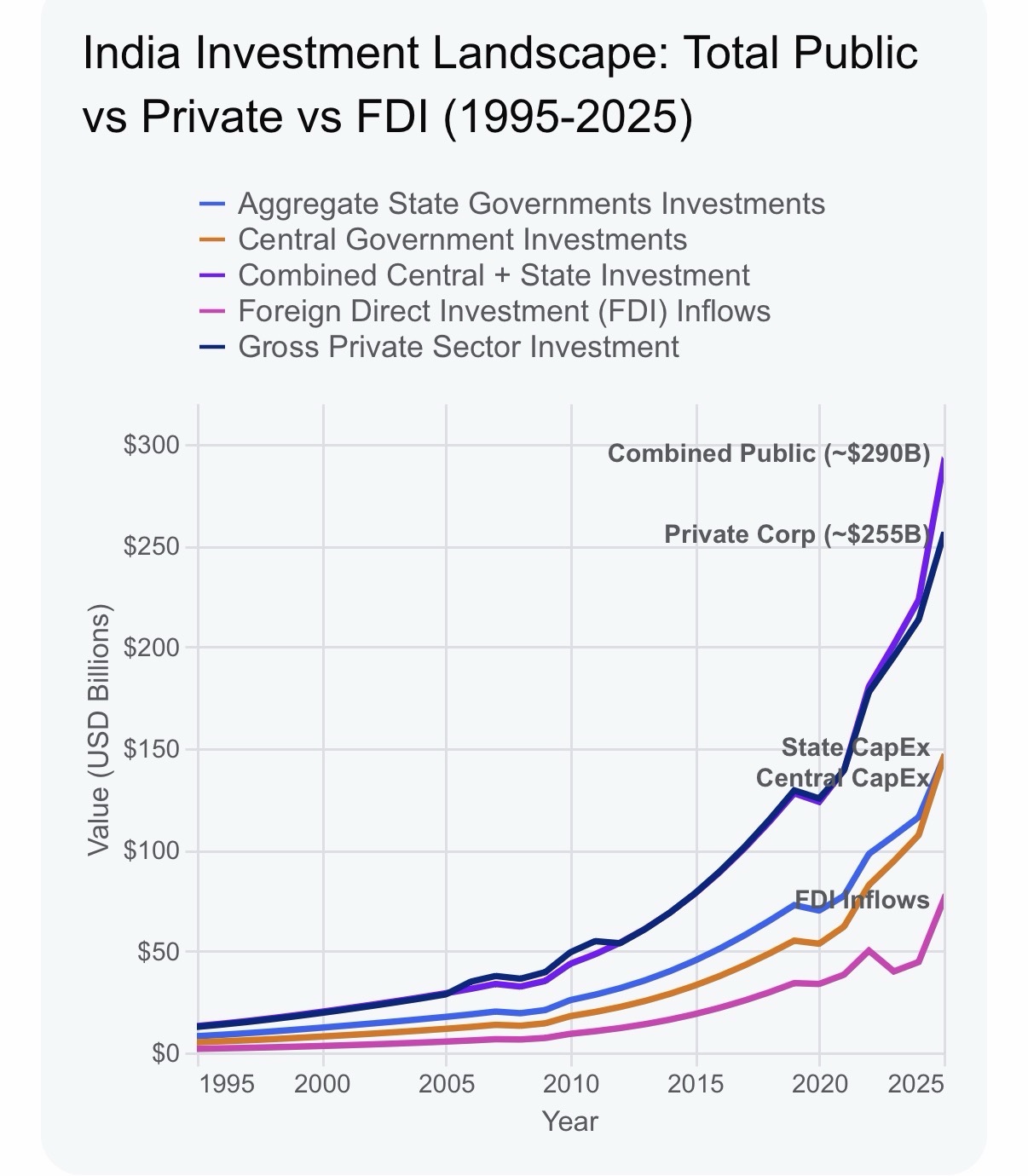

“Neither Timid Nor Tepid: The Myth of India’s ‘Laggard’ Private Investors”

Is India’s private sector really a laggard?

This data-driven analysis explodes the myth, proving corporate investment matches the state’s entire fiscal weight.

A Letter to My Granddaughter

“We were not regenerating a new India; we were refurbishing the old one. Do not judge us for failing to be what we could not be.”

“The clearest gift I could give you was honesty: to call spades spades, to name the loss clearly so that you would not be burdened with false pretenses.”

The Paradox of Social Engineering: Why Affirmative Action Risks Becoming Social De-Engineering

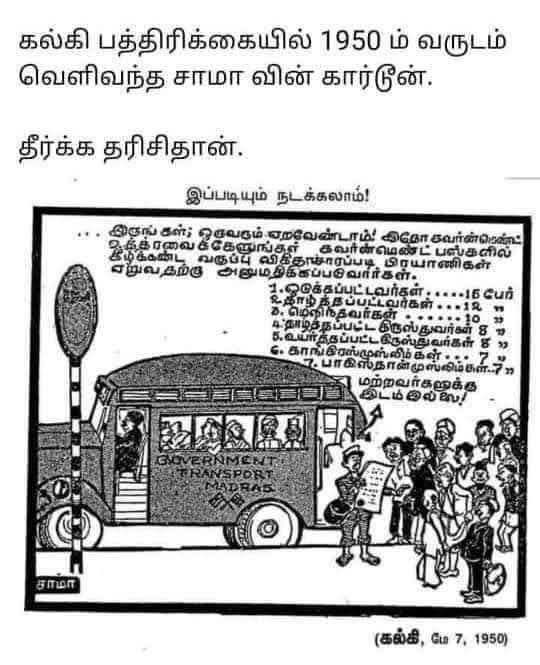
The scene portrays a crowded bus stop labeled “Government Transport Madras”. Instead of allowing passengers to board normally, a bus conductor stands at the door reading a restrictive government mandate to an astonished crowd. To mock how extreme state-enforced communal reservation could theoretically become, the conductor announces a rigid proportional breakdown of who is permitted onContinue reading “The Paradox of Social Engineering: Why Affirmative Action Risks Becoming Social De-Engineering”

Entrepreneurship is the Virtue-Signalling of Modern Corporate Capitalism (aka. “the new world order”)

Overview In contemporary political economy, entrepreneurship is often presented as a morally elevated force of innovation, risk-bearing, and social progress. Yet the structure of the modern corporate economy suggests a different interpretation: entrepreneurship functions largely as the legitimating language through which capital organizes production, appropriates profits, and normalizes an unequal distribution of national wealth. AcrossContinue reading “Entrepreneurship is the Virtue-Signalling of Modern Corporate Capitalism (aka. “the new world order”)”

The Great Betrayal: How Labour Lost in Both China and India to Capital in the decade 2014-2024

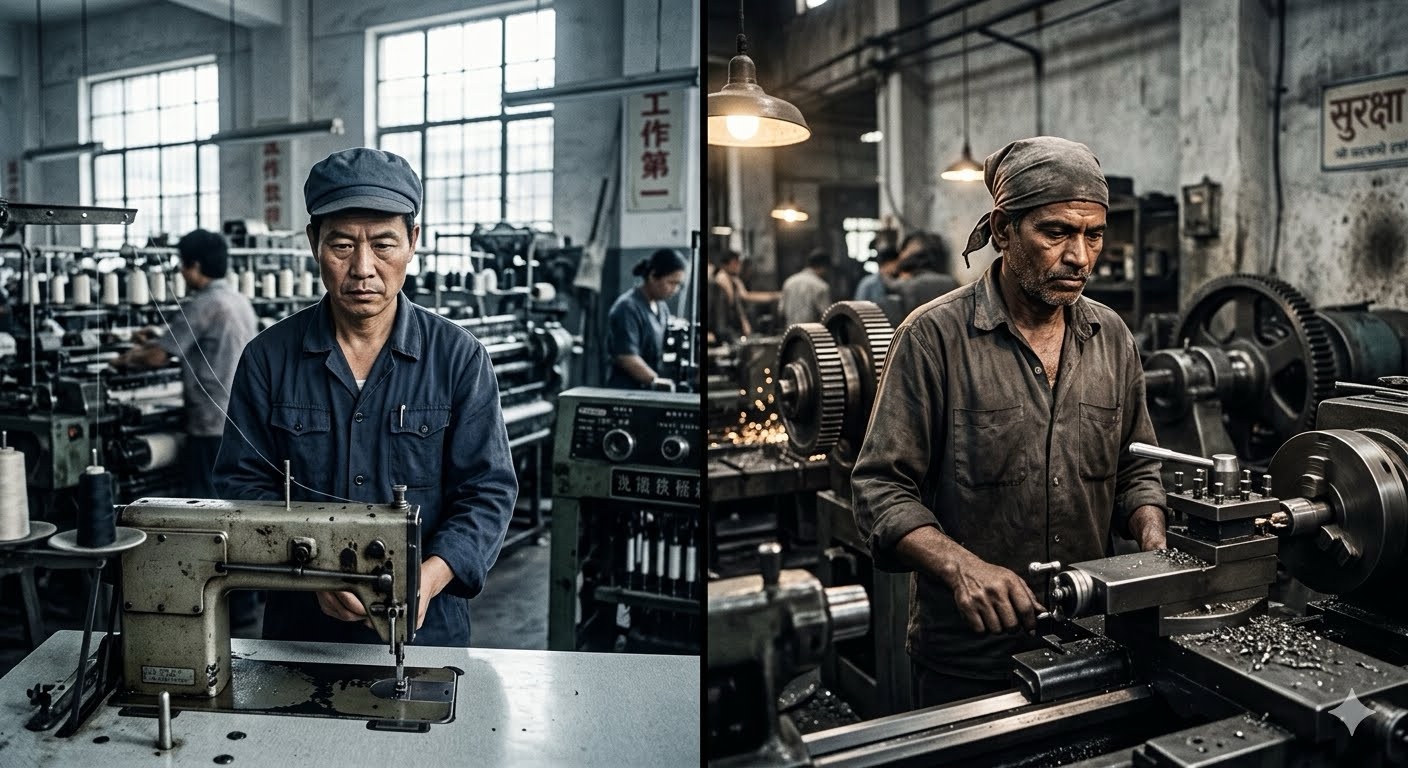
The Shared Tragedy A blue-collar factory worker in Dongguan, China, and a white-collar IT contractor in Bangalore, India—separated by the Himalayas and 3,000 miles—have something heartbreaking in common: over the past decade, both have watched capital owners capture 4–6 times more wealth per person than they did, despite their nations’ spectacular economic growth. In China, GDPContinue reading “The Great Betrayal: How Labour Lost in Both China and India to Capital in the decade 2014-2024”

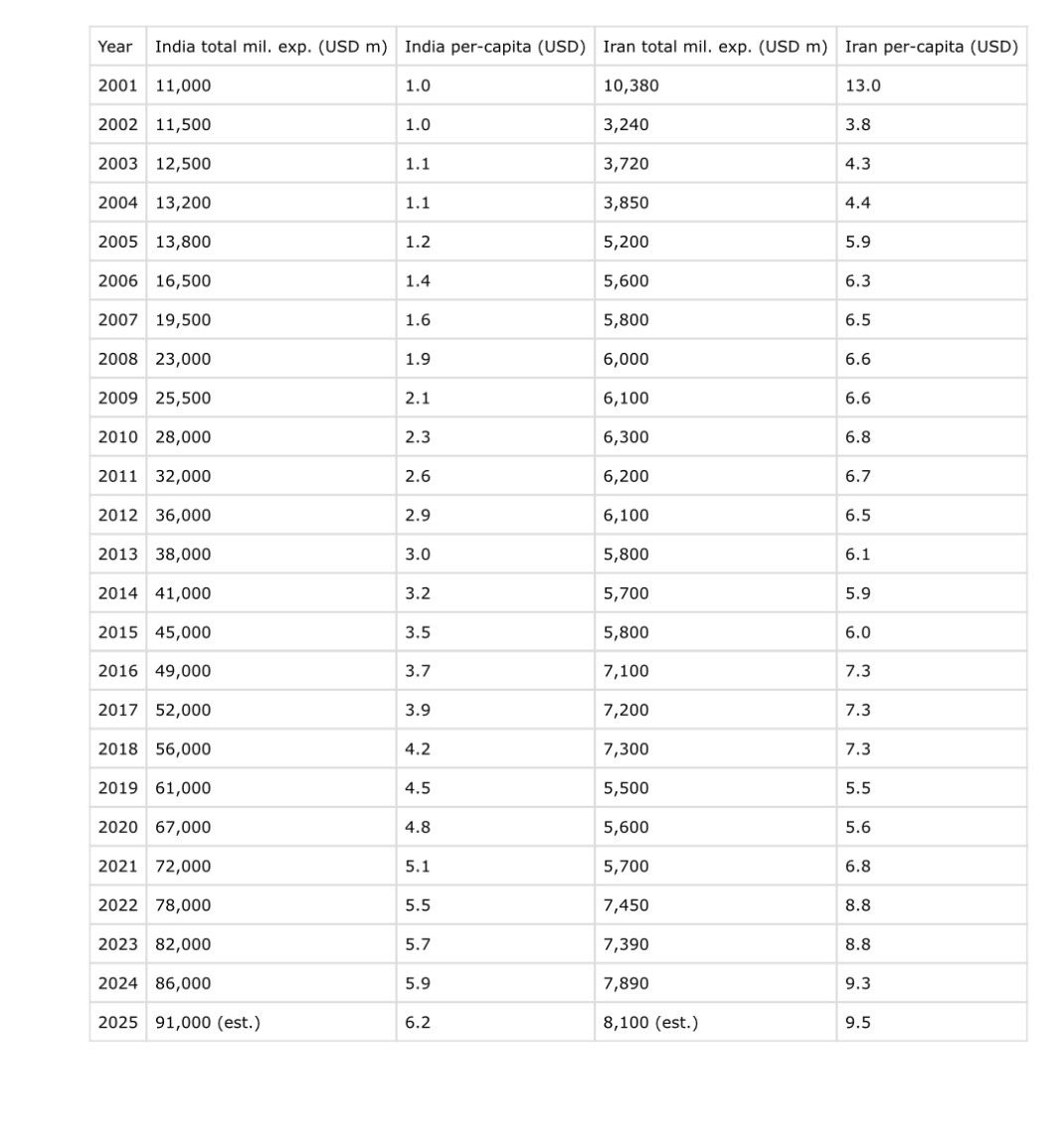
Has India’s budget spending on Defence and National Security been as smart and wise as Iran’s turns out to be today ?

Please take a good, long and hard look at the table below . India’s total defence budget outlay has risen 8 fold in the last 25 years ( $11 billion to $91 billion) while Iran’s has risen only 3 times (from around $3 billion to $8 billion in the same period). In 2001, India andContinue reading “Has India’s budget spending on Defence and National Security been as smart and wise as Iran’s turns out to be today ?”

“Access to American Technology” is not such a big deal… India shouldn’t get spooked by a pinprick wound.

Ever since Trump slammed the punitive “left-right punch” tariffs of 25%+25% tariff on India weeks ago, there’s been an ongoing debate in the public square on why our Government’s response has been so pusillanimous if not craven so far. The economic pundits and journalistic commentariat are busy writing copious, dense op-Eds in the nationwide pressContinue reading ““Access to American Technology” is not such a big deal… India shouldn’t get spooked by a pinprick wound.”

Modi-ji, Please don’t let the current Trump-tariff crisis of India go waste!

Below ⬇️ is a jingoistic “forwarded message” that’s going viral on the Whatapp University circuit. Why is Trump angry with India? Is it only because India is buying oil from Russia, or is that just an excuse? And why is it that we are not able to sign even a mini Trade deal, leave aloneContinue reading “Modi-ji, Please don’t let the current Trump-tariff crisis of India go waste!”

With the 11-Year “Narendra Modi Report Card” of Anand Ranganathan, I concur and say, “This was India’s Finest Hour”!

The Modi Era: 2014-2025 Magnificent achievements indeed ! This past 11 year period will certainly have to be reckoned by historians of the future as India’s “finest hour” heralding a golden era in the life of the nation. Anand Ranganathan’s one glaring omission of India’s achievements in the last 11 years is the great stridesContinue reading “With the 11-Year “Narendra Modi Report Card” of Anand Ranganathan, I concur and say, “This was India’s Finest Hour”!”