On 27 Oct 2024, at 2:54 PM, Rangarajan T.N.C. Sent to me in an email this YouTube link :
And below was my reply to him via email :
Dear Sir, Thank you for sharing with me the above beautiful Shloka from Sankara Bhagavatpada’s masterpiece “Soundarya Lahari …”!
This Bhakti laden Sanskrit hymn has a very special place in my heart for 2 main reasons :
First reason, this entire hymn of 108 shlokas was rendered many years ago into a melodious raaga-Maalika — a garland of beautiful raagaas— verse by verse, by my mother (late) Sangitha Kalanidhi Smt. Mani Krishnaswami (1930-2002) . Her rendition was well received by all aasthikajanaas all over the country . Even today in many homes this recording is played as religious offering to Goddess Amba. You can listen to it here on YouTube —
The second reason :
Some years ago , having been bewitched by just the plain sounds of this exquisite Sanskrit hymn , I wanted to delve into its meaning. But since I’m no scholar in Sanskrit , I had to rely only upon a translation of it into English . However, I wanted an authentic commentary by an authentic traditional commentator who had expounded on it … and there was no better choice I could’ve have made than to refer to the Kanchi Acharya, Sri Chandrasekara Saraswathi’s own public discourses on the Soundarya Lahari …

The Acharya explains lucidly each of the 100-odd shlokas in the hymn. It’s a masterpiece in itself …
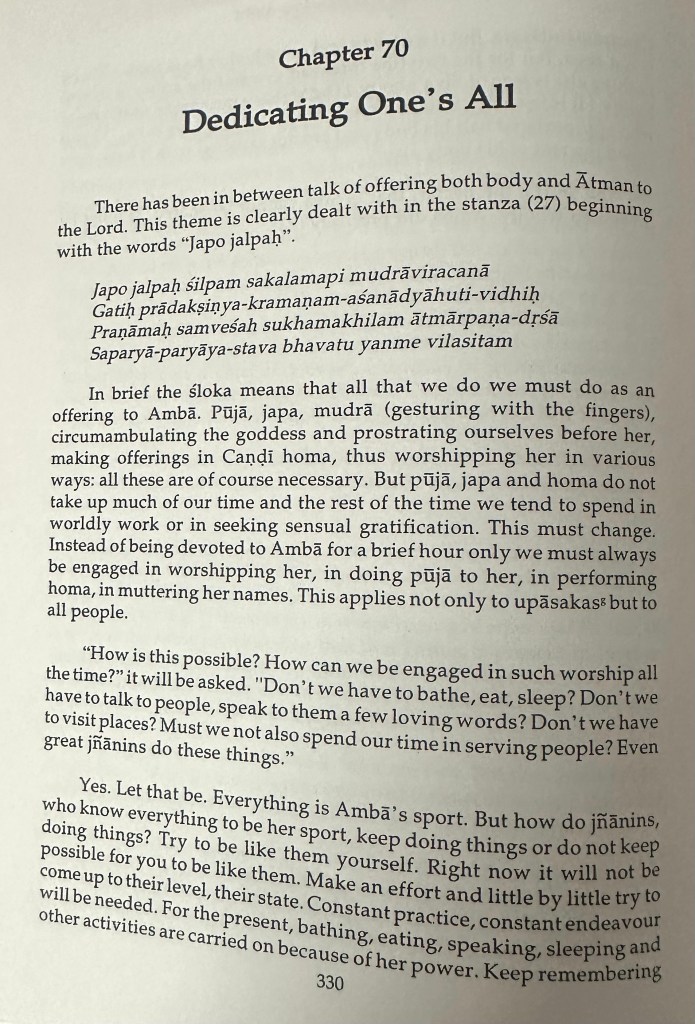
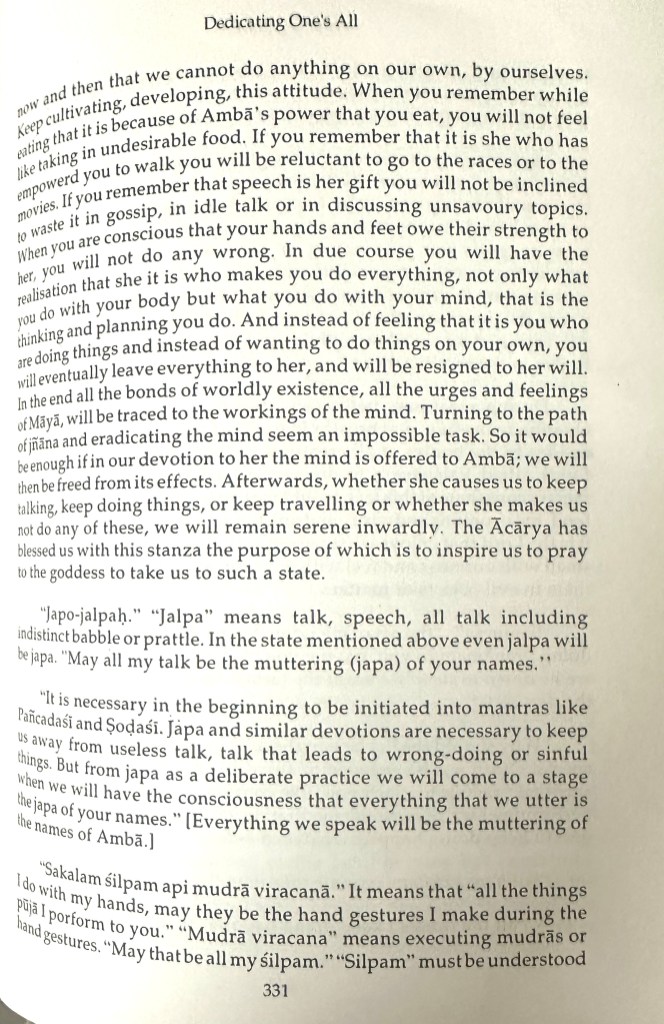
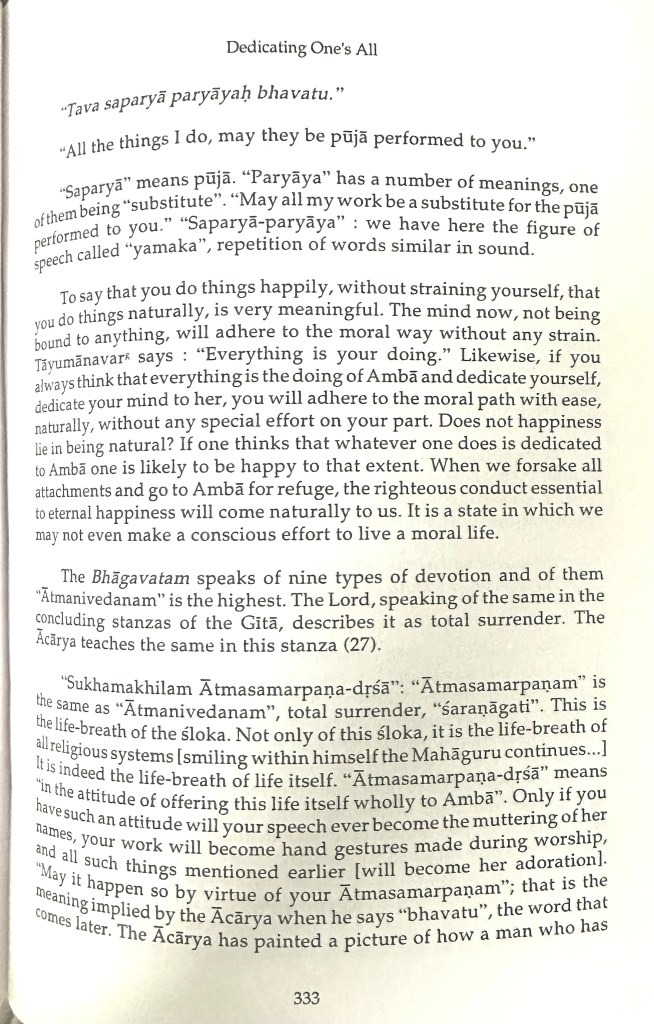
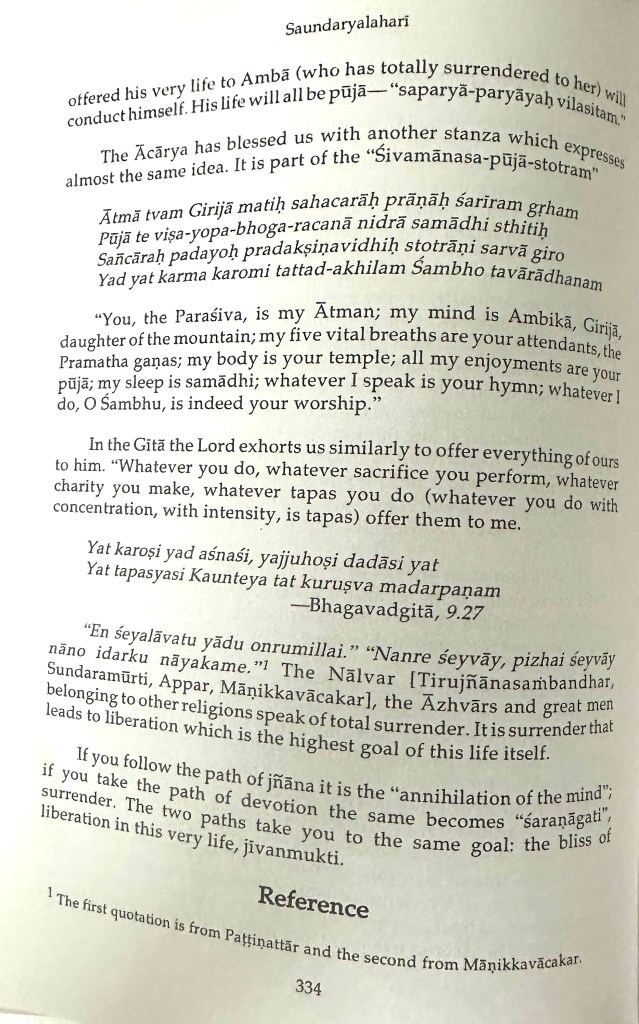
Although most of the shlokas are expounded by the Kanchi Acharya from the standpoint of the Advaita Siddhaantham , there is however one shloka in which his exposition veers around slowly to one of the fundamental tenets of Sri Vaishnava Sampradaayam — namely, the doctrine of Saranagathi , or Prapatthi … the concept of Surrender which is the crown jewel of Visishtaadvaita Siddhaantham of Sri Ramanujacharya. And that Shloka is No: 27 … ! It’s the very same stanza which is talked about in the video you have forwarded to me .
The Kanchi Acharya’s exposition on this Shloka 27 is elegant and profound . And it’s worthwhile to reproduce it below in facsimile… I hope you will also read and be able to appreciate the extraordinary beauty and philosophical depth of this Shloka … whether you approach it from the Advaitin or Visishtaadvaitin standpoint .

Best regards,
Sudarshan Madabushi