Tag Archives: advaita
Claude Must Not Make Advaita the Ventriloquist of All Vedānta
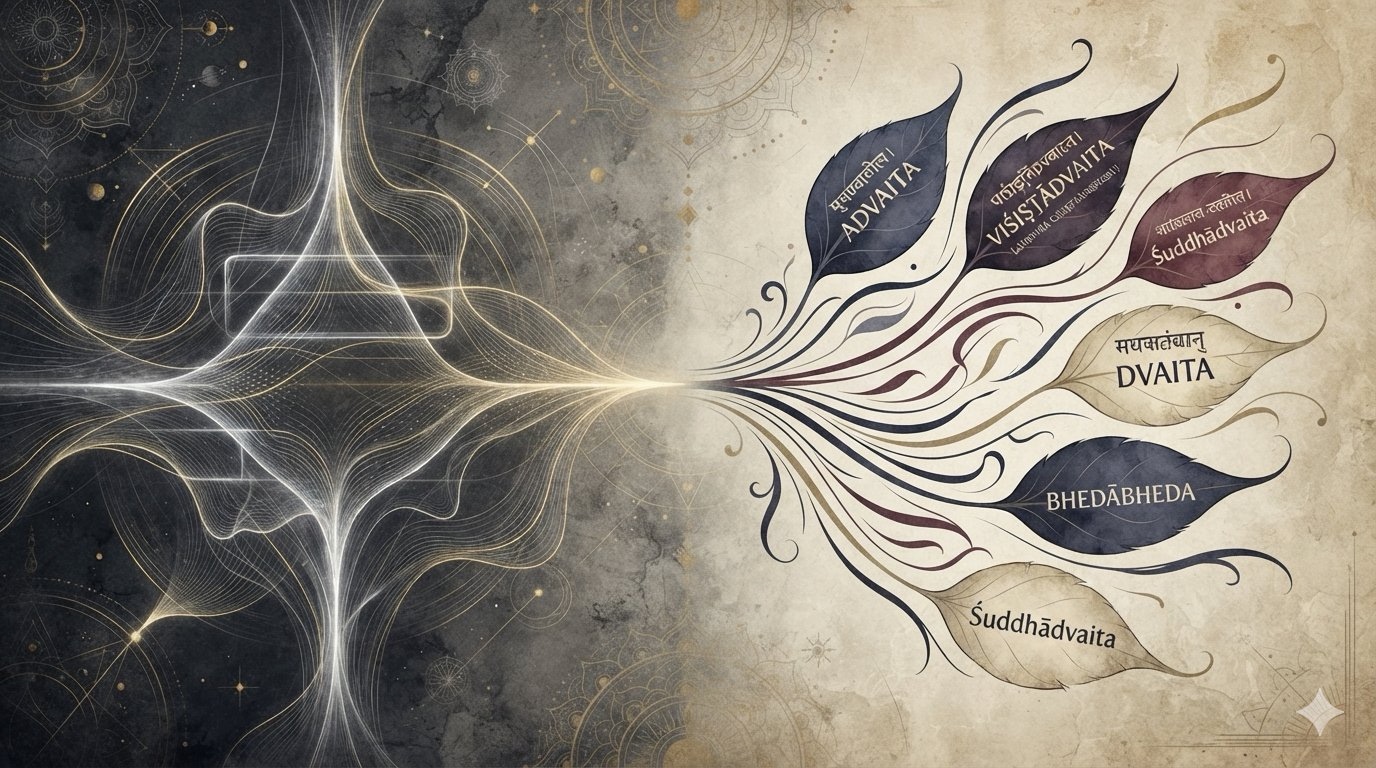
Anthropic’s engagement with Indian philosophical traditions is welcome—but it must not mistake one influential Vedāntic school for the entire intellectual inheritance of India.
Sound as the Beginning—and End—of Vedic Metaphysics: A Modern Recapitulation offered by Sundar Sarukkai

The Veda calls itself the breath of the Veda-Puruṣa, creation a continuum of sound—yet the Upaniṣad says, “from which words turn back with the mind.”
Is this a contradiction?
This essay moves from Sundar Sarukkai’s modern restatement to the Gītā, Taittirīya Śikṣā and Ānanda Valli, and the Viṣṇu Sūkta, showing how Advaita reads the end as silent awareness and Viśiṣṭādvaita as eternal praise in Vaikuṇṭha.
Three Words, One Surrender:

In Srīvaiṣṇava thought, three words keep appearing together: śaraṇāgati, prapatti and nyāsa. Are they synonyms? Not exactly.
Set on the Tirumala hills during a pilgrimage to the temple of Venkaṭeśvara, this dialogue between an American professor of Indian Religious Studies and an unknown Srīvaiṣṇava pilgrim explores their distinctive shades of meaning.
Śaraṇāgati names the heart’s turn to God—the bhakti inflection point of taking refuge.
Prapatti is that surrender developed as a complete upāya, with doctrine, inner disposition, and often ritual.
Nyāsa is the Vedic ideal of self‑entrustment, crystallised in the Mahānārāyaṇa Upaniṣad’s recurring prapadye mantras.
The dialogue also asks whether the wide presence of śaraṇāgati in Advaita, Dvaita, Śaiva Siddhānta, Gauḍīya Vaiṣṇavism, and modern devotional movements makes it a Srīvaiṣṇava borrowing or possession. Its answer is no: surrender is a shared Vaidika–Vedāntic spiritual grammar, though each tradition gives it a different metaphysical and soteriological accent.
Srīvaiṣṇavism’s distinctive contribution lies in its unusually exact and comprehensive articulation of the principle through prapatti and nyāsa.
Moving through the stories of Vibhīṣaṇa, Draupadī, Arjuna, Bharata and Kākāsura, the conversation shows how “coming to refuge”, “surrendering” and “placing oneself in God’s hands” can be read as different facets of one profound movement of the soul toward the Divine.
When Footnotes Pretend to Be History:
When Footnotes Pretend to Be History
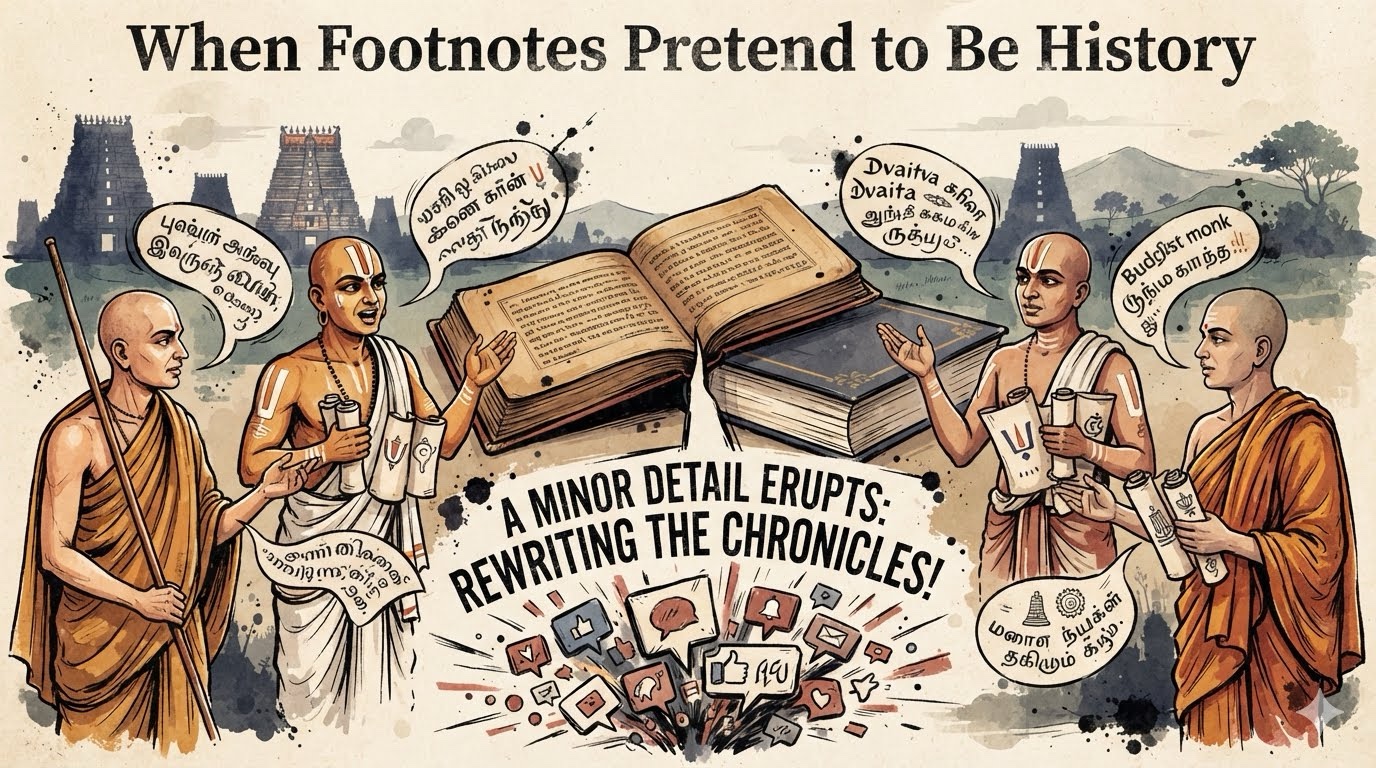
Hindu philosophical traditions did not develop in a climate of uninterrupted harmony. Advaitins, Viśiṣṭādvaitins, Dvaitins, Buddhists, Jains, Śaivas, and Mīmāṃsakas often engaged in fierce—and sometimes deeply personal—polemics.
But a sectarian insult is not the whole history of a philosopher. A hostile hagiography is not a neutral biography. And a provocative footnote should not be presented as though it were a major chapter in the history of Indian thought.
From Śaṅkara and Rāmānuja to Vedānta Deśika and Madhva, the record reveals both acrimonious conflict and extraordinary intellectual creativity.
The real danger today is not that these old polemics are discussed. It is that social media detaches them from context, magnifies them, and turns historical trivia into historical truth.
When does a footnote become a distortion of history?
ரமணரிடமிருந்து ராமானுஜருக்கு; ஐன்ஸ்டீனிடமிருந்து ஹாக்கிங்கிற்கு: காலமின்மையிலிருந்து கால நிறைவிற்கு
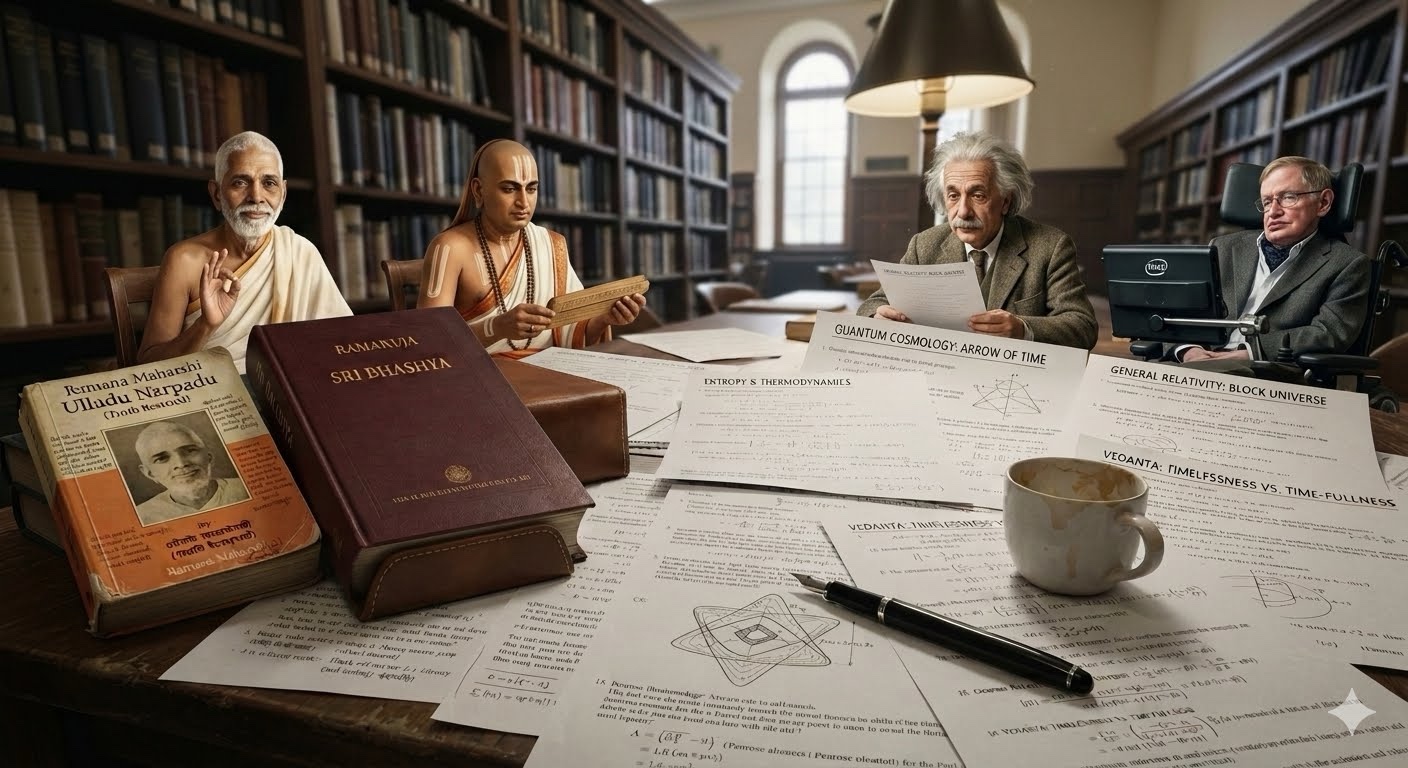
by M.K.Sudarshan July 8, 2026, Chennai, India Disclosure: below is an AI-aided translation in Tamil of my English blog-essay : https://mksudarshans.blog/2026/07/08/from-ramana-to-ramanuja-and-from-einstein-to-hawking-timelessness-to-time-fullness/ சூழல்: ஒரு பல்கலைக்கழக நூலகத்தின் அமைதியான மூலை. மேசையின் மீது ரமண மகரிஷியின் உள்ளது நாற்பது மற்றும் ராமானுஜரின் ஸ்ரீ பாஷ்யம் நூல்கள் இருக்கின்றன. அவை பொதுச் சார்பியல், குவாண்டம் அண்டவியல் மற்றும் வெப்ப இயக்கவியல் தொடர்பான தாள்களுக்கு இடையே புதைந்து கிடக்கின்றன. மாணவர்: ரமண மகரிஷியின்Continue reading “ரமணரிடமிருந்து ராமானுஜருக்கு; ஐன்ஸ்டீனிடமிருந்து ஹாக்கிங்கிற்கு: காலமின்மையிலிருந்து கால நிறைவிற்கு”
From Ramana to Ramanuja; and from Einstein to Hawking: Timelessness to Time-Fullness
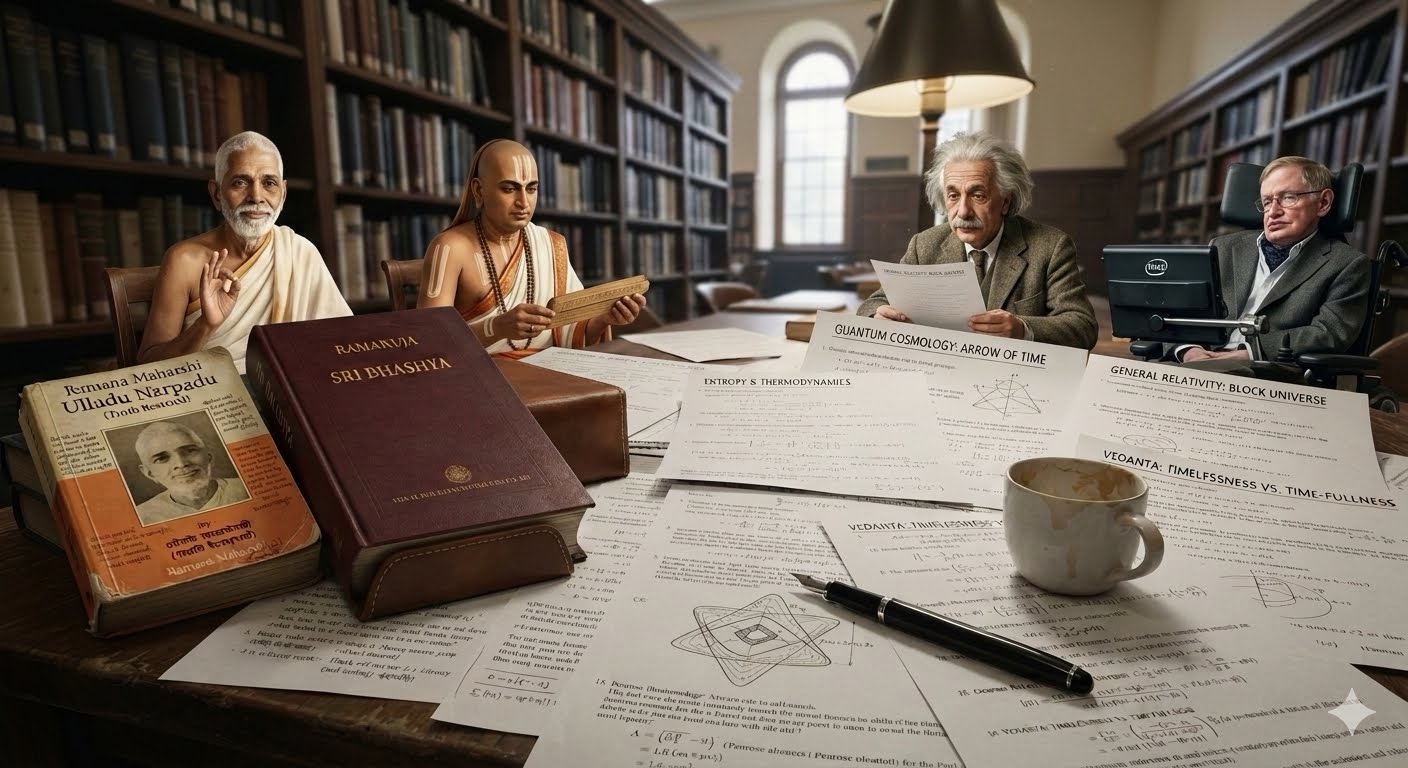
by M.K. Sudarshan July 8, 2026 : Chennai, India Setting: A quiet corner of a university library. On the table sit copies of Ramana Maharshi’s Ulladu Narpadu and Ramanuja’s Sri Bhashya, now buried under papers covering general relativity, quantum cosmology, and thermodynamics. Student: Look at this quote from Ramana Maharshi. It’s devastatingly simple: “There isContinue reading “From Ramana to Ramanuja; and from Einstein to Hawking: Timelessness to Time-Fullness”
““Eureka” at Srirangam: The Shared Dawn of Viśiṣṭādvaita””
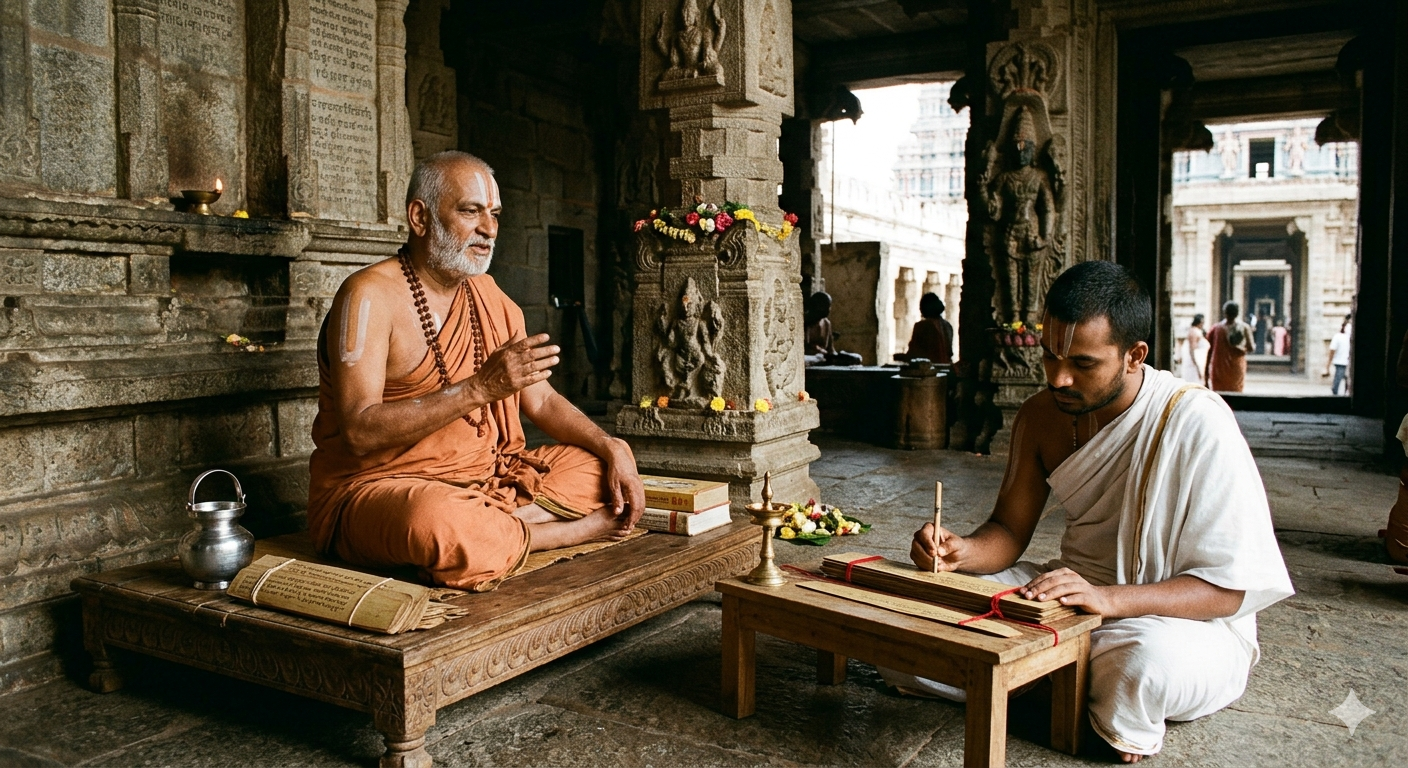
“When the teacher and his faithful disciple together beheld the soul and the world as truly real, and the living truth of Viśiṣṭādvaita dawned.” by M.K. Sudarshan ______________________________ I. The teacher and the disciple: setting and relationship In the great temple-town of Śrī Ranganātha, where the tidal hush of devotion meets the disciplined flame ofContinue reading “““Eureka” at Srirangam: The Shared Dawn of Viśiṣṭādvaita”””
“Better to reign in Hell than to serve in Heaven” versus the Sri Vaishnava Ideal of “Nitya Kainkarya Praapthi”

Understanding Sri Vaishnava Soteriology with the aid of Milton’s ‘Paradise Lost’. (A) A comparative glance at moksha and salvation in the three Vedānta schools, Christianity, and Islam Across traditions, liberation or salvation — moksha — is conceived as the final release from bondage, suffering, and separation from the divine. But the nature of that release differs remarkably in ontology,Continue reading ““Better to reign in Hell than to serve in Heaven” versus the Sri Vaishnava Ideal of “Nitya Kainkarya Praapthi””
Sri Thyagaraja, the undeclared Sri Vaishnava “prapannan”
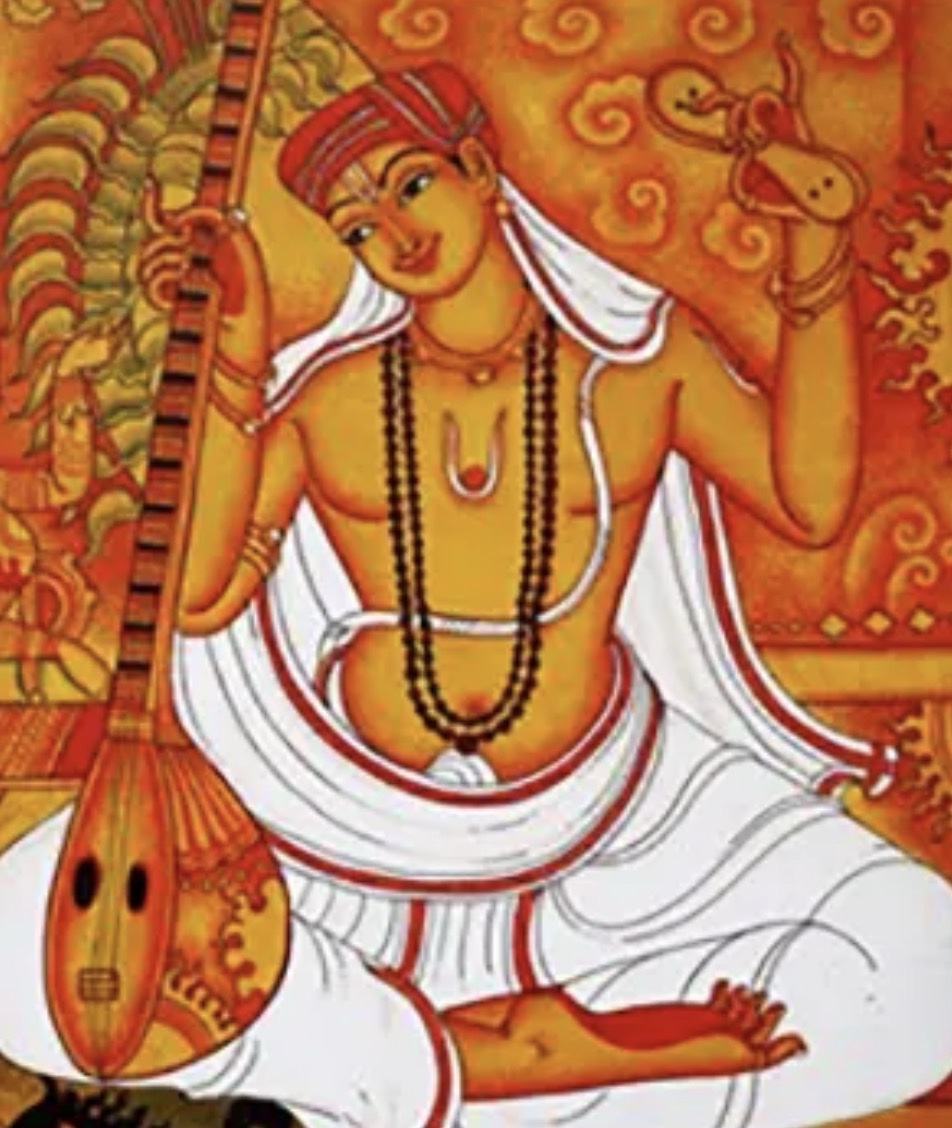
Like millions of Rasikas all over the world , I too consider myself an ardent Sri Thyagaraja bhakth who loves so many of the saint’s exquisite kritis and often, whenever swept away by the mood, I do sing a few of them in the privacy of my home purely for the delight of my ownContinue reading “Sri Thyagaraja, the undeclared Sri Vaishnava “prapannan””