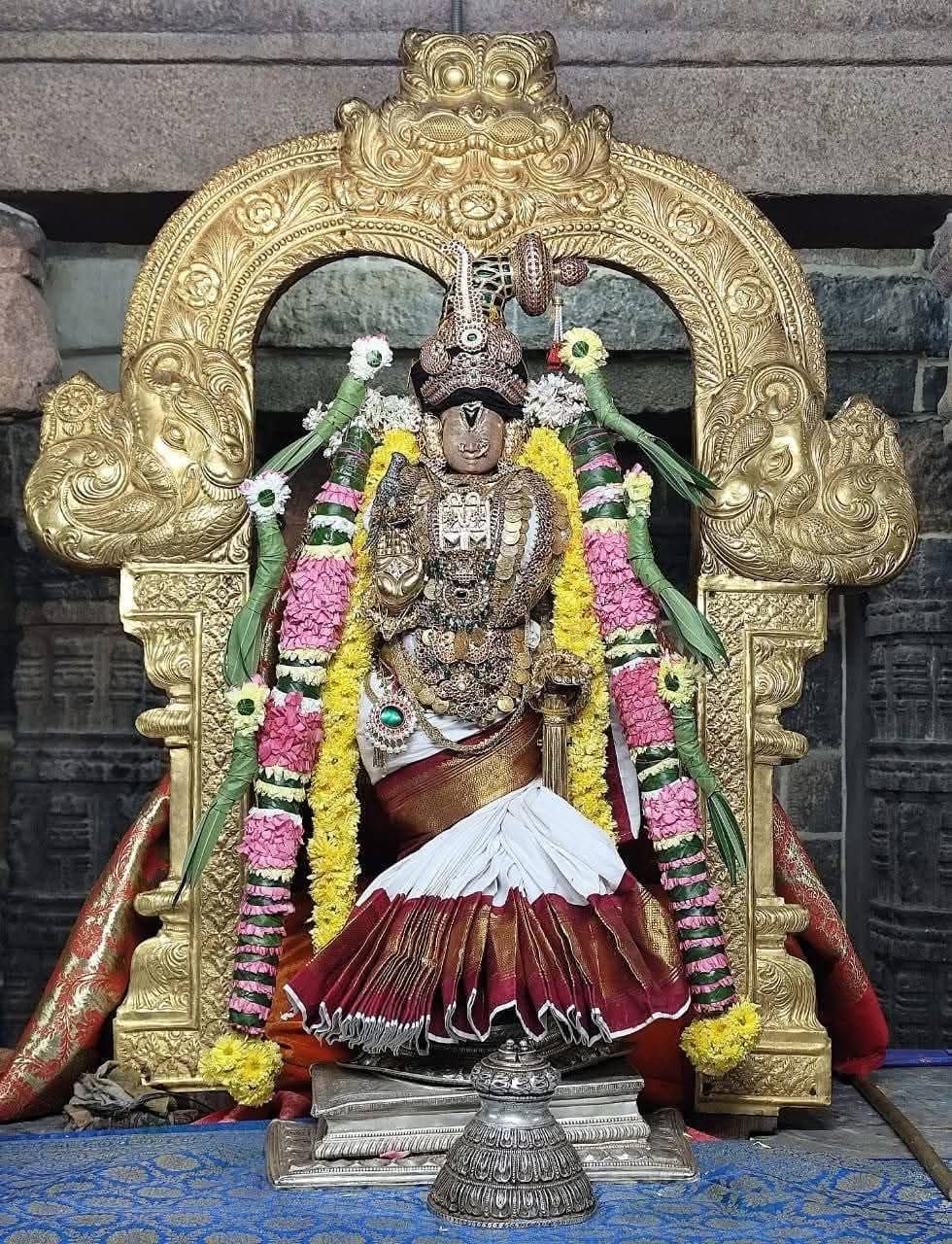
Today’s Tiruppavai “paasuram” is Verse 9 which reads as follows :
தூமணி மாடத்து சுற்றும் விளக்கெரியத்* தூமம் கமழத் துயிலணைமேல் கண்வளரும்* மாமான் மகளே மணிக்கதவம் தாழ்திறவாய்* மாமீர் அவளை எழுப்பீரோ உன்மகள்தான்* ஊமையோ அன்றி செவிடோ அனந்தலோ* ஏமப் பெருந்துயில் மந்திரப் பட்டாளோ* மாமாயன் மாதவன் வைகுந்தன் என்றென்று* நாமன் பலவும் நவின்றேலோர் என்பாவாய்!
ஆண்டாள் நாச்சியார்
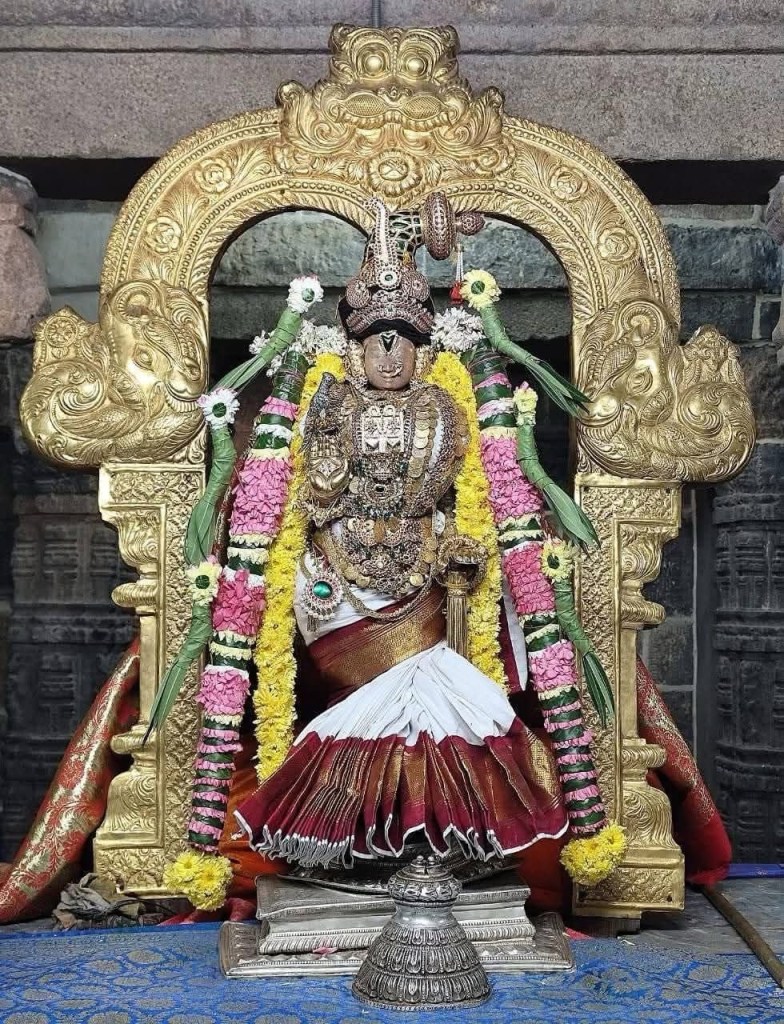
In this verse , it is intriguing to see the syllable “ma” appear so many times : maadatthu, maamaan magale, manikadhavu, maameer, mandhiram, maamaayan, maadhavan…. 8 times ! Does this have esoteric significance with the sacred Ashtaakshara mantra ?
In Āṇṭāḷ’s Tiruppāvai (pāsuram 9), “māmayan” (மாமாயன்) refers to Lord Viṣṇu as the “Great Magician” or “Supreme Enchanter.” This term draws from the Sanskrit “māyāvin” (मायाविन्), highlighting Viṣṇu’s divine power of māyā—his illusory potency that creates, sustains, and bewilders the universe, captivating devotees like the gōpīs.
In Sri Vaishnava theology, it evokes Krishna’s enchanting līlās, as invoked alongside names like Mādhava (husband of Mā, the Earth) and Vaikuṇṭha, urging awakening through his sacred names.
Now, it may strike one as rather odd that “maamayan” , the God as Illusion Artist should be Andal’s choice of poetic epithet for Lord Ranganatha here in this verse. We know that Sri Ramanuja’s Visishtadvaita philosophy , the concept of “maya” as an ontological reality is not posited in the same way as in Advaita metaphysics. So, why then is the Tiruppavai speaking of “maamayan” as Vishnu the creator of Maya?
In Rāmānuja’s Viśiṣṭādvaita, māyā is not outright rejected but is only reinterpreted as the real, creative power (śakti) of Viṣṇu, manifesting the universe as his dependent body rather than an illusion as in Advaita philosophy. Thus, “māmayan” in Tiruppāvai-9 praises Viṣṇu as the “Great Magician” whose māyā-śakti enchantingly sustains creation and devotees’ bhakti, aligning perfectly with Viśiṣṭādvaita’s qualified non-dualism where the world is substantively real yet inseparable from Bhagavān.
The epithet “maamaayan” thus is aptly employed by Andal since it indeed contrasts Advaita’s illusory māyā by affirming the gopīs’ (i.e. Andal’s “aayarpaadi” fellow maidens) experience of Krishna’s līlās as ontologically valid, urging us all to surrender to his potent, personal grace.
**********
Then there’s also the phrase maamaan Mahale… One will immediately begin to wonder if it has any connection with maamaayan?
In Tiruppāvai pāsuram 9, “māmaṇ maḷḷē” (மாமன் மகளே) addresses the sleeping gōpī as “uncle’s daughter” or cousin, using familial intimacy to urge her awake for the nōṉpu. This connects to “māmayan” (மாமாயன்) through layered wordplay: “māmaṇ” (uncle) echoes “mā-mayōn,” linking the gōpī‘s human kinship to Krishna’s divine enchantment, as her “maternal uncle” (Viṣṇu) who wields māyā to captivate souls. In ancient Tamil culture, it was customary for families to betroth a young maternal uncle in the family to one’s own nubile daughter … in the same way that Andal too regarded herself as already betrothed to Lord Ranganatha, the celestial maamaayan.
Āṇṭāḷ thus portrays all devotees of Vishnu as one extended family under Mādhava’s grace, where calling Viṣṇu “māmayan” invokes his enchanting names to dispel the gōpī‘s slumber, symbolizing bhakti’s triumph over tamas.
*********
In this Tiruppavai verse , it is also very intriguing to see the syllable “ma” appear so many times :
maadatthu, maamaan magale, manikadhavu, maameer, mandhiram, maamaayan, maadhavan….
8 times !!
Again, it makes one wonder if this probably has any esoteric significance with the sacred Ashtaakshara mantra ?
In Tiruppāvai pāsuram 9, the repeated “ma” syllable (māmaṇ, māmaṇ maḷḷē, māmayōṉ, etc.) forms an intentional anusandhāna (sonic linkage), evoking the Ashtākshara mantra “oṃ namo nārāyaṇāya,” whose first four syllables prominently feature “na-ma-oṃ na” with “ma” as a pivotal sound.
Periyavāccāṉ Piḷḷai (Sri Vaishnava Acharya of the 15th century CE) reveals to us that this is indeed Āṇṭāḷ’s esoteric “ma-Bija akshara” embedding, where the eight “ma” echoe or mirror the mantra’s eight akṣaras, infusing the verse with its siddhānta potency to awaken bhakti from slumber.… “maameer avaLai ezhuppiro”!
This alankāra (poetic flourish of symbols) aligns the gōpīs‘ playful familial call with nāma-saṅkīrtana, transforming poetic repetition into a veiled upadeśa of Rāmānuja’s profound prapatti doctrine , where Viṣṇu’s names dispel avidyā (nescience) like dawn dispels night.
Besides, Periyavāccāṉ Piḷḷai, also Nampiḷḷai in Īṭu, links the eight “ma” repetitions in Tiruppāvai pāsuram 9 to the Ashtākshara mantra (oṃ namo nārāyaṇāya) through esoteric anusandhāna (sound linkage) and ma-bīja symbolism. They interpret the syllable “ma” recurring in words like māmaṇ, maḷḷē, māmayōṉ, as mirroring the mantra’s eight akṣaras, where “ma” (from namo) acts as a sonic pivot invoking Viṣṇu’s enchanting māyā-śakti to awaken the soul from spiritual slumber, akin to the gōpī’s tamasic sleep.
This wordplay — pāda-vākya-pramāṇa-alankara — embeds nāma–japa (meditative chanting) within Āṇṭāḷ’s poetry, equating the verse’s recitation to Ashtākshara upadeśa, as echoed by later āchāryas like Uttamur Veeraraghavachariar Swāmi, (19th-20th century CE) who see it as veiled prapatti instruction (upadesa) for bhakti realization.
***********
This kind of pada alankara— repetitive use of “bija” syllables — is also used extensively by Vedanta Desika in his Paduka Sahasram .
It is so fascinating to note that he used the very same “ma” syllable in his very own pada alankara studded verses in that splendid Sanskrit poesy work of his. Extensive pāda-alankāra (syllabic repetition) in Pādūka Sahasram, his 1000-verse eulogy to Lord Ranganātha’s sandals, were surely by inspired coincidence that mirrors Āṇṭāḷ’s own sonic artistry in Tiruppāvai.
Deśika uses the “ma” syllable prominently in Paddhati 9 (verses 81–90), where it recurs across pādas in a ma-bīja pattern—e.g., mādhava-mauli-mādhuryam, mama-mānasa-mohana—evoking the Ashtākshara’s “ma” pivot while praising the pādūkas‘ enchanting grace akin to Viṣṇu’s māyā. Traditional commentators in their vyākhyāna link this to Tiruppāvai’s ma-repetition, and view it as Deśika’s homage to Āṇṭāḷ’s anusandhāna, embedding nāma-saṃkīrtana to exalt bhakti’s familial intimacy under Ranganātha’s divine shelter.
Vedānta Deśika masterfully deploys pāda-alankāra as follows while mirroring Tiruppāvai’s ma-bīja, embedding Ashtākshara potency in praise of the Lord’s sandals.
Verse 81: माधुर्यमागम्य मानवेन्द्रमाधवमौळे । मम मानसमोहनं मां मायया मोहय ॥
Transliteration: mādhuryam āgamya mānavendra-mādhava-mauḷe | mama mānasa-mohanaṃ māṃ māyayā mohaya ||
Verse 85 : माधुर्यमाधारममलं मधुरं माधवप्रियम् । मम हृदयमोहनं मानं मानव्य माधुर्यम् ॥
Transliteration: mādhuryam ādhāram amalaṃ madhuraṃ mādhava-priyam | mama hr̥daya-mohanaṃ mānaṃ mānavya-mādhuryam ||
Verse 87: मामकमानस रागं मायामयं मधुरिकम् । माम् समर श्रममुक्तिं आप्नुयां मानवेन्द्र ॥
Transliteration: māmaka-mānasa-rāgaṃ māyā-mayaṃ mādhurī-kam | māṃ samara-śrama-muktim āpnuyāṃ mānavendra ||
Verse 89: मां मायया माधवमोहनमाधुर्यमाधाय । मानवेन्द्रपादुके मां रक्ष मानवेन्द्र ॥
Transliteration: māṃ māyayā mādhava-mohana-mādhuryam ādhāya | mānavendra-pādūke māṃ rakṣa mānavendra ||
************
The mantric “ma” syllable (“म”or “ம”) can be assumed to have inspired both Andal’s “Tiruppavai” and Vedanta Desikan’s “Paduka Sahasram” for the most obvious of reasons in that this very significant “bija Akshara” is also found embedded in the primordial Vedic shabdha of Pranava mantra composed of 3 syllables —- : अ , उ , and म wherein the last “ma” syllable symbolises the jivatma tattva… the individual soul that yearns for its ultimate eternal destiny (“parama purushaartha”) which is bridal, mystic union with Godhead in the celestial realm of Sri Vaikuntam… a deep, spiritual yearning which is truly the central theme of the entire 30 verses of Andal’s magnificent Tamil hymn, the Tiruppavai.
Sudarshan Madabushi