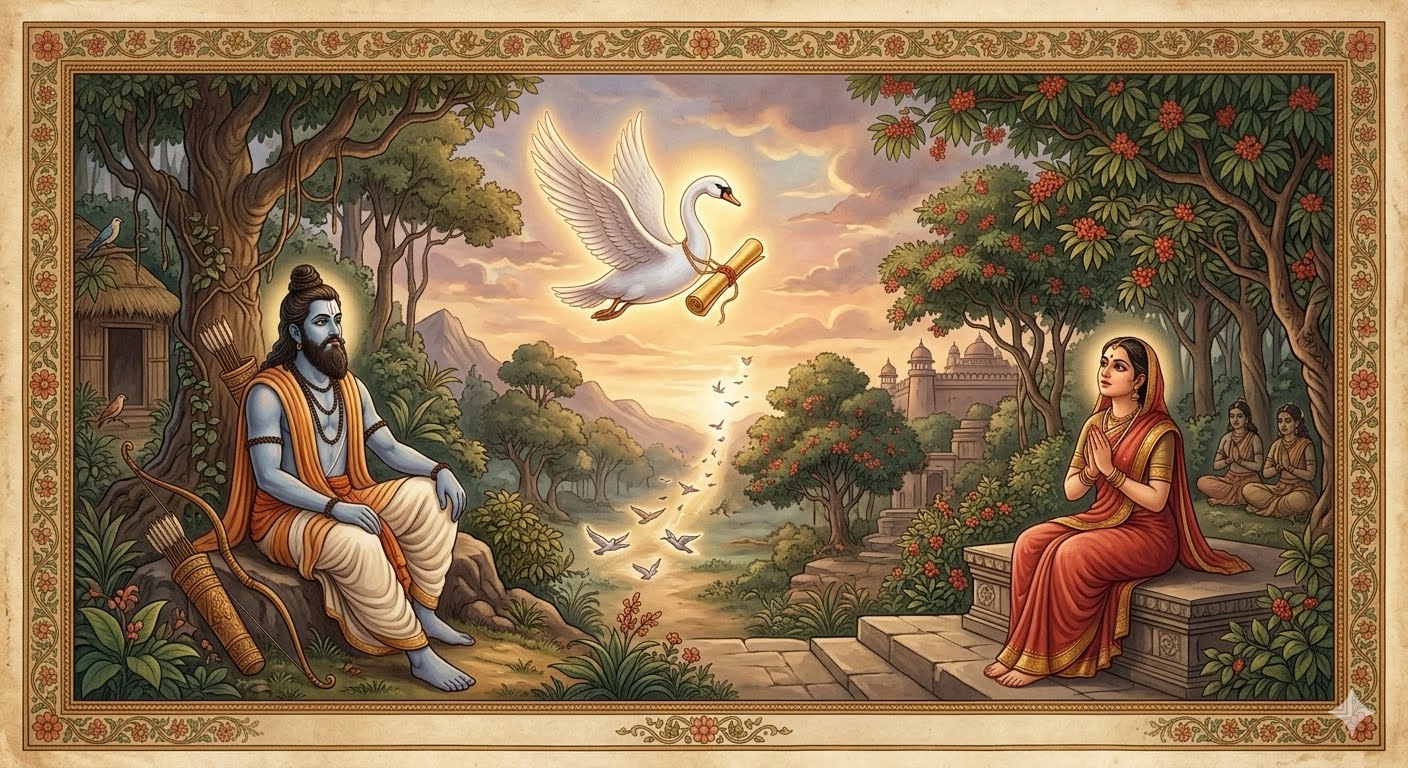

शच्या: क्लेशं क्वचनसमये तादृशं चिन्तयित्वा
स्मृत्वा देवीमचलतनयाम् विप्रयुक्ताम् शिवेन।
रक्षात्मानं कथमपि शुभे जीवितालम्बनं मे
पत्युश्छन्दात् व्यसनमपि हि श्लाघनीयं वधूनाम्।।
Here is an English translation of the brief Tamil talk on the above Sanskrit shloka in an audio message sent to me today by Thoopul U.Ve. Sriman Satagopa Thathachariar who is Professor in Sanskrit and Nyaya Sastra at the Sree Sankaracharya University of Sanskrit
Kalady, Kerala. He is also Member of the Board of Trustees of the Thoopul Sri Villakkoli Perumal Temple (Kanchi.
Swami Desikan, in the course of giving a message to Sita in the Hamsa Sandesha, seems also to be giving us an instruction.
The verse says that after thinking of the sufferings of noble women and remembering that even the daughter of the mountain was separated from Shiva, one should protect one’s body and continue living, since life itself is what sustains the body.
In other words, Sita is being comforted: separation from one’s husband is not something that happened only to her. Indrani once experienced separation from Indra, and Parvati too was separated from Shiva.
Thinking of these examples, one should understand that suffering is not unique to oneself.
The shloka conveys the truth that Rama wishes Sita to understand : that the pain caused by separation from a husband is bearable when one remembers that others have undergone similar sorrow. The instruction “protect the self/body” here is taken to mean: preserve the body and life, do not think of abandoning life, and endure the suffering.
A general lesson is drawn from this: in the world, when we suffer, it helps to look at the suffering of others, because then our own pain seems less unbearable.
Suffering is not permanent; it passes with time. The same idea is then extended to devotion and Bhakthi in a general sense and to temple service (Kovil kainkaryam).
Sometimes, when serving in the temple or performing kainkaryam, many difficulties and obstacles arise. One may feel then that such tribulations happen only because one is employed in the temple, and that others who do not come there, do not ever have to face such problems. But then, upon deeper reflection, one soon realises that human life always involves some form of suffering or other. If not through temple service, suffering will surely come in some other form—through health, family, or other worldly causes and adversity. So it is better to accept the difficulties that come in the service of the Lord as something to be borne and even regarded as meaningful.
In the “shloka”, Rama in fact tells Sita that her suffering has indeed been caused by him … and so she must bear it with patience and fortitude and with the never dying hope that soon he will himself deliver her from dire straits.
The overall message is a very moving one indeed considering that it was sent by a pining Sri. Rama to his beloved Sri. Sita who had been held hostage in distant Lanka: He counsels her to endure hardships, continue service, and to not lose heart.
In short, the talk teaches us that suffering is universal, temporary, and should be borne patiently, especially when it comes — often times, inevitably too — in the course of devotion and service to God.
Sudarshan Madabushi
(Tamil translation)
ஸ்வாமி தேசிகன் “ஹம்சசந்தேசத்தில்” சீதாதேவிக்குச் செய்த உபதேசம், நமக்கும்கூட ஒரு செய்தியாக அமைந்திருக்கிறது என்று தோன்றுகிறது. அந்த ஸ்லோகத்தில், துன்பத்தை அனுபவித்த பிற பெண்களின் நிலையை நினைத்து, தாஷரதன் திருநங்கையாகிய சீதாதேவி தன் உயிரைத் தாங்கிக்கொள்ள வேண்டும், எப்படியாவது தன் உடலைக் காப்பாற்றிக்கொள்ள வேண்டும் என்று கூறப்படுகிறது. அதாவது, “நீயே தனியாகப் பிரிந்துவிட்டாய்; இப்படிப் பட்ட துயரம் உனக்கே மட்டும் ஏற்பட்டது அல்ல” என்பதே இதன் கருத்து.
இந்திராணி ஒருகாலத்தில் இந்திரனைப் பிரிந்து தனியாக இருந்தாள்; பார்வதி தேவியும் சிவபெருமானைப் பிரிந்த துயரை அனுபவித்தாள். இவ்வாறு பிறரின் துயரங்களையும் நினைத்தால், “எனக்கு மட்டும் தான் இத்தனை கஷ்டமா?” என்ற எண்ணம் குறையும். ஆகவே, உடலைக் காக்க வேண்டும்; உயிரை விட்டுவிடும் எண்ணம் கொள்ளக் கூடாது என்று இங்கு அறிவுறுத்தப்படுகிறது.
உலகில் துன்பம் என்பது எல்லாருக்கும் உண்டு. ஒருவர் தன் துன்பத்தைப் பார்க்கும் போது மிகப் பெரியதாகத் தோன்றும்; ஆனால் பிறருடைய துயரத்தை நினைத்தால், தன் துன்பமும் சற்று தாங்கக்கூடியதாகத் தோன்றும். மேலும், எந்தத் துன்பமும் நிரந்தரம் அல்ல; காலப்போக்கில் அது மாறிவிடும்.
இதையே பகவத் சேவைக்கும் பொருத்தலாம். கோயிலில் கைங்கரியம் செய்யும் போது பல இடையூறுகள், சிரமங்கள், மனக்கலக்கம் ஆகியவை வரும். “கோயிலுக்கு வருவதால்தான் இப்படிச் சிரமங்கள் வருகின்றன; வராதவர்களுக்கு இவை இல்லையே” என்று சில சமயம் தோன்றலாம். ஆனால் மனித வாழ்க்கை முழுவதும் ஏதோ ஒரு துன்பத்தைக் கொண்டே செல்ல வேண்டியது தான். கோயில் சேவையால் வரும் சிரமம் இல்லையெனில், உடல் உபாதை, குடும்பச் சிக்கல், வேறு உலகியல் பிரச்சினைகள் என ஏதோ ஒரு வகையில் துன்பம் வந்து சேரும்.
ஆகவே, பகவான் திருவுளத்தினால் வரும் சிரமங்களையும் ஓரளவு பெருமையாகவும், தாங்க வேண்டியதாகவும் கருதலாம். அது நம் கர்மவசத்தால் வரும் துன்பமாக இருந்தாலும் சரி, பகவத் கைங்கரியத்தில் வரும் தடங்கலாக இருந்தாலும் சரி, அவற்றைத் தாங்கிக்கொண்டு சேவையைத் தொடர்ந்து செய்ய வேண்டும். இதுவே ஸ்வாமி தேசிகன் நமக்கு அளிக்கும் உபதேசமாகத் தோன்றுகிறது.
**************************
(concluded)