Medhā Sūktam: The Goddess Who Makes Speech Sacred

In the auspicious fortnight of Navarathri and on the sacred day of observance of the Mahasamadhi Day of Her Holiness Sathguru Gnananda Saraswathi, the VishnuMohan Foundation held a special religious event at the Ashram of Sri Sriharidas Swami-ji by conducting Vedic Homam and Devi Puja. The event was attended by a large gathering of Swami-Ji’s devotees who participated in the Guru puja, Devi puja and Homam.

At the kind invitation of Sri Sriharidas Swami-ji and with His Blessings, I delivered a talk on the occasion on “MEDHA SUKTAM”. The full transcript of the talk is reproduced here.
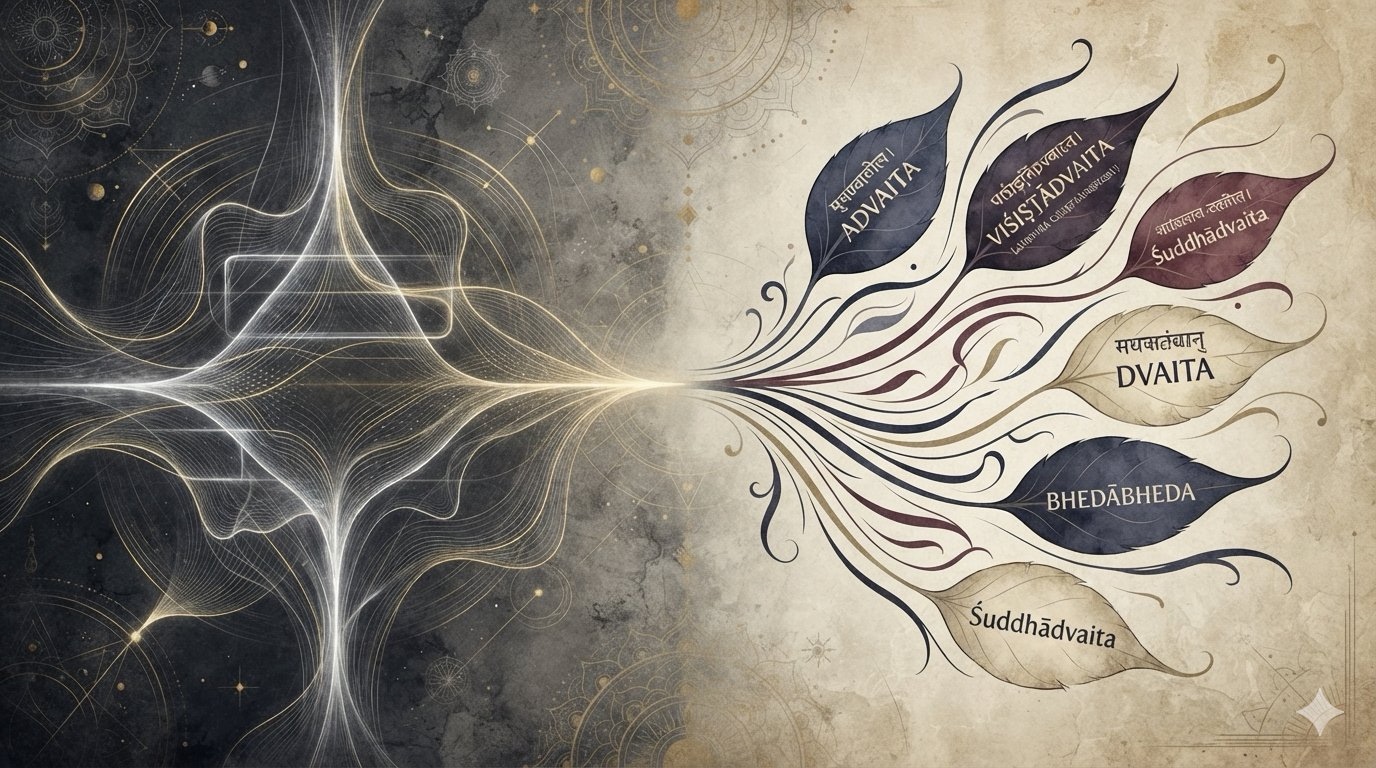

Claude Must Not Make Advaita the Ventriloquist of All Vedānta

Anthropic’s engagement with Indian philosophical traditions is welcome—but it must not mistake one influential Vedāntic school for the entire intellectual inheritance of India.

“Tabula Occulta”: பகவத்கீதை, விசிஷ்டாத்வைதம், மற்றும் இறைவெளிப்பாட்டின் நிகழ்வியலில் உன்னிப்பின் பரிமாற்றம்

எழுதியவர்: Sudarshan Madabushi September 30, 2026: Chennai, India I. கீதையின் மர்மமான வாக்குறுதி பகவத்கீதையின் நான்காம் அத்தியாயத்தில், பகவான் கிருஷ்ணர் ஒரு அறிவிப்பை வெளியிடுகிறார்—அது நூற்றாண்டுகளான வியாக்கியானங்களிலும் பக்தியிலும் எதிரொலித்து வருகிறது: ये यथा मां प्रपद्यन्ते तांस् तथैव भजाम्य् अहम् |मम वर्त्मानुवर्तन्ते मनुष्याः पार्थ सर्वशः ॥ ११ ॥யே யதா மாம் ப்ரபத்யந்தே தாம்ஸ் ததைவ பஜாம்ய் அஹம் |மம வர்த்மானுவர்தந்தே மனுஷ்யா: பார்த்த ஸர்வச: || “ஓContinue reading ““Tabula Occulta”: பகவத்கீதை, விசிஷ்டாத்வைதம், மற்றும் இறைவெளிப்பாட்டின் நிகழ்வியலில் உன்னிப்பின் பரிமாற்றம்”

“Tabula Occulta”: Intentional Reciprocity in the Bhagavad-gītā, Viśiṣṭādvaita, and the Phenomenology of Divine Revelation

🕉️ New Essay: “Intentional Reciprocity”

What if Bhagavad-gītā 4.11 is not just a theological promise—but a metaphysical principle about the structure of consciousness itself?

Kṛṣṇa says: “In whatever way one worships Me, I reciprocate accordingly.”

Read through the lens of Edmond Husserl’s phenomenology and Rāmānuja’s Viśiṣṭādvaita, this verse reveals a profound truth:

✅ Consciousness is never ex nihilo—it’s eternally self-luminous.

✅ But its intentional reach (dharma-bhūta-jñāna) expands or contracts according to karma.

✅ Divine manifestation is proportional to the karmically shaped intentionality of the devotee.

✅ The real risk isn’t ex nihilo; it’s ex occulto—Bhagavān present but unrevealed.

For readers who love comparative philosophy, Vedānta, phenomenology, and the metaphysics of bhakti.

Sound as the Beginning—and End—of Vedic Metaphysics: A Modern Recapitulation offered by Sundar Sarukkai

The Veda calls itself the breath of the Veda-Puruṣa, creation a continuum of sound—yet the Upaniṣad says, “from which words turn back with the mind.”

Is this a contradiction?

This essay moves from Sundar Sarukkai’s modern restatement to the Gītā, Taittirīya Śikṣā and Ānanda Valli, and the Viṣṇu Sūkta, showing how Advaita reads the end as silent awareness and Viśiṣṭādvaita as eternal praise in Vaikuṇṭha.

How Visishtadvaita Distinguishes Between Ego-Bashing and Ego-Massaging : விசிஷ்டாத்வைதம் காட்டும் வழி: அகந்தையை ஒடுக்குவதா? வளர்ப்பதா?

Is your ego an enemy to crush or a spark to celebrate? Visishtadvaita Vedanta reveals a beautiful middle path: aligning individual choice (Sankalpam) with divine service. Read the full bilingual (English/Tamil) breakdown featuring the story of Vibhishana.

Discover why Sri Ramanuja’s Visishtadvaita Vedanta rejects both crushing and inflating the Ego. Learn how Svarupa-Jnana aligns the self toward Moksha.

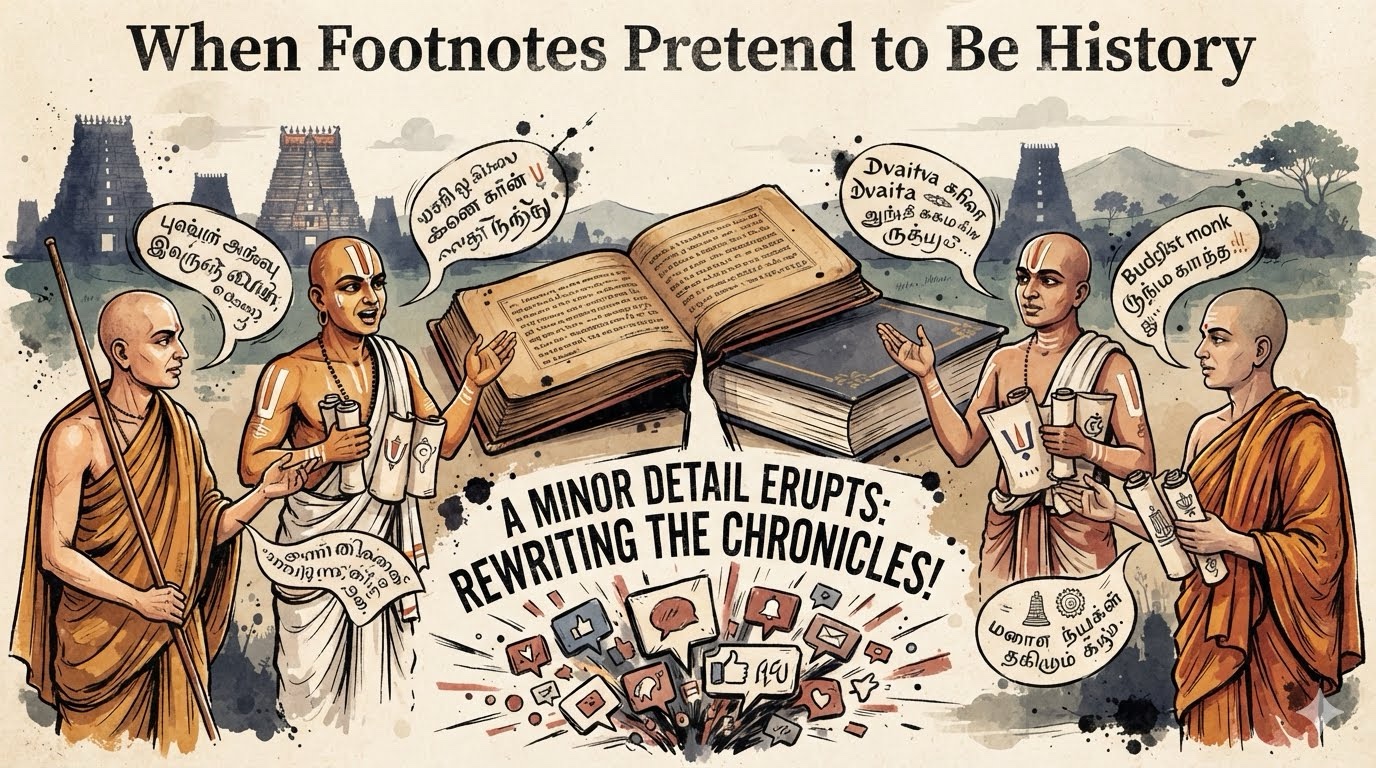
When Footnotes Pretend to Be History:

When Footnotes Pretend to Be History
Hindu philosophical traditions did not develop in a climate of uninterrupted harmony. Advaitins, Viśiṣṭādvaitins, Dvaitins, Buddhists, Jains, Śaivas, and Mīmāṃsakas often engaged in fierce—and sometimes deeply personal—polemics.
But a sectarian insult is not the whole history of a philosopher. A hostile hagiography is not a neutral biography. And a provocative footnote should not be presented as though it were a major chapter in the history of Indian thought.
From Śaṅkara and Rāmānuja to Vedānta Deśika and Madhva, the record reveals both acrimonious conflict and extraordinary intellectual creativity.
The real danger today is not that these old polemics are discussed. It is that social media detaches them from context, magnifies them, and turns historical trivia into historical truth.
When does a footnote become a distortion of history?

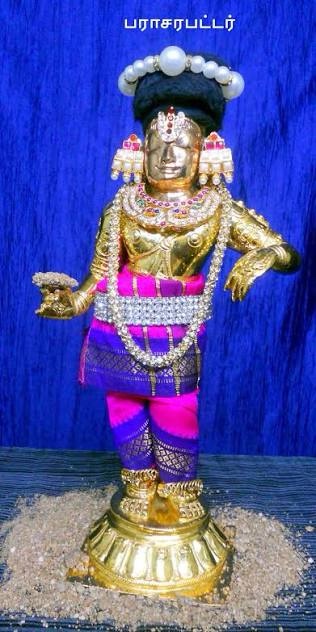
பாராசர பட்டரால் அருளிச் செய்யப்பட்ட தனியன்: அர்த்த பஞ்சகம்: இராமானுஜ தரிசனத்தின் முழுமையான கட்டமைப்பு

Parashara Bhattar’s “Tanian”: Artha Panchakam: The Integral Architecture of “Ramanuja Darsana” by M. K. Sudarshan August 27, 2026 (the sacred day of Avani Avittam – Upakarma- Vedaarambha Day): Chennai, India அர்த்த பஞ்சகத்தை வெறும் “ஐந்து அடிப்படை உண்மைகள்” என்று மட்டும் கூறுவது அதன் உள்ளார்ந்த தத்துவ விரிவைச் சுருக்கிவிடுகிறது. ஸ்ரீவைஷ்ணவ சம்பிரதாயத்தில் இது ஆன்மா, பரமன், அடைய வேண்டிய பேறு, அதற்குரிய உபாயம், அதற்குContinue reading “பாராசர பட்டரால் அருளிச் செய்யப்பட்ட தனியன்: அர்த்த பஞ்சகம்: இராமானுஜ தரிசனத்தின் முழுமையான கட்டமைப்பு”

திருப்பதி செல்லும் இரயிலில் வேத ஒலியும் ஆன்மிக ஏற்புத்திறனும் பற்றிய ஒரு உரையாடல்

by M.K.Sudarshan August 18, 2026: Chennai, India பாத்திரங்கள்• டேவிட் — நடுத்தர வயதுடைய அமெரிக்கத் தத்துவ மாணவர்; ஓராண்டு ஆய்வு-விடுப்பில் இந்தியத் திருத்தலங்கள், குருமார்கள், இந்தியத் தத்துவப் பேராசிரியர்கள் ஆகியோரைச் சந்தித்து வருபவர். • அறியப்படாத ஸ்ரீவைஷ்ணவர் — எழுபது வயதுடைய வேதாந்த உண்மை நாடுபவர்; முறையாக வேதாத்யயனத்தில் தீட்சை பெற்றவர், ஆயினும் தம்மை முழுமையான வேதவித்தகர் என்று கூறிக்கொள்ளாதவர். இடம்: சென்னை–திருப்பதி நீண்டதூர இரயில் பயணம். மாலைச் சாயல். ஒரு சாதாரண உறங்கும்Continue reading “திருப்பதி செல்லும் இரயிலில் வேத ஒலியும் ஆன்மிக ஏற்புத்திறனும் பற்றிய ஒரு உரையாடல்”

On the Train to Tirupati: A Dialogue on Vedic Sound (“veda shabdha”) and Spiritual Receptivity

by M.K.Sudarshan August 18, 2026: Chennai, India Characters: • DAVID — A middle-aged American student of Philosophy, on a year-long sabbatical in India visiting temples, gurus, and university professors. • THE UNKNOWN SRI VAISHNAVA — A 70-year-old seeker of Vedantic truth, initiated into formal Vedaadhyaya but not a complete scholar, traveling incognito. Setting: A longContinue reading “On the Train to Tirupati: A Dialogue on Vedic Sound (“veda shabdha”) and Spiritual Receptivity”