by M.K. Sudarshan
October 24, 2026: Chennai, India
Nine Dialogues on Trust, Betrayal, and Mahāviśvāsam
Ānanda: Madhava, I have been turning over a small phrase printed on American currency: In God We Trust. It struck me as strange. A society that places these words on its money seems, at the same time, to have lost faith in nearly every institution around it.
Madhava: Perhaps it is not so strange, Ānanda. When people cease to trust one another, they may reach for a trust that lies beyond human failure.
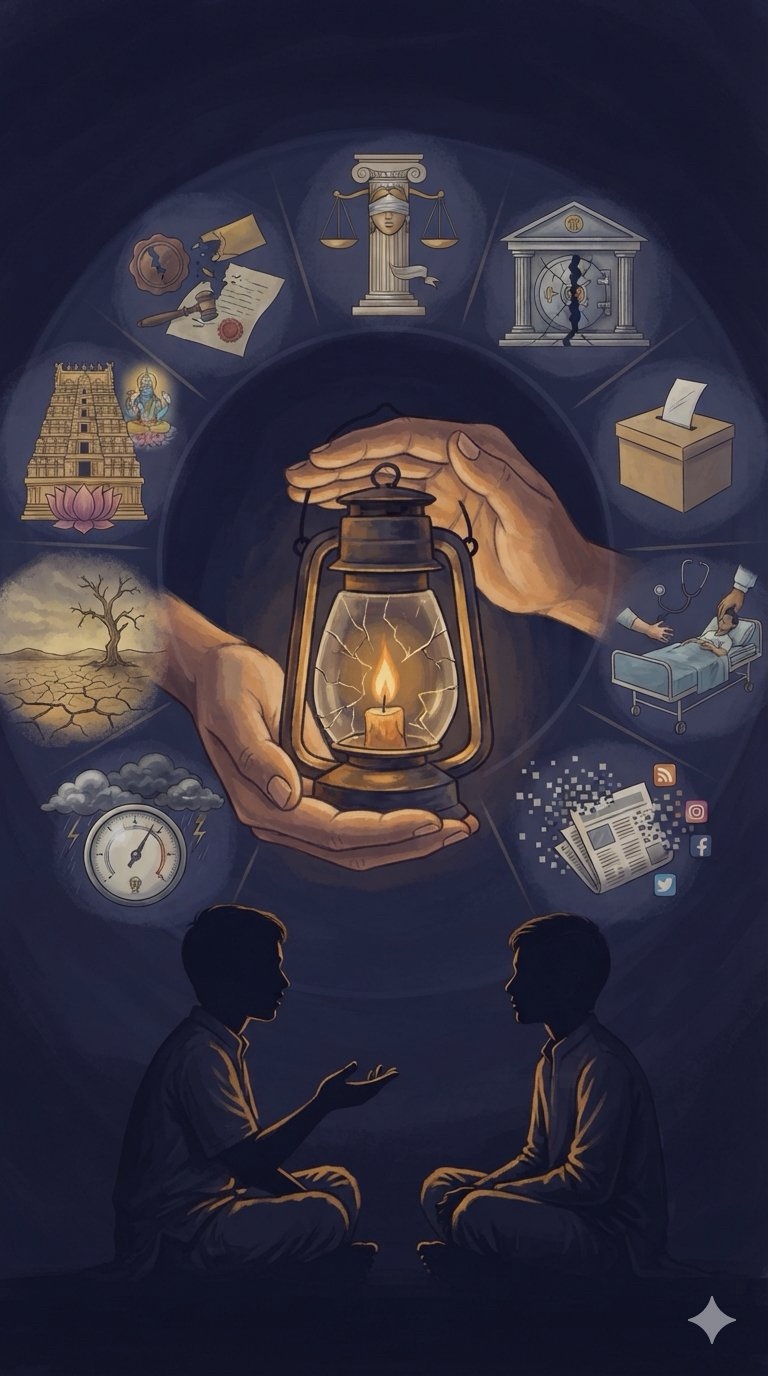
Ānanda: But look at the world. Governments are doubted. Banks are doubted. Judges, doctors, journalists, priests, scientists, technology companies—all are viewed with suspicion. We speak of a “trust deficit” as though it were a shortage of grain or fuel.
Madhava: And perhaps it is a shortage of a subtler kind. A deficit of trust does not appear in ledgers, but it affects every transaction of life.
Ānanda: How so?
Madhava: Consider the farmer who sows before he reaps. He trusts the rain, the soil, the seasons, and the buyer who will one day purchase his crop. Consider the patient who places his body in a physician’s hands. Consider the citizen who pays tax, obeys law, and accepts the verdict of a court even when it goes against him. Each act rests upon a quiet wager: I make myself vulnerable because I believe the other will not betray that vulnerability.
Ānanda: You make trust sound like the foundation beneath everything.
Madhava: It is. Remove it, and every institution becomes a fortress. People still obey, but they obey out of fear, habit, or compulsion—not because they believe.
Ānanda: Then where did this deficit begin? I wonder sometimes whether it goes back to the biblical story of Adam and Eve.
Madhava: Tell me what you have in mind.
Ānanda: In the Book of Genesis, God places Adam and Eve in a garden and permits them to eat from every tree except one: the tree of the knowledge of good and evil. A serpent approaches Eve and asks, in effect, “Did God really say you must not eat from that tree?” Eve replies that they may not touch it, lest they die. The serpent then says, “You will not surely die,” and suggests that eating will make them like God, knowing good and evil.
Madhava: And then?
Ānanda: They eat the fruit. Their eyes are opened. They realise they are naked, feel shame, and hide from God. When God asks what they have done, Adam blames Eve, and Eve blames the serpent.
Madhava: So the story is not merely about the eating of a fruit.
Ānanda: No. It is about the questioning of a trust. God had given them a command; the serpent makes them doubt whether God’s word was truthful or benevolent. Once that doubt enters, disobedience follows.
Madhava: That is why the story has endured. It is not merely an ancient tale about two people in a garden. It is a mirror. In every age, human beings receive a trust, begin to suspect the giver, seek security on their own terms, and then hide from the consequences.
Ānanda: But can we really blame two figures in an ancient story for the distrust of our own time?
Madhava: No. We should not treat the story as a genetic curse passed mechanically through generations. It is better understood as a parable of the human condition. Each generation repeats the movement: we are given trust, we fear its demands, and we seek safety on our own terms.
Ānanda: Then the “original sin” is not simply disobedience.
Madhava: In that reading, it is the death of trust in the heart. The Catechism of the Catholic Church puts it strikingly: Adam and Eve, tempted by the serpent, allowed their trust in their Creator to die, and then misused their freedom.
Ānanda: But our own tradition also speaks of illusion, desire, and ego. Is there a parallel?
Madhava: There is. The serpent’s question—“Did God really say?”—is not very different from the inner voice that asks, “Can the Lord really be relied upon? Can dharma really protect? Is surrender not weakness?” The external form changes; the inner movement is familiar.
Ānanda: Yet I hesitate to call all distrust evil. Should we trust a tyrant, a fraudster, or a careless physician?
Madhava: Certainly not. Distrust has its place. It is the immune system of society. We need discernment, scrutiny, and the courage to question power. The disease begins when distrust becomes universal and indiscriminate—when we decide that no one and nothing can be trusted.
Ānanda: Then what is the difference between healthy suspicion and the trust deficit?
Madhava: Healthy suspicion asks, “Show me the evidence.” The trust deficit says, “I will believe no one, because everyone has failed me.” The first protects society. The second dissolves it.
Ānanda: You speak as though trust were a discipline.
Madhava: It is. Like health, it cannot be commanded into existence. It must be practised: by keeping small promises, admitting errors, honouring commitments, and refusing to exploit another’s vulnerability.
Ānanda: And if others fail us?
Madhava: Then trust must become discerning. We need not trust blindly; but neither should we allow one betrayal to make us incapable of recognising fidelity when it appears.
Ānanda: So the story of Eden does not end in despair?
Madhava: No. It begins the human vocation: to live among broken promises and still become capable of keeping one.
Ānanda: Perhaps that is why the serpent’s question still echoes across the ages: “Did God really say…?”
Madhava: Yes. And every generation must answer it—not merely with words, but with a life that makes trust credible again.
(Continued in Part 2)
