In Mylapore, Madras, on July 19th, 1944, Rt. Hon’ble Srinivasa Sastri delivered the fifteenth in his series of thirty sterling “Lectures on the Ramayana”
Profoundly insightful observations were made in the course of the passionate speech upon a very wide range of matters, political and philosophical viz.: Patriotism, Treason, Nationalist pride, Democracy, Political Dissent, Political civility, Temperance of speech and, lastly but not the least, on the supreme importance of mutual respect that one human must alway culivate for the other, no matter what idea, ideology, feeling or prejudice separates them.
***********
Tomorrow, the 15th of August 2025 happens to be the 79th anniversary of India’s Independence, an occasion when great orations will be heard from the Red Fort in New Delhi and from the ramparts of Raj Bhavans and State Legislatures in State Capital cities right across India.
Great many lofty-sounding patriotic sentiments will be aired in public, all as a matter of annual routine and ritual but very little genuine national soul-searching will likely to be seen anywhere . The pomp and pagaentry of Indian Independence Day will all be over in a few hours of chorepgraphed festivities and after the grand speeches have been made, the People will all go back to their homes and to their private burdens and challenges in daily life. The politics of business will go on as usual and so will the business of Indian politics too.
Many of Sastri’s observations made in Lecture#15 of the “Lectures on the Ramayana” way back in July 19, 1944 were made in the context of his expatiation on the episode and characterisation of Vibheeshana. Nonetheless, they so strongly resonate with us even today on the eve of August 15th, 2025 because what was said about India then holds equally good for India today. That the remarks Sastri made then are so relevant even today will become clear to us if we realise that the fundamental nature of Indian political and social life as he had described them to be in his time has not changed much since then. If this assertion of mine sounds rather too jarring, too provocative or cyncial, and is also prone to be, as I shudder to think, grossly misunderstood, perhaps the actual extracts of Sastri’s oration from Lecture#15 that I am going to reproduce below will bear me out.
***********
ON DEMOCRACY
Democracy is certainly the best form of human governance that has yet been devised, but it wants to be served by brave men, by true men, by first-class men. It stands liable ever to the greatest abuse at the hands of untried men who think that abuse is the staple of politics and hatred is the hall-mark of patriotism. This sermon has been drawn out of me partly because I think it is an evil of the day, which in India is of foreign origin and may well be eradicated, and partly because it accounts for the degradation to which the great name of Vibhishana has been unfortunately subjected. If our politics were not what they are, if the word ‘ patriotism’ has not been applied in the modern way, Vibhishana’s name would well have been pure and unsullied in our estimation.
*************
ON PATRIOTISM and NATIONALIST PRIDE
What is meant by Patriotism? I ought to be very careful in the words I use, for people who bring political bias in the listening of a leader interpret it in their own way, according to their predilections, not necessarily according to the words of the speaker or his real sense. Pray, let me be understood to say what I wish to say, not what you think I am saying.
I was going to say that patriotism is not necessarily a virtue of human character. It is an emotion. It is a high feeling, an inclination of the heart of a noble order, of an exalted character. But whether it works well or ill, whether the consequences of patriotism are good or bad, whether the country is served well by the patriot in the end, depends upon how the emotion is directed.
Take the love of the child in the mother. The mother would spill her blood, give her life for the child. What is there in the world which she would not do for the welfare of the child? But we all know how often mothers untrained to their task, not knowing the nature of children do not bring them up properly and even spoil their general health completely. However sincere, however loving, however devoted, however sacrificing she may be, the ignorant mother cannot bring up a child in proper ways. She herself, out of the excess of her love, becomes a source of the child’s weakness, perhaps of its wickedness.
We see to what bad uses love may be put, and we know too how in times of famine and acute trouble, women, burdened with two or three children and not knowing how to find the day’s bread for them, and thinking that they should put an end to their own lives, think that the necessary preliminary for that is that they should kill their own children. See where it leads. I am trying to point out that this noblest of all feelings, the love of her child, can lead a woman to the commission of deeds the very mention of which fills us with horror.
On the other hand, take a wise father or a wise mother who has read books on how the young should be protected and guarded from evil practices, who can teach them to love the noble and the sincere, and avoid what is likely to degrade. Think how strong a power for good in the life of our nation becomes the possession of a mother or father of that character.
So now you will see how I am justified in saying that even our strongest passions, our noblest emotions, are only to be welcomed to the extent that they are used for uplifting purposes by those in whose hearts they play a prominent part. Patriotism thus may be good, or it may be bad in its effects, however honourable a man’s intentions may be. No man is born with all these good qualities.
If we want to examine their origin in human affairs, we shall find perhaps that they had a very simple physical origin, and from that physical origin, by gradual perfection of their associations, by gradual exaltation of the uses to which they are put, these moral ideas have become purer and purer, until now we think that the chief end and aim of education is to inculcate them in the young.
Allow me a few minutes to show how patriotism arose in human history. Patriotism is not today what it meant at first. At first patriotism was largely confined to tribes and communities. From being strictly limited to families and to little villages, it gradually extended and came to mean a kindly feeling, a love af our kinsmen, a love of our people.
In our history we have the Kosalas, the Vaidehas and communities of that kind. No one had a country or land or district of his own. He belonged to a certain tribe or community, whose welfare was to him a prime concern. Originally this community migrated in the land. People moved rapidly from one part of the land to another, and gradually this feeling was transferred to the land itself, until now, by long usage, the word ‘patriotism’ is applied much more commonly to a feeling concerning the country where we were born rather than to a feeling concerning the people to whom we belong. Now, that is the change that has come over the word ‘ patriotism’… From being communal or tribal, it gradually transferred itself to the country where these communities or divisions settled down permanently.
*************
ON TREASON and TRAITORS
It is in this section of Lecture#15 that we find suggestive hints that Sastri, in the course of offering a stout defense of the character of Vibhishana in the Ramayana, might have been subconsciously also offering — as much to himself as to his audience — a veiled rationalisation and justification for the role he himself had played in the Indian freedom struggle.
In the passage quoted below, he conducts a sort of psycho-analysis of the character of Vibheeshana. But then, it was perhaps also a way to psychoanalyse himself by which he identified himself, in part, with Vibheeshana’s character. Whether Sastri found the experience cathartic or therapeutic or not, we will never, know for sure, of course.
Sastri, through the same process, had perhaps found a way of rationalising to himself why such sharp differences and divergences had arisen between himself and the INC under Gandhi and Nehru’s leadership. His explanations for Vibheeshana’s deep moral misgivings about Lankan politics in Ravana’s time, in fact, may have served Sastra well in reflecting upon how he himself had to cope with and come to terms with many conflicts he had faced in his own political career in India.
Vibheeshana had dissented with Ravana bitterly. And Sastri too had found himself dissenting from his elder brother Gandhi, not to mention his acolytes, Patel, Rajaji, Nehru et al, with regard to the Ends and Means to be adopted in the fight for Indian Independence. While Gandhi did teach that the means are as important as the ends, Sastri’s objection was that even noble ends could not quite justify methods that risked destabilizing society or weakening ethical respect for government and law. He was particularly troubled by Gandhi elevating mass suffering and imprisonment to a political virtue. He feared that it sentimentalized public policy and undermined rational discourse.
Sastri is noted to have regarded Gandhi, in philosophical-political terms, as something of a “philosophical anarch”. To Sastri it seemed that Gandhi believed Order could come out of Chaos… and Sastri believed the exact opposite: From chaos could come only more Chaos.
To Sastri, Gandhi’s Civil Disobedience was not any kind of high-minded political philosophy. It was at best a clever-by-half, innovative political tactic. Thus, from the chaos of Civil Obedience mass-movements in pre-independence India, Sastri feared, what would ultimately emerge could only be a motley, rambunctious, unstable or chaotic Democracy. Sastri viewed the masses as not yet ready, in terms of political discipline and education, to safely wield the power of governance through rule of law when Independence was attained. He saw only the great danger of emotional crowds replacing deliberative debate.
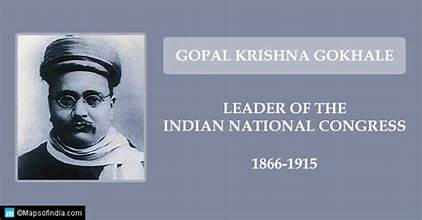
Sastri clung to espousing the way of Gopala Krishna Gokhale, his political guru viz. “gradualism” and “constitutionalism“. It favored gradual, evolutionary progress—step-by-step reforms—over mass agitation and popular upheaval. Gokhale had always said that deep-rooted social or political change had to be built patiently within existing frameworks, not imposed through extra-legal pressure or mass mobilization against the state. But Gandhi and Nehru had by then already jettisoned Gokhale’s idealism and instead embraced the philosophy of Sathyagraha, which Sastri was convinced, contained within itself the dangerous, viral seed of anarchic politics. It might, in the short-term, serve well the purposes of “non-violent Civil Disobedience and Non-Cooperation” politics but for the future of Indian nationhood in years ahead it meant only one thing: a political culture of chaos, indiscipline and social strife.
Through a masterly portrayal of Vibheeshana as a tragic, anti-heroic victim of vindictive, clandestine politics, Sastry juxtaposed himself in this Lecture along with the same Ramayana character, holding its portrayal up as one of unjust vilification by North India that had misread and misunderstood Vibheeshana altogether. In saying so, Sastri was probably subtly insinuating that he being a scholar-politician of no mean stature from South India, had been misunderstood and vilified by his more dominant, assertive colleagues from the North.
It is therefore a matter of literary conjecture that Srinivasa Sastri really saw Vibheeshana as an allegorical metaphor for himself.
Sisters and brothers,
In the opening days of 1907—thirty-seven years ago-there occurred an event in the political world of India, which will serve as a suitable introduction to my talk today. The famous Dadabhai Naoroji Congress had concluded, and the feeling of Congressmen generally was that the threatened split had for the time been averted and that our efforts should all be directed to its prevention next year. That, however, as you know, was not to be.
After the 1906 Congress concluded, Mr. Gopal Krishna Gokhale, who had taken a prominent part in the proceedings, thought that the good work should be completed by a series of public talks in various parts of India, showing young people how wild talk about the severance of the British connection and about a thorough-going boycott of everything British might end in disaster. He toured through Upper India, and his first lectures had a very great effect, producing anguish in the hearts of those whose efforts to weaken the Congress had caused all the trouble.
At that time Bengal was served by a famous daily newspaper called ‘Bande Mataram‘. Its editor was Aurobindo Ghosh. The first lectures had appeared in the press and they were reported in full. We were all astonished one morning to read the editorial headed “Exit Vibhishana“. The idea was that Gokhale, by declaring himself on the side of the British power and against the surging national movement, had played the part, the odious part, that Vibhishana played when deserting his brother and going over to join Sri Rama on the other side of the water.
I was naturally hurt very much by the reference to my master Gokhale, but I was still more hurt by the use of the name Vibhishana to signify a traitor, I had been brought up to believe that Vibhishana was a Bhakta of the first order, that he was a noble character who might be held up to pious people as an example of devotion to Dharma and to those who practised it with sincerity.
Was Vibhishana to be held up to public execration as a man who had abandoned a noble cause and exposed his kinsmen and his land to the perils of a foreign invasion? That anyhow was not the light in which I was trained to understand that character. And on enquiry I was much pained to learn that the name Vibhishana was used, generally speaking, in Upper India to mean a traitor, a betrayer of his national cause. That opened up a great difference between North India and South India in the understanding of this great epic, the Ramayana. But I am glad my enquiries since then have proved that there is not that very great difference that I thought at that time was prevalent.
There are many in South India who, for some reason, inflamed by the political feeling of the day, regard Vibhishana as a character to be held up to contempt and to odium; and there are in other parts of India many who hold the contrary opinion. Nevertheless, I think, if we were to take a census today, we should find more people inimical to the reputation of Vibhishana in Upper India than here.
________________
(As an aside:) ON VISHISHTADVAITA SOTERIOLOGY
In the course of this passionate speech, and right in the middle of this particular section of Lecture#15 that was a passionate defense of the character of Vibheeshana, Sastri also exhibitied — by way of an aside — his intimate knowledge of Vishistadavaita soteriology!
As a Sri Vaishnava myself, when I first read the little passage below, I was wonderstruck by Srinivasa Sastry’s catholicity and with what superb appositeness he had brought it to bear too as an allusion while weighing in with his redoubtable argument:
It appears to me a misfortune that a character in our greatest epic whom the Poet himself has held in the highest esteem and whom for centuries upon centuries India has regarded as an ideal devotee, a man who exemplified by whatever he did, according to the Visishtadvaitins, in faithful reproduction, the various attributes and stages, one after another, of the progress of a “prapanna”, that a character of that high order should by any means be regarded by the politically inflamed people of the time as a character to be avoided, to be mentioned only with disapprobation.
_______________
Lecture#15 then proceeds further in the same vein with Sastri juxtaposing himself, very subtly, very suggestively in veiled if not cryptic manner, right into the character-mould of Vibheeshana:
It seems to me to be a melancholy fact, and I cannot reconcile myself to it. I wish today, talking to an audience in sympathy with Valmiki and his general ideas, in sympathy with our great traditions, that Vibhishana should be possibly saved from his detractors, and presented to you in what I consider to be a correct light. I hold that Vibhishana was a good man according to the standards of his time, and is a good man according to the standards of our time too. Let me make my meaning clear by devoting a part of the time this evening to an illustration of the chief elements of Vibhishana’s nature.
In the above excerpt, in the line — viz.; “I wish today, talking to an audience in sympathy with Valmiki and his general ideas, in sympathy with our great traditions, that Vibhishana should be possibly saved from his detractors, and presented to you in what I consider to be a correct light” — if Vibheeshana were to be subsituted with Srinivasa Sastri, a reader like me perhaps would tend to believe that Sastri was simply referring to himself.
___________________
Sastri next proceeded to define who is a Traitor. He posed a classic rhetorical question to his audience. He held up to them a painting, as it were, that was a vivid contextual representation of the moral predicament, the horns of dire dilemma on which Vibheeshana in the Yuddha Kandam found himself impaled. His situation seemed to mirrored the moral quandary that Sastri himself had grappled with on the Indian political stage:
The first question that occurs to me is, who is a traitor? In common parlance today, a traitor would be one who betrays his country or his nation to the enemy who has invaded the country and makes war upon it. By extension, ot course, it would apply to any politician or public worker who sets himself deliberately for private profit, or who, for the sake of title or for some such purely worldly considerations, sets himself against the efforts made by patriots for the liberation of their country.
It is not very difficult fathom who Sastri really had in mind when he stressed that the word “traitor” could “by extension, of course, … would apply to any politician or public worker who sets himself deliberately for private profit, or who, for the sake of title or for some such purely worldly considerations, sets himself against the efforts made by patriots for the liberation of their country”. A new political-class and breed of people by then had already emerged in India, had flocked to the Indian National Congress Party and had begun dominating it. The Congress Party’s future ethos was in the making and Sastri was probably alluding to it.
*************
ON POLITICAL DISSENT, POLITICAL CIVILITY
The rousing, conscience-stirring words quoted below spoken by Srinivasa Sastri on this subject are, in fact, far truer today in 2025 than they might have been in 1944 :
Unfortunately, I am not in sympathy with the deep hatred that political parties bear today to each other. Politics are just on the surface of human affairs. They do not go deep down into the heart of things or into the profundities of our real nature. They have small connection with our relations to the other world or to our being able to secure the grace of the Almighty.
Why should people who hold one political opinion execrate men on the other side to such an extent that whatever their private character may be, however great their usefulness to the public may be in other directions, however exemplary their conduct may be, why should people hold them up to be the enemies of the future of the nation?
All parties, it seems to me, have their place in politics. No one party has the monopoly of truth or of political wisdom. Each party requires the assistance of the others, if only we knew that political wisdom and political truth are to be found in the doctrines of every organised political party. We ought all to regard one another as allies in the task of serving the country. Perhaps the exigencies of the day may throw us even into some rivalry of actual work, and we may be found on opposite sides of the camp, each trying to negative the work of the other. But we need not traduce the character of the great men on the other side.
***********
ON TEMPERANCE OF SPEECH
Young men delight in throwing mud at older people. I have suffered a great deal myself. I have known other people who have a title to real greatness and to the gratitude of our country suffer undeservedly at the hands of young men. This is a very special feature of democratic politics. It was not the case at a time when politics had not become democratised. It is much more prevalent in America and England, where politicians have established themselves over a good many generations and where at the moment, if you will ask my honest opinion, the converse of democracy is far more in evidence than the good it has done or the good it is likely to do for some time.
More than property, more than the honour of your wives, more than the affairs of litigation which cast off fellow-feeling, more than all these, political differences seem to call forth from our people the vilest language to be applied to one another. It is a thing that I cannot understand, and it is a thing which I wish were eliminated from the education of our boys if possible, for ever and for ever.
***********
ON THE SUPREME IMPORTANCE OF MUTUAL RESPECT
No young man ought to be taught to think that a leader of high reputation, just because he happens to be on the other side, is a vile man to be abused and to be spoken of as one who has to die, or if he will not die, to be destroyed if the good of India has to be served. I think that that man would be the greatest benefactor of his day who could teach the young in our colleges and schools to think that private merit, the beauties of human character, the dignities of human conduct, are to be found in all political parties, and that it is wrong for a young man to narrow his sympathies and his heart.
That, however, is a desire which is not going to be fulfilled in my time.
It is inconceivable that Srinivasa Sastri may have possibly also foreseen then that the same forlorn desire he voiced on July 19, 1944 would continue remaining unfulfilled to this day, the 15th of August, 2025.
***********
(to be continued)
Sudarshan Madabushi