Srinivasa Sastri viewed Dharma as both personal ethical conduct and societal duty. He linked it closely to moral responsibility, justice, compassion, and wise governance. If there was only one overriding theme that overshadowed all others in his famous thirty “Lectures on the Ramayana“ 1944, it was this commandment and this alone:
“Rulers must abide by Dharma—a combination of righteousness, discipline, and self-restraint. And he saw “Rama, as the model king, (who) embodies the vision of dharma—binding his people together in justice and loyalty founded on ethical leadership and personal virtue.“
Since Sastri, above all else, held the principle of Dharma to be supreme, the question naturally arises in the minds of both admirers and detractors, then as it does now:
~ Was he a Hindu Orthodox Santanist or a Hindu Liberal Reformist? And if he was either one of the two, could he also be described or not with that peculiarly pejorative term often reserved for the so-called “Hindu Sanghi” viz. a “Performative Brahmin“?
~ Was he a devout orthodox Brahmin in religious outlook ? Did Sastri ever wear caste marks on his person as Brahmins did ? Did he perform Sandhyavandanam? Did he perform ancestral Vedic rites of pitru-shraadham? After all, Sastri did passionately hero-worship, did he not, his idol and ideal in life, Sri Rama of the Ramayana, who in fact, as Valmiki wrote, scupulously performed both the rites of Sandhyavandam and Pitru-Shraadham…?
**********
Sastri was born into an orthodox Brahmin family and was raised in an environment of strict ritual observance and traditional Hindu values. His father was a vedic scholar and a devout practitioner of ritual, and his early upbringing included deep exposure to the Sanskrit scriptures, epics, and the cultural life of a traditional Brahmin household.
Sastri maintained a strong personal discipline, placing high value on self-control, piety, and moral conduct, and repeatedly expressed reverence for the ideals of dharma (righteousness) and the spiritual teachings of the epics like the Ramayana and other Vedic scriptures. He was known to have maintained the typical Brahminical customs, which included performing daily rituals and observing caste marks (such as the pāṇḍu or tilaka) traditionally worn by Brahmins (although exact specific details of his wearing caste marks on the person are not explicitly documented in public sources or archives; however, his orthodox upbringing implies such observance). And there is enough historical evidence to show that Sastri did practice traditional Hindu rites including Sandhyāvaṇḍanam (the daily ritual-worship performed by orthodox Brahmins), as he adhered closely to Vedic and ritualistic norms in his devotional and family life. Sastri also participated in pūjā for the ārādhana (yearly remembrance rituals) connected with the passing away of sanyāsis in his family lineage, indicating observance of annual ancestral rites in the strict Brahmin tradition. He also performed pitṛ-śrāddham (ancestral rites) annually, as noted from accounts of his observance of yearly rituals connected to the worship and remembrance of ancestors (pūjā for ārādhana), which aligns with the orthodox Brahminical duties.
D.V.Gundappa (DVG), the famous Kannada litterateur, who was Sastri’s biographer, narrates a very telling incident which reveals Sastri’s reverence for the spiritual value of the Vedic ritual of Sandhyavandanam. Sastri expressed to DVG feelings of deep guilt and regret for having been lax in the performance of the Sandhyavandanam ritual due to his ill-health.
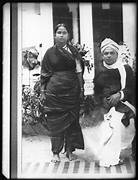
Sastri with his wife and family had once visited the Ashram of the Sri Sringeri Sankaracharya Muttam to pay obeisance to the pontiff, Jagadguru PujyaSri Chandrashekhara Bharati. The Sankaracharya was engaged in Puja ritual when Sastri arrived there and humbly requested for an audience with the pontiff.
QUOTE: The Jagadguru consented and went ahead with the pūjā. After the pūjā, the Jagadguru offered “phala-mantrākṣatā” to Sastri and his wife Lakshmamma and blessed the couple. Something interesting happened at this instance. The Jagadguru placed a golden “tāli” ( or “mangala sutra”) and a handwritten note in Sastri’s hand and said: “You should ask your wife to wear this taali”.
Sastri: “We are privileged, thanks to the blessings of the Guru. As per your command, I shall have her wear this in the Śāradā-devī temple tomorrow. She has lost all confidence looking at the illness I am suffering from and she is constantly worried about my longevity. I’ll act as per the Guru’s instruction for her mental well-being. I’ll also keep the śhloka safe and remember the same. I can’t speak much.”
They bowed down to the Guru and returned to their lodge. I then asked Sastri:
Me: “What did you intend to say? What was the śhloka that you mentioned?”
Sastri: ”I have not been performing the sandhyāvandana regularly. It has, in fact, been quite a long time since I stopped performing the sandhyāvandana. Such being the case, how can I give my word to the Jagadguru that I will regularly chant the śhloka? The śhloka looks really ordinary. Don’t we have hundreds of such śhlokas and “stotras” in our tradition? What is so special about it? However, the person adorning the Guru’s pedestal has given it to me with great affection. It is our duty to respect it.” UNQUOTE
************
So, given the above facts of Sastri’s personal faith, would it not be too easy for any present-day social commentator who, let us say, proudly claims that he or she is wedded to ‘secular-liberal values‘ and ‘social justice’, to label him as a “Performative Brahmin”?
Who is a “performative brahmin“? This term is used in contemporary social critique and cultural studies to describe how certain individuals or groups publicly display, enact, or emphasize the traits, customs, symbols, or mannerisms associated with being a Brahmin (the priestly, scholarly caste in Hindu tradition)—often for social prestige, authority, or belonging, rather than as a matter of authentic personal spiritual practice or lived tradition. This can involve the conscious use of dress (white clothes, forehead marks), speech patterns, Sanskritized language, and participation in traditional rituals—mainly as social performance.
In drama, literature, and public events, Brahmins may be depicted (or self-depict) as calm, wise, charitable, scholarly—projecting virtues commonly associated with Brahmin status and elitism… Sometimes, this is done to claim moral or intellectual authority, rather than resulting from deeper engagement with those ideals.
In political or intellectual contexts, “performative Brahminness” might mean publicly enacting Brahminical identity to signal legitimacy or belonging among elite circles—sometimes overshadowing more inclusive or pluralistic values. It can also involve gatekeeping or dominance in academic, cultural, or spiritual spaces. Dalit and Dravidianist anti-caste writers often use “performative Brahminness” to criticize token displays of Brahmin identity (in rituals, ceremonies, or discourse) that imply reinforcement of caste privilege, rather than genuine spiritual practice or egalitarian reform. It’s seen as part of the “Brahminical social order”—upholding status and hierarchy through outward performance.
So, we now know for sure that Sastri in his own time was viewed by many of his colleagues, political peers and even admirers as an Anglophile-cum-Sanskritist elitist of high-brow Tamil Brahmin stock. And therefore, it would be hardly surprising if Sastri were today to be branded a “performative brahmin“?
***********
Objectively speaking however, the term “performative brahmin” must surely ill suit Sastri as definitely as the term “Sanatanist“, in its present-day sense, would wholly mischaracterize him.
“Sanatanist” widely used in contemporary India often signifies a strong, public, and actively political identification with Sanatana Dharma. It is also in some cases a strong advocacy for ritual orthodoxy as a social or political project. Many a time it is also virulent opposition to reformist or secular currents.
Sastri’s personal record in history shows that he favoured none of the above courses of action. The record shows that his approach to Sanatana Dharma was very nuanced and sophisticated.
Sastri did not publicly champion orthodox Sanatanist causes or use religion as a political weapon. He was influenced by liberal and reformist traditions within Indian society (notably Gokhale and Ranade), and his public work was characterized by rational inquiry, moderation, and a focus on ethical universals, not ritual exclusivism. Sastri was part of a generation that sought to purify and reinterpret Hindu traditions, seeking to reject only its superstitions but wholly and categorically emphasizing their ethical core.
While personally devout and respectful of Hindu tradition, Sastri never was a militant orthodox Brahmin in the contemporary political sense. He was liberal in his public engagements, stood for social harmony, and did not involve himself with extremist movements opposed to social reform or secularization. Sastri’s own Hindu cultural identity blended seamlessly with liberal, secular political goals because he worked very closely with leaders like Gopal Krishna Gokhale and Mahatma Gandhi, both of whose inclusiveness transcended narrow religious identities— and values that Sastri shared with them and upheld steadfastly. Furthermore, Sastri was a founding member of the Indian Liberal Party, which favored constitutional reforms and opposed separatist tendencies and communal divisions.
If Sastri were present today, his values of liberal constitutionalism, pluralism, social justice, and internationalism would very likely place him in opposition or serious critique of some of the “hard-core” or “hawkish” Hindutva movement. He would probably have found advocating for an India a movement that embraced all its diversities and upheld a constitutional, inclusive democracy.
So, if Sastri were to be alive today, it would really be a moot question whether he would have been gleefully appropriated as their mascot or flagship symbol by the small but very powerful influencer-group in the left-liberal-secular anti-Sanatanist intelligentsia of India, that has sworn eternal enmity with radical Hindutva. In other words the likes of all the enlisted eminent persons below — belonging to varying professions and walks of life — might certainly have been only too and desperately keen to apotheosise Rt. Hon’ble Srinivasa Sastri and use him as their figurehead icon.
Legal and Constitutional Luminaries
Fali S. Nariman, Soli Sorabjee, and other senior advocates: These jurists are known for upholding constitutionalism, minority rights, due process, and civil liberties, echoing Sastri’s dedication to rule of law and debate over populist mobilization.
Justice Madan Lokur, Justice R. F. Nariman, Justice A. P. Shah: Some retired judges continue to speak out for constitutional values, judicial independence, and reasoned discourse in public life.
Civil Society Leaders
Prashant Bhushan, Dr. Syeda Hameed, Harsh Mander, Anjali Bhardwaj: Activists working for civil liberties, minority protections, and social justice within the framework of constitutional democracy. They defend dissent, dialogue, and inclusive citizenship—key to Sastri’s philosophy.
Nandan Nilekani, Aruna Roy, Yamini Aiyar: Policy thinkers and reformers who emphasize incremental change, institutional strengthening, education, and evidence-based public action, rather than revolutionary upheaval.
Political Figures with Liberal Leanings
Dr. Shashi Tharoor, Jairam Ramesh, P. Chidambaram (Congress Party): They advocate pluralism, civil liberties, and global engagement—in ways that sometimes echo the liberal constitutional tradition. However, their party and the broader landscape often pull in more populist or majoritarian directions.
(late) Sitaram Yechury, Brinda Karat (CPI-M): Though left-of-center, they sometimes defend the constitutional order and rights for the marginalized; however, their ideological framework is more socialist than liberal.
Scholars, Writers, and Public Intellectuals
Pratap Bhanu Mehta, Ramachandra Guha, Madhav Khosla, and Gautam Bhatia: These writers and thinkers robustly defend constitutionalism, pluralism, federalism, and reasoned engagement in public discourse, standing closer to Sastri’s world than electoral politicians do.
Gopalakrishna Gandhi, T. M. Krishna (musician–activist): Advocates social harmony and democratization of culture, with token respect for tradition alongside reform—a spirit reminiscent of Sastri’s syncretic outlook.
Institutions
The Indian Liberal Group, Centre for Civil Society, and a campus debate forums and parliamentary research bodies here and there: They promote dialogue, debate, and a non-polarized vision of progress and reform, working in the spirit of liberal civic argumentation.
However, there is no doubt at least in my mind, that no single individual or party fully embodies Sastri’s mix of scholarship, statesmanship, nobility of thought , pluralism, and the ideal of genuine constitutionalism. Not one of the above eminent persons can be said to qualify as genuine inheritors of Sastri’s tradition. Indian public life has a few “inheritors” of Sastri’s legacy because the reality is that his nuanced, principled liberalism is not of the kind that cannot survive in the harsh and unconducive conditions of civil society today…. not within the cynical ecosystem of law and academia. Sastri’s genre of lofty Dharmic-Liberal-Humanism would be perhaps no more a dominant force in contemporary Indian party politics than it was in his own time.
While it can be argued that Sastri’s principles remain still profoundly relevant today and and might earn him a little respect across political lines, the current political environment in India—with its intensity, fragmentation, and ideological battles—would have no choice but to marginalize/sideline a figure of his nuanced, moderate character. He would a “respected outsider” rather than a mainstream party leader or influencer.
************
Srinivasa Sastry thus cannot easily be stereotyped as belonging to any of the categories that we are all familiar with in today’s India. He was unique. He was neither an Orthodox nor Performative Brahmin “Sanatanist”. And nor was he a shrill “anti-Sanatanist Liberal” with a heart bleeding for secular reforms.
Two separate incidents that involved burning social issues of his times that happened in Sastri’s life are clear evidence for the above assessment of the man:
(A) Temple Entry law for Dalits into the Guruvayur Temple in Kerala and
(B) the Hindu marriage customs under the Sarada Act .
(to be continued)
Sudarshan Madabushi