The above Instagram reel was forwarded to me by my son yesterday. It got me thinking very hard about the Rg Veda aphorism and I had to share my own take on it with my sin. Below ⬇️ is what I wrote to him:
Dear Shreyas,
Many thanks for forwarding the Instagram reel which is indeed very thought-provoking .
The scholar in the clip .. his argument cannot be contested if one goes strictly by a literal interpretation of the Rg Vedic text . What is said by him is absolutely correct.
But the way in which many other scholars and pundits have interpreted it is not based only upon a literal, narrow reading but upon the grander spirit of what the Rg Veda aphorism is conveying .
The soul of the Veda is Dharma . And Dharma as a concept and an ideal is UNIVERSAL. It is that universal ideal that the Rg Veda aphorism is referring to here as “ekam sath”… the one truth . Dharma is thus the One Universal Truth that in the most expansive sense is being hailed by the Rg Veda .
The other Vedic gods , of course, are also mentioned here , such as Indra , Varuna, Agni, Somarajan etc … but then we know that even all these gods are subject and subservient to the overarching , all-pervading and Universal Ideal of Dharma only . They all function and fulfill their cosmic mandates only in strict adherence to the highest principle of Dharma that is the Law of the Supreme Brahman , the Creator and Sustainer of the universe.
Now, in this video clip, we see the scholar arguing that the Veda’s ideal of Ekam Sath is not an inclusive one and that it refers only to the various gods mentioned in the previous line of the concerned Rg Veda text . If his argument is to be accepted then the Universality of the very idea of Dharma gets negated!
If the Rg Veda aphorism is read and interpreted in this narrow manner , then the “ekam sath” principle loses its universality and cosmic dimension. It gets stultified as an ideal which otherwise does, in fact, encompass the whole universe and, now resultantly, refers only to a narrow subset of it . Surely , that is not the way in which the Rg Veda must be understood by the “viprah” of the world.
Again, we see that the argument of the scholar in the video-clip is that the Sanskrit word “viprah” refers only to those who have studied the Vedic texts . This too seems to be a gross misinterpretation in my view .
Viprah in its platonic sense refers to the “gnyaani” — the Man of Spiritual Enlightenment — spoken about in the Bhagavath Gita by Bhagavan Sri Krishna himself. The gnyaani is one who — by the Grace of Bhagavan alone— has attained “Brahma gnyana”— i.e. knowledge of Brahma svarupa , the Nature of Godhood . This knowledge does not necessarily define itself as only that knowledge is derived by “viprah-s” from their deep immersive Vedic study . The knowledge can also be attained through other god given means of perception, intuition and personal revelation.
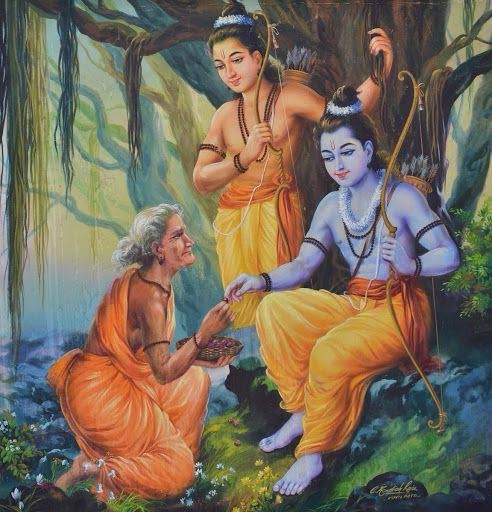
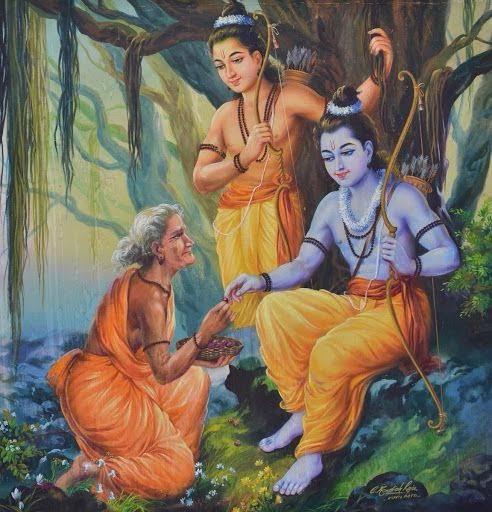
Sabari , the old forest tribal woman in the Ramayana was not a “viprah” in the technical sense of the term, but was she not a “gnyaani” who recognised immediately who it was who had appeared before her in the person of Lord Rama : the “ekam sath” that the Rg Veda speaks of ?!
So, to conclude, when this Rg Veda aphorism is interpreted , it should be done so keeping in mind not only the literal import but also its widest platonic , idealistic sense. The Rg Veda is not just about Inclusivity or non-inclusivity; it is about a much larger principle : Universality .
Sudarshan Madabushi