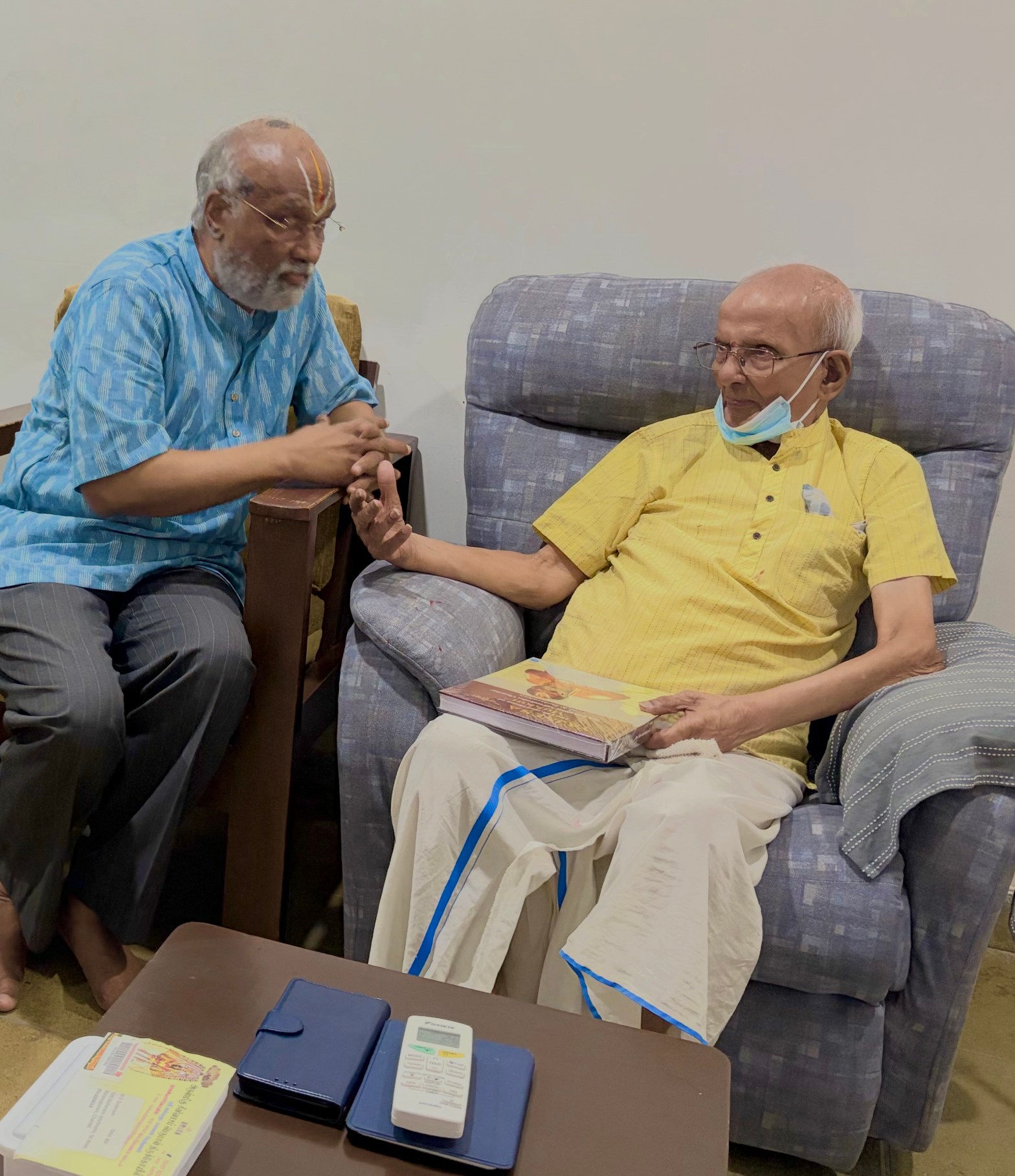
by M.K. Sudarshan
October 6, 2026: Chennai, India
Faith is not a composite of human faculties like thought, emotion, or principle; it is an existential posture that begins precisely where the mind, intellect, and cerebration completely run out.

“A single straw in the dark night of the soul:—where intellect falls silent, and the bankrupt soul desperately clutches at the lifeline of Divine Grace.”
We often treat faith as if it were a psychological Swiss Army knife—a neat combination of human faculties. We assume it is a mixture of logical thought, deep emotion, a flash of intuition, a hardened conviction, or a strict structural principle. But anyone who has been broken by reality knows the truth: faith is none of these things.
Thought needs logic; emotion needs a feeling; conviction needs evidence. Faith arises only when all three run completely dry. It is not a bridge built from our strengths, but an existential posture assumed at the absolute limit of our human bankruptcy.
A Morning Dialogue on Consciousness and Cerebration
To step outside this textbook dissection of the mind is to realize that faith cannot be localized in the intellect. This very morning, a text exchange with the 96-year-old doyen of Tamil literature, Sri Indira Parthasarathy (Eepa), cast a sharp, brilliant light on this precise boundary line:
Tagore once wrote: “Faith is the bird that feels the light even when the dawn is dark.”
I asked him: “What is Faith, Sir? Thought? Emotion? Intuition? Conviction? Principle? All the above? Why should the phrase be ‘an Article of Faith’?”
Eepa replied instantly: “That is what is an inseparable part of one’s consciousness of being. ‘Cogito ergo sum.’”
I pushed further: “’Cogito’… this word means to think, cognition, to apprehend… So, is Faith an act of the intellect? Is inner consciousness independent of thinking? In the dream and sleep state… there is no thinking… but is there no consciousness? ‘Thinking’ is cerebral. Does it mean one is brain dead during sleep?”
To anchor this, I shared Valluvar’s timeless Kural:
‘உறங்குவது போலும் சாக்காடு உறங்கி விழிப்பது போலும் பிறப்பு’
(Death is like falling asleep; birth is like waking up from it.)“Sir, our question was: is Faith cerebral?”
Eepa’s answer was definitive: “No. It is the part and parcel of our inner being.”
I summarized the weight of this conclusion: “Our innermost being thus resides not in cerebration but in faith. Right? In that case, ‘cogito ergo sum’ becomes invalid. I am… not because I think… I am… because I abide in Faith. Would that be the final conclusion?”
Eepa agreed completely: “I agree and I have written elsewhere in one of my Tamil articles that Descartes’s statement should have been the other way about. But thinking is the product of consciousness.”
This dialogue shatters the Western Cartesian trap. Descartes tied existence to the grinding of the cognitive gears (“I think, therefore I am”). But as Eepa beautifully points out, thinking is merely a passing product of a much deeper, underlying stream. When the brain goes quiet in deep sleep or under the weight of existential trauma, we do not cease to exist. We abide. The Cartesian formula is backward:
We do not find our being because we cerebrate; we are sustained because we fundamentally abide in a foundational state of being that is synonymous with faith.
The Darkness and the Leap
This foundational layer of existence is rarely noticed when life is comfortable and logical. It must be forged in the dark night of the soul. This is not a state of gentle sadness; it is the terrifying, vast expanse where our standard coping mechanisms fail. Your intellect cannot think its way out of the dark. Your emotions offer no warmth. Your intuition falls completely silent. You are submerged in what ancient traditions call samsara—the heavy, unyielding vale of sorrow.
It is precisely here, in the vacuum of certainty, that faith is born. It does not look like a triumphant march. It looks like a blind, desperate leap into the dark, driven not by confidence, but by absolute exhaustion. When you have nothing left to give, you make a radical gamble. You reach out into the nothingness in the desperate hope that something out there will catch you.
“Hymns for the Drowning”: Nammalvar and Ramanujan
This raw, non-cerebral desperation is beautifully captured in the classic Tamil poetry of Nammalvar’s Tiruvaymoli, brought to modern readers by the scholar A.K. Ramanujan in his seminal translation, Hymns for the Drowning.
The title itself tells the story. The saint does not write from dry land or a position of theological safety. He writes as a man whose head is barely above water, actively gasping for air in an ocean of existence. In Ramanujan’s commentary, this devotion (bhakti) is not a peaceful, controlled meditation. It is a state of being utterly “devoured and possessed” by the Divine after passing through deep phases of questioning, abandonment, and despair.
Consider how Nammalvar cries out in a verse translated by Ramanujan, where the intellect has completely given up its analytical categories and can only stutter in the face of an all-consuming presence:
“My dark one who stands there doing things no one can do, melting my bones, churning me, swallowing me down... I have no one else."
In another stark verse, Nammalvar explicitly lays bare the limits of human cerebration. He doesn’t reach God through a flawless chain of logic or philosophy. He reaches Him only when his thoughts are completely unseated, fragmented, and overwhelmed:
"My lord who swept me away leaving me no mind to think of anything else... how can I speak of him?"
The drowning man does not stop to analyze the chemical composition of the water, nor does he wait for a perfectly engineered rescue vessel. Instead, he reaches for a single straw floating on the waves. By any logical measure, clinging to a straw to save yourself from drowning is an absurdity. A straw has no weight, no structural integrity, and no guarantee of carrying anyone to the far shores of salvation. Yet, the act of actively grasping it with every ounce of your remaining strength transforms the straw into an unbreakable lifeline.
The Architecture of Surrender: “Mahaviswasam”
In the grand theological synthesis of Sri Ramanuja, this non-cerebral, desperate clinging is formalized into the supreme bedrock of Saranagati (total surrender) under a singular, monumental principle: Mahaviswasam.
Mahaviswasam is traditionally translated as “supreme, unshakeable faith,” but it is entirely distinct from standard belief. In Ramanuja’s formulation, Mahaviswasam is the crucial emotional and existential engine of Prapatti. It requires two terrifyingly vulnerable recognitions:
- “Akinchanya” (Total Helplessness): The absolute, ego-shattering realization that your intellect, your rituals, your good deeds, and your philosophies are utterly useless to swim across the ocean of samsara. You are drowning, and you are completely bankrupt of self-saving options.
- The Illegitimacy of Logic: Mahaviswasam is the radical, seemingly illogical trust that the Supreme (Sriman Narayana) will rescue you despite your immense unworthiness and past flaws. It completely bypasses the analytical mind, which screams that a drowning sinner has no right to be saved.
For a Vadakalai follower of Swami Vedanta Desika’s lineage, this is where the famous Markata Nyaya (the monkey metaphor) becomes vital. The mother monkey possesses infinite, transcendent strength to leap across the chasm of sorrow, but the baby monkey must still use its tiny, frail arms to actively cling to her body.
The act of Prapatti is that tiny, active clutch. It is the human soul choosing Mahaviswasam in the dead of night. The straw you reach for is not a passive illusion; it is the intentional, desperate grasp of a drowning consciousness that has realized it cannot save itself.
The hymn of desperation sung while going under is not a performance—it is a cry of absolute surrender that transforms human bankruptcy into divine rescue.
(Concluded)
