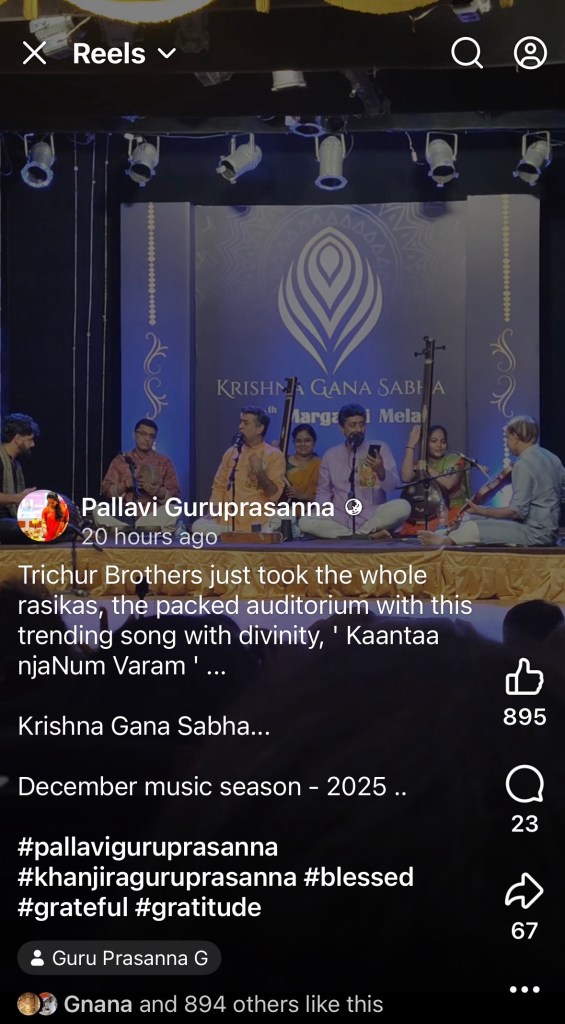
The Carnatic Music world quietly forgot (maybe even forgave?) Kamal Hassan deriding Saint Thyagaraja… but not this feisty Muslim woman!

The whole world of Carnatic Music aficionados, institutions, Vidwans, Rasikas and musicologist should watch this video-clip below and hang their collective heads in shame and sin.

https://www.facebook.com/share/v/1DLUSD44eC/?mibextid=wwXIfr

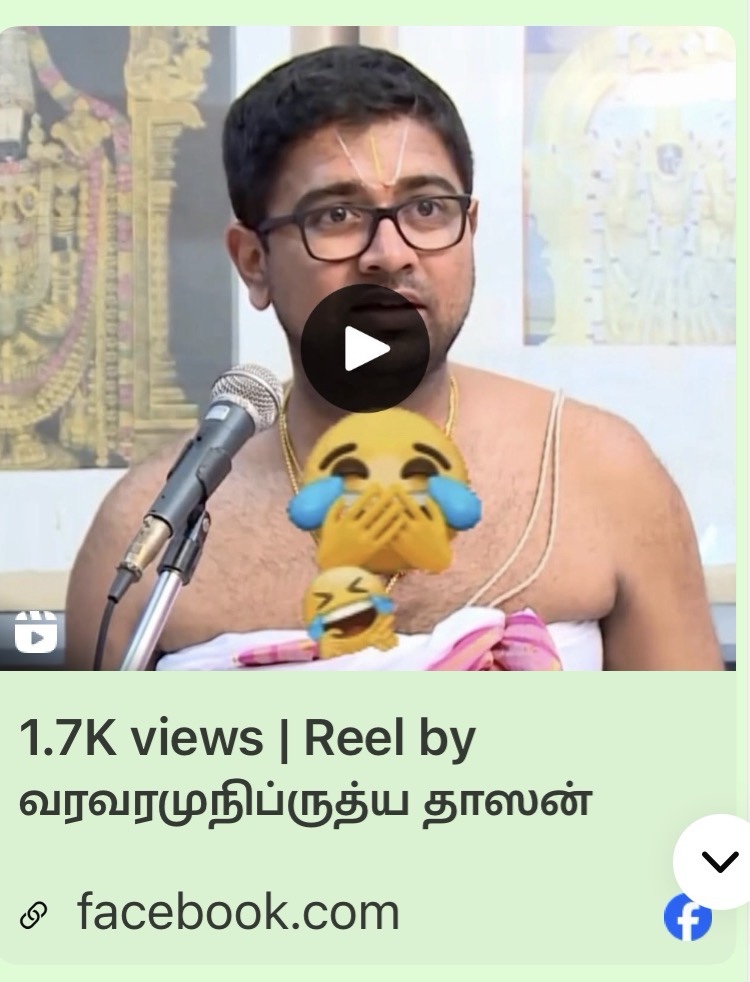
The Muslim woman castigates Kamal Haasan for having disgraced Sri Thyagaraja once when he spoke during an Instagram Live conversation with actor Vijay Sethupathi on May 4, 2020. He stated that Thyagaraja sang praises of Lord Rama while “begging” (using the Tamil word “picchai”) on the streets of Thanjavur, contrasting it with his own commercial film career.

Haasan aimed to highlight Thyagaraja’s dedication to art over money via “unchavritti” (devotional alms collection), but Carnatic musicians like Palghat Ramprasad and the Malladi brothers condemned it as derogatory, launching a Change.org petition with over 13,000 signatures demanding an apology. They emphasized Thyagaraja was a “Haridasa” (devotee) practicing sacred bhakti, not a beggar.

Unchavritti” or “unja viruthi” involved Thyagaraja accepting voluntary food offerings while singing Rama kritis, viewed as spiritual nirvana in bhakti tradition, not desperation. Kamal Hasan critics noted he had overlooked this cultural nuance

Musicians demanded an “unconditional apology” via Change.org and public statements, arguing it insulted Carnatic music heritage and Hindu faith. Legal notices for defamation were reportedly issued, but no retraction followed.

Contemporary reports from May 2020, like “Will Kamal Apologise?” and coverage in Deccan Herald and India Today, mention only the petition and notice but no one from the fraternity of Carnatic Musicians (who make a living for themselves singing Thyagaraja kritis!) filed any lawsuit or court proceedings. Haasan did not respond with an apology, and the issue faded without legal follow-through.


As of 2026, no records of a defamation suit, verdict, or settlement exist in news or court reports related to this incident.

As an ordinary Carnatic music Rasika , I too partially bear vicarious responsibility along with the entire world of Carnatic Music lovers for having quietly and conveniently forgotten about Kamal Hassan’s slur on Saint Thyagaraja. But my guilt is not either as grave or as damning as that of Vidwans and of hallowed institutions that piously claim their mission is to protect, preserve and promote the heritage of Saint Thyagaraja. While I do not forgive myself, I still say to them , “Shame on all of you!”

And to that feisty Muslim lady, I bow my head in humble salutations for letting us all know that she at least has neither forgotten nor forgiven history.

Sudarshan Madabushi

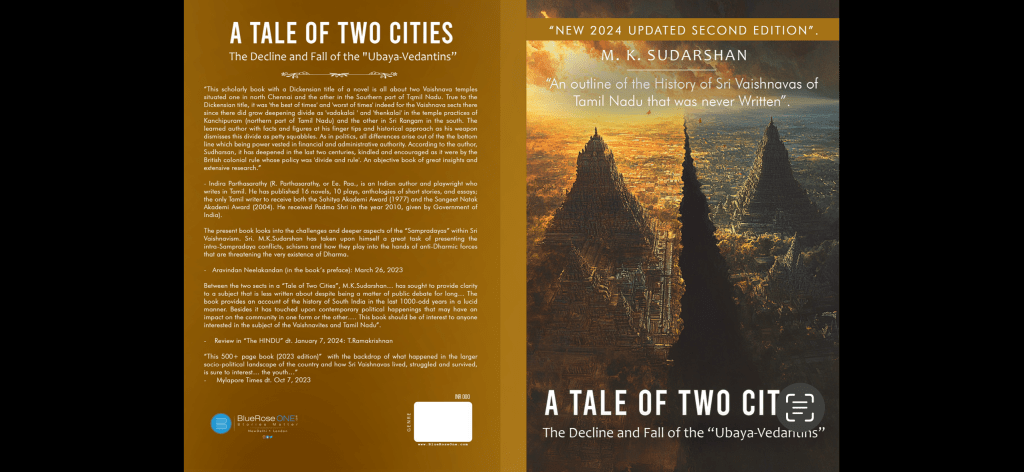
Dushyant Sridhar’s jingoistic FB comment only proves the point made in my 2024 book: “The Decline and Fall of the “ubhaya vedantins”

https://www.facebook.com/share/v/1818EjnJ4E/?mibextid=wwXIfr

https://www.facebook.com/share/v/17puU48Ue2/

The above URL of Sri. Dushyant Sridhar short-video clip of course will be music indeed to the ears and hearts of Vadakalais . I’m sure Dushyant’s fan following might increase by a few hundreds. It will most certainly be red rag waved in the raging faces of the Tenkalais . But the question for Sri Vaishnavas belonging to both sects is to ask themselves: Will all this rhetoric really serve the much larger cause of the tradition of “ubhaya vedantins” of which once upon a time after Sri Ramanuja’s era they were all so proud?

இந்த துஷ்யந்த் ஸ்ரீதர் அவர்களின் சுருக்க வீடியோ கிளிப்பிங், வடகலை சம்பிரதாயத்தினரின் செவிகளுக்கும் ஹৃதயங்களுக்கும் இனிமையான இசைதான் என்பது அனிச்சயமில்லை. துஷ்யந்த் அவர்களின் ரசிகர் பட்டாளம் சில நூற்றுக்கும் மேல் பெருகிவிடும் என்பதில் சந்தேகமில்லை. தென்கலை சம்பிரதாயத்தினரின் கோபமான முகங்களுக்கு சிவப்பு துணி ஆட்டப்படுவது போன்றதாகவும் இருக்கும். ஆனால், இரு சம்பிரதாயங்களையும்—வடகலையையும் தென்கலையையும்—சேர்ந்த ஸ்ரீவைஷ்ணவர்கள் தங்களிடம் கேட்க வேண்டிய கேள்வி இதுவே: இந்த அனைத்து வாக்குரை பேச்சுக்களும், ஸ்ரீ ராமானுஜரவர்களுக்குப் பின் “உபய வேதாந்தி”ன்களின் பெருமையான பாரம்பரியத்தின் பெரிய நோக்கத்தை உண்மையிலேயே சேவை செய்யுமா? அன்று அவர்கள் அனைவரும் அத்தன்மையில் அபிவிருதியுடன் இருந்தோம்.

Sudarshan Madabushi

“Eepa” (Sri. Indira Parthasarathy) and I discuss T.M.Krishna’s caricature of the “guru sishya sambhandham”

https://scroll.in/article/1090081/how-the-traditional-guru-shishya-system-undermined-critical-thinking-in-india

https://swarajyamag.com/culture/no-the-guru-iya-parampar-was-never-about-blind-obedience

This morning I forwarded/ Shared the above to links to “Eepa” Sir to read and give his views. He is a deep scholar in the traditional literature of India and I was keen to know what he would make out of TM Krishna’s specious thesis on the ancient Hindu educational institution handed down the generations as “guru-sishya parampara” or lineage.

My remark to Eepa Sir that I forwarded along with the online URLs was this below ⬇️

Sir, The pernicious anti-Hindu propaganda in Indian academia now regards singer T M Krishna as one of its high priests and ideologue . The guru-sishya relationship in Hindu ethos is an institution not a power-play as this perverted Op-Ed suggests . The purpose is clear : the most effective way to destroy Hinduism is to undermine and sabotage the ancient “guru sishya sambhandham”. It is a shame that T M Krishna is at the forefront of this toxic attack on Hindu culture .

Promptly in about half an hour, I received Eepa Sir’s messsge on WhatsApp. He made no comment at all, neither on the “Scroll” OpEd quoting TM Krishna’s views, nor the rebuttal that was published in the “Swarajya” nor on my own view castigating Krishna’s toxicity. Eepa message simply posed two sharp and searching questions to me:

  1. Do you approve of Drona as a guru demanding Ekalaiva who had been his disciple without his knowlege to give him his thumb as guru-dhakshina?
  2. And would Drona have taught him if he had revealed his caste?

My response to Eepa Sir was this :

Sir, these are loaded question you ask but IMHO they are frivolous because the answer to them cannot be other than contextual and relative to time .

In Dronacharya’s time Varna was an accepted social system of occupational hierarchy. What he did was very harsh to Ekalavya but then it was to teach a lesson to an upstart student who had through extraordinary “guru Bhakthi” yes, indeed, but nonetheless which also was more than just a bit of dissimulation of personal identity, had used stealthy means to acquire knowledge of “Astra sastra” which was was exclusive domain of Kshatriyas within the then prevalent social contract called Varnashrama Dharma.

But then it Ekalavya too who also was teaching a very fitting and sobering lesson to Dronacharya who was a Brahmin and had had no business really to engage in and master a martial art that was reserved only for the Kshatriyas.

Thus, we must be careful not to draw the wrong lessons from these two Mahabharata characters. They were not being casteist in the contemporary sense of the term . They were both exhibiting their respect for the Varna system , the social contract of their time. By mirroring each other, Ekalavya and Dronacharya were only exposing one another’s blatant violation of that normative social structure.

In today’s context, however, Varna is outlawed as a social structure. And so in today’s context , one could very easily ask these frivolous , mischievously hypothetical questions with no purpose other than to just repeat ad nauseum political propaganda narratives about so-called caste injustice that the Brahmin Dronacharya meted out to the Dalit Ekalavyan.

But, Sir, the Mahabharatha characters even today continue to have great relevance … but in a wholly different sense and worldly setting unrelated to caste.

Ekalavya deceived Dronacharya through usurpation or piracy of patented “intellectial property” akin to “industrial espionage” , or “copyright infringement”, “plagiarism” etc… all of which even in our modern world amount to criminality because they upend the prevailing social contract.

The Mahabharata is timeless . The lessons it imparts are ever relevant to us. Only the context changes.

Sudarshan Madabushi

Tenkalai and Vadakalai Sri Vaishnavas’ endless legal battle: Can a Phyrric victory for either side erase the “writing on the wall” for both?

What Is a Pyrrhic Victory? The Tragic Story Behind the Phrase ...
King Phyrrus of Epirus 280 BC

Pyrrhic means a victory won at such a devastating cost that it’s almost a defeat. King Pyrrhus of Epirus: his army suffered huge losses winning battles against the Romans, leaving him too weak to continue. It describes any success that ultimately proves worthless due to the immense price paid, like winning a lawsuit but losing everything in legal fees, or a team winning a game but losing their star players.

The Sri Vaishnavas of Tamil Nadu have been fighting a ceaseless and bruising sectarian war over respective temple worship rights since the 18th century CE in the Kanchipuram Varadaraja Perumal Temple with both Tenkalai and Vadakalai denominations behaving much like King Phyrrus of 280 BC.

On 28 November 2025, a Madras High Court Division Bench (R Sureshkumar and S Sounder) delivered a “common judgment” upholding the Thenkalai sect’s exclusive Adhyapaka Mirasi rights to lead Prabandham recitations (goshti) and rituals at Sri Devarajaswamy (Varadaraja Perumal) Temple in Kanchipuram.


Key Rulings on Rituals
Mirasi Exclusivity: Affirmed pre-Constitutional decrees (1882, 1915, 1939, 1969) granting Thenkalai residents of Kanchipuram the hereditary right to perform official ceremonial services, including leading Divya Prabandham goshti during processions and temple worship; Vadakalais limited to participating as ordinary worshippers without independent recitation.


Denominational Character: Declared the temple’s essential rituals as Thenkalai (Thennacharya) in nature under Article 26(c)/(d), rejecting Vadakalai claims of “mixed” or public status.


HR&CE Act Impact: Held 1971 abolition of hereditary offices inapplicable, as Mirasi is a collective ritual-property right vested in the Thenkalai community, not individual emoluments.


Vadakalai Claims Rejected
Quashed a 2022 single-judge order allowing Vadakalai seating behind Thenkalais for joint recitation, ruling it violated settled decrees; emphasized Article 25 worship rights subject to Article 26 denominational protections and public order. The verdict urged sect unity while enforcing Thenkalai primacy in core rituals.

Now, on January 28, 2026:

The Supreme Court admitted the Vadakalai SLP (Special Leave Petition) against the 28 November 2025 Madras High Court verdict and appointed retired Justice Sanjay Kishan Kaul as principal mediator on 28 January 2026, signaling openness to resolution but prioritizing amicable settlement over outright overturn.


Legal Strategy of Vadakalai : Success Prospects


Overturning the High Court verdict—upholding Thenkalai Adhyapaka Mirasi rights from pre-Constitutional decrees (1915/1969)—remains unlikely through litigation alone, as mediation typically aims for compromise rather than nullifying settled property-religious rights under Article 26(c)/(d).

Vadakalai arguments invoking Article 25 equality and 1971 HR&CE abolition of hereditary services gained only admission traction, but the Court’s directive for Justice Kaul (with Tamil/Sanskrit experts) to facilitate “day-to-day rituals in an amicable manner” suggests outcomes like time/space demarcations for recitations, not full reversal.

The Matter has now been listed for 13 March 2026 post-mediation, where failure to settle could lead to merits hearing, but historical deference to mirasi precedents favors partial gains at best.

Public Perception Impact

Sri Vaishnavas risk some public embarrassment from prolonged, high-profile airing of intra-sect rituals (e.g., goshti recitations at Kanchipuram Devarajaswamy Temple), as media frames it as a “120-year-old” feud between Ramanuja followers, potentially amplifying stereotypes of division.

However, the Supreme Court’s mediation push—echoing High Court pleas for unity (“two petals on one stem”)—positions it as constructive, mitigating backlash and highlighting shared heritage over discord.

Local Chennai sentiment and in other major Sri Vaishnava religious congregations elsewhere may view it neutrally given temple prominence, but national coverage could invite criticism if not ridicule and opprobrium if no quick compromise emerges.

WHY COMPROMISE BETWEEN TENKALAI and VADAKALAI IS BEST and WISE PATH for BOTH SECTS

If mediation fails, the Supreme Court will hear the Vadakalai SLP on merits on 13 March 2026, potentially leading to a substantive ruling on the High Court verdict.

What could happen then ?


Merits Hearing


The bench (CJI Surya Kant and Justice Joymalya Bagchi) will examine Vadakalai claims that the 28 November 2025 Madras High Court order violates Article 25 by upholding pre-Constitutional Thenkalai Adhyapaka Mirasi rights despite the 1971 HR&CE abolition of hereditary services.

The Possible outcomes include:


Partial relief: Permitting Vadakalai recitations in non-mirasi spaces/times (e.g., courtyards, off-seva hours), balancing Article 26 temple autonomy with equality.
High Court upheld: Affirmation of mirasi as settled tradition, dismissing SLP if no “substantial injustice” found under Article 136.
Remand: Sending back to High Court for fresh consideration of constitutional issues.


Procedural and Practical Effects

1. Failure in Mediation will halt any interim status quo and will invite detailed arguments, all over again in the Supreme Court. But there is also the likelihood of non-speaking dismissal of the petition, barring refiling.

2. HR&CE may enforce stricter compliance, escalating tensions unless parties self-regulate; prolonged litigation could prompt Court directives for SOPs or administrative oversight.

3. Public’s friction at Kanchipuram Devarajaswamy Temple risks rising, though Court’s mediation push underscores preference for harmony.

4. Further gradual erosion in the moral and spiritual authority of the sectarian Jeeyars, Acharyas, pontiffs and religious leadership that they now at least seem to exercise over their respective flock.

And that would be certainly victory for both sects — a clear Phyrric Victory indeed!

The writing on the wall for Sri Vaishnava community is clear : Compromise and Co-Live or else face further interference of HR&CE Commission into your temple affairs.

Sudarshan Madabushi

“Whistle podu”: Is Actor Vijay “whistling in the dark” before elections?

https://open.substack.com/pub/narasimhanvijayaraghavan/p/the-symphony-of-the-whistle-a-high?r=22fqhg&utm_medium=ios&shareImageVariant=overlay

The Whistle is not really such a great election symbol … in fact,  it portends looming inauspiciousness in many of English idioms we know. 

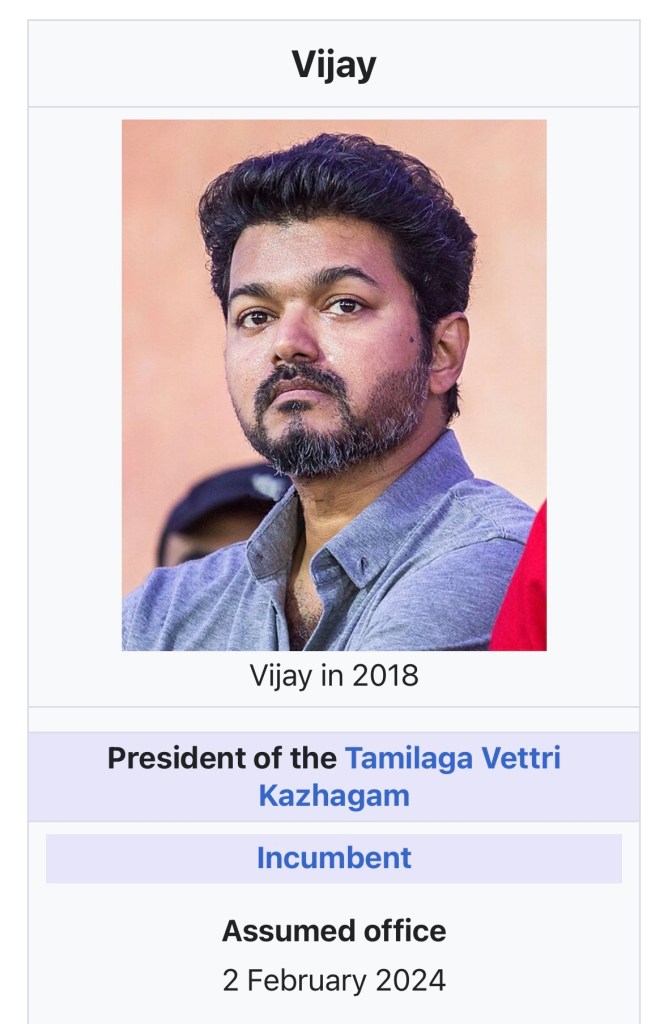
Vijay the parvenu politician is all bravado and no real substance . His filmy glamour is only tinsel thick veneer. 

He probably senses his vulnerability in the upcoming elections. He’s not sure his calculations of risk-assessments will not go suddenly awry at the last minute. 

At the moment he is like Hamlet caught in a dilemma “To be or not to be” … in a coalition with NDA or Congress?  Signs of dithering… 

That’s why from out of his subconscious-self comes this Freudian slip of a choice in taking the Whistle as his party’s symbol : He’s whistling in the dark.  

Whistling in the dark” is an idiom meaning to pretend to be brave or confident when facing fear, uncertainty, or danger. It evokes the image of someone whistling alone in darkness to bolster courage or ward off imagined threats. The phrase also implies baseless optimism or wild guessing despite contrary evidence.

Whistling in the dark” shares its metaphorical use of whistling with several other equally in auspicious English idioms, often evoking sounds of empty bravado, futility, or squeaky cleanliness put on for effect. These expressions draw from the act of whistling to convey emotions, actions, or states.

Bravery Idioms

Whistling metaphors frequently depict false courage in scary situations.

Whistle past the graveyard:Pretending to be fearless while facing real danger, like driving through a haunted area while whistling.

Wet one’s whistle: To take a quick drink, originally to moisten the mouth for whistling or before singing … out of nervousness . 

Futility Idioms

These highlight pointless efforts.

Whistle Dixie (or “whistling Dixie”): Engaging in empty talk or daydreaming without action.

Whistle in the wind: Attempting something hopeless that goes ignored.

Vijay chose the Whistle perhaps to convey the image to the public that he is “clean as a whistle” — oh so  perfectly clean or innocent!  — but he he doesn’t realise that his pretentious Mr Clean image is nothing but just  “Bells and whistles” — an extra, non-essential feature added just for cheap appeal.

Sudarshan Madabushi

“Six blind men, the elephant and a Tower of Babel”: How intellectuals think they really are making sense out of a senseless world

We in India believe ourselves to be equal intellectuals of those in the West who over the years have fed us with specious theories and treatises on how to make sense of the world and all its geopolitical tumult and historic tragedies.

For many years now, I myself have been an avid reader and follower of what western academicians and a few other foreign academicians have gone about peddling their fancy worldviews. Ever since Donald Trump became POTUS and the world plunged into more chaos — and a scenario of looming wars — than it ever has in the history of mankind, I am beginning to suspect that everything the Western intellectuals said and taught all these years about how to make sense of a senseless world is itself sheer nonsense. They have taken the common man like you and me on a merry go round of fiction and pablum.

To peel away all the nonsense that I suspect these intellectuals have been purveying, I turned to AI and asked it to create for me an imaginary Round Table Debate amongst them on the raging war now ongoing in Ukraine. The issue — which is indeed a festering wound on the entire world — presented to the group of intellectuals to discuss was this :

What should be a rational and consensual view of when and how the Russo-Ukraine War will end ?”

AI created an imaginary roundtable debate amongst 4 of the most well known experts on International Relations from the West and one Russian historian. Each of them put forward sharpened arguments on the Russo-Ukraine War’s resolution.

After reading the transcript below of the round-table , my suspicions are confirmed: the best brains in the world have no clue about how to make sense of the world. All that they engage in is in fabled confabulations echoing that of the “six blind men and an elephant” … or the cacophony surrounding a Tower of Babel.

Read on….

Sudarshan Madabushi

*********

Alexander Dugin, Zbigniew Brzezinski, John Mearsheimer, Samuel Huntington, and Henry Kissinger.

Openings lead to pointed exchanges.


Dugin’s Opening:

Ukraine lacks historical legitimacy as a sovereign entity; it forms the core of Russia’s civilizational space. The war corrects this, reclaiming Crimea and Donbas to establish Eurasian multipolarity against NATO expansionism.


Brzezinski’s Opening:

Control of Eurasia defines global primacy; U.S. strategy must prevent Russian dominance there. Ukraine’s independence, supported by Western aid, ensures Moscow’s eventual overextension and retreat.


Mearsheimer’s Opening:

NATO’s eastward push created a security dilemma, prompting Russia’s preemptive action to secure a neutral buffer. The conflict settles into stalemate or partition along current lines, as decisive victory eludes both sides.


Huntington’s Opening:

This pits Orthodox civilization against Western Christendom along Ukraine’s cultural divide. Resolution requires partition: Orthodox regions to Russia, Western-aligned areas to Europe, respecting fault lines.


Kissinger’s Opening:

Provocation met overreaction, but escalation threatens catastrophe. Diplomacy restores approximate pre-2014 borders—Crimea to Russia, Ukraine neutral—to maintain great-power balance.


Argumentative Exchanges


Dugin presses Brzezinski:

Your chessboard analogy falters, Zbigniew; NATO’s encroachment provoked this reclaiming of sacred territory. U.S. domestic shifts under Trump undermine sustained aid—Eurasia rises regardless.


Brzezinski counters Dugin:

Civilizational rhetoric masks expansionism, Alexander. Sanctions and arms expose Russia’s vulnerabilities; Ukraine’s resolve integrates it into the Western sphere, denying you Eurasia.


Mearsheimer challenges Brzezinski:

NATO expansion was predictable folly, not destiny. Your primacy invites endless proxy wars; realism demands acknowledging mutual deterrence and freezing the front.


Huntington rebuts Mearsheimer:

Security dilemmas ignore deeper cultural fissures, John. Forcing unity across civilizational lines perpetuates conflict—partition alone stabilizes, as history shows in the Balkans.


Kissinger questions Huntington:

Fault lines explain tensions but not solutions, Samuel. Equilibrium requires negotiation, not ethnic cartography; neutrality for Ukraine prevents Russian encirclement by NATO.


Dugin rebuts Kissinger:

Balance presumes Western moral superiority, Henry—false premise. Multipolar spheres demand Russia’s full sphere of influence, not your compromised midground.


Brzezinski interjects Mearsheimer:

Provocation narratives excuse aggression; sustained pressure compels Russian withdrawal, securing the European order against revanchism.


Mearsheimer responds to all:

Theories aside, power dynamics dictate stalemate. Neither side capitulates without existential loss—armistice preserves what balances remain.


Huntington to Dugin:

Your integration risks civilizational backlash; recognize boundaries to end the fault-line war sustainably.


Closing Positions

Dugin: Eurasian integration prevails; Western unipolarity ends.


Brzezinski: American leadership forces Russian defeat.


Mearsheimer: Partitioned stalemate endures.


Huntington: Civilizational separation stabilizes.


Kissinger: Negotiated balance averts disaster.

END of DISCUSSION

“Something is rotten in the state of Denmark”: William Shakespeare

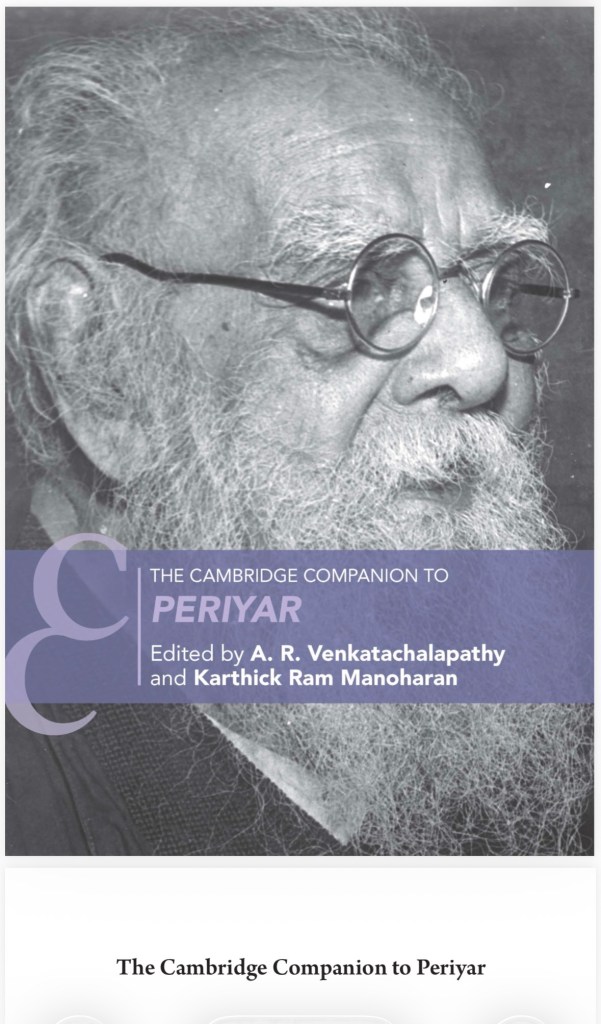
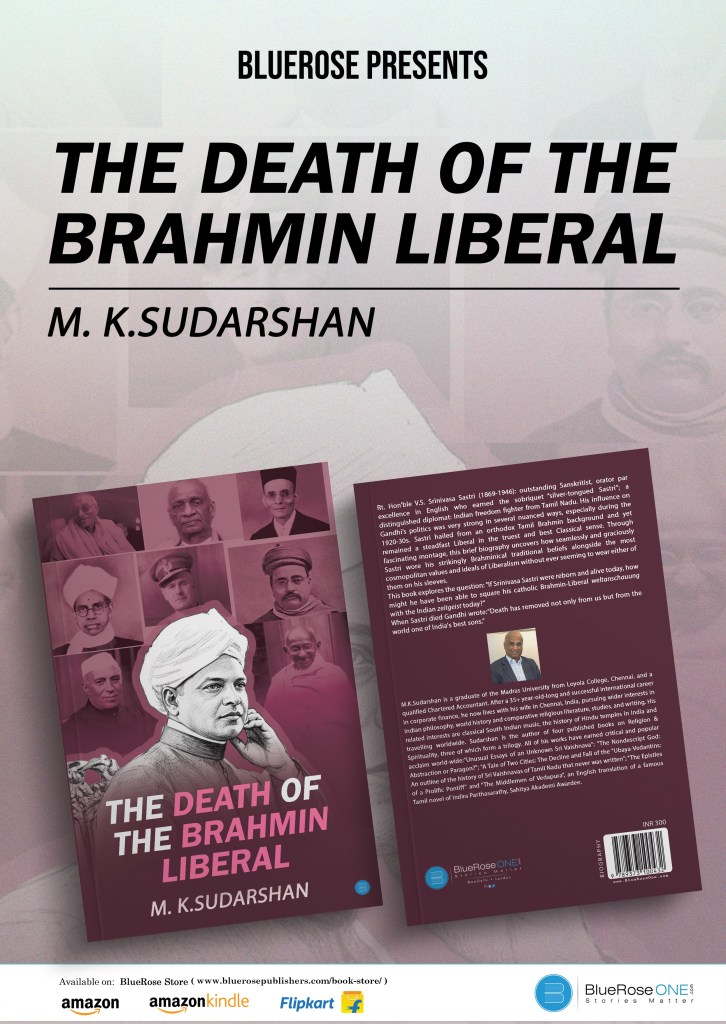
When this biography above of EV Ramaswamy (aka “Periyar”) grabs a lot more readership and eyeballs in Tamil Nadu and in far away Cambridge than my own recently published book on Rt. Hon’ble Srinivasa Sastri  does even in Mylapore, Chennai, India (see below), you might tend to say that it brings to mind at once a very famous quotable quote from Shakespeare’s Hamlet: …. “something is rotten in the State of Denmark”… er.. or, maybe State of Tamil Nadu ? …

regards…  M K Sudarshan 🙏 

Sent from my iPhone

On 5 Jan 2026, at 10:20 PM, Ramakrishnan Sundaram . com> wrote:

<The Cambridge Companion to Periyar (A. R. Venkatachalapathy, Karthick Ram Manoharan etc.) (Z-Library).pdf>


Sent from my iPad

Sudarshan Madabushi

“Move over Monroe, it’s now the “Donroe Doctrine” that’s taking control over a “rules-based World Order”!

Commenting on the above Op-Ed and headline subject, this morning I had a lively exchange of views on WhatsApp with a very respected friend of mine in Bangalore who is also a retired IAS officer having served with distinction in an erstwhile PMO (Prime Minister’s Office).

He wrote : “No country is safe if RIC (Russia China India) come together and that includes the entire American continent leave alone poor USA.”

My reply RIC coming together is a geopolitical pipedream, IMHO.

His retortThis is due to trust deficit. Russia these days acting as trust moderator in RIC. It’s a pipedream for China to envision a unipolar world with that nation being the singular pole. China is increasingly coming to realise this truism. Hence the Russian role.

My summing up:

SirThe position of America is impossible to challenge mainly because of its geography . The oceans offer it enormous strategic protection from any kind of military threat from anywhere . 

America’s Monroe Doctrine further effectively ensures that the USA will never have to face threats from any neighbouring country in the Western Hemisphere , either directly or as any one else’s proxy . Any threat from Latin or South America will be ruthlessly crushed and exterminated. E.g. Cuba. Chile, Nicaragua, Argentina , Mexico …. History of the Western Hemisphere is the history of the Monroe Doctrine. 

The USA also has enormous natural resources including energy reserves. Russia, India and China too have large natural and energy resources that make them formidable powers but they do not have the requisite advanced technology to tap and exploit their respective resources or to weaponise it in the aggressive way the USA can and does. 

China, India and Russia are great powers no doubt but they do not have as America does vast oceans that keep them away at a safe and healthy distance from each other geo-strategically . When you have neighbours next door to you  , it’s very difficult to both collaborate and compete at the said time . Interests cannot be expected to always converge. Cooperation and mutuality can never be taken for granted . 

Sir, As you rightly point out “the trust deficit” will always rankle and offset the possibility or the “pipe-dream” of any strategic alliance or even alignment amongst RIC members.

Great power rivalry today is the same as it has always been for the last 100+ odd years. It has always been about one overriding reason only : Energy, Energy and Energy. 

The nation that wins the war for control over energy resources and reserves (oil, gas , fossil, non-conventional) will rule the world as an unchallenged hegemon. 

America today is not going to give up its ambition to be that global hegemon commandeering all of the world’s energy supply . 

Venezuela is its latest successful takeover as a hegemon in the Americas. Saudi Arabia was always its captive energy vendor. Iran will be broken and brought to its knees too in good time by America and become its other gas-pump station in West Asia and near-Eastern Europe. 

The final coup too will happen eventually when Russia’s vast energy reserves of oil, natural gas and minerals too become the last final frontier to be conquered and annexed under Pax Americana

There are only 2 things that can ever conceivably stop the American global expansionist juggernaut: 

1. Discovery of some totally new and revolutionary energy source other than anything ever known to mankind today. In other words, a paradigm change in the energy sector of the entire world that resets and initialises all relations between and amongst major military-powers and economic powerhouses. 

2. A devastating nuclear war becomes unavoidable and breaks out between America and Russia + and/or China that ends up destroying much of both the Western and Eastern Hemisphere, reducing both to crippled states on a scale much larger and more grievous than Japan was after Hiroshima and Nagasaki. 

As far as I can see, there is really no other alternative scenario to the apocalyptic one I envisage above . 

Can you think of any other that is less so? 

Sudarshan Madabushi

“Brahmins as secret Muslims”: Devdutt Pattnaik’s hodge-podge he tries selling as exotic delicacy

Devdutt Pattanaik’s recent framing of “Brahmins as secret Muslims” and his analogy between Brahminical and Islamic ways of life rests on several contestable historical, textual, and sociological assumptions that can be systematically challenged.

The “secret Muslims” thesis collapses very different histories and concepts into a single polemical frame. A counter‑narrative can be built by taking each claim and showing where it is historically, textually, or conceptually flawed.

  1. Devadutt’s narrative: I am convinced that Brahmins function like secret Muslims, separated not by theology but by strategy.

Like the Muslim halal haram divide, Brahmins imposed a satvik tamasik hierarchy, introducing moralised food and behaviour codes that earlier Indian cultures did not emphasise in this way.

Counter narrative: The three guṇas (sattva–rajas–tamas) originate in Sāṅkhya ontology as universal qualities of prakṛti, not as a Brahmin/non‑Brahmin boundary marker; they apply to all beings, foods, mental states, and actions, usually as mixed tendencies, not a binary of saved/damned.

Pre‑modern classification of food as sattvik/rajasic/tamasic is about shaping “svabhaava” or innate mental dispositions (clarity, agitation, dullness) and is not identical to a legal‑theological code like halal/haram that is grounded in divine command and explicit juristic sanction of Islam.

So while both traditions moralise upon Food, one is part of a cosmological psychology (vide.. the “anna suktam” in the Rg Veda which is at least a 10,000-year old revelation) and the other of a revealed legal system called “Koran, Hadith and Sura” which all date back to a mere 800-year past in history. The analogy obscures more than it clarifies.

2. Devdutt’s narrative: Both Brahmins and Muslims entered India from the northwest, following the same geographic corridors into the subcontinent. Brahmins trace their cultural roots to the Eurasian steppe, linked to horse domestication around 4000 years ago, arriving in India roughly 3000 years ago.Muslims followed the same routes about 1000 years ago, spreading north to south, and east to west, mirroring earlier Brahmin movement.

Counter-narrative: Contemporary scholarship (archaeology, historiography etc.) on Indo‑Aryan language and culture speaks of complex migration and interaction over hundreds of centuries; it does not support a simplistic picture of a corporate group “Brahmins” entering as a caste block and then “moving” in the same pattern later followed by Muslims. Devdutt here is perhaps conflating the Muslim “migration” of Prophet Mohammed’s followers and faithful from Mecca to Medina and back with his cocky and less than half-cocked theory about Brahmin migration. ​Islam’s spread into the subcontinent involved very different mechanisms: military conquest, trade networks, Sufi lineages, and inter‑marriage, often coastal as much as north‑western; this cannot be reduced to “mirroring earlier Brahmin movement”.

3. Devdutt’s narrative: Brahmins insist on one ultimate reality, formless and beyond images, articulated through Advaita Vedanta.This mirrors Islamic monotheism, where God is imageless, absolute, and beyond representation. As a result, gods tied to rivers, rocks, mountains, trees, and villages are downgraded as lesser or folk deities.

Brahmins frame the Vedas as supreme knowledge, dividing the world into astika and nastika, believers and non believers.This parallels how Islam treats pre Islamic practices as jahiliya, a state of ignorance. This mirrors the Islamic division between truth and ignorance, revelation and error.

Counter-narrative: Advaita Vedānta is only one among many Brahminical systems that include dualist (Dvaita) and qualified non‑dualist (Visishtadvaita) Vedāntas, Pūrva‑Mīmāṃsā and Bhakti theologies (including Śrī Vaiṣṇava, Mādhva, Śaiva Siddhānta) that grant real status to personal, image‑worshipped deities (“archa murthy araadana”) and to local forms, and are not reducible to aniconic monotheism which is what Islam is.​ Amongst Brahmins there is no one or distinctive monotheistic worldview: the “smaartha brahmin” views godhead as “yagnya“; the “saiva” brahmin worships the “linga” as “Isvara“; Sri Vaishnava brahmins worship the form of “Narayana” as Supreme Brahman; the Saaktha brahmins worship Devi or Amba… and so on.

The Monotheism of Brahmins cannot be strait-laced into any one definitive kind as that which characterises Islam. Devdutt Pattnaik seems utterly ignorant of the famous Vedic aphorism: “ekat sath viprah: bahudaah vadanti…”: The Truth is One but conceived of in many ways by men who have realised it.

In the Brahmin view, Truth is Universal but it is neither uni-dimensional, unichrome nor unipedal. Even Advaita’s monistic conception of nirguṇa brahman is arrived at by philosophical or hermeneutical reasoning on Vedic sentences (vaakya), not by prophetic revelation, and it coexists in practice with other Vedanta ‘darsana‘ whose theology is extended upon “visishta-advaita” or qualified monism and temple‑worship — something that Devdutt ought to know is structurally different from Islamic aniconism.

Devdutt’s supposed “downgrading” of river, tree, and village gods can be stoutly contested by the persistence of grāma‑devatā, nāga worship, and tīrtha cults in Brahmin‑led ritual systems up to the present. In the Taittiriya Upanishad (Mahanarayana Upanishad), there is a suktam exclusively devoted to the praise of the Waters as a cosmic elemental deity: “Apah devata”“aghamarshana suktam“.

Islamic jāhiliyya denotes a specific sacred history of pre‑Qurʾanic Arabia. The expression serves as a form of grand narrative to paint pre-Islamic Arabians as barbarians in a morally corrupt social order. It is anchored in a doctrine of final revelation and prophetic correction of earlier error, for which there is no equivalent claim of chronological finality in Brahminical discourse.

The āstika/nāstika distinction is historically a philosophical category in darśana debates—the āstika accepting Veda as a pramāṇa, the nāstika rejecting it. This is not about salvation/condemnation binary aimed at common people, and is certainly not a unified social policy of “Brahmins”.​ Equating āstika/nāstika with believer/infidel imports Abrahamic categories back into Sanskrit vocabulary and distorts both.

Devdutt Pattnaik simply doesn’t know what he is talking about. He conflates history, theology, metaphysics, linguistics and religion… and tries to palm off hodge-podge to us in the hope it will be mistaken for exotic delicacy.

4. Devdutt’s narrative: Both Brahmins and Muslims mark themselves physically to signal difference and superiority. The sacred thread functions like Islamic dress codes, separating insiders from outsiders. Bodily marks and ritual symbols reinforce hierarchy and controlled access to the sacred.

Counter-narrative: Marks like the yajñopavīta, “urdhva-pundhram” or tilaka function as saṃskāra‑based identity and ritual readiness; they are not imposed by a central lawgiver nor standardised across all Brahmin groups, and historically many non‑Brahmin communities have worn sacred threads or caste‑marks as well. The “vibhuthi” smears worn across the forehead is a practice of many non-Brahmins as well. Such marks do not denote varna, jaathi or matham… they denote piety, or bhakthi. ​They are worn purely out of individual choice or in compliance of community’s religious custom.

Islamic dress and beard codes — or the dishdasha and the abbaaya or burqah —derive their authority from scripture and ḥadīth as interpreted by fiqh schools, with explicit legal obligations for modesty; these are structurally different from caste and sectarian insignia tied to life‑cycle rites.​​

​5. Devdutt’s narrative: Both systems are deeply homophobic, treating same sex desire as unnatural or sinful, justified through divine sanction. Both are misogynistic, restricting women from sacred authority. In mosques, prayer leadership is male; in temples, priesthood and core rituals are male dominated.

Counter-narrative: In the Brahminical case, key śruti texts do not legislate explicit punishments for same‑sex behaviour; many dharmaśāstra and purāṇic sources either ignore it or treat it contextually, which has allowed contemporary Hindu bodies to articulate LGBT‑inclusive readings grounded in karma, pluralism, and the four puruṣārthas (dharma, artha, Kama, moksha).

Womanhood holds a unique and central position in the Brahminical way of life. The Upanishad vaakya ” “maatru devo bhava...”Revere your mother as you would God” clearly attests and affirms the status of women in society. No Vedic ritual involving ‘agni’ or Fire can be performed by a Brahmin “gruhastha” (householder) without the presence of his wife beside him. The Brahmin wedding ceremony is solemnized by mantras which hail the woman as “saha-dharmachaarini” : she is the husband’s life-partner in all Dharmic endeavours in life lived together.

The Brahmins adore and worship female saints with equal fervour as male: Andal of Sri Villiputtur is one among the 12 Holy Azhwars.

Once again, Devdutt speaks from utter ignorance.

6. Devdutt’s narrative: The crucial difference is tactical: Muslims seek conversion and expansion; Brahmins seek dominance without conversion. Brahmins prefer rule without inclusion, preserving power by exclusion.

Counter-narrative: Historically, Brahmins have not had a single “tactic”: there were kingdoms where Brahmins were marginal; there were regions where Śaiva or Vaiṣṇava non‑Brahmin ritual specialists dominated; and there were periods where śramaṇa, bhakti, or anti‑Brahmin movements had drastically reshaped religious life of the peoples. Indian History is a multi-mosaic social continuum. It cannot be defined in Marxist terms of class-struggle or dominance … which is precisely (and insidiously) what Devdutt is implying by suggesting Brahminical “strategy of dominance“. ​

Islamic traditions themselves too cannot be said to be uniformly conversion‑oriented; in many Indian contexts, Islamic rule did not translate into mass conversion, and rulers often governed multi‑religious populations with layered legal structures.

The idea that one civilisational bloc “seeks expansion” and the other “seeks dominance without inclusion” reifies highly contingent or variable historical patterns into essences or certainties, which serious historiography will find untenable.

7. Devduttt’s narrative: The unresolved question remains: who taught whom, or whether both inherited the same patriarchal, monotheistic, control oriented worldview from older West Eurasian traditions.

Counter-narrative: Modern scholarship repeatedly cautions against “single‑source” explanations of patriarchy or hierarchy; both Hindu (or Brahminical) and Islamic patriarchies have been shaped by local economies, state formations, and colonial modernity as much as by any deep origin in a putative Eurasian steppe culture.

Academic or intellectual histories of Vedic–post‑Vedic India, and of Islam in Arabia and even beyond, point to very different genealogies: one centred on śruti, yagnya, karma, rebirth and multiple darśanas; the other founded upon prophetic monotheism, eschatology, and codified law.

A more precise comparative framework would therefore:

  • Compare specific institutions (qāḍī vs purohita, madrasa vs pāṭhaśālā, waqf vs temple–maṭha endowments) rather than theorise about entire “worldviews”.
  • Track how particular texts and practices changed under concrete pressures—Buddhist competition, bhakti, Islamic rule, imperial-colonial codification—without assuming a specious, vague and timeless “strategy of control“.

Within such a framework, meaningful similarities and borrowings can certainly be discussed, but Devdutt Pattnaik’s slogan that “Brahmins function like secret Muslims” turns a nuanced comparative project into a polemical caricature … if not into clownish antic.

Sudarshan Madabushi
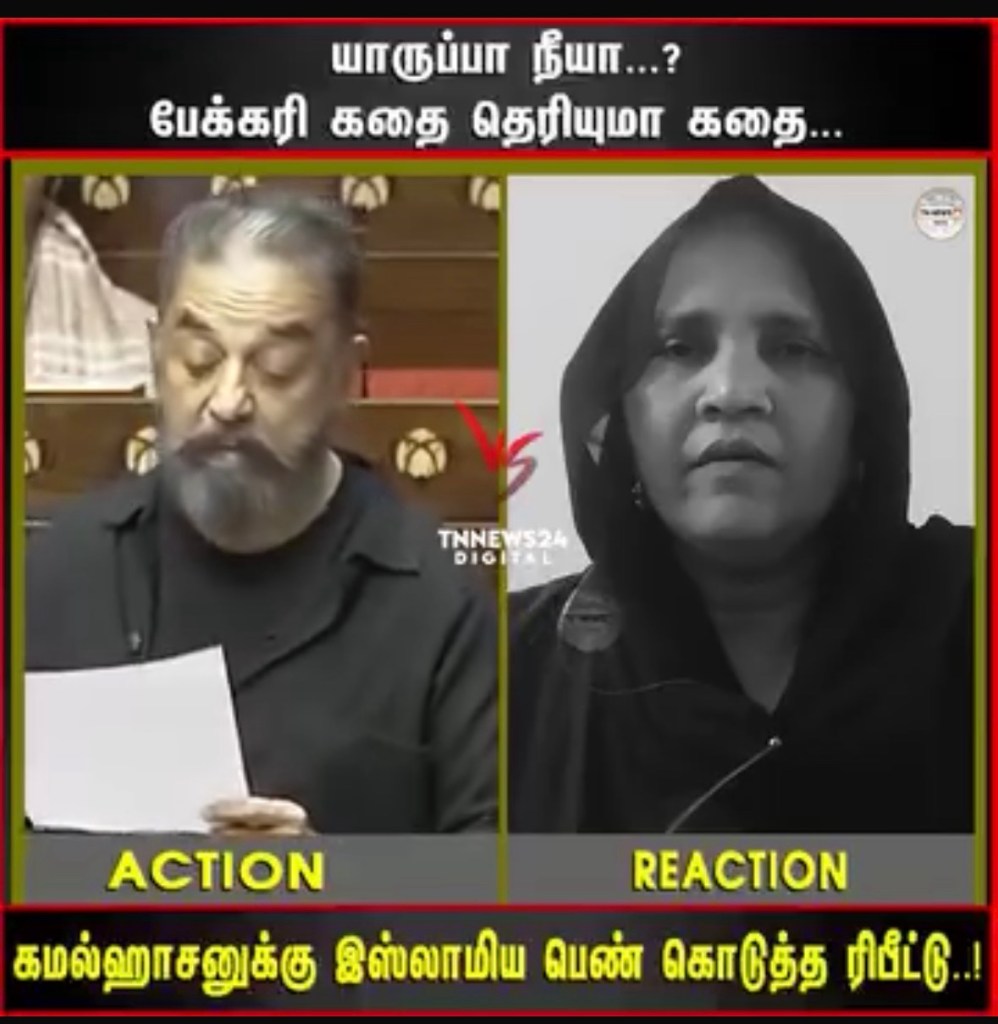
The “Marghazhi Music Season, Chennai”: A festival of “divinity” travesty

https://www.facebook.com/share/v/1JH6uPKxpJ/?mibextid=wwXIfrhttps://www.facebook.com/share/v/1JH6uPKxpJ/?mibextid=wwXIfr

The Marghazhi Music Festival Season in Chennai is fast turning into a jamboree of circus stunts by various performers. And the audiences today who go to these performers go there not to enjoy true classicism of Carnatic music but to be entertained by the travesties of it delivered by so-called young “innovative” , “revolutionary” Vidwans and Vidushis who have come to believe that the surest way to protect preserve and propagate this ancient art form of music is to “un-shackle” it from the clutches and grip of classicism and hallowed “sampradaya” “paattantharam” and “popularise” it instead in the manner and high-voltage, high-decibel gusto of a rock-star concert . And the audience — irrespective of its demographic or gender or age profile — is seen drooling over it and applauding it all with equal gusto .

This performance of Trichur Brothers on stage at the Krishna Gana Sabha Chennai is an outstandingly outrageous example of de-Classicisification of Carnatic music kutcheri form . It’s a form of “creeping debasement” of tradition in the name of “generational re-culturing and gentrification” of Carnatic music .

I know now that immediately some ardent fan of the Trichur Brothers will rise to defend them by trying to rubbish my opinion expressed above . “What’s wrong with singing this exciting, lilting Tamil light-music album song based “tukkada” piece in a modern kutcheri?… Especially, if it pleases the audience ? Why, in the olden days , didn’t Madurai Mani sing the “English Note” piece ? And didn’t Muthuswami Deekshitar himself compose many pieces with a touch of Western music elements ?… Why this “Rasika attitude of bigotry”…. Why this needless , mean-spirited , surly , grumpy , sour-puss clinging to old world notions of classicism and purity?

Madurai Mani Aiyer was one of a kind of musician … he was “Sui generis”… He was so exceptional that anyone trying to follow his example and style would only end up insulting his genius.

But I know well that modern Rasikas will reject all these my protestations as “rubbish”.

Against all such stout doughty arguments , I have really no forceful riposte … I have to concede that I’m an old-timer , a prisoner of anachronisms and outdated views of what classical Carnatic music is and ought to be . I just find myself unable to wise up and learn to “go with the flow” of the time and age . There’s nothing permanent except impermanence, and nothing more fashionable than the latest. As a fossil-age Rasika, I thought it better for me to give up the world of Carnatic music realising that it already has given me up.

Which is the reason why , in the last few years , I have stopped attending Marghazhi Music Festival Season kutcheris which I now regard as now being no more than razzmatazz , glitz , glamour and IMHO … pure new age schmalz.

I have therefore conceded defeat gracefully and distanced myself silently far from the madding crowd of present-day Rasikas .

In reclusion , there may be desolation …. But sometimes in desolation there is also comfort of great consolation.

Sudarshan Madabushi