by M.K.Sudarshan
August 14, 2026: Chennai, India

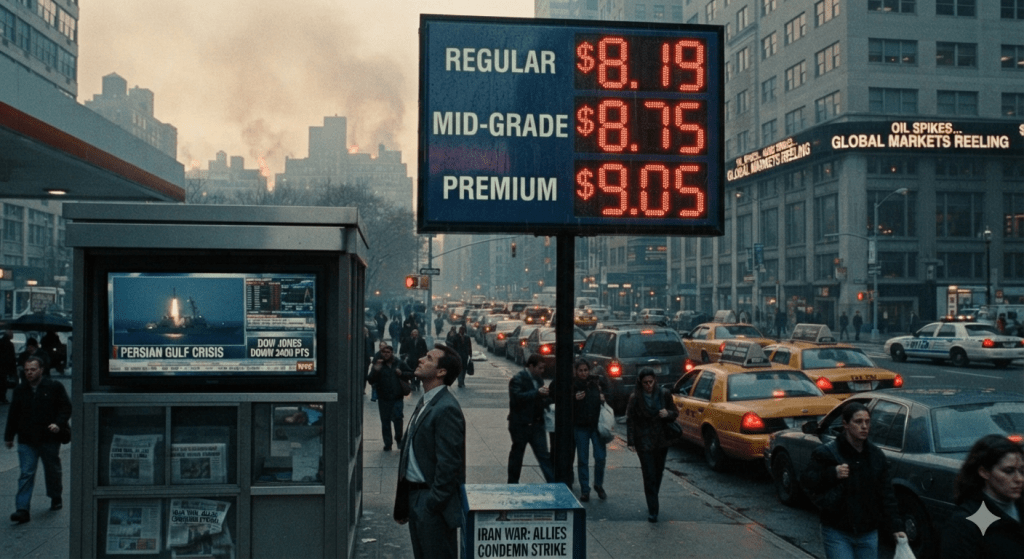
As the US-Iran war shatters international law, the newly signed Mecca Accord reveals a grim truth: the liberal dream of cooperative trade blocs is dead.
By fusing Saudi capital, Turkish defense tech, and Pakistani military mass, this new “Islamic NATO” signals a volatile new era of raw, multi-polar re-armament where middle powers no longer wait for superpowers to save them.
Part I: The Genesis of the Pact and the Questions Arising
The signing of the Mecca Joint Defence Agreement on August 7, 2026, by Saudi Arabia, Turkey, and Pakistan has shattered the traditional geopolitical landscape of West Asia. Born out of the chaotic security vacuum left by active American reverses in its war on Iran, this pact binds three massive, heavily armed nations—historically dependent on American hardware, financial aid, or energy markets—into an explicit, legally binding collective defense arrangement. Yet, underneath the official veneer of regional stabilization lies a labyrinth of deep contradictions. All three nations possess historic, heavily documented ties to global terrorism, fluctuating between functioning as covert sponsors and safe houses. All three have navigated highly volatile, love-hate relationships with Washington over the decades.
This sudden fusion of capital, technology, and manpower raises several critical questions for the global order:
- In the short term, is this new Islamic West Asian Defence Pact a veiled sort of twiddling the thumb at a declining American superpower?
- In the mid-term, will the pact serve as an effective Sunni check against the rise of an existentially threatened, retaliatory Shia Iran? If Iran targets GCC energy assets, can this pact provide the genuine security assurances that Washington failed to deliver?
- In the long run, is this alliance destined to become the cornerstone of West Asian security—a Sunni Islamic imitation of “NATO”? Will a sensitive Russia tolerate a NATO-like beast lurking on its southern soft-belly? Will China tolerate an autonomous military bloc capable of imposing energy chokepoints through the Strait of Hormuz and the Bab-al-Mandab?
- For India, what is the true threat perception of a formalized Islamic defense alliance embedding a nuclear-armed Pakistan on its western border?
- Globally, does this pact signal a terrifying new era of hyper-armament, mirroring the massive military build-ups currently sweeping through the European Union, Taiwan, Japan, Russia, India, and Australia?
Part II: The Institutionalist Defense and the Illusion of Deterrence
In evaluating these urgent queries, conventional geopolitical analysis often falls back on institutionalist frameworks, arguing that the Mecca Accord is structured primarily as a pragmatic, defensive mechanism to manage regional instability rather than incite global conflict.
From this perspective, the pact is viewed not as a defiant gesture toward Washington, but as a rational diversification of strategic dependencies. Proponents of this view suggest that by fusing Saudi capital, Turkish defense innovation, and Pakistani military mass, the trio seeks to build an independent regional deterrent capable of absorbing shocks without drawing the world into a wider war.
Furthermore, this line of reasoning assumes that the establishment of high-level political-military councils and joint air defense networks can effectively insulate Gulf energy infrastructure from Iranian retaliation. It assumes a degree of structural restraint, pointing to Pakistan’s official declarations that its nuclear arsenal remains strictly territorial, meant only for home defense. Vis-à-vis global powers, the institutional argument suggests that Russia would remain neutral so long as Turkey acts independently of Washington to erode absolute US dominance, while China would use its immense economic leverage over Islamabad and Riyadh to ensure that the vital trade arteries of Hormuz and Bab-al-Mandab remain completely unimpeded. For India, the traditional counter-argument counsels calm, suggesting that New Delhi’s deep-rooted economic and diplomatic ties with individual GCC nations can effectively neutralize any hostile, pan-Islamic military posture manipulated by Islamabad over the Kashmir issue.
Part III: The Brutal Realpolitik Rebuttal
However, this sanitised, rule-bound interpretation of the Mecca Accord crumbles when subjected to the harsh light of brutal realpolitik. The assumptions undergirding the defense of the pact are not merely optimistic; they are dangerously fragile and facile.
First, the notion that bureaucratic political councils can restrain an Iran facing an existential American war is a fantasy. For Tehran, an existential threat demands an asymmetric response; it will not respect the paper treaties of its neighbors. Static, highly vulnerable Gulf oil and desalination infrastructures remain prime targets. If invoked, the collective defense clause will not protect Saudi Arabia—it will simply trap Turkey and Pakistan in a devastating kinetic war they cannot afford, or force them to abandon their very first treaty, utterly destroying their international credibility.
Second, counting on Pakistan’s nuclear self-restraint ignores the cold reality of economic survival. Saudi Arabia has effectively bankrolled Pakistan’s bankrupt economy for decades. In a crisis where Iran becomes a nuclear power or Saudi Arabia faces conventional military collapse, the pressure on a cash-strapped Islamabad to extend its nuclear umbrella, transfer warheads, or station delivery systems on Saudi soil will become absolute.
Third, Russia does not, and will never, trust Turkey—a NATO member that controls the Black Sea straits and arms Ukraine. A formalized Sunni military alliance deep in the Persian Gulf directly encroaches on Moscow’s spheres of influence and threatens Russia’s repositioned strategic footprint in post-Bashar Assad Syria, prompting Moscow to covertly destabilize the pact rather than tolerate it.
Finally, India cannot insulate itself from a hostile Turkey-Pakistan axis simply by “playing nice” with the Gulf. Turkey’s advanced drone ecosystems, combined with Pakistan’s proxy warfare machinery, create a highly dangerous hybrid threat on India’s western flank. In a crisis where Riyadh relies on Pakistani boots on the ground for survival, the Gulf states will inevitably look the other way as Ankara and Islamabad weaponize their alliance to support secessionist forces in Kashmir.
Part IV: The Davos Tragedy and the Grim New World Order
The emergence of this “Islamic NATO” completely upsets the apple cart of global security, introducing a highly volatile, autonomous power center into a multi-polar world that is fracturing far faster than anyone anticipated. This reality exposes the profound tragedy of the vision articulated by Canadian Prime Minister James Carney at the Davos Summit. Carney heralded the “Era of the Middle Powers,” conceptualizing a world where middle-tier nations would form elegant, technocratic coalitions to protect global trade, safeguard supply chains, and resist the predatory tariff offensives of Great Powers.
Instead, the active US-Iran war has proven that international law is dead and trade blocs cannot defend sovereign borders. Middle powers have looked at the global landscape and concluded that hard kinetic power, not economic interdependence, is the only true currency of survival. They have bypassed the traditional global hierarchy, refusing to remain compliant security vassals or passive staging grounds for great-power proxy wars.
The Carney vision of a cooperative, trade-shielded world has been violently replaced by an anarchic global order where sovereignty is defined by a single, grim objective: military re-armament to the teeth. We have entered a dark era where Great Powers expand their nuclear arsenals, Middle Powers pool their resources into volatile military pacts, and even middling non-state actors—hiding in the wormwood of international neglect as terrorist networks or mercenary corporations—arm themselves for a few dollars more. In this new world order, the laws of ammunition, deterrence, and raw survival have decisively triumphed over the communiqués of Davos.
(Concluded)