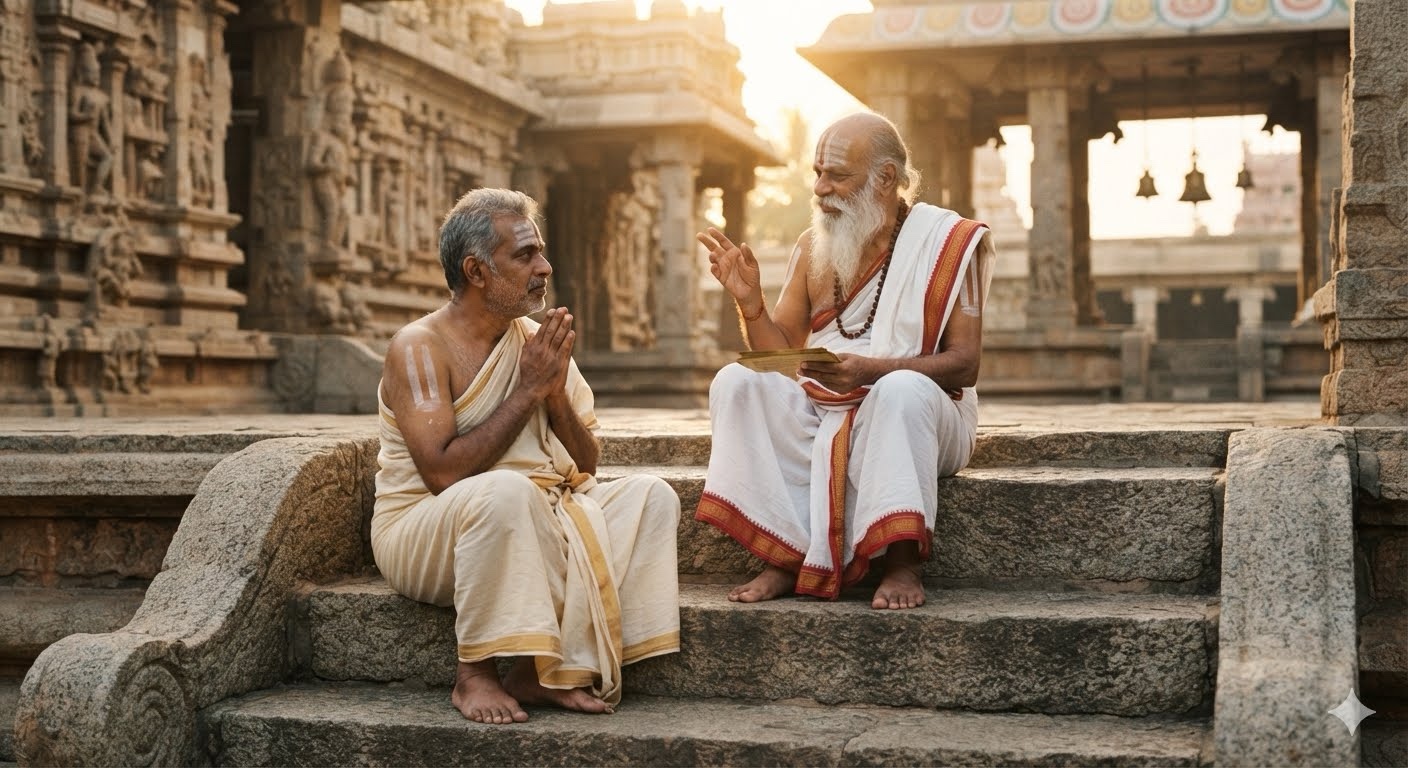
by M. K. Sudarshan August 17, 2026: Chennai, India இடம்: ஸ்ரீரங்கம் கோயில் வளாகத்தில் ஒரு அமைதியான மூலை, காலை நேரம். தரிசனத்திற்குப் பிறகு இரண்டு பக்தர்கள் கற்களில் அமர்ந்திருக்கிறார்கள். கதாபாத்திரங்கள்: அறியப்படாத ஸ்ரீவைஷ்ணவர் (அஸ்வ) – 70 வயது, பிரபன்னர், ரஹஸ்ய த்ரய சாரத்தை கற்றவர் பாகவதர் (பாக) – 55 வயது, பக்தி உடையவர், ஆனால் இன்னும் பிரபத்தி செய்யாதவர் பாக: ஸ்வாமி, நான் தேசிகனின் ரஹஸ்ய த்ரய சாரத்தை படித்துக்Continue reading ““பாகவத ஷேஷத்வம்”குறித்த உரையாடல்”
Tag Archives: Rahasya Traya Saaram
Vidura, Birth, and Bhakti: A Tension in Reading and interpreting the Mahabharata

Author’s Note: The quotation discussed here in this essay below appears in Vedanta Desikan’s Rahasya Traya Saram, where a Mahabharata episode is re-read within a later Sri Vaishnava interpretive framework. The essay is merely an observation — neutral , non-judgmental and wholly academic. The writer’s purpose in penning the essay is solely to invite religiousContinue reading “Vidura, Birth, and Bhakti: A Tension in Reading and interpreting the Mahabharata”
Is a special mental attitude needed to study the “Sri Rahasya Traya Saram” of Sri Vedanta Desika (1268-1368 CE)?

Swami Sri Vedanta Desika’s monumental treatise on Sri Vaishnava Siddhanthic soteriology, the Srimad Rahasyatraya Sāram is a uniquely layered work that is, at once, (a) a philosophical treatise, (b) a theological manual, and (c) a catechetical‑homiletic guide. A disciple undergoing a program of serious study of this text even under the guidance and tutoring ofContinue reading “Is a special mental attitude needed to study the “Sri Rahasya Traya Saram” of Sri Vedanta Desika (1268-1368 CE)?”
The SWOT-grid and “ARTHA-PANCHAKA”: (Part 2 of 2 – CONCLUDED)

It is only very late in my life today, and I regret to say it, that I have received the Grace of Bhagavan to embark finally upon a serious study of the Rahasyatrayasaram in the traditional learning mode of “grantha kaalakshepam” under an erudite Sri Vaishnava scholar-Acharya. Because of ageing factor and also the lackContinue reading “The SWOT-grid and “ARTHA-PANCHAKA”: (Part 2 of 2 – CONCLUDED)”
The SWOT-grid and “ARTHA-PANCHAKA” (Part 1 of 2)
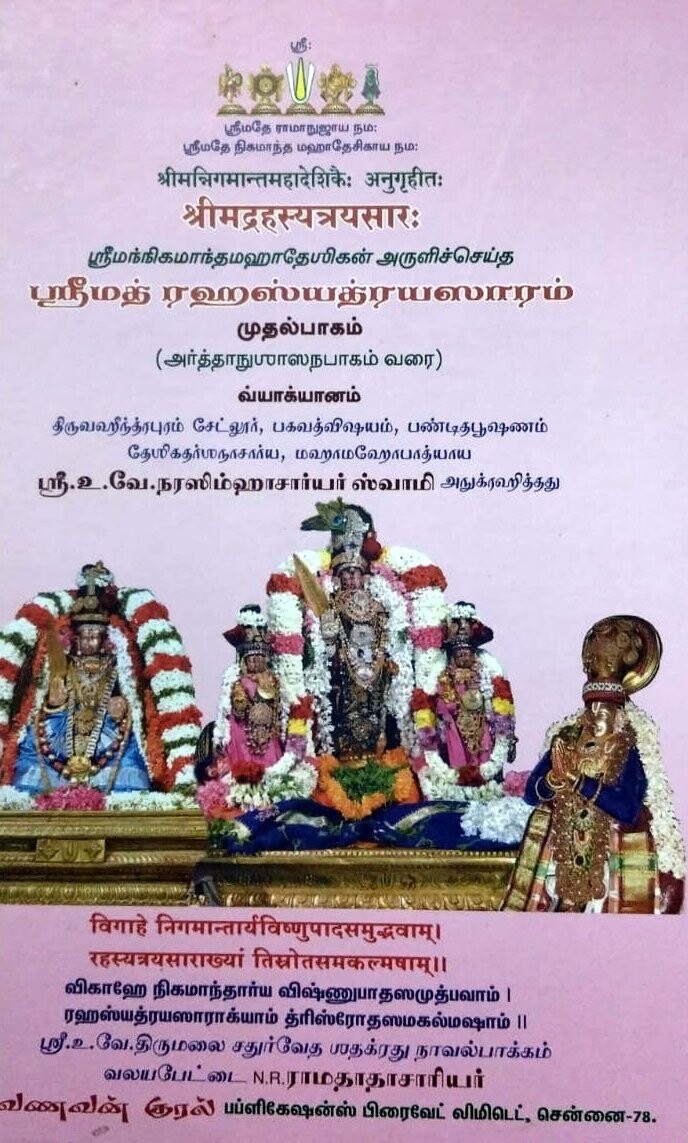
What does the Greek derived Biblical word Soteriology mean? It is the branch of theology that studies “salvation”: i.e. what the human problem is, what it means to be saved or liberated, and by what means and conditions that liberation is effected. Generally, in religious studies across the board, soteriology covers doctrines about (a) deliveranceContinue reading “The SWOT-grid and “ARTHA-PANCHAKA” (Part 1 of 2)”
“Pradaana pratitantra” in Vedanta Desika’s “Rahasya Traya Saaram”: Visishtadvaita and Quantum Physics

What is the fundamental principle of the “Indestructibility“? How is it elucidated in the Metaphysics of Visishtadvaita Vedanta? In the 3rd chapter titled “Pradaana Pratitantra-adhikaaram” in the “Rahasya-Traya-Saaram” (RTS), a seminal work of Swami Vedanta Desikan on Visishtadvaita philosophy, this fascinating question is very briefly alluded to by way of (what one may using aContinue reading ““Pradaana pratitantra” in Vedanta Desika’s “Rahasya Traya Saaram”: Visishtadvaita and Quantum Physics”
A Dialogue on the Veda, the self-existent, uncaused revealed scripture un-authored by human agency: the Visishtadvaita “darsana” (Part 2 of 2 CONCLUDED)
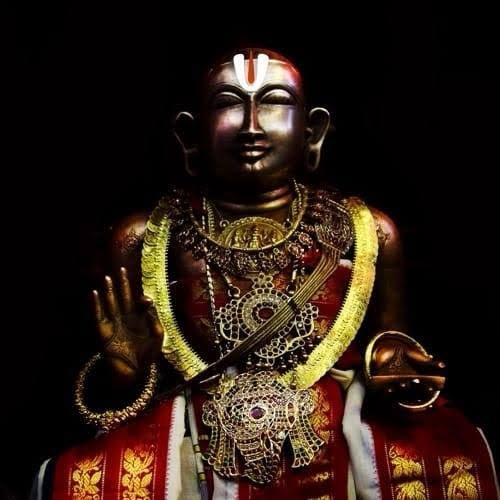
The Acharya and his student continued their dialogue as follows: The Swami:Dear one, your question is subtle and worthy of deep reflection. You say that calling the Veda “apauruṣeya” seems like a human attribution, a mental concept applied by human intellect. But hear me out carefully: The Veda is not an object of mere humanContinue reading “A Dialogue on the Veda, the self-existent, uncaused revealed scripture un-authored by human agency: the Visishtadvaita “darsana” (Part 2 of 2 CONCLUDED)”
A Dialogue on Veda…self-existent, uncaused revealed scripture un-authored by human agency: the Visishtadvaita “darsana” (Part 1 of 2)
An imaginary dialogue has been conceived and recorded below between a student and a Sri Vaishnava Acharya being held during the course of a traditional “kaalakshepam” (small intensive study-group class) session conducted by the Master for his band of disciples on the sacred Vedanta text, “Rahasya Traya Saaram” written by Swami Vedanta Desikan (1268-1368CE) TheContinue reading “A Dialogue on Veda…self-existent, uncaused revealed scripture un-authored by human agency: the Visishtadvaita “darsana” (Part 1 of 2)”
Musings on “Bhakthi”explained in Swami Vedanta Desikan’s “Rahasya Traya Saaram” as a “virtuous cycle”
ஸ்வாமி வேதாந்த தேசிகரின் “ரஹஸ்ய த்ரய சாரம்” எனும் அபூர்வ கிரந்தத்தில் விளக்கப்படும் பக்தி தத்துவம் குறித்து எழுந்திருக்கும் சிந்தனைகள் — அது ஒரே நேரத்தில் ஆன்மீக உயர்வையும் நற்பெருக்கையும் விளைவிக்கும் ஒரு புனிதச் சுழற்சியாகப் பதிவாகின்றன. எங்கள் ஸ்ரீ வைஷ்ணவ சமூஹத்தின் காவலனாகிய ஸ்ரிமத் வேதாந்த தேசிகரின் “ரஹஸ்யத்திரய ஸாரம்” என்பதின் திவ்யார்த்தங்களை விளக்கும் ஸதாசார்யர் உ.வே. ஸ்ரீ வளையப்பேட்டை இராமாச்சார்ய ஸ்வாமிகள் அவர்கள் ஆவாராந்திரம் ஓவ்வொரு வார இறுதியிலும் அருளும் கலாசேபங்களில், அடியேன் தன்னுடையContinue reading “Musings on “Bhakthi”explained in Swami Vedanta Desikan’s “Rahasya Traya Saaram” as a “virtuous cycle””