“Brahmins as secret Muslims”: Devdutt Pattnaik’s hodge-podge he tries selling as exotic delicacy

Devdutt Pattanaik’s recent framing of “Brahmins as secret Muslims” and his analogy between Brahminical and Islamic ways of life rests on several contestable historical, textual, and sociological assumptions that can be systematically challenged.

The “secret Muslims” thesis collapses very different histories and concepts into a single polemical frame. A counter‑narrative can be built by taking each claim and showing where it is historically, textually, or conceptually flawed.
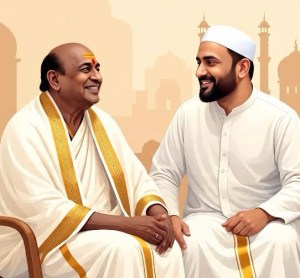
  1. Devadutt’s narrative: I am convinced that Brahmins function like secret Muslims, separated not by theology but by strategy.

Like the Muslim halal haram divide, Brahmins imposed a satvik tamasik hierarchy, introducing moralised food and behaviour codes that earlier Indian cultures did not emphasise in this way.

Counter narrative: The three guṇas (sattva–rajas–tamas) originate in Sāṅkhya ontology as universal qualities of prakṛti, not as a Brahmin/non‑Brahmin boundary marker; they apply to all beings, foods, mental states, and actions, usually as mixed tendencies, not a binary of saved/damned.​

Pre‑modern classification of food as sattvik/rajasic/tamasic is about shaping “svabhaava” or innate mental dispositions (clarity, agitation, dullness) and is not identical to a legal‑theological code like halal/haram that is grounded in divine command and explicit juristic sanction of Islam.​

So while both traditions moralise upon Food, one is part of a cosmological psychology (vide.. the “anna suktam” in the Rg Veda which is at least a 10,000-year old revelation) and the other of a revealed legal system called “Koran, Hadith and Sura” which all date back to a mere 800-year past in history. The analogy obscures more than it clarifies.

2. Devdutt’s narrative: Both Brahmins and Muslims entered India from the northwest, following the same geographic corridors into the subcontinent. Brahmins trace their cultural roots to the Eurasian steppe, linked to horse domestication around 4000 years ago, arriving in India roughly 3000 years ago.Muslims followed the same routes about 1000 years ago, spreading north to south, and east to west, mirroring earlier Brahmin movement.

Counter-narrative: Contemporary scholarship (archaeology, historiography etc.) on Indo‑Aryan language and culture speaks of complex migration and interaction over hundreds of centuries; it does not support a simplistic picture of a corporate group “Brahmins” entering as a caste block and then “moving” in the same pattern later followed by Muslims. Devdutt here is perhaps conflating the Muslim “migration” of Prophet Mohammed’s followers and faithful from Mecca to Medina and back with his cocky and less than half-cocked theory about Brahmin migration. ​Islam’s spread into the subcontinent involved very different mechanisms: military conquest, trade networks, Sufi lineages, and inter‑marriage, often coastal as much as north‑western; this cannot be reduced to “mirroring earlier Brahmin movement”.

3. Devdutt’s narrative: Brahmins insist on one ultimate reality, formless and beyond images, articulated through Advaita Vedanta.This mirrors Islamic monotheism, where God is imageless, absolute, and beyond representation. As a result, gods tied to rivers, rocks, mountains, trees, and villages are downgraded as lesser or folk deities.

Brahmins frame the Vedas as supreme knowledge, dividing the world into astika and nastika, believers and non believers.This parallels how Islam treats pre Islamic practices as jahiliya, a state of ignorance. This mirrors the Islamic division between truth and ignorance, revelation and error.

Counter-narrative: Advaita Vedānta is only one among many Brahminical systems that include dualist (Dvaita) and qualified non‑dualist (Visishtadvaita) Vedāntas, Pūrva‑Mīmāṃsā and Bhakti theologies (including Śrī Vaiṣṇava, Mādhva, Śaiva Siddhānta) that grant real status to personal, image‑worshipped deities (“archa murthy araadana”) and to local forms, and are not reducible to aniconic monotheism which is what Islam is.​ Amongst Brahmins there is no one or distinctive monotheistic worldview: the “smaartha brahmin” views godhead as “yagnya“; the “saiva” brahmin worships the “linga” as “Isvara“; Sri Vaishnava brahmins worship the form of “Narayana” as Supreme Brahman; the Saaktha brahmins worship Devi or Amba… and so on.

The Monotheism of Brahmins cannot be strait-laced into any one definitive kind as that which characterises Islam. Devdutt Pattnaik seems utterly ignorant of the famous Vedic aphorism: “ekat sath viprah: bahudaah vadanti…”: The Truth is One but conceived of in many ways by men who have realised it.

In the Brahmin view, Truth is Universal but it is neither uni-dimensional, unichrome nor unipedal. Even Advaita’s monistic conception of nirguṇa brahman is arrived at by philosophical or hermeneutical reasoning on Vedic sentences (vaakya), not by prophetic revelation, and it coexists in practice with other Vedanta ‘darsana‘ whose theology is extended upon “visishta-advaita” or qualified monism and temple‑worship — something that Devdutt ought to know is structurally different from Islamic aniconism.​

Devdutt’s supposed “downgrading” of river, tree, and village gods can be stoutly contested by the persistence of grāma‑devatā, nāga worship, and tīrtha cults in Brahmin‑led ritual systems up to the present. In the Taittiriya Upanishad (Mahanarayana Upanishad), there is a suktam exclusively devoted to the praise of the Waters as a cosmic elemental deity: “Apah devata” — “aghamarshana suktam“.

Islamic jāhiliyya denotes a specific sacred history of pre‑Qurʾanic Arabia. The expression serves as a form of grand narrative to paint pre-Islamic Arabians as barbarians in a morally corrupt social order. It is anchored in a doctrine of final revelation and prophetic correction of earlier error, for which there is no equivalent claim of chronological finality in Brahminical discourse.

The āstika/nāstika distinction is historically a philosophical category in darśana debates—the āstika accepting Veda as a pramāṇa, the nāstika rejecting it. This is not about salvation/condemnation binary aimed at common people, and is certainly not a unified social policy of “Brahmins”.​ Equating āstika/nāstika with believer/infidel imports Abrahamic categories back into Sanskrit vocabulary and distorts both.

Devdutt Pattnaik simply doesn’t know what he is talking about. He conflates history, theology, metaphysics, linguistics and religion… and tries to palm off hodge-podge to us in the hope it will be mistaken for exotic delicacy.

4. Devdutt’s narrative: Both Brahmins and Muslims mark themselves physically to signal difference and superiority. The sacred thread functions like Islamic dress codes, separating insiders from outsiders. Bodily marks and ritual symbols reinforce hierarchy and controlled access to the sacred.

Counter-narrative: Marks like the yajñopavīta, “urdhva-pundhram” or tilaka function as saṃskāra‑based identity and ritual readiness; they are not imposed by a central lawgiver nor standardised across all Brahmin groups, and historically many non‑Brahmin communities have worn sacred threads or caste‑marks as well. The “vibhuthi” smears worn across the forehead is a practice of many non-Brahmins as well. Such marks do not denote varna, jaathi or matham… they denote piety, or bhakthi. ​They are worn purely out of individual choice or in compliance of community’s religious custom.

Islamic dress and beard codes — or the dishdasha and the abbaaya or burqah —derive their authority from scripture and ḥadīth as interpreted by fiqh schools, with explicit legal obligations for modesty; these are structurally different from caste and sectarian insignia tied to life‑cycle rites.​​

​5. Devdutt’s narrative: Both systems are deeply homophobic, treating same sex desire as unnatural or sinful, justified through divine sanction. Both are misogynistic, restricting women from sacred authority. In mosques, prayer leadership is male; in temples, priesthood and core rituals are male dominated.

Counter-narrative: In the Brahminical case, key śruti texts do not legislate explicit punishments for same‑sex behaviour; many dharmaśāstra and purāṇic sources either ignore it or treat it contextually, which has allowed contemporary Hindu bodies to articulate LGBT‑inclusive readings grounded in karma, pluralism, and the four puruṣārthas (dharma, artha, Kama, moksha).

Womanhood holds a unique and central position in the Brahminical way of life. The Upanishad vaakya ” “maatru devo bhava...”Revere your mother as you would God” clearly attests and affirms the status of women in society. No Vedic ritual involving ‘agni’ or Fire can be performed by a Brahmin “gruhastha” (householder) without the presence of his wife beside him. The Brahmin wedding ceremony is solemnized by mantras which hail the woman as “saha-dharmachaarini” : she is the husband’s life-partner in all Dharmic endeavours in life lived together.

The Brahmins adore and worship female saints with equal fervour as male: Andal of Sri Villiputtur is one among the 12 Holy Azhwars.

Once again, Devdutt speaks from utter ignorance.

6. Devdutt’s narrative: The crucial difference is tactical: Muslims seek conversion and expansion; Brahmins seek dominance without conversion. Brahmins prefer rule without inclusion, preserving power by exclusion.

Counter-narrative: Historically, Brahmins have not had a single “tactic”: there were kingdoms where Brahmins were marginal; there were regions where Śaiva or Vaiṣṇava non‑Brahmin ritual specialists dominated; and there were periods where śramaṇa, bhakti, or anti‑Brahmin movements had drastically reshaped religious life of the peoples. Indian History is a multi-mosaic social continuum. It cannot be defined in Marxist terms of class-struggle or dominance … which is precisely (and insidiously) what Devdutt is implying by suggesting Brahminical “strategy of dominance“. ​

Islamic traditions themselves too cannot be said to be uniformly conversion‑oriented; in many Indian contexts, Islamic rule did not translate into mass conversion, and rulers often governed multi‑religious populations with layered legal structures.​

The idea that one civilisational bloc “seeks expansion” and the other “seeks dominance without inclusion” reifies highly contingent or variable historical patterns into essences or certainties, which serious historiography will find untenable.

7. Devduttt’s narrative: The unresolved question remains: who taught whom, or whether both inherited the same patriarchal, monotheistic, control oriented worldview from older West Eurasian traditions.

Counter-narrative: Modern scholarship repeatedly cautions against “single‑source” explanations of patriarchy or hierarchy; both Hindu (or Brahminical) and Islamic patriarchies have been shaped by local economies, state formations, and colonial modernity as much as by any deep origin in a putative Eurasian steppe culture.

Academic or intellectual histories of Vedic–post‑Vedic India, and of Islam in Arabia and even beyond, point to very different genealogies: one centred on śruti, yagnya, karma, rebirth and multiple darśanas; the other founded upon prophetic monotheism, eschatology, and codified law.

A more precise comparative framework would therefore:

  • Compare specific institutions (qāḍī vs purohita, madrasa vs pāṭhaśālā, waqf vs temple–maṭha endowments) rather than theorise about entire “worldviews”.​
  • Track how particular texts and practices changed under concrete pressures—Buddhist competition, bhakti, Islamic rule, imperial-colonial codification—without assuming a specious, vague and timeless “strategy of control“.

Within such a framework, meaningful similarities and borrowings can certainly be discussed, but Devdutt Pattnaik’s slogan that “Brahmins function like secret Muslims” turns a nuanced comparative project into a polemical caricature … if not into clownish antic.

Sudarshan Madabushi

The “Marghazhi Music Season, Chennai”: A festival of “divinity” travesty

https://www.facebook.com/share/v/1JH6uPKxpJ/?mibextid=wwXIfrhttps://www.facebook.com/share/v/1JH6uPKxpJ/?mibextid=wwXIfr

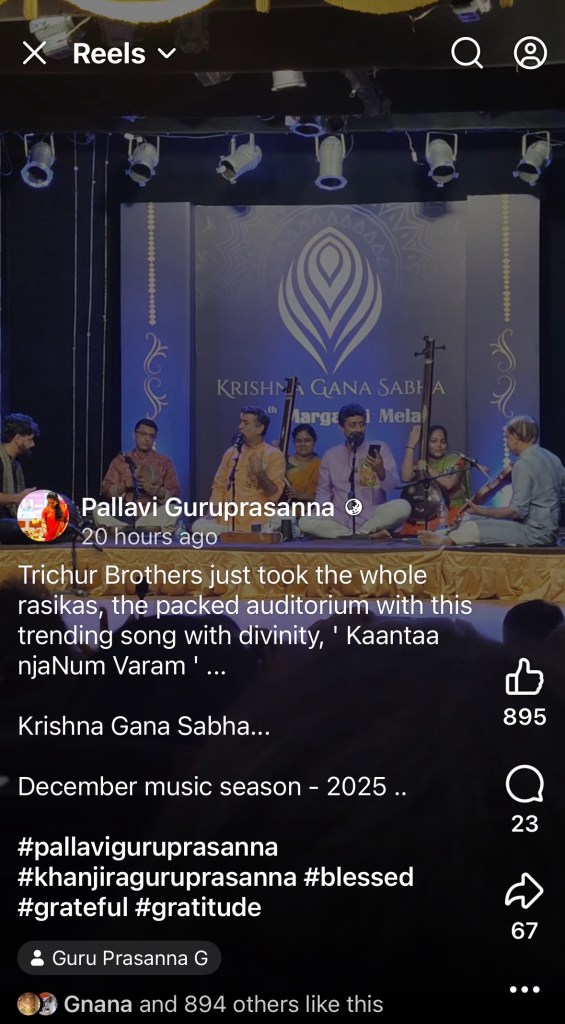
The Marghazhi Music Festival Season in Chennai is fast turning into a jamboree of circus stunts by various performers. And the audiences today who go to these performers go there not to enjoy true classicism of Carnatic music but to be entertained by the travesties of it delivered by so-called young “innovative” , “revolutionary” Vidwans and Vidushis who have come to believe that the surest way to protect preserve and propagate this ancient art form of music is to “un-shackle” it from the clutches and grip of classicism and hallowed “sampradaya” “paattantharam” and “popularise” it instead in the manner and high-voltage, high-decibel gusto of a rock-star concert . And the audience — irrespective of its demographic or gender or age profile — is seen drooling over it and applauding it all with equal gusto .

This performance of Trichur Brothers on stage at the Krishna Gana Sabha Chennai is an outstandingly outrageous example of de-Classicisification of Carnatic music kutcheri form . It’s a form of “creeping debasement” of tradition in the name of “generational re-culturing and gentrification” of Carnatic music .

I know now that immediately some ardent fan of the Trichur Brothers will rise to defend them by trying to rubbish my opinion expressed above . “What’s wrong with singing this exciting, lilting Tamil light-music album song based “tukkada” piece in a modern kutcheri?… Especially, if it pleases the audience ? Why, in the olden days , didn’t Madurai Mani sing the “English Note” piece ? And didn’t Muthuswami Deekshitar himself compose many pieces with a touch of Western music elements ?… Why this “Rasika attitude of bigotry”…. Why this needless , mean-spirited , surly , grumpy , sour-puss clinging to old world notions of classicism and purity?”

Madurai Mani Aiyer was one of a kind of musician … he was “Sui generis”… He was so exceptional that anyone trying to follow his example and style would only end up insulting his genius.

But I know well that modern Rasikas will reject all these my protestations as “rubbish”.

Against all such stout doughty arguments , I have really no forceful riposte … I have to concede that I’m an old-timer , a prisoner of anachronisms and outdated views of what classical Carnatic music is and ought to be . I just find myself unable to wise up and learn to “go with the flow” of the time and age . There’s nothing permanent except impermanence, and nothing more fashionable than the latest. As a fossil-age Rasika, I thought it better for me to give up the world of Carnatic music realising that it already has given me up.

Which is the reason why , in the last few years , I have stopped attending Marghazhi Music Festival Season kutcheris which I now regard as now being no more than razzmatazz , glitz , glamour and IMHO … pure new age schmalz.

I have therefore conceded defeat gracefully and distanced myself silently far from the madding crowd of present-day Rasikas .

In reclusion , there may be desolation …. But sometimes in desolation there is also comfort of great consolation.

Sudarshan Madabushi

Bhakti’s triumph over plunder and mayhem: revisiting the legend of Sri Rangam “thulaka naachiyaar” with “Eepa”

This morning “Eepa” — a doyen of Tamil literature known for his Sahitya Akademi Award-winning novels and plays — Indira Parthasarathy sent me a sharp question as a WhatsApp message. It tested my familarity if not knowledge, as a Sri Vaishnava (albeit an “Unknown and Unusual” one!), of age-old temple customs and traditions in the Sri Rangam Temple.

“What’s your take on துலுக்க நாச்சியார் and that Sri.Ranganathar’s breakfast “நைவேத்தியம்” is served from her sannadhi everyday?”

Momentarily, I was taken aback by the query since although I have worshipped at the temple of Sri Ranganathan at Sri Rangam several times in my life, and also had heard of the “thulaka nacchiyaar sannidhi” (the “shrine of the Muslim consort of the Deity”), I had given it really no more than cursory attention or thought. It was my understanding that it was one of several hundreds of legends and hyperbolic narratives that over centuries had been woven around the history and hagiography of the famous temple so dearly cherished by all Sri Vaishnavas in the world.

However, Eepa’s question to me that came right out of the blue, so to say, made me sit up and try and recollect all that I knew from vague and patchy memory about this shrine dedicated to a Muslim princess who came to be apotheosised, deified and idolised inside the sanctity of this premier Sri Vaishnava place of worship.

Here below are a few snatches of the exchange on the matter that Eepa and I shared with each other later this the morning.

*********

Sir, I’ve not read the sampradaya texts on this old legend . What I know is limited to whatever I’ve been able to gather about this Temple tradition from just hearsay… Whatever I’ve heard was narrated to me by family elders and relatives, Sri Rangam priests and a few other knowledgeable friends. I’m not sure what the “sthala purana” says about this. But like you, I too have always wondered if during Ramanuja’s time this practice of offering Sri Ranganatha “breakfast naivedyam” sent from “Thulaka Nacchiyaar” had been prevalent. I know for a fact that Ramanujacharya did not include it as a routine “sevai” (ritual service) in the temple’….

Eepa then posed another question: “In Tirupathi she is called ‘Bibi Nacchiyar‘ . Right?”

And I replied: No, Sir …. That’s in Melkote Tirunarayanapuram. Tirumala has no such shrine.

Eepa’s probing made me try even harder to remember whatever I had earlier gathered from hearsay about this shrine of Thulaka Nacchiyaar… and slowly, one by one, the halting memories began to surface inside my mind.

*************

Thulukka Nachiyar, also known as Surathani, represents a legendary figure in Sri Vaishnava tradition at the Ranganathaswamy Temple in Srirangam, embodying profound devotion that transcends religious boundaries.

The story originates from the 14th-century invasions by Malik Kafur, when the temple’s utsava murti (processional idol) of Lord Ranganatha was seized by the Muslim army general and taken to Delhi; there, the Muslim commander’s daughter — a pubescent lass and a royal — fell deeply in love with the idol of the Deity. Her bridal-mystic instincts were stirred , and she began treating it with utmost care, affection and reverence. She also became very possessive about Sri Rangantha’s icon.

History suggests that Ramanujacharya travelled up to the Delhi Sultanate capital city to secure the recovery with the help of devotees and temple devotees of the idol and brought it back to Sri Rangam. But the little princess was so besotted with the Lord of Sri Rangam that she refused to part with it and followed it all the way to Srirangam. She never left the holy city. She sacrificed her life in devotion to the Deity until her end when she was believed to have merged into the sanctum in much the same manner as Sri Vaishnavas believe Sri Andaal herself too attained union with Lord Ranganatha. It was thus that Thulakka Naachiyaar’s deification came about as one of Ranganatha’s consorts with a dedicated shrine being consecrated in the temple’s second circular concourse or prakaram.

*********

The custom of offering “breakfast naivedyam“—specifically butter rotis and sugar prepared in Mughalai style —from Thulukka Nachiyar’s sannidhi persists daily to this day. It is first presented to her before Lord Ranganatha. This practice honors her legendary bhakti, where Ranganatha is said to have appeared in her dreams, accepting her as his wife, and temple priests built her shrine as a portrait rather than as an idol, (respecting Islamic aniconism!) with agil and sandalwood rituals. Such syncretic elements highlight Sri Vaishnavism’s historical inclusivity, as seen in Ramanuja’s era, reflect devotion superseding caste and creed.

In Sri Vaishnava lore, this narrative exemplifies bhakti’s universality, portraying divine grace extending to even a Muslim woman whose love rivaled that of traditional consorts like Andal. Variations of this legend of Sri Rangam exist —some link it to Melkote Temple’s “Bibi Nachiyar“ or emphasize Ramanuja’s role in consecrating it there in that temple town —but the Srirangam version is meant to underscore Ranganatha’s compassion, when he accepted the Muslim girl-bhakta merging herself unto himself.

The legend affirmed two of Sri Vaishnavism’s theological tenets: feminine right to worship as equalling male’s and syncretism in worship that brooked no communal difference. It brought the entire community of Sri Rangam together. It thus countered the Islamic invasion’s trauma suffered by Sri Rangam and at the same time, it also affirmed the doctrine of “saranagathi tattva” — the true surrender to Vishnu that dissolves divisions — which aligns with Vishishtadvaita principles of qualified non-dualism.

The annual festival — “kalyana utsavam” — in Sri Rangam celebrates the Thulaka Naachiyaar’s union with the Almighty with great fanfare and grandeur, reinforcing communal harmony while at the same time solemnly memorialising — amidst the old collective memories of — community sufferings of historical pillage and plunder that once upon a time in history had been wreaked upon them.

***********

Even amongst the faithful within the Sri Vaishnava community, there are those who believe in the historicity of Thulakka Naachiyaar.… lock, stock and barrel… while there are equal number of skeptics too who view it as a post-invasion compromise. And that is what I told Eepa too in my messages to him:

Sir, I feel that this shrine was probably constructed after the Muslim invasion . Maybe the temple administrators wanted to maintain communal amity through what is known in political discourse today as “minority appeasement” .

Forgive me, Sir, if you think I am sounding a bit too cynical and incredulous here, but some serious historians of Sri Rangam temple do classify this temple custom as myth-making intended to foster harmony, not literal history, since it perfectly aligns with Sri Vaishnava emphasis on prapatti or saranagathi over rigid historicity.

I am sure that you will agree with me when I say that we Sri Vaishnavas as a community are extremely flexible to a fault. We are so very agile and our adaptiveness to social and political changes and circumstances is what makes us as survivors of historical upheavals and tumult through the ages. It should therefore not surprise us at all that even so soon after the Islamic Invasions of the Sri Rangam temple, Sri Vaishnavism was so very adept and resilient that it could convert Adversity (i.e. Muslim invasion) into Opportunity (i.e. co-opting and then digesting utterly alien religious influences into its own body of religious customs).

***********

Temple records and oral traditions uphold the legend of Thulaka Nachiyar’s bhakthi as genuine devotion, not merely some kind of conquest glorification. Also, her story of devotion to Ranganatha almost rivals that of Sri Andal since it is a narrative that enriches Tamil Vaishnava heritage, inviting reflection on how bhakti unites diverse souls before the Divine.

While we cannot challenge the faith of the faithful, at the same time we also cannot dismiss outright the skeptics view of the legend of Thulaka Nachiyaar. Their incredulity is based on their view that the most authentic record of the history of the Sri Rangam temple and its rituals must remain true to the “kovil ozhugu” manual of sanctum which was authored by Sri Ramanujacharya himself.

For the skeptics it would be impossible to conceive anything like a daily rite of offering breakfast naivedyam from Thulukka Nachiyar’s sannidhi as part of the temple protocols outlined in the “Kovil Ozhugu“. The introduction of it into temple protocols later by the Sri Vaishnavas of Sri Rangam amounts to a travesty of the priestly order ordained by Ramanuja. So, their moot question is: If that Muslim princess followed Sri Ramanuja all the way from Delhi to Sri Rangam and became lifelong bhaktha of Ranganatha, why did Ramanuja not institute this “naivedyam” rite as part of the “kovil ozhugu” if at all he did wish to instal and immortalise her as an exemplar of Sri Vaishnavite faith?

Kovil Ozhugu chronicles the Srirangam temple’s history, rituals like annual Adhyayanotsavam, and Ramanuja’s reforms on daily conduct, temple management, and festivals such as Pagal Pathu and Ira Pathu. It details his efforts to organize services, introduce order against vested interests, and specify procedures for utsavams, but lacks mention of Thulukka Nachiyar or her naivedyam custom.​ Ramanuja lived in the 11th-12th centuries, implementing core protocols amid opposition, including a brief exile to nearby Tiruvellarai. Thulukka Nachiyar’s legend ties to the 14th-century Malik Kafur invasion, but only as a post-Ramanuja event, making her rite as clearly much later syncretic addition, not codified in his manual.​

While Ramanuja emphasized inclusive bhakti, the specific Muslim-style butter roti offering could have evolved only post-invasion as a new sacramental form of devotional homage, upheld by temple custom but absent from Kovil Ozhugu’s documented reforms. This perhaps highlights Sri Vaishnava adaptability, layering new practices onto foundational rites…. yes, no doubt it indeed! … but it does not vouchsafe a historical fact or truth for the Sri Vaishnava laity. ​

So, who then included it in daily rites of the temple ? And when?

No, historical records attribute the inclusion of Thulukka Nachiyar’s naivedyam rite in Srirangam’s daily protocols to even the times of Sri Manavala Mamunigal (15th century) or his immediately later disciples.​ The custom therefore must have emerged only after the idols’ return around 1370 CE, following the Vijayanagara Empire’s defeat of Muslim forces, as devotees then might have formalized her shrine and breakfast offerings to honor her legendary devotion during the 60-year exile of the deity’s utsava murthy out of Sri Rangam temple.

Temple priests and bhattars, guided by oral traditions and the Kovil Ozhugu’s spirit of adaptation and flexibility, most likely integrated the Mughalai-style butter rotis without naming a specific acharya. Sri. Manavala Mamunigal certainly revitalized Srirangam, post-Invasion, by reorganizing services and emphasizing Ramanuja’s ideals, but sources like temple chronicles focus more on his contributions to festivals and sampradaya revival,than to this syncretic rite of Thulaka Nachiyaar. Pillai Lokacharyar (13th-14th century), who safeguarded the Ranganatha utsava murti idol during the invasions, is closer temporally but he too is unlinked to formalizing this Muslim Nachiyaar’s daily naivedyam.​

The temple practice got solidified mainly perhaps through collective bhakti of Sri Rangavaasis (citizens of Sri Rangam) , reflecting Sri Vaishnava resilience, with this Nachiyaar sannidhi’s rituals evolving via priestly consensus rather than any single acharya’s decree.

All this certainly is meant to underscore devotion’s triumph over historical trauma.​

***********

Often a legend or myth is created as a way of coping with trauma and of coming to terms with psychological scars and aftermath. So, did Sri Rangam priests invent this Thulaka Nacchiyaar simply to serve as a collective therapeutic to help soften the pain of invasion trauma?

Such a question naturally arises in the mind of even the most devout Sri Vaishnava, if he is honest to himself/herself.

Was this Muslim girl real or perhaps fictional ?

Thulukka Nachiyaar can only be understood — even by Sri Vaishnavas — as a legendary figure in Sri Vaishnava tradition rather than as a verifiable historical person. She is rooted in temple lore only to commemorate devotion amid those terrible 14th-century invasions.​

The narrative of a Muslim commander’s daughter falling in love with Ranganatha’s utsava murti during its Delhi exile draws credence only from oral traditions and temple chronicles like Kovil Ozhugu extensions, but it lacks contemporary Islamic or Delhi Sultanate records naming “Surathani” or such an event. Historians view it as hagiographic, symbolizing bhakti’s triumph over plunder and mayhem by Malik Kafur (1311 CE) and Ulugh Khan (1323 CE), with the Nachiyaar’s shrine and her portrait (not idol) and her naivedyam evolving more as post-recovery syncretism rather than true sacrament. It most probably got instituted inside the temple on considerations and severe compulsions which really had nothing to do with either Ramanuja’s manual of temple rites or the Paancharaatra Agama which alone regulates, in fact, all other rites of this famous Sri Vaishnava temple.

**********

The narratives of Ramanuja going to the Delhi Sultanate to recover the idol of Ranganatha – has 2 versions : one that he went from Sri Rangam and returned with the idol and the other that he went from Melkote and returned there with the idol known as Selvapillai.

Which is true ? Which is more prevalent in popular belief?

These too are questions raised by serious historians abd hagiographers.

Neither version attributing idol recovery from the Delhi Sultanate directly to Ramanuja is historically accurate, as he lived in the 11th-12th centuries, predating the 14th-century invasions by Malik Kafur and later sultans. Both narratives are hagiographic legends blending his life with later temple events to exalt his divine prowess.

Melkote Variant:
The more prevalent popular belief links Ramanuja to recovering the utsava murti “Ramapriya” (later named Selvapillai or Sampatkumara) from Delhi for Melkote (Tirunarayanapuram), where he resided for 12 years. In this tale, Ramanuja journeys north, identifies the idol cherished by the sultan’s daughter via divine vision, calls it forth miraculously, and returns it amid pursuit, with her following as Bibi Nachiyar.


Srirangam Ranganatha Variant:
A rarer version swaps locations, claiming Ramanuja retrieved Ranganatha’s idol from Delhi for Srirangam, sometimes conflated with Thulukka Nachiyar lore. This lacks strong hagiographic support and contradicts timelines, as Srirangam’s invasions occurred post-Ramanuja.


Melkote’s Selvapillai story dominates Sri Vaishnava lore, upasana texts, and pilgrim narratives, symbolizing Ramanuja’s universal bhakti triumph, while Srirangam credits later acharyas like Pillai Lokacharyar for safeguarding during actual invasions. These myths underscore Vishishtadvaita’s inclusive ethos over literal history.

********

The fantastic tradition and shrine of Thulaka Nachiyaar of Sri Rangam thus suggests only one stand-out motif of the art of archetypal storytelling: The necessity to heal communal trauma and affirm Vishnu’s universal grace.

​**********

Sudarshan Madabushi

How the mantric “ma” syllable (“म”or “ம”) inspired Andal’s “Tiruppavai” and Vedanta Desikan’s “Paduka Sahasram”

Today’s Tiruppavai “paasuram” is Verse 9 which reads as follows :

தூமணி மாடத்து சுற்றும் விளக்கெரியத்* தூமம் கமழத் துயிலணைமேல் கண்வளரும்* மாமான் மகளே மணிக்கதவம் தாழ்திறவாய்* மாமீர் அவளை எழுப்பீரோ உன்மகள்தான்* ஊமையோ அன்றி செவிடோ அனந்தலோ* ஏமப் பெருந்துயில் மந்திரப் பட்டாளோ* மாமாயன் மாதவன் வைகுந்தன் என்றென்று* நாமன் பலவும் நவின்றேலோர் என்பாவாய்!

ஆண்டாள் நாச்சியார்

In this verse , it is intriguing to see the syllable “ma” appear so many times : maadatthu, maamaan magale, manikadhavu, maameer, mandhiram, maamaayan, maadhavan…. 8 times ! Does this have esoteric significance with the sacred Ashtaakshara mantra ?

In Āṇṭāḷ’s Tiruppāvai (pāsuram 9), “māmayan” (மாமாயன்) refers to Lord Viṣṇu as the “Great Magician” or “Supreme Enchanter.” This term draws from the Sanskrit “māyāvin” (मायाविन्), highlighting Viṣṇu’s divine power of māyā—his illusory potency that creates, sustains, and bewilders the universe, captivating devotees like the gōpīs.

In Sri Vaishnava theology, it evokes Krishna’s enchanting līlās, as invoked alongside names like Mādhava (husband of Mā, the Earth) and Vaikuṇṭha, urging awakening through his sacred names.

Now, it may strike one as rather odd that “maamayan” , the God as Illusion Artist should be Andal’s choice of poetic epithet for Lord Ranganatha here in this verse. We know that Sri Ramanuja’s Visishtadvaita philosophy , the concept of “maya” as an ontological reality is not posited in the same way as in Advaita metaphysics. So, why then is the Tiruppavai speaking of “maamayan” as Vishnu the creator of Maya?

In Rāmānuja’s Viśiṣṭādvaita, māyā is not outright rejected but is only reinterpreted as the real, creative power (śakti) of Viṣṇu, manifesting the universe as his dependent body rather than an illusion as in Advaita philosophy. Thus, “māmayan” in Tiruppāvai-9 praises Viṣṇu as the “Great Magician” whose māyā-śakti enchantingly sustains creation and devotees’ bhakti, aligning perfectly with Viśiṣṭādvaita’s qualified non-dualism where the world is substantively real yet inseparable from Bhagavān.

The epithet “maamaayan” thus is aptly employed by Andal since it indeed contrasts Advaita’s illusory māyā by affirming the gopīs’ (i.e. Andal’s “aayarpaadi” fellow maidens) experience of Krishna’s līlās as ontologically valid, urging us all to surrender to his potent, personal grace.

**********

Then there’s also the phrase maamaan Mahale… One will immediately begin to wonder if it has any connection with maamaayan?

In Tiruppāvai pāsuram 9, “māmaṇ maḷḷē” (மாமன் மகளே) addresses the sleeping gōpī as “uncle’s daughter” or cousin, using familial intimacy to urge her awake for the nōṉpu. This connects to “māmayan” (மாமாயன்) through layered wordplay: “māmaṇ” (uncle) echoes “mā-mayōn,” linking the gōpī‘s human kinship to Krishna’s divine enchantment, as her “maternal uncle” (Viṣṇu) who wields māyā to captivate souls. In ancient Tamil culture, it was customary for families to betroth a young maternal uncle in the family to one’s own nubile daughter … in the same way that Andal too regarded herself as already betrothed to Lord Ranganatha, the celestial maamaayan.

Āṇṭāḷ thus portrays all devotees of Vishnu as one extended family under Mādhava’s grace, where calling Viṣṇu “māmayan” invokes his enchanting names to dispel the gōpī‘s slumber, symbolizing bhakti’s triumph over tamas.

*********

In this Tiruppavai verse , it is also very intriguing to see the syllable “ma” appear so many times :

maadatthu, maamaan magale, manikadhavu, maameer, mandhiram, maamaayan, maadhavan….

8 times !!

Again, it makes one wonder if this probably has any esoteric significance with the sacred Ashtaakshara mantra ?

In Tiruppāvai pāsuram 9, the repeated “ma” syllable (māmaṇ, māmaṇ maḷḷē, māmayōṉ, etc.) forms an intentional anusandhāna (sonic linkage), evoking the Ashtākshara mantra “oṃ namo nārāyaṇāya,” whose first four syllables prominently feature “na-ma-oṃ na” with “ma” as a pivotal sound.

Periyavāccāṉ Piḷḷai (Sri Vaishnava Acharya of the 15th century CE) reveals to us that this is indeed Āṇṭāḷ’s esoteric “ma-Bija akshara” embedding, where the eight “ma” echoe or mirror the mantra’s eight akṣaras, infusing the verse with its siddhānta potency to awaken bhakti from slumber.… “maameer avaLai ezhuppiro”!

This alankāra (poetic flourish of symbols) aligns the gōpīs‘ playful familial call with nāma-saṅkīrtana, transforming poetic repetition into a veiled upadeśa of Rāmānuja’s profound prapatti doctrine , where Viṣṇu’s names dispel avidyā (nescience) like dawn dispels night.

Besides, Periyavāccāṉ Piḷḷai, also Nampiḷḷai in Īṭu, links the eight “ma” repetitions in Tiruppāvai pāsuram 9 to the Ashtākshara mantra (oṃ namo nārāyaṇāya) through esoteric anusandhāna (sound linkage) and ma-bīja symbolism. They interpret the syllable “ma” recurring in words like māmaṇ, maḷḷē, māmayōṉ, as mirroring the mantra’s eight akṣaras, where “ma” (from namo) acts as a sonic pivot invoking Viṣṇu’s enchanting māyā-śakti to awaken the soul from spiritual slumber, akin to the gōpī’s tamasic sleep.

This wordplay — pāda-vākya-pramāṇa-alankara — embeds nāma–japa (meditative chanting) within Āṇṭāḷ’s poetry, equating the verse’s recitation to Ashtākshara upadeśa, as echoed by later āchāryas like Uttamur Veeraraghavachariar Swāmi, (19th-20th century CE) who see it as veiled prapatti instruction (upadesa) for bhakti realization.

***********

This kind of pada alankara— repetitive use of “bija” syllables — is also used extensively by Vedanta Desika in his Paduka Sahasram .

It is so fascinating to note that he used the very same “ma” syllable in his very own pada alankara studded verses in that splendid Sanskrit poesy work of his. Extensive  pāda-alankāra (syllabic repetition) in Pādūka Sahasram, his 1000-verse eulogy to Lord Ranganātha’s sandals, were surely by inspired coincidence that mirrors Āṇṭāḷ’s own sonic artistry in Tiruppāvai.

Deśika uses the “ma” syllable prominently in Paddhati 9 (verses 81–90), where it recurs across pādas in a ma-bīja pattern—e.g., mādhava-mauli-mādhuryam, mama-mānasa-mohana—evoking the Ashtākshara’s “ma” pivot while praising the pādūkas‘ enchanting grace akin to Viṣṇu’s māyā. Traditional commentators in their vyākhyāna link this to Tiruppāvai’s ma-repetition, and view it as Deśika’s homage to Āṇṭāḷ’s anusandhāna, embedding nāma-saṃkīrtana to exalt bhakti’s familial intimacy under Ranganātha’s divine shelter.

Vedānta Deśika masterfully deploys pāda-alankāra as follows while mirroring Tiruppāvai’s ma-bīja, embedding Ashtākshara potency in praise of the Lord’s sandals.

Verse 81: माधुर्यमागम्य मानवेन्द्रमाधवमौळे । मम मानसमोहनं मां मायया मोहय ॥
Transliteration: mādhuryam āgamya mānavendra-mādhava-mauḷe | mama mānasa-mohanaṃ māṃ māyayā mohaya || 

Verse 85 : माधुर्यमाधारममलं मधुरं माधवप्रियम् । मम हृदयमोहनं मानं मानव्य माधुर्यम् ॥
Transliteration: mādhuryam ādhāram amalaṃ madhuraṃ mādhava-priyam | mama hr̥daya-mohanaṃ mānaṃ mānavya-mādhuryam || 

Verse 87: मामकमानस रागं मायामयं मधुरिकम् । माम् समर श्रममुक्तिं आप्नुयां मानवेन्द्र ॥
Transliteration: māmaka-mānasa-rāgaṃ māyā-mayaṃ mādhurī-kam | māṃ samara-śrama-muktim āpnuyāṃ mānavendra || 

Verse 89: मां मायया माधवमोहनमाधुर्यमाधाय । मानवेन्द्रपादुके मां रक्ष मानवेन्द्र ॥
Transliteration: māṃ māyayā mādhava-mohana-mādhuryam ādhāya | mānavendra-pādūke māṃ rakṣa mānavendra ||

************

The mantric “ma” syllable (“म”or “ம”) can be assumed to have inspired both Andal’s “Tiruppavai” and Vedanta Desikan’s “Paduka Sahasram” for the most obvious of reasons in that this very significant “bija Akshara” is also found embedded in the primordial Vedic shabdha of Pranava mantra composed of 3 syllables —- : अ , उ , and म wherein the last “ma” syllable symbolises the jivatma tattva… the individual soul that yearns for its ultimate eternal destiny (“parama purushaartha”) which is bridal, mystic union with Godhead in the celestial realm of Sri Vaikuntam… a deep, spiritual yearning which is truly the central theme of the entire 30 verses of Andal’s magnificent Tamil hymn, the Tiruppavai.

Sudarshan Madabushi

I love this “anti-library” quote of Nassim Taleb because …

…. Because at any time you visit my private home-library, on the shelves you will find at least half a dozen books lying around gathering a bit of dust, and all still waiting for me to pick them up and finish reading …

Amongst them a few would still be smelling of fresh page-unopened print-aroma that wafts around the posh roomy bookstores one visits … others, would be half-read … others with pages filled with the graffiti of my “on the margin” scrawls … and all still though would be waiting to have their last page turned and cover shut .

That’s the Anti Library that Nassim Taleb talks about below ⬇️… and it makes me so proud of my own private one at home .

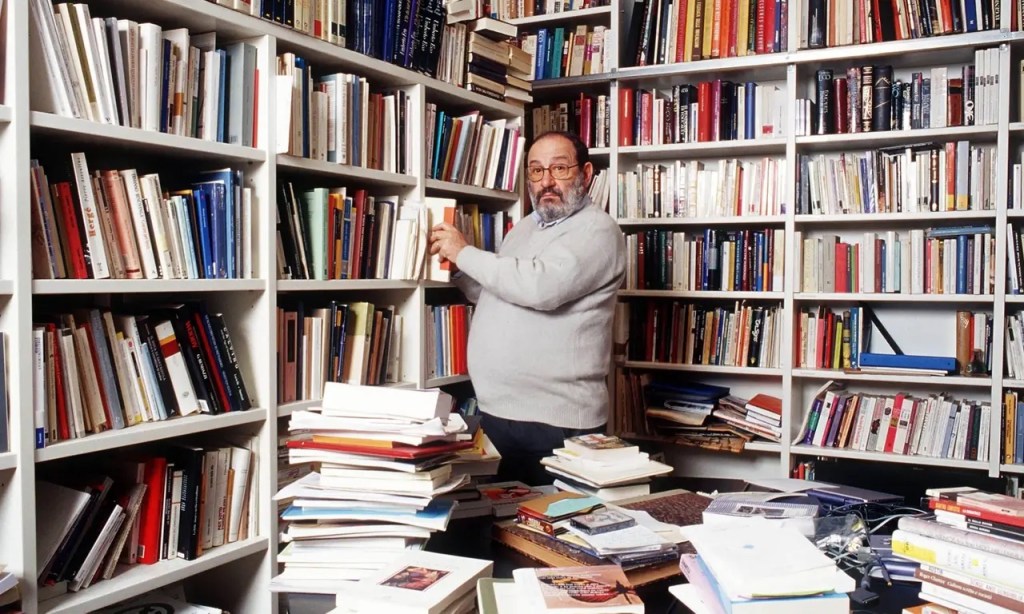
My library is nowhere as huge as Umberto Eco’s — 30,000! — but it’s certainly way well over 300 … And it’s big enough to make me feel small and even humbler all my life than ever before, and with that classic Socratic thought stuck, deeply, firmly and constantly inside my mind : “All that I know is that I know nothing”.

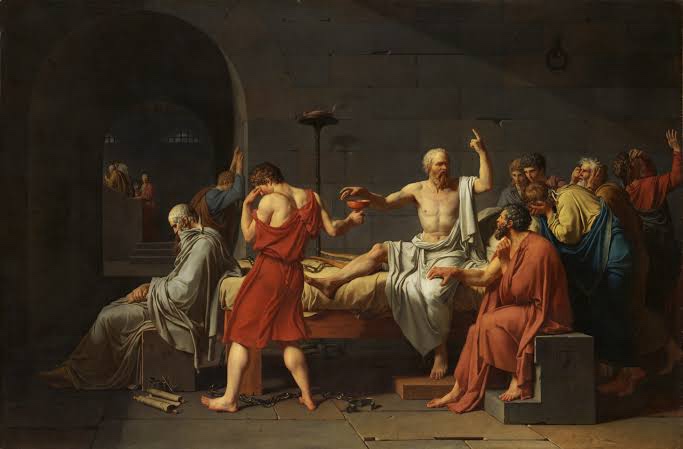
The Death of Socrates

Sudarshan Madabushi

*********

Nassim Taleb

The Anti-Library

This story offers an interesting solution to protect yourself against negative black swans. The solution is to build what Taleb calls an “antilibrary”.

🟠 Nassim Nicholas Taleb:

The writer Umberto Eco belongs to that small class of scholars who are encyclopedic, insightful, and nondull. He is the owner of a large personal library (containing thirty thousand books), and separates visitors into two categories: those who react with “Wow! Signore professore dottore Eco, what a library you have! How many of these books have you read?” and the others—a very small minority—who get the point that a private library is not an ego-boosting appendage but a research tool. Read books are far less valuable than unread ones. The library should contain as much of what you do not know as your financial means, mortgage rates, and the currently tight real-estate market allow you to put there. You will accumulate more knowledge and more books as you grow older, and the growing number of unread books on the shelves will look at you menacingly. Indeed, the more you know, the larger the rows of unread books. Let us call this collection of unread books an antilibrary.

Umberto Eco

We tend to treat our knowledge as personal property to be protected and defended. It is an ornament that allows us to rise in the pecking order. So this tendency to offend Eco’s library sensibility by focusing on the known is a human bias that extends to our mental operations. People don’t walk around with anti-résumés telling you what they have not studied or experienced (it’s the job of their competitors to do that), but it would be nice if they did. Just as we need to stand library logic on its head, we will work on standing knowledge itself on its head. Note that the Black Swan comes from our misunderstanding of the likelihood of surprises, those unread books, because we take what we know a little too seriously.

Let us call an antischolar a skeptical empiricist. Someone who focuses on the unread books, and makes an attempt not to treat his knowledge as a treasure, or even a possession, or even a self-esteem enhancement device.

Charlie Munger has a great line on this idea of not treating your knowledge as a treasure: “Any year that passes in which you don’t destroy one of your best loved ideas is a wasted year.”

And the co-founder of Airbnb Brian Chesky also talks about this idea of never settling with what you currently know, and always being in a place of becoming… 

🟠 Brian Chesky:

I think that that is the key. It’s learning, it’s growing, it’s curiosity, it’s constantly having that hunger and that fire to always want to be better, to feel like I haven’t made it yet.

The reason I say I haven’t made it yet is because if I’ve made it, then I’m done.

And I want to feel like an artist. Bob Dylan used to say an artist has to be in a constant place of becoming. And so long as they don’t become something, then they’re gonna be okay.

“Could not even understand the secret of their talent”!

Both Ramanujan and Shakuntala Devi probably had very rare noetic faculty. 

Their minds had intuitive capacity to unravel abstract and abstruse constructs without using Reason… Reasoning was just an aid but not the driver of their mathematical prowess. 

Sometimes , they even did not understand  how their mind and intellect came up with the mathematical feats they found themselves achieving so involuntarily. 

That’s the power of the intuition of noetic minds. 

Ramanujan often said that his theorems and equations were intuited in a cognitive flash involuntarily. And he could attribute it only to his “Ishta devata”… the Namagiri Ambal of Namakkal. 

I don’t know if Shakuntala Devi was religious minded and similarly experienced also noetic divinations as Ramanujan. 

Please read this blogpost 

Regards , 

Sudarshan Madabushi

Sent from my iPhone

On 20 Dec 2025, at 7:53 AM, Chittanandam V R <> wrote:

These are massages exchanged in another Group on Srinivas Ramanujan and Shakuntala Devi.

Chittanandam

Shakuntala Devi and Srinivasa Ramanujan are often mentioned together because both were Indian numerical prodigies—but their genius, contributions, and places in mathematics are fundamentally different. Comparing them carefully helps avoid a very common misunderstanding.

Below is a clear, respectful, side-by-side comparison.


1. Nature of genius

Shakuntala Devi

  • Genius in mental computation and numerical intuition
  • Excelled at speed, accuracy, and pattern recognition
  • Mathematics as performance, play, and pedagogy

Srinivasa Ramanujan

  • Genius in abstract mathematical creation
  • Excelled at discovering deep, original structures
  • Mathematics as theory, proof, and discovery

Key difference:

Devi mastered existing mathematics in astonishing ways; Ramanujan created new mathematics.


2. Type of mathematical contribution

AspectShakuntala DeviRamanujanNew theorems❌ No✅ HundredsFormal proofs❌ No⚠️ Rare (but ideas were original)New formulas❌ No✅ YesResearch impact❌ None✅ EnormousEducational impact✅ Very high⚠️ Limited during life

Ramanujan’s formulas are still used today in:

  • Number theory
  • Modular forms
  • Partition theory
  • Mathematical physics

Shakuntala Devi’s work impacted:

  • Math education
  • Public engagement
  • Cognitive understanding of calculation

3. Relationship with formal mathematics

Shakuntala Devi

  • Largely self-trained
  • Did not work within academic mathematics
  • Focused on practical arithmetic and puzzles

Ramanujan

  • Also largely self-taught
  • Worked at the frontiers of pure mathematics
  • Collaborated with Hardy at Cambridge
  • His notebooks are still being studied a century later

Both lacked formal schooling—but only Ramanujan advanced the discipline itself.


4. Creativity vs. discovery

A useful analogy:

  • Shakuntala Devi is like a virtuoso pianist performing existing compositions at superhuman speed and precision.
  • Ramanujan is like a composer inventing entirely new musical languages.

Both require genius—but they are different kinds.


5. Public perception vs. mathematical legacy

Shakuntala Devi

  • Famous worldwide during her lifetime
  • Guinness records
  • Inspired millions
  • Legacy is cultural and educational

Ramanujan

  • Little-known while alive outside academia
  • Now regarded as one of the greatest mathematicians in history
  • Legacy is foundational and eternal within mathematics

6. How mathematicians view them today

  • Shakuntala Devi is admired as:
    • A phenomenal mental calculator
    • A gifted communicator
    • A symbol of intuitive numerical ability
  • Ramanujan is revered as:
    • A once-in-a-century mathematical mind
    • A source of ongoing research
    • A creator of ideas far ahead of his time

Mathematicians do not place them in the same category—and that is not a criticism of Devi.


Final takeaway

Shakuntala Devi showed what the human mind can do with numbers.
Ramanujan showed what the human mind can discover about numbers.

Both are extraordinary.
They are simply extraordinary in different dimensions.

Y.Markandeyalu

**********************************

I am still confused as to whether she was a Mathematician or an Entertainer.She did not derive any theorem that could have made such calculations easier and simpler for thousands of youngsters in India. In short she could not even understand the secret of her talent.To compare her with Ramajunan or other mathematicians , i think, would be sacrilege.Yes,she was blessed with a great memoryDr.Sundaram Sriniasan*******************************

She did mainly 2 books; one about the homosexual because she found her husband to be that later after the marriage and disappointment in life made her write the book. Another about the numbers mystery Joy of numbers which would show how she derived on her own short routes for phase of derivation which she did mention. Even Ramanujan did a one line answer by calculating in mind. Her memory power was sited right as a kid and developed not only in Maths, but applied the maths to astrology which she learnt later. SO ONE CANNOT CALL IT AS A FLUKE OR BY MEMORY ENTERTAINER. ASHATAVADHANI WAS NEVER AN ENTERTAINER. As a matter of fact she taught the methods of derivation by training daughter and she also went well ahead. Vedas do have shulva sutras and how big multiplications or divisions etc can be done by transfer of the digits and in 2 steps deriving the right answer. Ofcourse she when questioned expressed her ignorance about the vedic maths. Hence she is a prodigy. There were too many on earth and 80% of them did not invent anything but applied maths. So sakuntala is not an entertainer like pack of cards magician. World ack her talents.

Rajaram

**********************************

Everyone is differently endowed. In her own way she was remarkable and brilliant. But Ramajunan belongs to the league of Einstein’s. Einsteins happen once in a century.

Y.Markandeyalu

*********************************

Not on the talents of Shakuntala, but her behaviour during a trip she made to Tokyo, where she was our (my family’s) guest.  Her purpose during that trip was to promote her power in astrological prediction from the Indian Community in Tokyo.  There was  good response as she was talented in that art.  While she attended thousands of queries on a compensation basis, her temper in general did not go with a lady of her stature.  She was shouting at some of the people who had doubts about their astrological predictions.  Out of ten, six were disappointed.  As a host for her, it was a tough task for me to handle the situation.  Just an addition!  

Mani, who lived in Tokyo for nearly 40 years.

********************************************************

The European Union (EU): a “tin-pot republic” in stark contrast to India’s sophisticated and enduring political Union?

The ongoing Russo-Ukraine War has badly exposed the fragility and instability of the political unity and integrity of Europe and NATO. Watching the scenes and debates inside the European Parliament makes one suspect that the Union is rapidly fraying at its seams which may give way anytime soon.

As an Indian looking at the the EU from outside, I cannot help comparing the European Union of 27 states and the Indian Union of States of 25 States and concluding that the Indian one is by far more solid and enduring than the former.

1. In what fundamental and characteristic ways — i.e. constitutionally, structurally, culturally, economically, politically and militarily — is the EU different from the Indian Union ?

2. What are the reasons why, relatively speaking, the EU of the First World look so ragged and disunited in contrast to the Indian Union of the so-called “global South”?

3. Why does the EU look like a “banana tin-pot republic” in stark contrast to India’s sophisticated and enduring political Union?

In trying to further explore the question, we come up with the following comprehensive answers shedding quite some light on it.

*********

The European Union (EU) and Indian Union differ fundamentally in their foundational design, with the EU functioning as a confederation of sovereign states and India as a centralized federal republic. These distinctions, amplified by historical, cultural, and geopolitical factors, contribute to perceptions of EU fragility amid crises like the Russo-Ukraine War, contrasting with India’s relative cohesion.


Constitutional Differences
India’s Constitution establishes a “union of states” with a strong center, blending federal and unitary features through a single written document that vests sovereignty at the national level and limits state secession. The EU lacks a unified constitution; instead, treaties like the Lisbon Treaty create supranational institutions, but ultimate sovereignty remains with member states, allowing opt-outs and vetoes. This makes India’s framework more integrated, as states cannot unilaterally exit, unlike EU members.


Structural Variations
India operates a hierarchical structure with a dominant Union government controlling defense, foreign affairs, and finances, while states handle local matters under central oversight via bodies like the GST Council and NITI Aayog. The EU’s structure is decentralized, with the European Commission proposing policies, the Council representing states, and the Parliament providing limited oversight, leading to fragmented decision-making. India’s “national federalism” pools resources centrally, fostering uniformity, whereas EU “executive federalism” relies on intergovernmental consensus.


Cultural Factors
India’s ancient ethos of “unity in diversity,” rooted in shared philosophical traditions and historical assimilation, underpins national identity despite linguistic and ethnic pluralism. The EU, comprising historically independent nations with distinct languages, religions, and memories of conflict (e.g., Franco-German wars), pursues “unity in diversity” post-World War II but lacks deep cultural homogeneity. India’s civilizational continuity promotes instinctive solidarity, while Europe’s nation-state loyalties often override EU allegiance.


Economic Distinctions
The EU features deep integration via a single market, common currency (eurozone for 20 states), and customs union, but fiscal policies vary, causing tensions like during debt crises. India’s economy is a unified internal market with centralized taxation (e.g., GST), enabling resource redistribution from richer to poorer states without veto risks. EU economic interdependence exposes divisions over burdens, such as Ukraine aid funding, unlike India’s cohesive fiscal federalism.


Political Dynamics
India’s parliamentary system ensures single-party or coalition majorities at the center, enabling decisive action and national parties bridging states. EU politics involve multi-party fragmentation across 27 states, with frequent vetoes (e.g., Hungary/Slovakia on Ukraine/Russia), populist rises, and bilateral preferences over EU unity. This confederal politicking amplifies disunity in crises, contrasting India’s electoral federalism that channels regionalism into national stability.


Military Aspects
India maintains a unified armed forces under central command, with no state militaries, ensuring seamless defense. The EU has no army; defense relies on NATO (22 overlapping members) and national forces, revealing fissures like burden-sharing disputes and varying threat perceptions (e.g., Eastern vs. Western Europe on Russia). NATO’s expansion and Ukraine debates highlight these cracks, absent in India’s monolithic military structure.


Reasons for Perceived Disunity
The EU’s recent strains stem from its voluntary, shallow integration—recent sovereign states with clashing interests (e.g., energy ties to Russia, migration)—exacerbated by the Ukraine war’s economic costs and populist nationalism. India’s endurance arises from post-colonial centralization to avert balkanization, shared anti-colonial memory, unified institutions (judiciary, bureaucracy), and cultural resilience amid diversity. Despite First World resources, EU confederalism prioritizes national vetoes over collective action, making it appear “ragged” relative to India’s robust union model.

**********

Any Indian today who is able to read and appreciate the above stark contrast between the European and Indian models of political union will have compelling reason to be proud of the sagacity and foresighted-ness of our founding fathers of nationhood who designed and established for their progeny generations a rock-solid Constitutional Order that assures the sovereignty, integrity and cultural identity of nation as vast and diverse as ours.

There are many powerful politicians and interest-groups in our country today who go around decrying and denigrating the way our Indian Union of States functions, the way our Constitution serves the people and the way many institutions of federalism lay and regulate jurisdictional boundaries. Rahul Gandhi, M.K.Stalin, Mamata Banerjee, to name only a few political big-honchos, are known to hold views that range from anarchist to near-secessionist stances. Then there are also legal luminaries like Kapil Sibal and P. Chidambaram — and half a dozen other Supreme Court of India lawyers —- who constantly gripe about the Union of India resembling some sort of “elected autocracy”, “crony-capitalist republic” or a “dictatorship disguised as a parliamentary democracy” …. Etc. They even oftentimes, when invited on to speak in international forums in the West, hail the model of the EU as a role-model for modern sovereign governance!

Well… if the Stalins and Rahul Gandhis, and the Chidambarams and other ragtag civil-liberties champions and activists like Prashant Bhushan and Yogendra Yadav … really took a good hard look at the way the European Union is today slowly coming apart at its seams, they would surely feel happy and more humble that they still remain citizens of the Indian Union.

Jai Hind !

Sudarshan Madabushi

(PS: A few AI-contributed inputs are part of this blogpost).

What notable contribution to Carnatic Music has A.R. Rahman made that made Madras Music Academy invite him to preside over its prestigious 2025 Music Festival?

A.R.Rahman is without doubt a great popular musician. But he is NOT a classical musician. The MMA is an institution whose main mission is to preserve and promote classical Carnatic music .

A.R. Rahman’s skill or depth in Carnatic music has no third-party independent endorsement.

No doubt he has notably incorporated many elements of Carnatic music into film compositions, but that doesn’t make him an authentic Carnatic music vidwan.

Rahman’s Compositions with traces of Carnatic Music elements

Rahman’s soundtrack for Sangamam features Carnatic-style or imitative “fusion” tracks like “Mazhai Thulli” and “Sowkiyama Kannae,” blending traditional vocals with modern elements. Songs such as “Munbe Vaa” (raga Darbari Kanada), “Marghazi Thingal Allava” (Sindhu Bhairavi), and “En Veetu Thotaththil” showcase only his dalliance not true prowess with Carnatic music foundation.

Also often Rahman resorts to fusing ragas with Hindustani and Western styles… that kind of fusion is said to be creative but then it also pollutes classical standards and values. He takes liberties at will with ragas even in live concerts, in the name of “educating audiences” on Carnatic and Hindustani nuances or genres. This comes across to genuine “Rasikas” as travesty not tribute to Carnatic music traditions.

Rahman Foundation’s Contributions

The A.R. Rahman Foundation has been reported to have provided funds for projects that ostensibly revive Tamil music heritage, including research on Karunamirtha Sagaram by Abraham Pandithar. No one knows for sure what links they really have with Tamil traditions to Carnatic music. Rahman’s so-called Carnatic music forays only end up documenting Christian Carnatic hymns. These efforts are however hailed by populist politically biased media and fan clubs as though they genuinely preserve “underrepresented aspects” (whatever that means!) of Carnatic history. Such collaborations involve Rahman’s own daughter Khatija Rahman. Is there participation by any other cross-sections of society ? Not to my knowledge.

Rahman addressed challenges in attracting youth to classical music at the Music Academy’s 99th conference. The moot question is “What has he done about it that can be called useful if not impactful?” How many young Carnatic musicians — boys and girls — has he helped to make careers ? How many institutions devoted to research and development of the art has he supported in the years since he himself achieved international celebrity status? To the best of my knowledge, zilch.

MMA is simply corporatising Carnatic music for its own business interests. And anything in the world that gets corporatised must inevitably suffer some degree of decay and corruption. The MMA catalyses that process very subtly.

Sudarshan Madabushi

At the Madras Music Academy yesterday, A.R.Rahman’s sickening hypocrisy.

He was careful not to displease either the “traditionalist” reactionaries of Mylapore or the eminent revolutionaries of the Carnatic Music world who were seated beside him on stage.

So in one breath A R Rahman spoke from both sides of his mouth … and with the forked tongue within.

If you read his quoted words below (and between the lines too if you can) you’ll easily understand why Rahman gingerly had to pull off a treacherous moral sleight-of-hand both on himself and the audience by doing that rope trick of the Carnatic music world called “extreme unctuousness”.

On one hand , Rahman said this: “Everything comes from Bhakthi … everything comes from surrendering to tradition”. Then immediately, almost as if he had bitten his tongue through a heretical faux pas , he quickly flipped over to make amends for the Freudian slip. Read below and come to your own conclusions: “… I moved away from tradition to rediscover it …so that I gained the freedom to innovate and collaborate … and the freedom not to feel guilty about breaking rules”!

What sickening hypocrisy ! What humbug these great celebrities are! And how low they stoop to scratch each others’ backs!

O Tempora! O mores!

Sudarshan Madabushi