In Srīvaiṣṇava thought, three words keep appearing together: śaraṇāgati, prapatti and nyāsa. Are they synonyms? Not exactly.
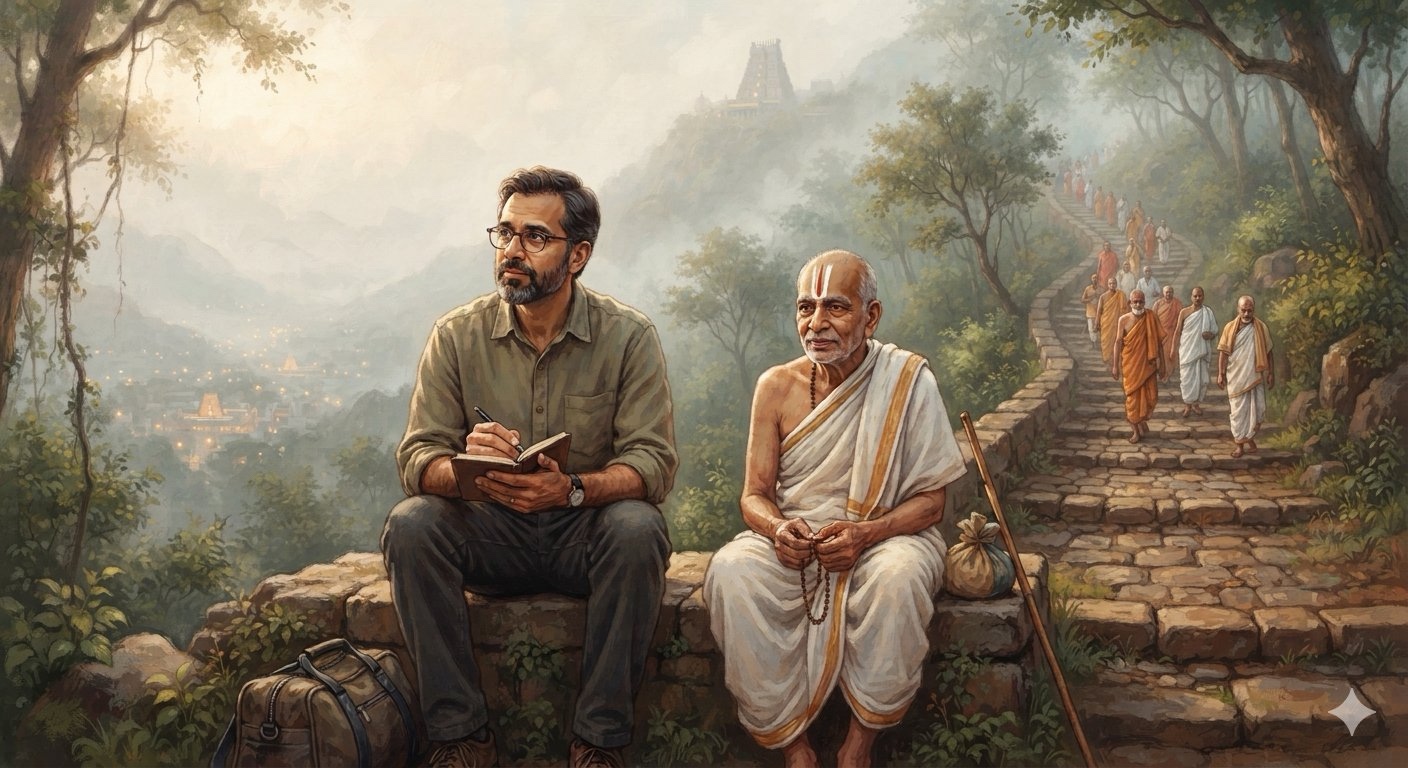
Set on the Tirumala hills during a pilgrimage to the temple of Venkaṭeśvara, this dialogue between an American professor of Indian Religious Studies and an unknown Srīvaiṣṇava pilgrim explores their distinctive shades of meaning.
Śaraṇāgati names the heart’s turn to God—the bhakti inflection point of taking refuge.
Prapatti is that surrender developed as a complete upāya, with doctrine, inner disposition, and often ritual.
Nyāsa is the Vedic ideal of self‑entrustment, crystallised in the Mahānārāyaṇa Upaniṣad’s recurring prapadye mantras.
The dialogue also asks whether the wide presence of śaraṇāgati in Advaita, Dvaita, Śaiva Siddhānta, Gauḍīya Vaiṣṇavism, and modern devotional movements makes it a Srīvaiṣṇava borrowing or possession. Its answer is no: surrender is a shared Vaidika–Vedāntic spiritual grammar, though each tradition gives it a different metaphysical and soteriological accent.
Srīvaiṣṇavism’s distinctive contribution lies in its unusually exact and comprehensive articulation of the principle through prapatti and nyāsa.
Moving through the stories of Vibhīṣaṇa, Draupadī, Arjuna, Bharata and Kākāsura, the conversation shows how “coming to refuge”, “surrendering” and “placing oneself in God’s hands” can be read as different facets of one profound movement of the soul toward the Divine.