
Mind your language, please !
Author Archives: theunknownsrivaishnavan
“Tabula Occulta”: Intentional Reciprocity in the Bhagavad-gītā, Viśiṣṭādvaita, and the Phenomenology of Divine Revelation

🕉️ New Essay: “Intentional Reciprocity”
What if Bhagavad-gītā 4.11 is not just a theological promise—but a metaphysical principle about the structure of consciousness itself?
Kṛṣṇa says: “In whatever way one worships Me, I reciprocate accordingly.”
Read through the lens of Edmond Husserl’s phenomenology and Rāmānuja’s Viśiṣṭādvaita, this verse reveals a profound truth:
✅ Consciousness is never ex nihilo—it’s eternally self-luminous.
✅ But its intentional reach (dharma-bhūta-jñāna) expands or contracts according to karma.
✅ Divine manifestation is proportional to the karmically shaped intentionality of the devotee.
✅ The real risk isn’t ex nihilo; it’s ex occulto—Bhagavān present but unrevealed.
For readers who love comparative philosophy, Vedānta, phenomenology, and the metaphysics of bhakti.
“Even after thousands of years, these will remain the medicine”: Pakkam Tamizhan

This short Tamil poem functions as a vernacular encyclopedia of the body, compressing a large medical worldview into a form that can be copied into a notebook, memorized, and recalled in moments of illness.
Its closing lines make the scope explicit: this is not a claim to cure every disease in every context, but a record of what “noble Tamils” used as precious medicine for daily, minor ailments—offered now “to those who understand.”
THE FORTRESS IN THE MIRROR

What happens when Alexander the Great and Napoleon Bonaparte stride into the Situation Room to lecture Donald Trump on military strategy?
A hilarious, sharp 3-act satirical script on the impossible geometry of modern asymmetric warfare in Persia.
“Yajñeśa”: biography of Mukkur Sri Lakshmi Narasimha Chariar: “Anugraha-sambhaashanam”of HH Srimad Azhagiyasingar Srivann Satagopa Sri Ranganatha Yathindra Mahadesikan
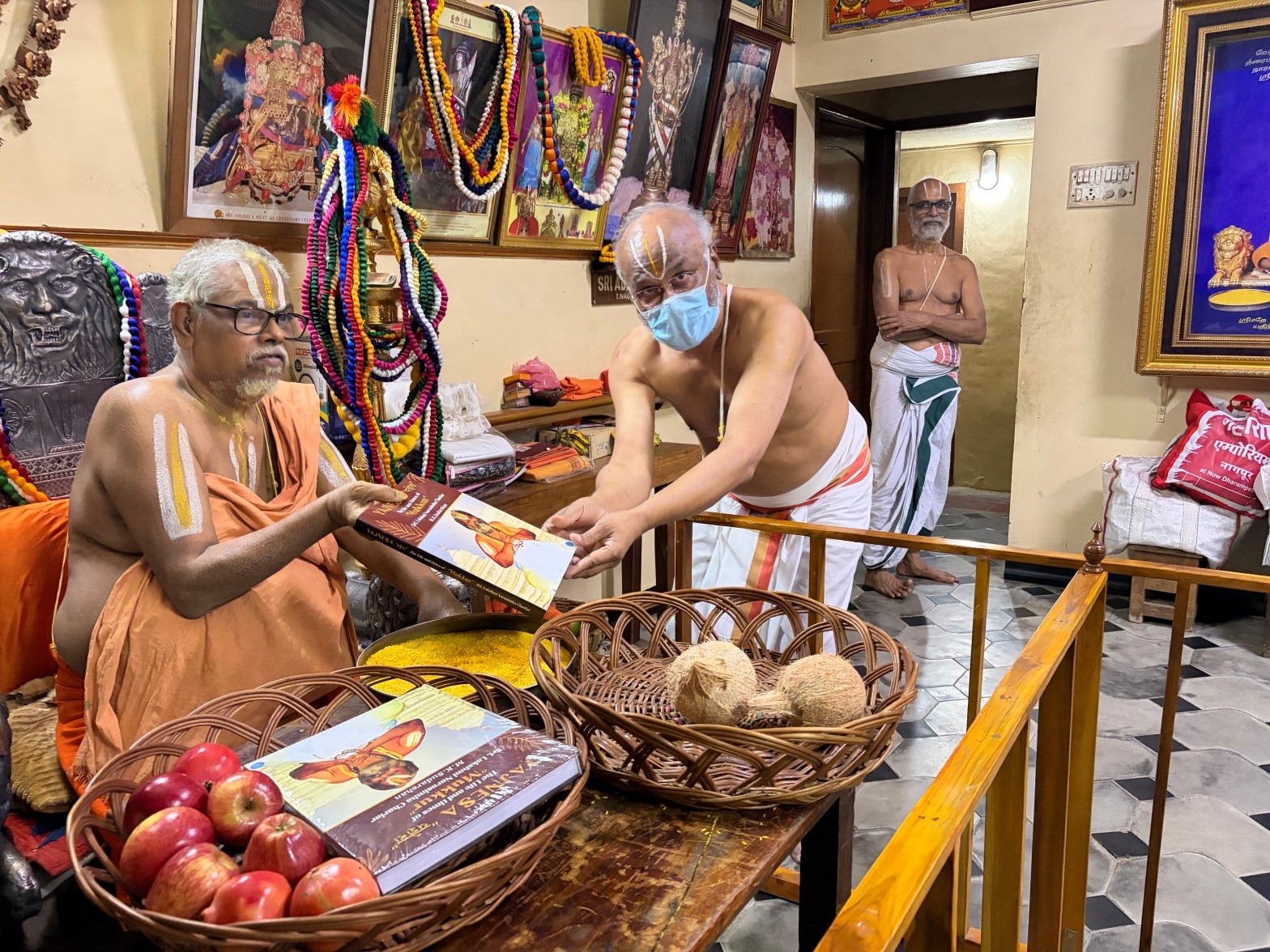
Please watch video below ⬇️ on my YouTube channel http://youtube.com/post/UgkxOO6_8vII7XOhstiD_aglGMGRAZwr5vxT?si=PHo6vtxLPHZsrZN1
Canonisation of the Divya Prabandhams through Maṇipravāḷam: A Double-Edged Sword?

The canonisation of the Āḻvār hymns as the Nālāyira Divya Prabandham preserved an extraordinary body of Tamil devotional poetry, sustained its temple life, and generated the sophisticated bilingual tradition of Maṇipravāḷam.
Yet the same process also placed the hymns within a specialised theological interpretive grammar, limiting their wider circulation as literature.
This essay examines that double-edged legacy and asks how the Divya Prabandham might be restored to the broader Tamil literary imagination without diminishing its Śrīvaiṣṇava identity.
“Mr. Gandhi, what do you think of Western Civilisation?” — Part II of 2
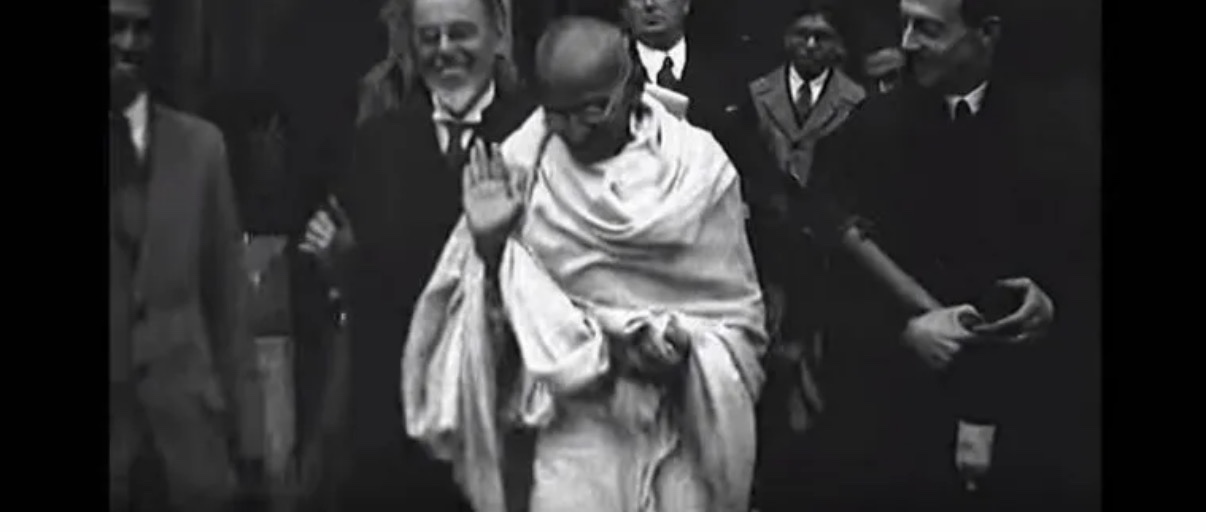
“Mr. Gandhi, what do you think of Western Civilisation?”“I think it’s a good idea.”
A century after Mahatma Gandhi delivered his famously sharp retort to a condescending British press, the global architecture he challenged faces an unprecedented twilight.In this new two-part long-form essay, I take a bird’s-eye view of the last 500 years of global history.
From the violent internal fractures of pre-industrial Europe to the cold, zero-sum geopolitical chessboards of Sir Halford Mackinder, the essay explores how Western Civilisation successfully turned its localized concepts into a global monoculture—often by ruthlessly marginalizing alternative frameworks.
Today, as the ten great ideological pillars of this half-millennium framework face systematic collapse, the world is stepping into a profound ideological void.📖 Read the full deep dive here:
“Mr. Gandhi, what do you think of Western Civilisation?” — Part I of 2
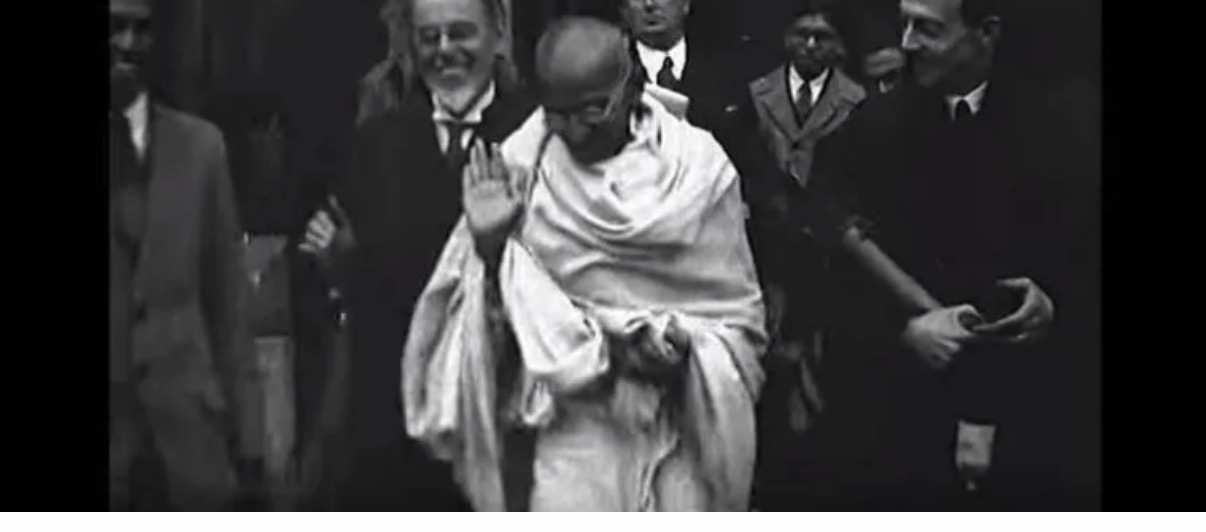
A century after Mahatma Gandhi delivered his famously sardonic critique of Western Civilisation, the global monoculture he challenged faces an unprecedented twilight.
Spanning the volatile centuries before the Industrial Revolution to the cold, zero-sum geopolitical chessboards of Halford Mackinder, this two-part long-form essay traces how the West exported its systems through military and financial might while aggressively silencing alternative ideas. As the ten great ideological pillars of this 500-year-old framework face systemic collapse, humanity now steps into an ideological void.
Explore a bird’s-eye view of history, the inquisitional nature of institutional orthodoxy, and why Gandhi’s inscrutable retort remains the ultimate epitaph for an empire in retreat.
Buy this book now! Read it to understand how Mukkur Sri Lakshminarasimha Chariyar upheld the glory of the Vedas

A Personal Word From the Author
YAJNESA is my seventh book written over the past decade. But this volume has a special place in my writing journey.
It is an effort to record, in English, the life of a remarkable Vedavith and yajna-karta whose contribution deserves to be known by readers beyond the circle of those who personally heard his discourses or witnessed his work.
I hope this book will reach devotees, younger readers, students of Indian religious history, and all those concerned with preserving the memory of great modern exponents of Veda and Vedanta.
If you purchase and read the book, please consider leaving an honest review once the Amazon listing is available. Reviews are among the most meaningful ways in which readers can help a serious book reach other readers.
Purchase link: [given in the post]
With regards,
M. K. Sudarshan
Poor you, Mr T.M.Krishna ! You are to be pitied not pilloried.

T M Krishna , the perennial Peter Pan and “enfant terrible” of the Carnatic Music world.