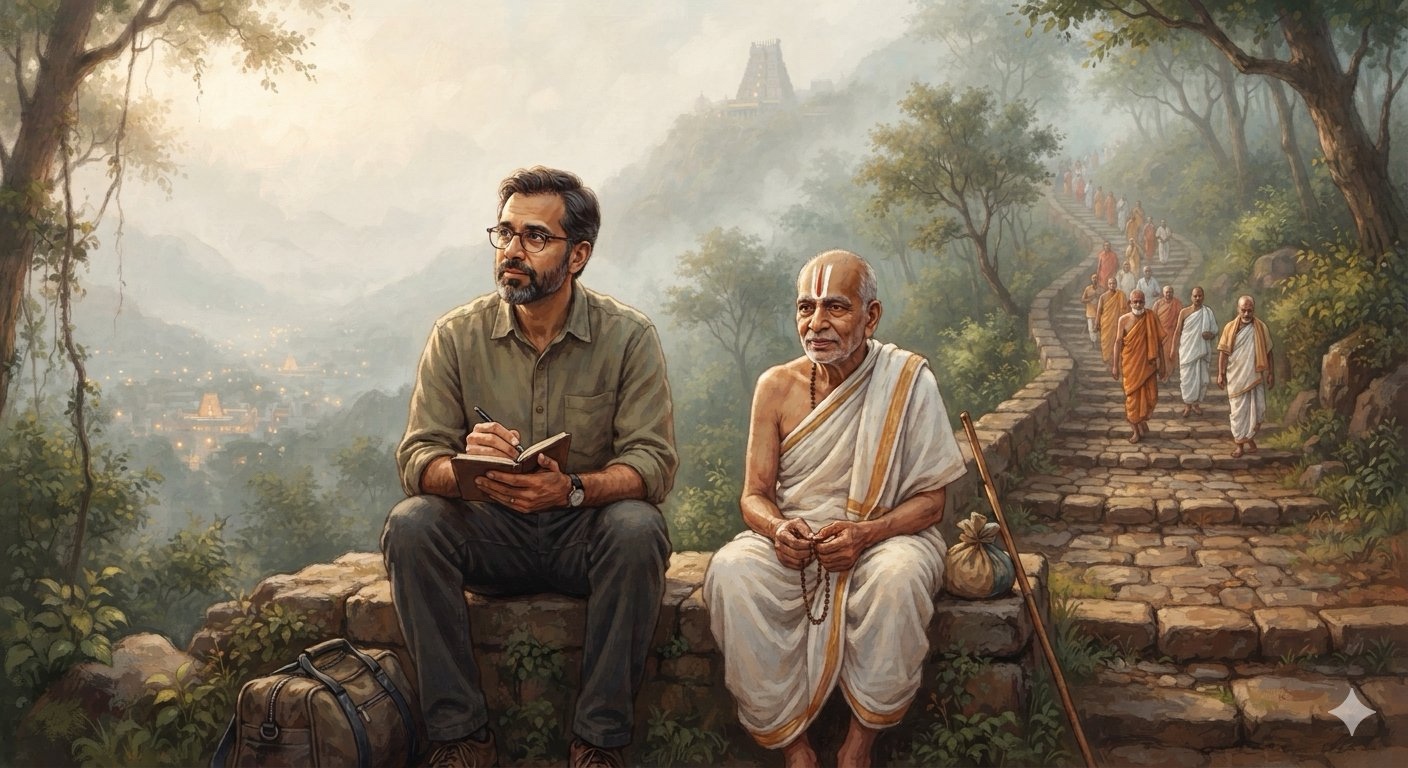
“Thought Too Deep for Tears” — From the “Apu trilogy” to Bhishmacharya, from Sathyajit Ray to Ramanujacharya, “Eepa”, “Amaruvi”and I: a Parlour Conversation on the Novel, the Cinema and the Inner Life

A brief WhatsApp exchange among Sri Indira Parthasarathy, Sri Amaruvi Devanathan, and the author becomes an imagined parlour conversation on Donna Tartt’s provocative claim that novels take us inside another soul while films leave us as voyeurs.

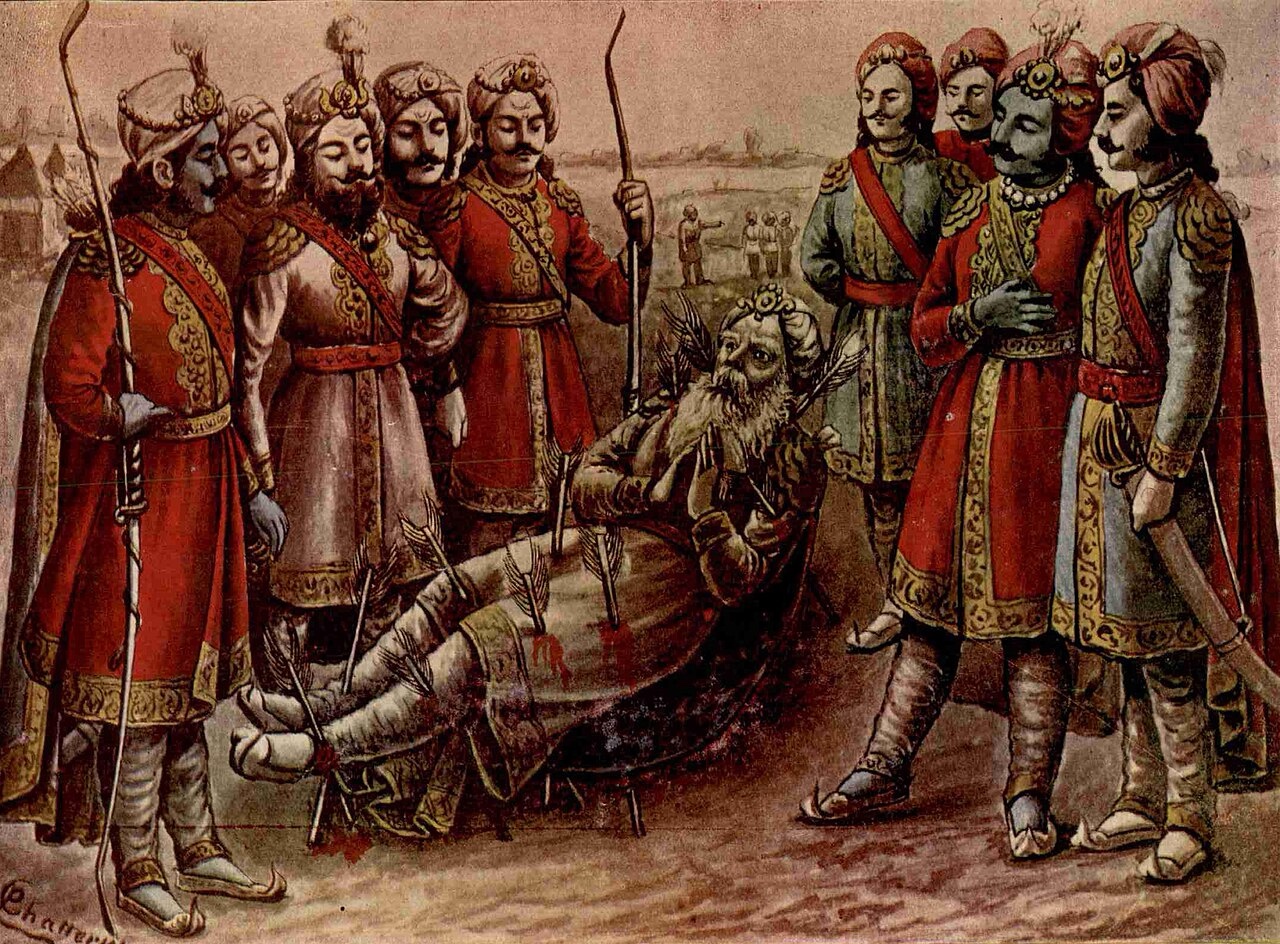
From Satyajit Ray’s Apu trilogy to Bhishma’s death in the Mahabharata and the sorrows of Ramanujacharya, the discussion asks what novels and cinema do differently to imagination, memory, and feeling.
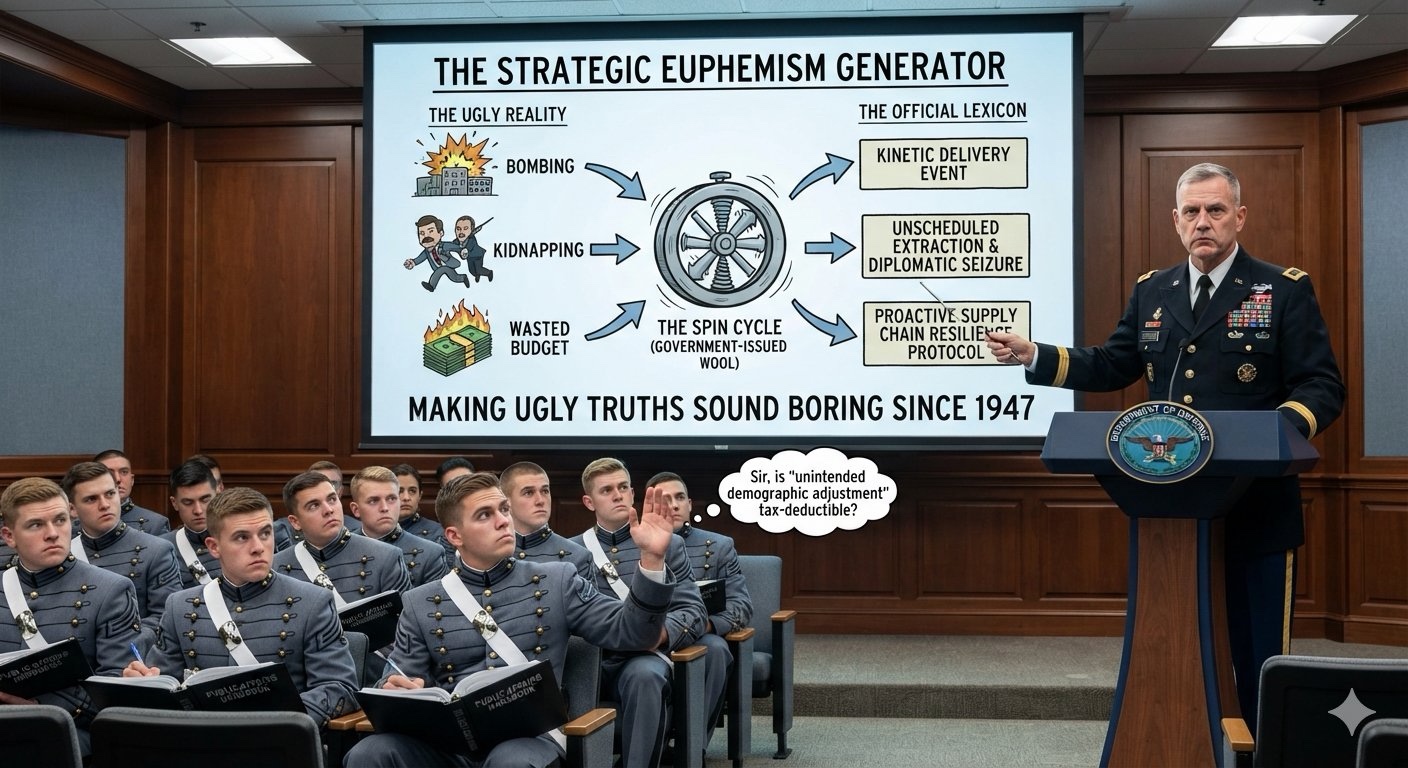
The “Pentagon Smokescreen”: The World’s Best-Selling, Most Expensive Literary Genre

A sharp, tongue-in-cheek satirical spoof inside an elite military academy, revealing how the Pentagon rebrands raw violence, failed excursions, and exorbitant budgets into clinical, bureaucratic corporate synergistic spin.

Sound as the Beginning—and End—of Vedic Metaphysics: A Modern Recapitulation offered by Sundar Sarukkai

The Veda calls itself the breath of the Veda-Puruṣa, creation a continuum of sound—yet the Upaniṣad says, “from which words turn back with the mind.”

Is this a contradiction?

This essay moves from Sundar Sarukkai’s modern restatement to the Gītā, Taittirīya Śikṣā and Ānanda Valli, and the Viṣṇu Sūkta, showing how Advaita reads the end as silent awareness and Viśiṣṭādvaita as eternal praise in Vaikuṇṭha.

What Will You Find in YAJNESA?

YAJNESA is my seventh book written over the past decade. But this volume has a special place in my writing journey.

It is an effort to record, in English, the life of a remarkable Vedavith and yajna-karta whose contribution deserves to be known by readers beyond the circle of those who personally heard his discourses or witnessed his work.

I hope this book will reach devotees, younger readers, students of Indian religious history, and all those concerned with preserving the memory of great modern exponents of Veda and Vedanta.

If you purchase and read the book, please consider leaving an honest review once the Amazon listing is available. Reviews are among the most meaningful ways in which readers can help a serious book reach other readers.

Bypassing the Tyrant: The 6th Mode of Transcending Workplace Friction — a Visishtadvaita therapy

Ever feel trapped in a cycle of silent resentment toward a toxic manager or a flawed institutional system? 💼

Standard advice tells us to “set boundaries” or “exit,” but modern clinical psychology often struggles to heal the underlying friction.

What if the solution isn’t to build higher walls around your ego, but to change the very source of authority you answer to?In our latest piece, we explore a fascinating dialogue between a practicing psychiatrist and a Vedantic philosopher.

Together, they map a revolutionary “Sixth Mode” of human behaviour derived from ancient Vishishtadvaita Vedanta—showing how true mental liberation in the workplace comes from an unexpected, vertical shift in perspective.

Read the full conversation here.

Please, for God’s sake, Leave Her Spirit Alone

On M.S. Subbulakshmi’s 110th birth anniversary, a pan-India biopic—M.S – A Legacy On Screen—was launched at the Music Academy with starry fanfare: Rashmika Mandanna in the lead, Gowtam Tinnanuri directing, Anirudh Ravichander composing, and Kamal Haasan giving the first clap.

This op-ed asks a harder question: when does tribute become exploitation?

Arguing that M.S. was a private, spiritually oriented artist who disliked the spotlight offstage, it contends that the endless cycle of articles, statues, awards, and now a high-profile biopic risks turning her into a brand.

The piece calls for homage that honours the art—paataantharam, discipline, humility—rather than PR-heavy pageantry.

If we must celebrate, let it be through performance, archival rigour, and restraint in iconography.

Celebrate Sadasivam if you must; leave Subbulakshmi alone.

My good friend Sri N. S. Srinivasan’s valuable and scholarly feedback for my blogpost “Three Words, One Surrender”

A reader provides me with valuable and scholarly feedback on my blogpost https://mksudarshans.blog/2026/09/15/three-words-one-surrender/

It is responses from readers like this that warms the cockles of the hearts of daily bloggers like me .

Sudarshan

Brahmotsavam at Tirumala commenced on September 15, 2026 with the hereditary Thozhappachari priests’ traditional “kainkaryam” on the grand occasion for the Deity, The Lord of Tiruvenkatam

The Salakatla Brahmotsavam began on 15 September 2026, following the Ankurarpanam on 14 September.

The opening day included the formal Dhwajarohanam, performed according to Vaikhanasa Agama prescriptions.

The water-bearing procession seen around the commencement of the festival is part of the Brahmotsavam’s preparatory and inaugural ritual cycle. In other words, the date of the water procession is linked to the opening of Brahmotsavam.

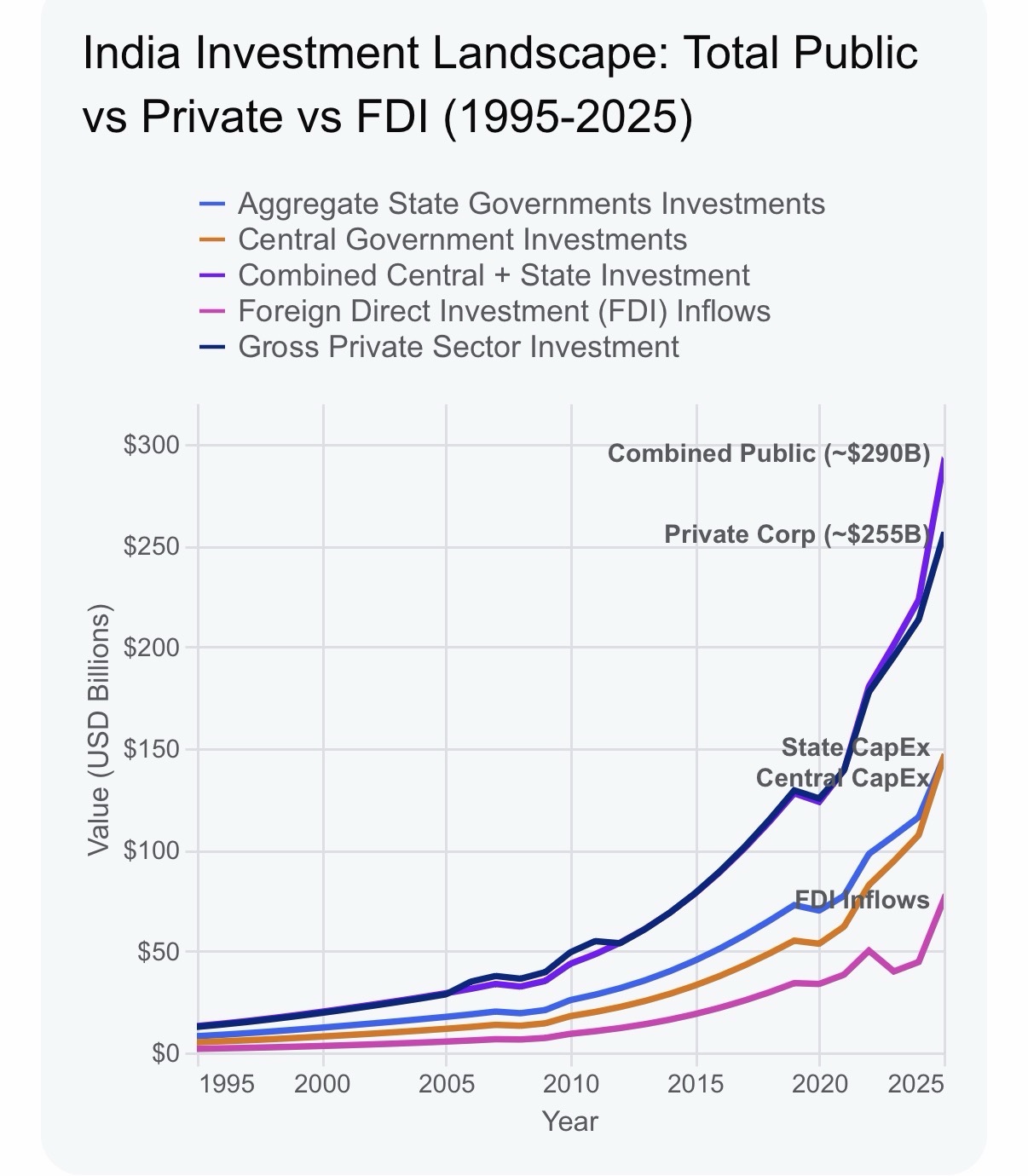
“Neither Timid Nor Tepid: The Myth of India’s ‘Laggard’ Private Investors”

Is India’s private sector really a laggard?

This data-driven analysis explodes the myth, proving corporate investment matches the state’s entire fiscal weight.

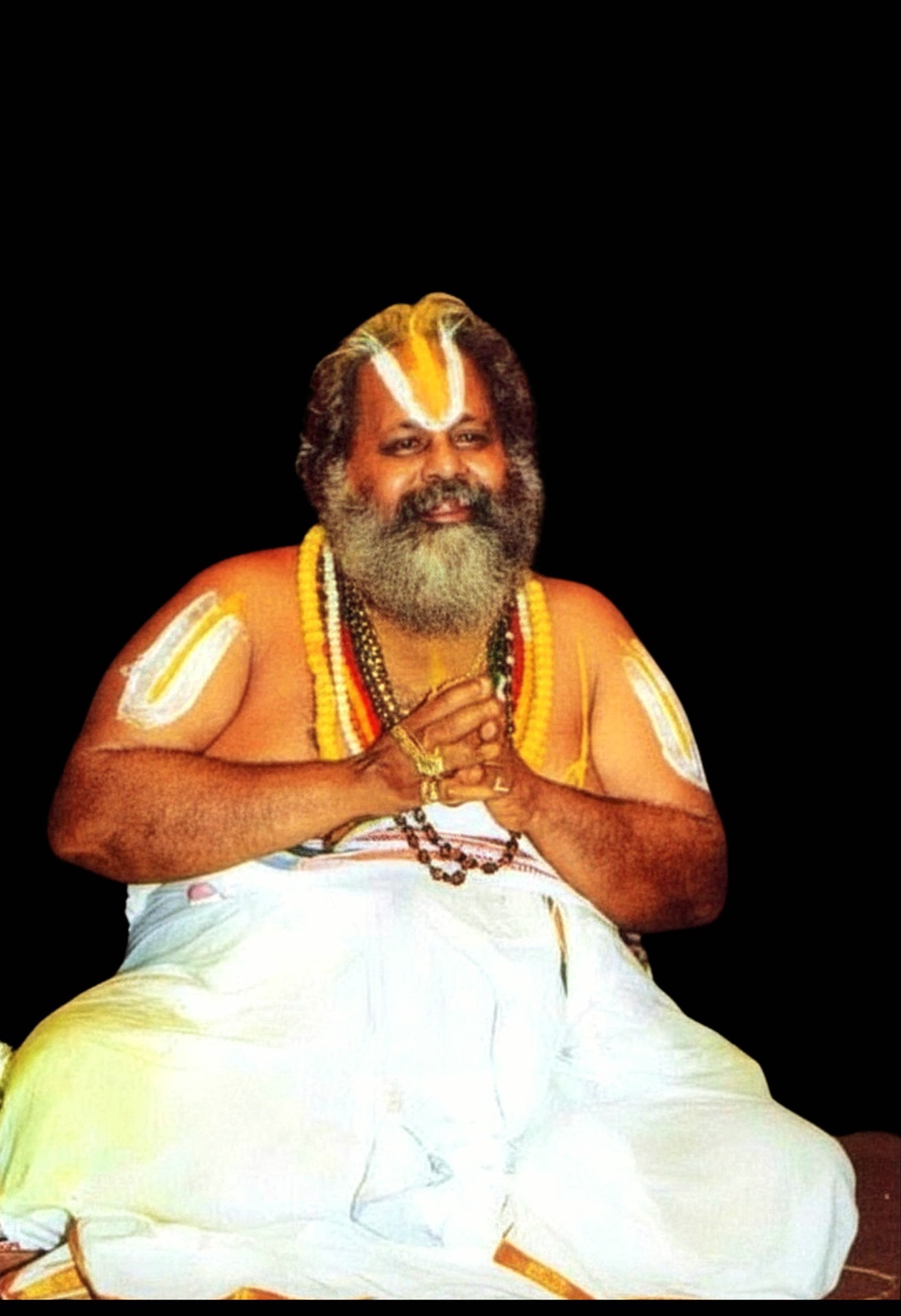
Who Was Mukkur Swami? And why you must read his biography?

Who Was Mukkur Swami? Sri Mukkur Lakshminarasimhachariar was not a figure of India’s distant past. He lived in the twentieth century, from 1944 to 2001, and left behind an immense spiritual and cultural legacy. He was:• A distinguished scholar of Veda and Vedanta• A powerful and widely admired upanyasaka• An austere performer of Vedic yajnas•Continue reading “Who Was Mukkur Swami? And why you must read his biography?”