
Prologue Mahabalipuram is where the past becomes a touristic afterthought. The Pallava‑era rock cavities, the carved monoliths, the half‑ruined shrines—all stand serene under the coastal sky, admired for their stone, not their sacrament. Visitors pass by, take photographs, sip tea outside the temple, and move on. The devotion that once gave these stones life isContinue reading “Ruins of the “Thanian War”: A Dialogue at Mahabalipuram””
Author Archives: theunknownsrivaishnavan
Why “Bahubali” and “Dhurandhar,” but No Mudrārākṣasa (मुद्राराक्षसम्)? Is Chanakya Less Cinematic Than the CIA?
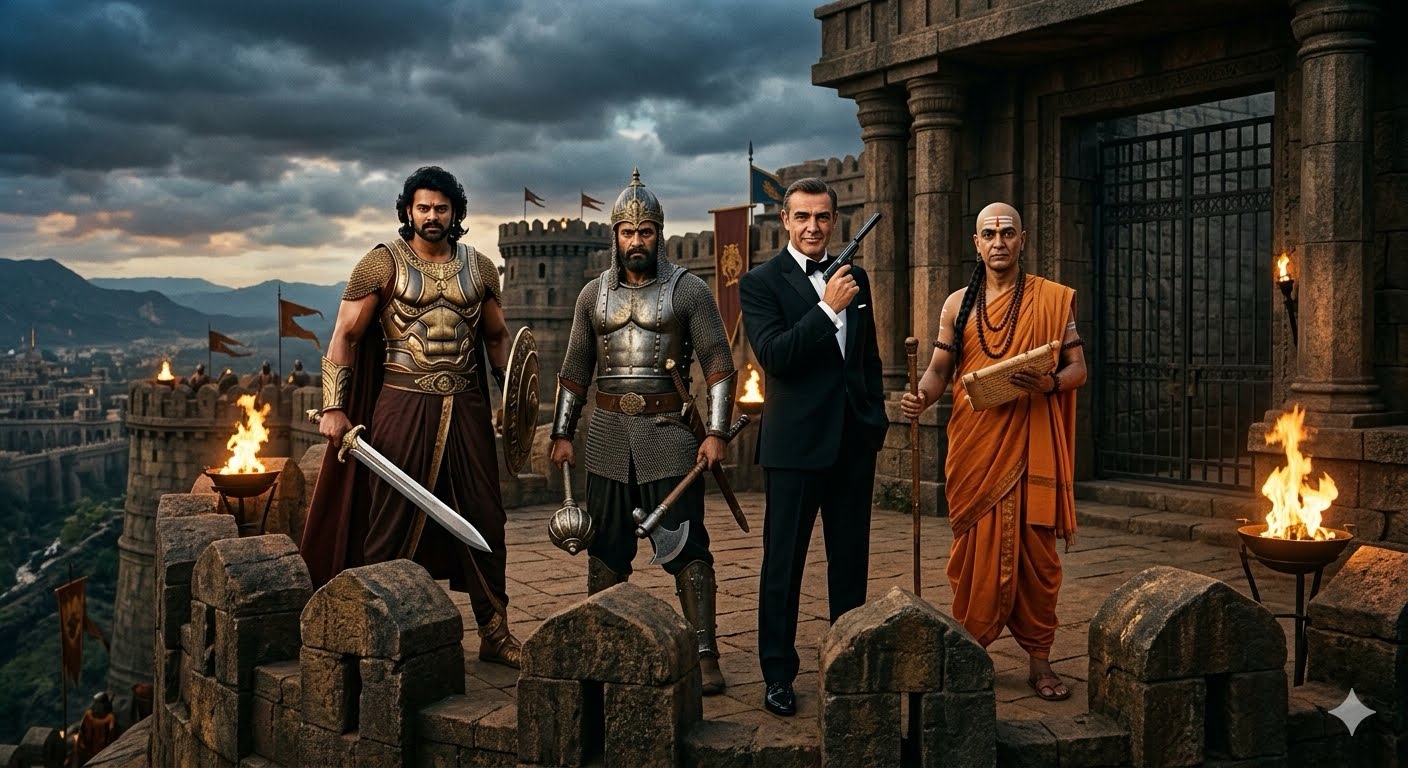
Mudrārākṣasa (मुद्राराक्षसम्): The Classical Indian Drama of Intrigue, Intelligence, and Statecraft A Sanskrit political thriller Viśākhadatta’s Mudrārākṣasa is one of the most arresting works in the Sanskrit dramatic tradition. Unlike many classical plays that dwell on love, courtly sentiment, or aesthetic refinement, this drama is driven by politics, strategy, deception, and the struggle to consolidateContinue reading “Why “Bahubali” and “Dhurandhar,” but No Mudrārākṣasa (मुद्राराक्षसम्)? Is Chanakya Less Cinematic Than the CIA?”
Tamil Iyengars’s Quixotic squabbles

A note on the 500 years old Thenkalai Vadakalai wars of Southern India A Substack blog post on “Amaruvi Aphorisms“ is copied here below ⬇️ Sudarshan Madabushi https://mylapore.substack.com/p/tamil-iyengarss-quixotic-squabbles AMARUVI DEVANATHAN MAY 23, 2026 Subscriber Note Let me begin with a personal note. I belong to the Vadakalai school of thought. When I had sought toContinue reading “Tamil Iyengars’s Quixotic squabbles “
The CIA: An Empire of the Literary Imagination
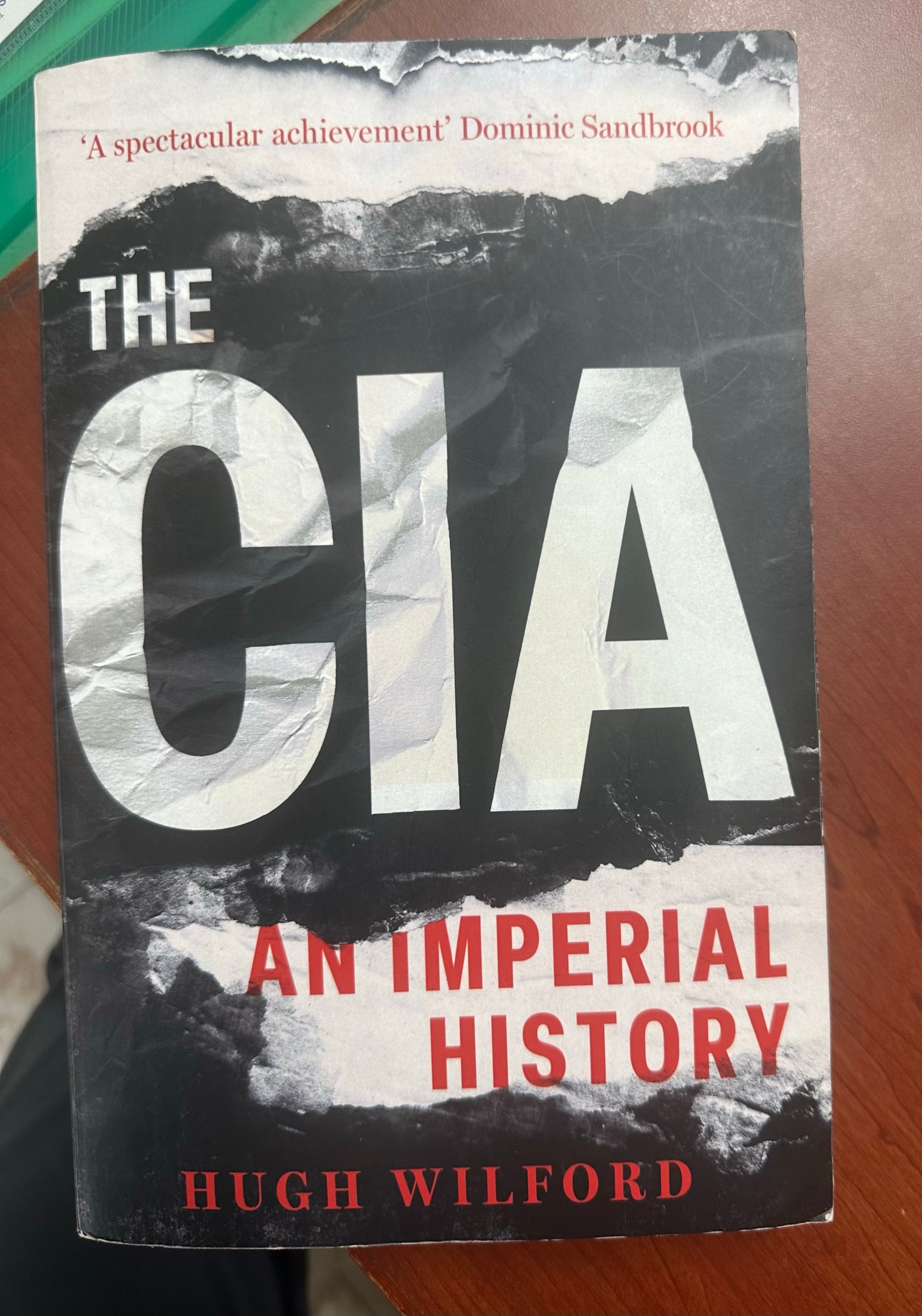
Hugh Wilford’s The CIA: An Imperial History shows that the Agency’s most dangerous weapon was never a gadget but a story: an imperial literary imagination — Kipling, Lawrence, Greene, Hollywood — that taught America how to see, intervene in, and narrate the world. I’ve just finished reading the book and I now understand the CIAContinue reading “The CIA: An Empire of the Literary Imagination”
Amaruvi Devanathan’s Book Review: “A Tale of Two Cities: the decline and fall of the ‘Ubaya-vedantins” – The History of the Sri Vaishnavas of Tamil Nadu that was never told”
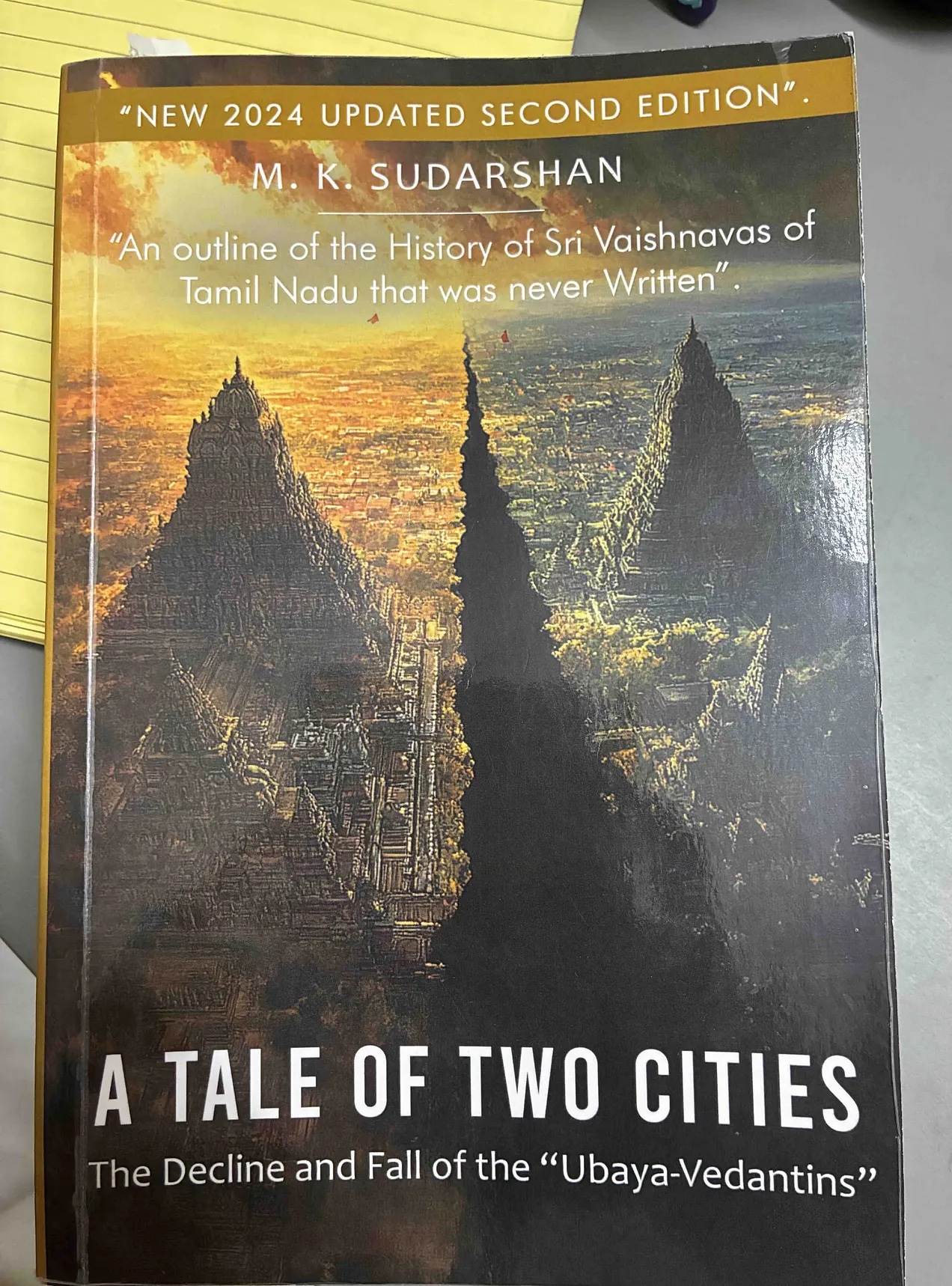
Amaruvi Devanathan is an Indian author, public speaker, and professional banking technologist. He frequently describes himself with the catchphrase “a banker by day and blogger by night,” balancing a corporate career in data architecture with a prominent role in the Tamil and English literary circuits. Professional Background Literary & Public Work Published Books He has written several notable worksContinue reading “Amaruvi Devanathan’s Book Review: “A Tale of Two Cities: the decline and fall of the ‘Ubaya-vedantins” – The History of the Sri Vaishnavas of Tamil Nadu that was never told””
ஒருவேளை காலப்போக்கில் நீங்கள் முதிர்ச்சி அடைவீர்கள், திரு. உதயநிதி ஸ்டாலின் அவர்களே!

சனாதனமும் அவதூறும் உதயநிதி ஸ்டாலின் “சனாதன தர்மத்தை ஒழிக்க வேண்டும்” என்ற தனது மறுகூற்றால், தமிழ்நாட்டில் நீண்ட காலமாக நீடிக்கும் பண்பாட்டு–அரசியல் மோதலின் இன்னொரு அத்தியாயத்தை மட்டும் மீண்டும் எழுப்பவில்லை. ஒரே சொற்றொடரில் ஒரு சிக்கலான நாகரிக மரபை எவ்வளவு எளிதாக ஒரு அரசியல் இலக்காகச் சுருக்கிவிடுகிறோம் என்பதையும் அது நினைவூட்டுகிறது. அந்த முழக்கத்தின் செயல்பாடு தெளிவானது: சனாதன தர்மமும் சாதிய ஒடுக்குமுறையும், பிராமணீய வழிபாட்டு மரபும் சமூக ஆதிக்கமும், சடங்கு அதிகாரமும் மரபுவழி சிறப்புரிமையும் —Continue reading “ஒருவேளை காலப்போக்கில் நீங்கள் முதிர்ச்சி அடைவீர்கள், திரு. உதயநிதி ஸ்டாலின் அவர்களே!”
Perhaps you will mature in time, Thiru. Udayanidhi Stalin “avargale”!

Sanatana and the Slur Udhayanidhi Stalin’s renewed call for the “eradication” of Sanatana Dharma is not merely another episode in Tamil Nadu’s familiar culture war. It is a reminder of how casually a complex civilizational inheritance is flattened into a political target. The slogan works only by collapsing distinctions: between Sanatana Dharma and caste oppression,Continue reading “Perhaps you will mature in time, Thiru. Udayanidhi Stalin “avargale”!”
An Open Letter to Tiru. S. Ramesh, the new Minister for Hindu Religious and Charitable Endowments (HR&CE), Government of Tamil Nadu.
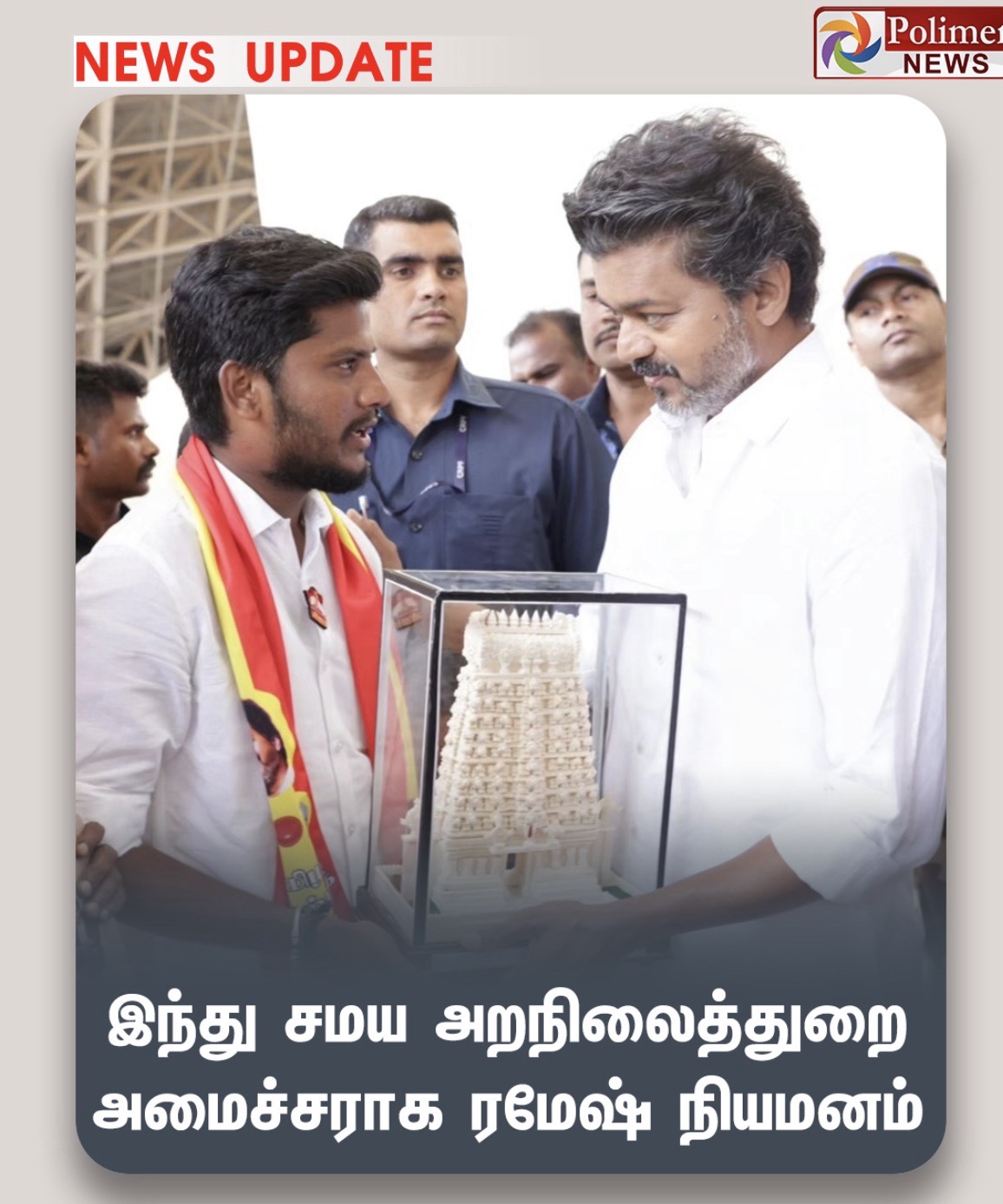
To, Tiru. S. RAMESH, The Honorable Minister for HR&CE,Government of Tamil Nadu,Fort St. George, Chennai. Subject: A Strategic Roadmap for Digital Transparency, Asset Protection, and Heritage Reform in Our Temples. Respected Minister, Allow me to congratulate you on your appointment to this vital ministry. As you take charge of managing over 40,000 temples and religiousContinue reading “An Open Letter to Tiru. S. Ramesh, the new Minister for Hindu Religious and Charitable Endowments (HR&CE), Government of Tamil Nadu.”
How the “Law of Diminishing Marginal Utility”, “Moore’s Law” and “Jevon’s Paradox” teach us all the true Meaning of Life (Part 3 Concluded)
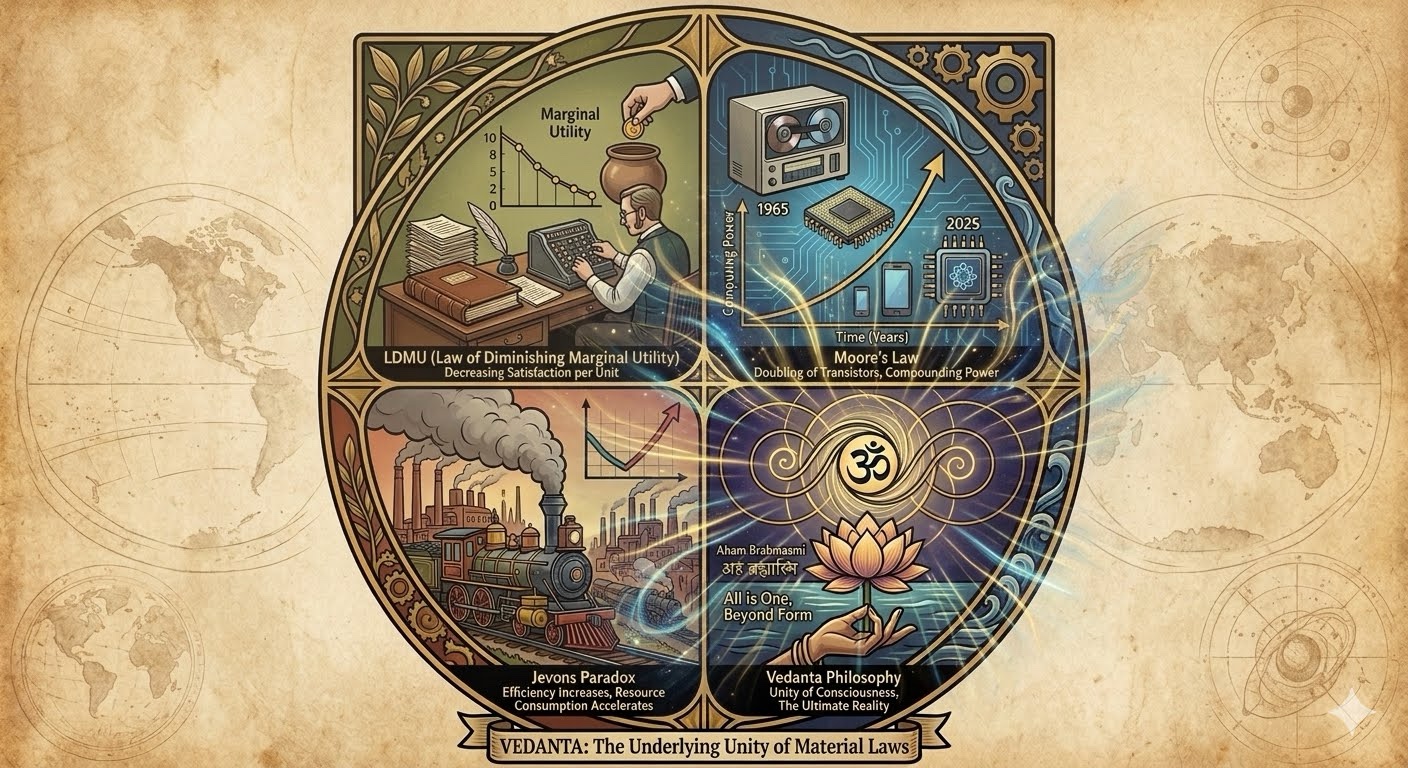
Human Nature, LDMU, and the Search for “Parama Puruṣārtha” Yet that sequence cannot go on forever. For all the empirical power of Moore’s Law and of Jevons’ Paradox, there is a deeper, more stubborn constant: human nature itself. And human nature, as the law of diminishing marginal utility suggests, is wired for satiation, for aContinue reading “How the “Law of Diminishing Marginal Utility”, “Moore’s Law” and “Jevon’s Paradox” teach us all the true Meaning of Life (Part 3 Concluded)”
How the “Law of Diminishing Marginal Utility”, “Moore’s Law” and “Jevon’s Paradox” teach us all the true Meaning of Life (Part 2 of 3)
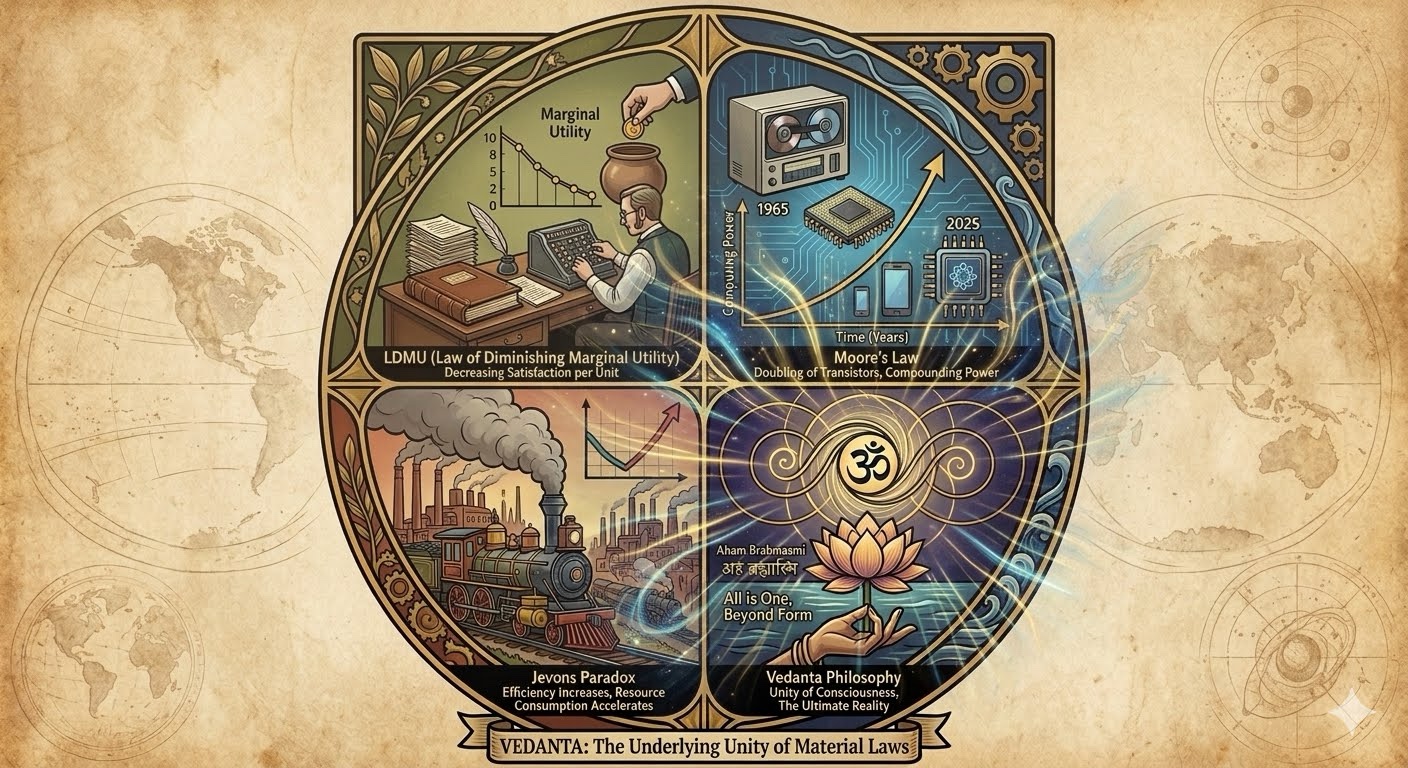
– Part 2 – How One Blends into the Other At first sight, Jevons’ Paradox and Moore’s Law seem to march in tandem while the law of diminishing marginal utility trails behind, like a conservative chorus whispering, “Beware of excess.” But the deeper one looks, the more the three form a subtle choreography. Start withContinue reading “How the “Law of Diminishing Marginal Utility”, “Moore’s Law” and “Jevon’s Paradox” teach us all the true Meaning of Life (Part 2 of 3)”