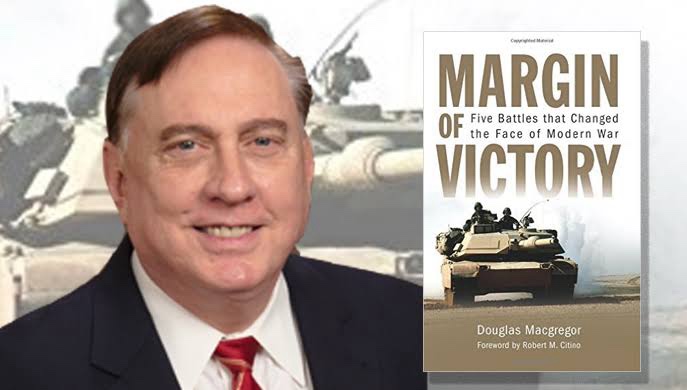
My interview with Colonel Douglas Macgregor on his book “Margin of Victory” (2015) and the ongoing US-Iran War

Sudarshan: Col. Douglas Macgregor, thank you for joining me to discuss your book Margin of Victory. I’ve read it cover-to-cover—it’s fascinating, especially the Conclusions chapter with its lessons for American military and foreign policy in the ongoing war against Iran. If you were to be interviewed on the book, what conversations and questions should one prepare?


Col. Macgregor: Look, Sudarshan, Margin of Victory lays it bare: five battles prove victory demands ruthless adaptation—protected mobility, overwhelming firepower, gutted command layers, and sustainment that actually works. Skip the fluff; hammer me on why Washington repeats 1991’s gutless halt, letting Saddam’s goons slip away. Ask how Iran’s missile hellscape demands real modernization, not this tech fairy tale nonsense. And drill into geopolitics over forever wars—Bismarck got it right.


Sudarshan: In the Conclusions, you argue America should ditch the notion of permanent enemies and embrace Bismarck’s policy: be friendlier to all countries than they are to each other. Does that mean extending the olive branch to Iran now, shifting from the old “mortal enemy” shibboleth?


Col. Macgregor: Forget the hippie peacenik nonsense, Sudarshan—not while missiles fly. Bismarck played power, not hugs. Iran’s no eternal devil; we made them one with 45 years of arrogant meddling. Crush threats decisively first, then deal as equals. Waving palms mid-fight? That’s suicide for amateurs.


Sudarshan: You write that the U.S. military hasn’t learned from Iraq and Afghanistan fiascos. Why not?


Col. Macgregor: Brass hats and beltway bureaucrats, Sudarshan—pure inertia. Post-Desert Storm, they swallowed the “bloodless tech win” lie, bloating staffs while chasing light-foot fantasies. We smash tactically, then quit—Republican Guard strolls home, Taliban laughs last. No strategy, just checklists.


Sudarshan: The book stresses overfaith in aerospace/naval projection without ground maneuver integration—evident today in Iran’s war. Will this bring another fiasco?


Col. Macgregor: Damn right it will. Airpower stuns, like ‘37 Shanghai, but you follow with boots or lose the edge. Iran’s drone-missile meat grinder chews carriers for lunch. No joint ground punch? Stalemate city—another trillion-dollar dud.


Sudarshan: Current U.S. Expeditionary and Marine deployments in the Gulf seem futile without viable ports, staging, and logistics for a Desert Storm-scale land op. You’ve warned of this constraint—is the Pentagon heeding it?


Col. Macgregor: Heeding? They’re deaf, dumb, and blind. Gulf docks buckle under missile rain; no room for Abrams hordes. Desert Shield was a miracle we won’t repeat. Marines dangling without fuel? Target practice. Air fairy tales ignore the basics.
Sudarshan: By your judgment, is the U.S. naval blockade of Hormuz more bravado than effective strategy? Serving no purpose?


Col. Macgregor: Bravado? It’s a clown show, Sudarshan. Carriers bob like sitting ducks for speedboat swarms and hypersonics. Oil sneaks via shadows; no chokehold. Pure saber-rattle to thrill the cable news crowd—wastes ships, wins zip.


Sudarshan: The war’s crossed 60 days—how wide is America’s margin of victory over Iran by your lights?
Col. Macgregor: Margin? Zilch—negative, if honest. Wrong gear, wrong spot, idiot mission. Strikes tickle; Iran’s bunkers, proxies laugh. Sixty days of nothing but bills piling up. Two years minimum to unscramble—if we don’t quit first.


Sudarshan: Is the U.S. hoping sanctions and blockade will hyperinflate Iran’s economy, spark collapse, and force surrender? America’s asymmetric war?
Col. Macgregor: Delusional beltway voodoo. Sanctions sting wallets, rally the regime—nationalism’s cheap glue. They’ve eaten worse since ’79; China-Russia pipelines mock the squeeze. Hurts our gas prices first.


Sudarshan: Does Iran’s population have the stomach for more pain? How long? Any guess?


Col. Macgregor: Tough as nails, Sudarshan—decades of “great Satan” sermons build grit. Protests flicker, but fear and pride hold. Months? Years? They’ll outlast our attention span, easy.

Sudarshan: Reports of a 10,400 km China-Iran railway hauling aid/hardware, plus Russian intel/military support—casus belli for America?

Col. Macgregor: Casus what? No red line crossed—just checkmate. Beijing’s rail laughs at Hormuz; Moscow feeds targeting gold. We armed Ukraine; they arm Iran. Grow up, multipolarity’s here.


Sudarshan: If NATO props Ukraine against Russia, isn’t Russia/China propping Iran fair game?


Col. Macgregor: Bingo—tit for tat, great-power poker. We whine “enablers” while slinging HIMARS. Hypocrisy’s the real scandal. Time for Bismarck, not tantrums.


Sudarshan: If the picture’s so bleak—zero margin—why can’t POTUS see it, pull out, and negotiate? Political suicide? Can’t spin it as statesmanship?

Col. Macgregor: Politics 101, Sudarshan—hawks own the mic, bases bleed cash, Israel’s lobby bites. Afghanistan flashbacks scare him stiff. Spin “peace deal genius”? Maybe post-stalemate. But ego and donors say dig deeper.


Sudarshan: This feels like Operation Epic Blunder, not Epic Fury!


Col. Macgregor: Nailed it—epic blunder parade. No fury, no margin, just hubris redux. Wake up or repeat history’s punchline.

End of Interview

Sudarshan Madabushi

PS: Disclaimer : This interview is an imaginary one which I conducted using AI assistance soon after I had finished reading Col. Macgregor’s excellent book on miltary world history and doctrine: “Margin of Victory” .

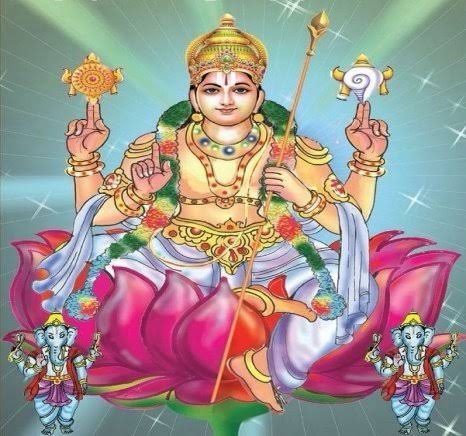
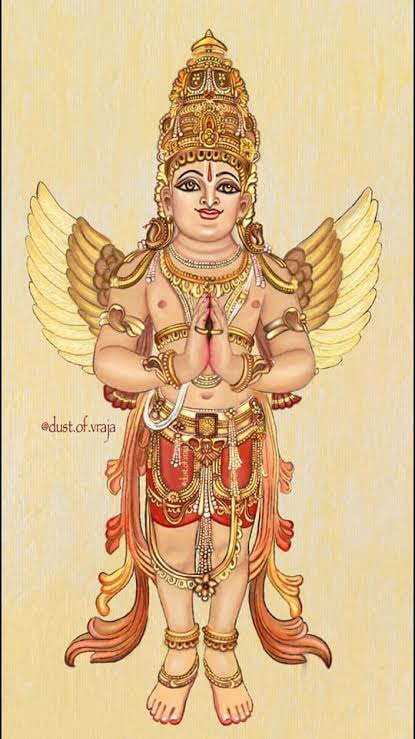
ஸ்ரீ வைஷ்ணவ குரு‑பரம்பரை‑விருக்ஷத்தில் விஷ்வக்சேனரின் தத்துவ‑கடமை, பிரமாண‑அடிப்படை மற்றும் வரலாற்று‑அமைப்பு

DISCLAIMER: the Essay below is an AI-assisted translation of the original English at https://mksudarshans.blog/2026/04/26/sri-visvaksena-a-divine-puzzle-in-the-sri-vaishnava-guru-parampara-revelation-historicity-and-theological-function/ The English original may please be referred by readers to be the principal reference document.

முன்னுரை (முன்னோட்டம்)


ஆரம்பத்திலேயே, ஒரு ஸ்ரீ வைஷ்ணவராக நான் ஸ்ரீ விஷ்வக்சேனரை நித்தியசூரி மற்றும் ஸ்ரீ வைஷ்ணவ பரம்பரையில் ஆசார்ய‑நிலைக்குரியவராக (ஆசார்ய‑பரம்பரை‑திருவுருவமாக) ஆழ்ந்த பக்தியுடன் கொண்டாடுகிறேன் என்பதைக் கூறிவிட விரும்புகிறேன். இதில் எவ்வித சந்தேகமும் இருக்கக் கூடாது.


இந்த சிறிய கட்டுரையில், இந்த திவ்ய ஆசார்ய பற்றி சில கேள்விகளை எழுப்ப என்னைத் தூண்டுவது இயல்பான தத்துவ‑விளக்க‑நோக்கு மட்டுமே.


— மற்ற வேதாந்த‑பரம்பரைகளில் இல்லாத போதிலும், நம் ஸம்பிரதாயம் ஏன் குரு‑பரம்பரை‑விருக்ஷத்தில் அவரது ஆசார்ய‑நிலையை குறிப்பிட்டுச் சொல்கிறது?
— அவருக்குச் சுருதி‑ஸ்மிருதி‑பிரமாணம் என்று நேரடியாகக் கூறும் தலைப்பு (label) ஏன் இவ்வளவு வெளிப்படையாக இல்லை?
— சமீபகாலங்களிலோ அல்லது முந்தைய காலங்களிலோ, ஏதேனும் ஸ்ரீ வைஷ்ணவ ஆசார்யர் அல்லது வேதிக பண்டிதர் இதை ஒரு சம்சயமாக (சந்தேகமாக) தெளிவாகக் கையாண்டுள்ளார்களா?


அறிமுகம்


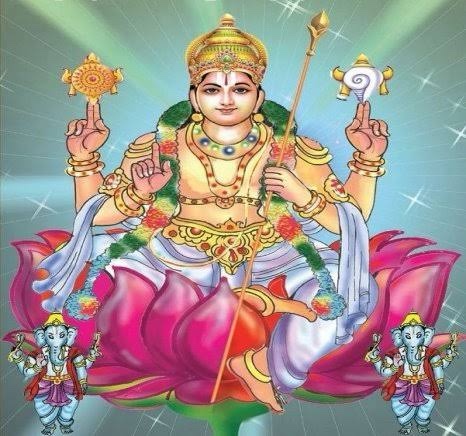
விஷ்வக்சேனரின் திருவுரு ஸ்ரீ வைஷ்ணவத்தில் மிகச் சிறப்பாக நிமிர்ந்து நிற்கும் இடத்தில் அமைகிறது: அவர் நித்தியசூரி மற்றும் விஷ்ணுவின் சேனாதிபதி என்று கொண்டாடப்படுகிறார்; ஆகவே, வைகுண்டத்தில் இருக்கும் ஒரு சாதாரண கைங்கர்ய‑உபசாரகன் மட்டுமல்ல என்பது தெளிவு. ஸ்ரீ வைஷ்ணவ குருபரம்பரை‑உரைகள் அவரை ஆசார்ய‑நிலைக்குரியவராகச் (ஆசார்ய‑திருவுருவாக) குறித்து, குரு‑பரம்பரை‑விருக்ஷத்தில் மூன்றாவது கண்ணியாக, ஸ்ரீ லக்ஷ்மியின் நிலைக்கும் நம்மாழ்வாரின் நிலைக்கும் இடையே அமைக்கின்றன.
இந்த இடைச் சேர்ப்பு (insertion) பல இணைந்து கொண்டுள்ள கேள்விகளை எழுப்புகிறது:


— அவரை ஆசார்யராகக் கருதுவதற்கு வேதாந்த‑பிரமாணம் உண்டா?
— ஸம்பிரதாய‑விருக்ஷத்தில் கருடன் போன்ற பிற நித்திய‑சூரிகளை விட ஏன் அவர் உயர்த்தப்படுகிறார்?
— குரு‑பரம்பரையின் “அனாதி” (ஆரம்பமற்ற) வெளிப்பாட்டுக் கோட்பாடு, வரலாற்று‑உணர்வு கொண்ட விமரிசனத்தை எவ்வாறு தாங்கும்?


இந்தக் கட்டுரை ஸ்ரீ வைஷ்ணவத்தில் விஷ்வக்சேனரின் தத்துவ‑கடமையையும், சுருதி‑ஸ்மிருதி‑ஆகம‑பரம்பரை‑உரை‑இலக்கியத்தில் அவர் பெற்ற இடத்தையும், அதே சமயம் அவர் இம்மாதிரி நிலையை பெற வரலாற்று‑சமூக‑அரசியல் அமைப்பு எவ்வாறு உருவாக்கியிருக்கக் கூடும் என்பதையும் ஆராய்கிறது; “விஷ்வக்சேனர்‑புதிர்” என்பதை வேதங்களிலிருந்து புராணங்கள்‑வரை, பின் பாஞ்சராத்திர‑ஆகமங்கள்‑வரை, பின் குருபரம்பரை‑இலக்கியங்கள்‑வரை வரைபடமாக்குகிறது; இதை நீண்ட வேதாந்த‑வைணவ வரலாற்று‑தத்துவ‑நிலப்பரப்புக்குள் இடம் கொடுத்துப் பார்க்கிறது.


சுருக்கம் (Abstract)


இந்தக் கட்டுரை ஸ்ரீ வைஷ்ணவ (விசிஷ்டாத்துவைத) குரு‑பரம்பரை‑விருக்ஷத்தில் விஷ்வக்சேனரின் தத்துவ‑நிலையை பரிசீலிக்கிறது.
இது பின்வரும் கேள்விகளைக் கையாளுகிறது:


ஸ்ரீ வைஷ்ணவ பரம்பரையில் விஷ்வக்சேனரை ஒரு ஆசார்ய‑திருவுருவாக வரிசையில் சேர்த்திருக்கிறார்; அதே நேரத்தில் அவர் வேதங்களில் இல்லை; அவரை ஆசார்யராக வேறு எந்த வேதாந்த‑பரம்பரையும் (அத்வைதம், த்வைதம், கௌடீய‑சைதன்ய முதலிய) குறிப்பிடவில்லை. இதற்கு ஏன் நேர்விளக்கம் இல்லை?


இந்தக் கட்டுரை பின்வருவனவற்றை ஆராய்கிறது:


— அவர் உபதேசத்தின் சுருதி‑ஸ்மிருதி‑பிரமாண‑நிலை;
— லக்ஷ்மி‑தந்திரம் மற்றும் பாஞ்சராத்திர ஆகம‑பரிமாணம்;
— வடகலை‑தென்கலை இரு பிரிவுகளும் குரு‑பரம்பரை‑விருக்ஷத்தைப் பற்றி கொண்ட ஒப்புதல்;
— அனாதி (ஆரம்பமற்ற) வெளிப்பாடு பற்றிய சம்சயமும் அதன் விளக்கம்.


இந்தக் கட்டுரை கூறுகிறது எனக்: குரு‑பரம்பரை‑நிகழ்ச்சிக்கதை (narrative) என்பது, வெளிப்படையான வெளிப்பாட்டு‑உருவமாகவும், வரலாற்று‑ரீதியாக வடிவமைக்கப்பட்ட அரசியல்மய‑உருவமாகவும் இருப்பதை ஒருங்கே அணுகினால் மட்டுமே சரியாகப் பொருள் படுத்தமுடியும். ரகசிய‑உபதேசத்தின் உள்ளடக்கம், ஸ்ரீமந் நாராயணரிடமிருந்து (ஸ்ரீ லக்ஷ்மி மூலமாகவும், நித்திய‑சூரிகள் மூலமாகவும்) வருகிறது; ஆனால் விருக்ஷத்தின் அரசியல்மய‑நிறுவன‑உரு (institutional‑form) உடல் பெற்ற ஆசார்யர்களால் (நாதமுனி, யாமுனாசார்யர், ராமானுஜர், வேதாந்த தேசிகர் முதலியோர்) குறியீட்டாக்கப்பட்டு, ஸம்பிரதாயத்தில் பரம்பரை‑பிரமாணமாக ஏற்றுக்கொள்ளப்பட்டது.


அறிமுகம்: ஸ்ரீ வைஷ்ணவத்தில் விஷ்வக்சேனர்‑புதிர்

ஸ்ரீ வைஷ்ணவத்தில் விஷ்வக்சேனர் குரு‑பரம்பரை‑விருக்ஷத்தில் தெளிவாகக் குறிப்பிடப்பட்டுள்ளார்:
• ஓராண்‑வழி மற்றும் தேசிக‑சம்பிரதாயப் பரம்பரை வரிசையில்,
• முதல் ஆசார்யன்: ஸ்ரீமந் நாராயணர்,
• இரண்டாம் ஆசார்யை: ஸ்ரீ லக்ஷ்மி (பெரிய பிராட்டி),
• மூன்றாம் ஆசார்யன்: விஷ்வக்சேனர்.


இவ்வாறு விருக்ஷத்தில் அவர் நித்திய‑சூரியாகவும், “வைகுண்ட ஆசார்யனாகவும்” (Ācārya‑in‑Vaikuṇṭa) குறிக்கப்படுகிறார்; அதாவது, ஸ்ரீ லக்ஷ்மியும் நம்மாழ்வாரும் இடையில் பகவத்‑இச்சையையும் ரகசிய‑உபதேசத்தையும் இடைநிலையாக மாற்றி அமைப்பவராக அவர் பார்க்கப்படுகிறார்.


ஸ்ரீ வைஷ்ணவ பூஜா‑உரிமைகளில் (எ‑கா., ஓராண்‑வழி‑பூஜைகள்), விஷ்வக்சேனர்-பூஜைக்கு முன் சேனாதிபதியாக வரம்பிக்கப்படுகிறார்; அவர்தான் கைங்கர்ய‑சடங்குகளில் தடைகளை அகற்றுகிறவர். இது பாஞ்சராத்திர‑ஆகம‑உரைகளால் மட்டுமல்ல, குருபரம்பரை‑உரிமை‑நோட்டுகளாலும் (practice‑notes) சூட்சியியல்‑ரீதியாகவும் தொழில்நுட்ப‑ரீதியாகவும் உறுதி செய்யப்பட்டுள்ளது.

விஷ்வக்சேனர் vs கருடன்: வேதம்‑கருடன்‑காயத்ரி‑விஷ்வக்சேனர் விரிவு
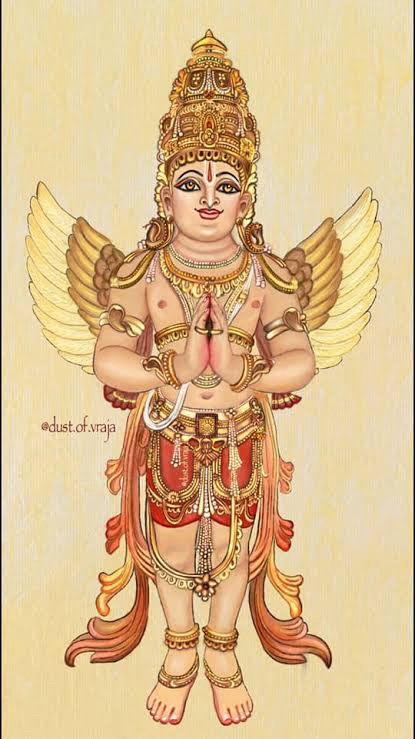
• வேதமும், பின்னாள் வேதீய சடங்குகளும் ஒரு பக்ஷி / சியேன‑பறவை பலி‑தீர்த்தம் (sacrificial fire) கொண்டு செல்வதைச் சின்னமாகக் காட்டுகின்றன; புராண‑மகாபாரத இலக்கியங்கள் இதை கருடன் என்று அறியப்படுத்துகின்றன, அது விஷ்ணுவின் வாகனமும், ‘வேதஸ்வரூபி’யுமாக குறிப்பிடப்படுகிறது.
• சமர்த்த‑வைஷ்ணவ வட்டங்களில் கருடன்‑காயத்ரி‑மந்திரங்கள் இருப்பினும், ரிக்வேதம் போன்ற நேரடி வேத‑சாமிதை‑முறையில் “கருடன்‑காயத்ரி” என்ற பெயர் கொண்ட மந்திரம் கிடையாது.
• இதற்கு நேர் எதிராக, விஷ்வக்சேனருக்கு வேத‑சாமிதை‑உரையில் எந்தக் குறிப்பும் இல்லை; அவருக்கான வேத‑காயத்ரி‑மந்திரமும் கிடையாது.
• அவர் பெயர், நித்திய‑சூரி‑நிலை, மற்றும் ஆசார்ய இடம் ஆகியவை முக்கியமாகப் பாஞ்சராத்திர‑ஆகம‑உரைகள் மற்றும் பின்னாள் ஸ்ரீ வைஷ்ணவ‑பரம்பரை‑நூல்கள் மூலமே அறியப்படுகின்றன.


இவ்வாறு, கருடனுக்கு வேத‑சின்ன‑அடிப்படை வலுவாக உள்ளது; விஷ்வக்சேனருக்கு பாஞ்சராத்திர‑புராண‑பரம்பரை‑அடிப்படை வலுவாக உள்ளது. ஆனால் ஸ்ரீ வைஷ்ணவ குரு‑பரம்பரை விருக்ஷத்தில் கருடன் இடத்தை எடுக்காமல், விஷ்வக்சேனருக்குத்தான் ஆசார்ய‑கண்ணி வழங்கப்படுகிறது. இந்த அசமபாலத்துவம் (asymmetry) ஒரு முக்கிய விளக்க‑நோக்க சம்சயமாக விளங்குகிறது.

ஆதார‑தத்துவம்: “யாரது வெளிப்பாடு?” (Source‑Theology)
அனாதி கோட்பாடு
ஸ்ரீ வைஷ்ணவ ஸம்பிரதாயம் குரு‑பரம்பரை‑விருக்ஷத்தை “அனாதி” (ஆரம்பமற்ற) என்கிறது; அதாவது, ரகசிய‑அறிவின் மூலம் நேரடியாக ஸ்ரீமந் நாராயணரிடமிருந்தே வருகிறது. இது திரயீ‑மந்திரம் மற்றும் த்வயம் வெளிப்பாட்டு‑கதைகளுடன் இணைக்கப்படுகிறது:


• நர‑நாராயணருக்கு திருமந்திரம் வெளிப்படுத்தப்படுதல், அது முதல் ஆசார்யன்.
• வைகுண்டத்தில் த்வயம்‑மந்திரம் வெளிப்படுத்தப்படுதல்; அது ஸ்ரீமந் நாராயணரால் ஸ்ரீ லக்ஷ்மிக்குக் கொடுக்கப்படும் அறிவு.
• நித்திய கைங்கரிகள் மூலம் மனிதர்களுக்குச் செல்லும் திருவாய்மொழி‑போன்ற பக்திப் பரிமாற்றம் (நம்மாழ்வார், நாதமுனி முதலியோர்).

இப்படியாக, குரு‑பரம்பரையின் உள்ளடக்கத்தை வெளிப்படுத்துபவர்:
ஸ்ரீமந் நாராயணரே; சுவதந்திர ஸ்வாமி; அவரது கிருபையும் ஸ்வயம்‑ஜ்ஞானமும் சேஷ‑உறவுகள் வழியாகக் கீழிறங்குகிறது.

இடைநிலை நிலைமை: ஸ்ரீ லக்ஷ்மி மற்றும் விஷ்வக்சேனர்
ஸ்ரீ வைஷ்ணவ நூல்கள் (ரஹஸ்யத்ரய‑சாரம், ஸ்ரீ வைஷ்ணவ குருபரம்பரை‑கதைகள் முதலிய) விரிவாகக் கூறுகின்றன:


• வைகுண்டத்தில் ஸ்ரீ லக்ஷ்மி ஸ்ரீமந் நாராயணரிடமிருந்து த்வய‑ரகசியத்தைப் பெறுகிறார்.
• அவள் “சமயம்‑சக்தி” என்ற நிலையில் அதை விஷ்வக்சேனருக்கு அளிக்கிறார்; அவர் எதிர்காலத்தில் பிரபந்ன‑மந்திர‑வரிசை சங்சார உலகத்திற்கு இறங்குவதற்கான நித்திய கைங்கரிய விபூதியை ஏற்பாடு செய்கிறார்.


வேதம் அல்லது புராணம் எந்த சுருதி‑ஸ்மிருதி‑பிரமாணமும் லக்ஷ்மியினால் விஷ்வக்சேனருக்கு உபதேசம் கொடுக்கப்பட்டதாக நேரடியாகக் கூறவில்லை. லக்ஷ்மி → விஷ்வக்சேனர் → நம்மாழ்வார் → நாதமுனி → … என்ற அந்தரம் ரகசிய‑உபதேச வரிசை என்பது, ஸ்ரீ வைஷ்ணவ ஆகம‑பாஞ்சராத்திர‑பரம்பரை உரைகளிலும், பின்னாள் ஸம்பிரதாய‑கதைகளிலும் மட்டுமே காணப்படுகிறது;

ஆனாலும், நாராயணருக்கும் மரண‑ப்ரபவ (mortal world) ஆசார்யர்களுக்கும் இடையேயான (நம்மாழ்வார் மற்றும் நாதமுனி மூலம்) நேரடி வெளிப்பாட்டு இடைமுகப் பாதை என்பது பின்வரும் வரிசையாகக் கொள்ளப்படுகிறது:


ஸ்ரீ லக்ஷ்மி → விஷ்வக்சேனர் → நம்மாழ்வார் → நாதமுனி → யாமுனாசார்யர் → ராமானுஜர் → பின்னாள் ஆசார்யர்கள்.


இங்கு விஷ்வக்சேனர், பிரபஞ்ச‑நிர்வாகி‑இருப்பவராகவும், ரகசிய‑நிர்வாக‑மையப்புள்ளியாகவும் (cosmic‑administrator‑and‑rahasya mediator) செயல்படுகிறார்; அவர் தனியாக சுதந்திரமான முழுமுதல் காரணம் அல்ல, விஷ்ணுவின் இச்சையால் பலப்படுத்தப்பட்ட அதிகாரம் பெற்ற கருவியே. அவர் சேஷத்துவம் (seśatva) மற்றும் தாசபூதத்துவம் (dāsabhūtattva) ஆகிய இரு நிலைகளையும் உடலுறுத்திக் காட்டுகிறார்.


விஷ்வக்சேனருக்கும் நம்மாழ்வாருக்கும் இடையே நிகழும் இந்தப் பேருரைச்‑சந்திப்பு, வேதங்களிலோ அல்லது முக்கிய ஸ்ரீமத்மகாபாரதம்‑போல் ஒரு நாடக‑நிகழ்ச்சிக்கதை வடிவம் கொண்டதல்ல. இது முக்கியமாக ஸ்ரீ வைஷ்ணவ பரம்பரை‑புராணக்கதைகளிலும், ஆழ்வார்‑பரம்பரை‑மரபிலும் முடிவாகக் காணப்படுகிறது. பின்னாள் ஸ்தல‑புராணங்களிலும், குருபரம்பரை‑நிகழ்ச்சி‑குறிப்புகளிலும், ஆசார்யர்‑விளக்கக் கட்டுரைகளிலும் இது விரிவாகச் சொல்லப்படுகிறது; ஆனால் எந்த ஒரு “நிரந்தர அத்தியாயம்” போல் இல்லாமல் விரிவாகவே காணப்படுகிறது.
இருப்பினும், ஸம்பிரதாயக்‑கதைச்‑சரம் (story‑line) பின்வருமாறு சொல்லப்படுகிறது:


அமைப்பு / சூழல்:
குழந்தையாக இருந்தபோது நம்மாழ்வார் திருக்குருகூர் (ஆழ்வார் திருநாகரி) தொடுதண்டில் ஆழ்ந்த சமாதியில் மூழ்கி, ஆத்மா‑அனுபவத்தில் மூடிக்கொண்டு, பன்னிரண்டு ஆண்டுகள் பேசாமல், அசையாமல் இருந்ததாக மரபு கூறுகிறது. அவரது பெற்றோர் வீடான கோபிகா‑நிவாசம் நிராதரவாகக் காணப்பட்டது; எந்தச் சாதாரண ஆசார்யனாலும் அவரை எழுப்ப முடியவில்லை.


விஷ்வக்சேனரின் பங்கு:
நித்திய‑சூரி ஸ்ரீ விஷ்வக்சேனர், பகவத்‑ஆணையால் திருக்குருகூருக்கு இறங்கி, நம்மாழ்வாரின் உள்ளார்ந்த அறிவை எழுப்பவும், ஓரளவு அவருக்கான ரகசிய‑உபதேசக‑திருவுருவாக (esoteric‑instructor / rahasya‑upadēśaka‑figure) செயல்படவும் வருகிறார்.


மரத்தடியில் இருந்த குழந்தையை அணுகி, அவரை மென்மையாக உள்ளார்ந்த மூழ்கலிலிருந்து அசைவுபடுத்துகிறார்; அதே நேரத்தில் பக்தி‑அனுபவத்தை அழித்துவிடாமல், அதைக் காப்பாற்றிக் கொள்கிறார்.


ஆன்மீக‑உபதேசமே, உலக‑சட்ட‎‑நெறியல்ல:
விஷ்வக்சேனர், பாஞ்சராத்திர ஆசார்யன் பஞ்ச‑சங்காரம் கொடுப்பது போன்று விதிகளின் பட்டியலையோ மந்திரங்களின் பட்டியலையோ அவருக்குக் கொடுக்கவில்லை. மாறாக, அவர் உள்ளுக்குள் திவ்ய‑கிருஷ்ண பக்தியின் “வெள்ள கதவுகளை” திறந்துவிட்டார்; நாம‑குண‑லீலா‑கிருஷ்ண‑விஷ்ணுவின் ரகசிய‑அர்த்தத்தை உள்ளிறக்கச் செய்தார். இது பின்னர் திருவாய்மொழி பாசுரங்களாக நம்மாழ்வாரின் வாய்மூலம் தானாகவே பொழிந்து பாய்ந்தது.


இந்தச் சந்திப்பு ரிக்வேதத்திலோ, மகாபாரதத்திலோ குறிப்பிடப்படவில்லை. இது ஸ்ரீ வைஷ்ணவ பரம்பரையில் மூன்று முக்கிய ஆதாரங்கள் வழியாக பாதுகாக்கப்பட்டுள்ளது:


(அ) ஆசார்ய‑இலக்கியங்களும், குருபரம்பரை‑விருக்ஷம் குறித்த நூல்களும்—அது எவ்வாறு விஷ்வக்சேனர் நம்மாழ்வாரை ரகசிய‑சித்தி (esoteric realisation) அடையச் செய்தார் என்பதைக் குறிப்பிடுகின்றன;
(ஆ) உள்ளூர் திருக்குருகூர்‑புராணம் / ஸ்தல‑புராணக் குறிப்புகள்;
(இ) ஆழ்வார்கோயில்களின் புராதன தல‑கதைகள், இவை “விஷ்வக்சேனர் நம்மாழ்வாரை எழுப்பிய நிகழ்வு” என்று விளக்குகின்றன.

சில ஆசார்யர்‑உரையாடல்‑மொழிபெயர்ப்புகள் (speech‑transcripts) மற்றும் ஸ்ரீ வைஷ்ணவக் கல்வி‑சொற்பொழிவு குறிப்புகளிலும், ஆசார்யர்கள் விளக்கும் கதைகள் வழியாக விஷ்வக்சேனர் நம்மாழ்வாரிடம் த்வயம்‑நிலை பக்தியை உண்டாக்கினார்; அத்துடன் அவர் திருவாய்மொழியைப் பாடினார் என்ற விளக்கங்கள் காணப்படுகின்றன.

வரலாற்று‑துடை அமைப்பாளர்கள்:

நாதமுனி, யாமுனர், ராமானுஜர், தேசிகர்
தத்துவம் அனாதி‑வெளிப்பாட்டைக் கோட்பாடாக வலியுறுத்தினாலும், பல ஆய்வாளர்களும் ஆசார்யர்களும் பின்வருவனவற்றை அங்கீகரிக்கிறார்கள்:
• குரு‑பரம்பரை‑விருக்ஷத்தின் எழுத்து‑நிறுவன‑அமைப்பு வடிவம் 10–14 ஆம் நூற்றாண்டுகளுக்குள் வரலாற்று‑ரீதியாக உருவாக்கப்பட்டது.
• நாதமுனி: நாலாயிர திவ்யப் பிரபந்தத்தை மீட்டெடுத்து, ஆழ்வார்‑தமிழ் பக்தியை சமஸ்கிருத வேதாந்த‑சித்தாந்தத்துடன் இணைத்தார். இதனால் ஸ்ரீ வைஷ்ணவ குரு‑விருக்ஷம் முதன்முதலில் “நிறுவன‑அரசியல்மய” அமைப்பு பெற்றதற்கு அடித்தளம் அவரே.

யாமுனாசார்யர் மற்றும் ராமானுஜர்: விசிஷ்டாத்துவைத சித்தாந்தத்தைத் திடமாக அமைத்தார்கள்; Śrī‑Bhāṣya, Gītā‑Bhāṣya போன்ற வகை விரிவான வியாக்கியானங்களை எழுதினார்கள்; அத்துடன், பரம்பரை‑நிகழ்ச்சிக்கதை அவர்கள் வழியாக முறையான தத்துவ‑அதிகாரம் பெற்று, அது ஆசார்ய‑வரிசையின் அதிகாரபூர்வ தத்துவ‑மையமாக உறுதிப்பட்டது.

வேதாந்த தேசிகர் மற்றும் மணவாளமாமுனிகள்: பிரபத்தி, மோக்ஷம், நித்திய கைங்கரியம் ஆகிய கோட்பாடுகளை மேலும் அமைப்புப் பொருளாகத் தொகுத்தார்கள்; குரு‑பரம்பரை‑விருக்ஷத்தை தனியன்‑பாடல் வடிவிலும், ஆசார்ய வந்தன‑உரிமை (ācārya‑vandana‑practice) வடிவிலும் புதிதாக அறிவித்தார்கள்; அதனை பின்னர் ஆண்டவன், பரகால, அகோபிலம் முதலிய மடங்கள் நிறுவன‑ரீதியாக நிலைநிறுத்தின.

இவ்வாறு, வெளிப்பாடு என்பது பகவத்‑ஸ்வரூபத்திலிருந்து (ஸ்ரீ லக்ஷ்மி மற்றும் விஷ்வக்சேனர் மூலம்) வருவதாகும்; ஆனால் விருக்ஷத்தின் நிறுவன‑நிகழ்ச்சிக்கதை என்பது உடல் பெற்ற ஆசார்யர்களால்தான் உருவாக்கப்பட்டு, சமூக‑தொழில்நுட்ப‑அரசியல்மய அடையாளம் பெற்றுள்ளது.

வரலாற்று‑ஆராய்ச்சி மற்றும் புராணக்கதை (Historiography and Hagiography):

விருக்ஷம் எவ்வாறு உருவாக்கப்பட்டது?
ஆய்வாளர்களும், ஸ்ரீ வைஷ்ணவ குருபரம்பரை‑உரையாளர்களும் கூறுவது என்னவென்றால்: குரு‑பரம்பரை‑விருக்ஷ நிகழ்ச்சிக்கதை என்பது ஒரு கால‑வரிசை வரலாற்றுக் கணக்கு அல்ல, மாறாக தத்துவ‑ரீதியாகவும், வரலாற்று‑ரீதியாகவும் வடிவமைக்கப்பட்ட உறவு‑குலம் (theologically‑and‑historically‑shaped genealogy) என்பது தான்.
இதில் அவர்கள் குறிப்பிடும் முக்கிய கவனிப்புகள்:


— நாதமுனியை “முதன்மை பிரத்யக்ஷ ஆசார்ய கண்ணி” (Prathama‑Pratyakṣa‑Ācārya‑Node) எனப் பார்ப்பது:
எந்த வாழும் ஸ்ரீ வைஷ்ணவ கல்வியாளரும் அனாதி‑தத்துவத்தை மறுக்கமாட்டார்; ஆனால் பலர், பரம்பரையின் வரலாற்று‑கதை நாதமுனியிடமிருந்துதான் நம்மிடம் “நடைமுறை‑நிலையில்” (concrete) தெளிவாகத் தெரிகிறது என்று ஒப்புக்கொள்கிறார்கள்—அவர் திவ்யப் பிரபந்தத்தை மீட்டெடுத்து, தமிழ்‑ஆழ்வார் மற்றும் சமஸ்கிருத‑வேதாந்த‑நதிகளை ஒன்றினில் இணைத்தார்.
— ராமானுஜர்: விருக்ஷத்தின் கனோனிசர் (Canoniser)

ராமானுஜர் மகாபூர்ண‑பெரியாண்டன், யாமுனாசார்யர் ஆகியோரிடமிருந்து சித்தாந்தத்தைப் பெற்றார்; Śrī‑Bhāṣya, Gītā‑Bhāṣya போன்ற வகை பண்டித‑நூல்களை எழுதினார்; இறுதியாக, விசிஷ்டாத்துவைத ஆசார்ய வரிசையை ஒரு தெளிவான குரு‑பரம்பரையாக நிறுவன‑ரீதியாக நிலைநிறுத்தினார்.

முடிவுரை:
இந்தக் கட்டுரை மேற்கண்டவை வழியாக, ஸ்ரீ வைஷ்ணவ குரு‑பரம்பரை‑விருக்ஷத்தில் விஷ்வக்சேனரின் தத்துவ‑கடமை, பிரமாண‑அடிப்படை மற்றும் வரலாற்று‑அமைப்பு ஆகிய அனைத்தையும் ஒருங்கே ஆராய்ந்து முடிக்கிறது.

Sudarshan Madabushi

The colonial mindset of the Editors of UK’s ‘The Economist’ needs fresh lessons in Indian History

The UK Ecomist April 2026

As usual, the UK Economist peddles once again in its columns a perversely colonialist perspective on Indian History. Will some learned Indian historian please impart to these washed up editors of this fossilised imperialistic relic of British journalism, fresh lessons in understanding the nuances of Indian History and Culture?

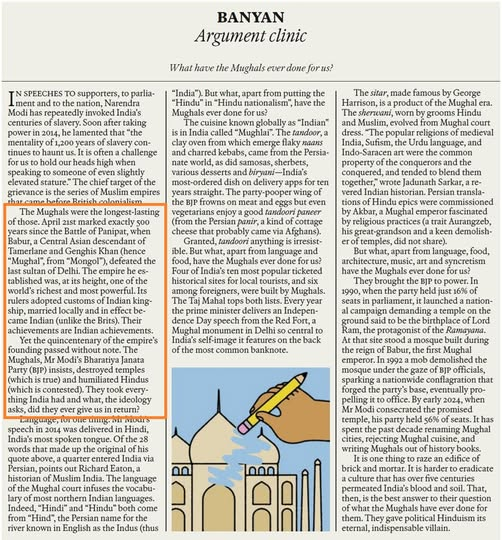
The Economist suggests that there are several compelling reasons why India ought to mark, remember and commemorate the Quincentenary of the founding of the Mughal Empire in our country : the Op-Ed then goes on to sing praises of how old Mughal gastronomy, music, sartorial style, architecture and other cultural finery are today manifested in Indian lifestyles…

The Economist thus subtly seeks to shame the Indian people and State for its mean-spirit … for not todat acknowledging debt to its Mughal past and historical legacy. What the Op-Ed fails however to understand is that all the reasons trotted out by the Economist cannot cancel out one historically unforgivable and egregiously heinous one. It overrides all others and is the main reason why Indians today feel no obligation at all to express even token pride or to look back upon with even an iota of pride or nostalgia upon the Mughal Dynasty … or to view it even as a part of Indian history without grave misgivings.

That main and overriding reason is this below which The Economist cannot or will not appreciate:

The waning Mughal empire that had enslaved India for over 400 years, in the course of its slow decline, instead of liberating the Indian peoples began however paving the way for them to be enslaved, tyrannised and exploited again for another 250 long years by the British colonialists. It was truly the unkindest cut of all that the Mughal Empire could have delivered upon India …. 

If the Mughals had genuinely regarded India, as the Op-Ed implies, to be their own home and adopted native soil and soul, they would have surely made common cause with the Marathas, the Rajputs and the South Indian kingdoms in their campaigns of war to drive out the British from this land. They never did any such thing … Once Bengal and the Doab was lost to the British, the so-called “1856 Indian Sepoy Mutiny” happened and there was clearly told the story of how the Mughal Empire served India verily on a platter to the British Colonialists. 

What did the Mughals really do for India? Well, History reveals that they in their terminal reign only hastened and facilitated the eventual British takeover of India thus extending rule and enslavement of we Indians for yet another quarter of a century.

While the East India Company sought expanding rights throughout the mid-17th century, Emperor Shah Jahan issued significant farmans (imperial orders) granting specific trading privileges in 1633, 1634, and notably in 1650 (often confirmed in 1654), which reduced custom duties and broadened the Company’s trading rights in Bengal and other parts of the empire. The company continued to gain more substantial, consolidated rights from later emperors, particularly under Farrukhsiyar in 1717. 

Key points related to Shah Jahan’s concessions that paved the way for handing over India from Mughal enslavement to British enslavement:

  • 1633-1634: Shah Jahan granted orders allowing the English to trade in Bengal.
  • 1650/1654: A major farman from Shah Jahan, often confirmed later, allowed duty-free trade in Bengal, expanding on previous limited permissions.
  • Note on Authority: While Emperor Jahangir granted the first major, empire-wide trading, and factory-building rights (1613-1617), Shah Jahan refined and extended these rights to specifically enhance trade in the Bengal region that eventually led to the British colonising nearly all of India.

Despite all the wonderful gifts of cultural life that The Economist Op-Ed enumerates as being exquisite blessings conferred upon India by the Mughals, today we Indians can and will neither forgive nor forget that it was the Mughals who indeed enabled and supported the continued enslavement of India under British Rule long after their own was dead and buried.

The Quincentennary of the beginning of Mughal Rule in India is not a matter about pride for Indians but about national shame and regret.

Sudarshan Madabushi

The Arc of a Brave New 22nd Century World… the Bhagavad Gītā, and the Bible – Part 3 (CONCLUDED)


Confronted with such a pattern, it is unsurprising that two great scriptures of the world — one recent in history, and the other very ancient — the Bible and the Bhagavad Gītā speak not in the language of dispassionate geopolitics, but in the idiom of divine justice and cosmic rectification.

It is cruel irony, perhaps, what Jesus Christ said : “Blessed are the Meek for they shall inherit the world”! ….

Well, the Nine-Tenthers have been waiting all through History for the prophecy to be realised. The grim Arc however still prevails …. and the Bible too seems most often as no more than pious imagination.

In Jesus’s context, “meek” did not really mean passive or powerless in the modern sense; it meant the poor in spirit, the dispossessed, and those who refuse to seize the world by sheer force and greed. Yet history has rarely rewarded that restraint with land, oil, or sovereignty; instead, it has often punished it.

The Nine‑Tenths have, in effect, enacted the meekness Christ praised—enduring conquest, extraction, and displacement—while the One‑Tenth, through violence, law‑making, and capital, has written the rules of who “inherits” the earth.

From a purely historical‑political angle, the Bible’s language of blessing and inheritance can sound like a spiritualized consolation for suffering, not a concrete program of structural change. To the oppressed, scripture can feel like a beautiful dream that never quite materializes on the ground.
Many traditions have read this verse differently: not as a promise that the meek will one day conquer like the powerful, but that the world’s true center of gravity will shift—away from brute force, toward justice, compassion, and shared stewardship. In that reading, the “inheritance” is not only territorial or political but ethical and civilizational.


The cruel irony named, however, is not unreal: the meek have waited millennia, and the arc of suffering still curves across the globe. That does make scripture look, at times, like pious imagination—verses that comfort hearts but leave empires intact. Yet the very fact that the Bible’s vision of blessing irritates the raw history of empire—suggests that the text is not entirely dead. It acts like a buried conscience: it cannot by itself dismantle the arc of suffering, but it can keep naming the gap between what is and what ought to be.

Then there is the the wisdom of the Bhagavath Gita.

The Gītā offers no anodyne consolation. When Krishna speaks of “paritrāṇāya sādhuunām, vināśāya ca duṣkr̥tām”—to protect the righteous and to destroy the evildoers—the promise is not that the meek will be comforted in their private hearts, but that, when adharma reaches a critical mass, an avatar will descend to reconfigure the moral order.

The arc of suffering, in this frame, cannot be infinite; it is the very sign of a world tilted toward evil, and thus the very condition that calls forth dharma’s intervention.


Yet the wait continues to be interminable. Empires rise and fall, oceans of blood are spilled, and the arc stretches, generation after generation, as if the avataric promise were written in a script that unfolds on a timescale our mortal eyes cannot grasp.

The Nine‑Tenths, who have lived and suffered as the Gītā’s “sadhus,” may wonder whether the Krishna’s assurance is not postponed indefinitely or encoded in forms they cannot yet recognize: not as a single, dramatic descent, but as the slow, fragmented awakening of conscience in individuals, communities, and movements that refuse to replicate the violence of the One‑Tenths.


In contrast, the New Testament’s vision of meekness—“Blessed are the meek, for they shall inherit the earth”—has often sounded to the suffering as a distant lullaby rather than a clear‑eyed description of history. The Christians of the arc, the Nine‑Tenths of the Levant and Mesopotamia, have for centuries endured the same imperial and sectarian violence, while the earth has been repeatedly inherited by the pushy, the armed, and the imperial. From a purely historical‑political standpoint, the Bible’s promise can appear as pious imagination, a beautiful dream that never quite materializes on the ground.
And yet, the very persistence of this tension—that the arc of suffering endures even as scripture names a different kind of inheritance—suggests that these texts are not merely escapist consolation. They function as a kind of moral counter‑narrative, affirming that the world’s true center of gravity ought to lie with those who refuse to imitate the cruelty of the powerful.

In the Gītā, the avatar is not expected to act alone; it is the context for Arjuna’s own moral awakening, for his decision to engage the world not as a fatalist, but as one who chooses to fight for dharma, even while knowing the cost. In the Bible, the meek are not passive; their blessing is the seed of a future that must be worked toward, even if the historical arc stubbornly resists it.

The “Brave New World” of the 22nd century will be decided less by whether scripture is true or false, and more by how the Nine‑Tenths choose to read such promises—as empty consolation, or as a call to slowly, stubbornly, and collectively reshape the arc itself.

If the arc of suffering is indeed moving, as everything happening today in geopolitics does seem to suggest— from the deserts of the Middle East toward the melting ice of the Arctic — the question for the future will be whether humanity can develop a politics and an ethics that do not simply repeat the One‑Tenths’ old pattern, but instead build a world in which the meek are not only blessed, but genuinely empowered to shape the earth they are promised. The Nine–Tenths of the world will have to turn themselves into an army of a billion Arjunas.


In that sense, the historian’s voice and the prophet’s voice are not in contradiction: the arc of sorrow is real, observable, and recurring, but the very fact that we keep returning to these texts—the Bhagavath Gītā, Bible, and the long arc of history—suggests that the arc itself is not yet the final word.

The arc of human sorrow may be one of history’s most durable features, but the stubborn human habit of imagining, quoting, and wrestling with Sri Krishna and the meekness of the Gospels is a sign that the arc is also, always, under dispute.

(Concluded)

Sudarshan Madabushi

The Moving Arc and the “One‑Tenthers” – Part 2 of 3


If the arc can be read as a product of resources and strategic geography, it can also be read as a mirror of power asymmetry.

Throughout most of human history, the making of the arc’s fate has been reserved for what I call the “One‑Tenthers”—the small minority of great‑power states, imperial elites, and ruling‑class networks who have, time and again, decided which wars would be fought, which borders drawn, and which resources exploited.

The Nine‑Tenthers, by contrast, have been largely reduced to the role of participants‑in‑suffering rather than participants‑in‑decision.

The rise of Western imperialism, driven by the industrial and military fruits of the Enlightenment‑era revolutions, only intensified this asymmetry. The cartography of the modern world—especially in the arc stretching from Libya to Persia—was not drafted by the people who lived there, but by foreign diplomats, generals, and corporate agents whose interests were, at first remove, surprisingly distant.

The choices in politics, ethics, and imagination that mankind, at large, made in the annals of its history were, in practice, choices made by the One‑Tenthers for the Nine‑Tenths, often under the rhetoric of civilization, stability, or development.

The arc, in this sense, became the outer edge of an imperial imagination, where the human cost of that imagination could be conveniently deflected.

The One‑Tenth has long perfected the art of “ethical camouflage”: wars undertaken in the name of “stability,” “order,” or “development” become palatable to the conscience of their own populations, even as they deepen the arc of suffering abroad. Humanitarian discourse, technocratic language, and claims of “civilizing missions” or “strategic necessity” are repeatedly used to insulate the powerful from the moral gravity of their choices.

The Nine‑Tenths, meanwhile, are often reduced to the role of moral witnesses—of victims, martyrs, or “case studies”—rather than co‑authors of an ethical world order. Their suffering is visible; their ethical agency is systematically marginalized.

The choices in imagination are perhaps the most subtle conquest. For centuries, the dominant global narratives—about progress, modernity, civilization, and even “what is realistic”—have been authored by the One‑Tenth. This means that the Nine‑Tenths are often forced to refashion their own dreams within frameworks drawn from elsewhere: nationalism, capitalism, secularism, and “development” as defined by the center.

When the Nine‑Tenths do imagine radically different futures—non‑imperial, non‑militarized, non‑extractive—their visions are routinely dismissed as “idealistic,” “unrealistic,” “utopian” or “irrational,” while the One‑Tenth’s own fantasies of endless growth, security, and power are treated as normal.

Yet history is not static. The arc, too, may move. If the current arc of sorrow is rooted in access to oil, gas, and strategic transit routes, the depletion of these resources—or the discovery of richer veins elsewhere—could shift the locus of imperial hunger.

The Arctic, now emerging as a new frontier of energy‑rich shelves, rare earths, and minerals, already bears the hallmarks of a nascent “moving arc.” As the ice melts and the old hydrocarbon‑frontier of the Middle East begins to wane, one can imagine the centers of great‑power competition migrating northward, repeating the same cycle of surveillance, militarization, and extraction, but now along the rim of the Arctic Ocean instead of the rim of the Mediterranean.


In this light, the arc of human sorrow is less a permanent feature of a single region than a pattern that migrates wherever the One‑Tenthers find concentrated value. The Nine‑Tenths, caught in one arc after another, remain structurally disempowered, their agency constrained by the very systems that define the arcs themselves.

The crucial question is not whether the arc will ever vanish, but whether the Nine‑Tenths can, in time, seize enough moral, political, and economic ground to force the One‑Tenths into a new kind of coexistence—one in which the arc of suffering is not simply displaced, but dismantled.


The arc’s movement also exposes a deeper irony: the very technologies that promised to liberate humanity from scarcity and toil now enable the One‑Tenthers to track, exploit, and militarize ever more remote frontiers. The same satellites, drones, and surveillance networks that could, in theory, connect the world in solidarity, are instead used to secure extraction‑zones and choke‑point routes.

The arc of sorrow is no longer confined to the warm, old‑world deserts; it is already stretching into the cold, newly navigable oceans of the far north, ready to become the next textbook‑boxed theatre of great‑power competition, while the Nine‑Tenths once again stand on the margins, watching power‑decisions made in distant capitals, boardrooms, and security councils.

(To be continued)

Sudarshan Madabushi

The Arc of Human Sorrow – Part 1 of 3

I. The Arc of Human Sorrow in the World


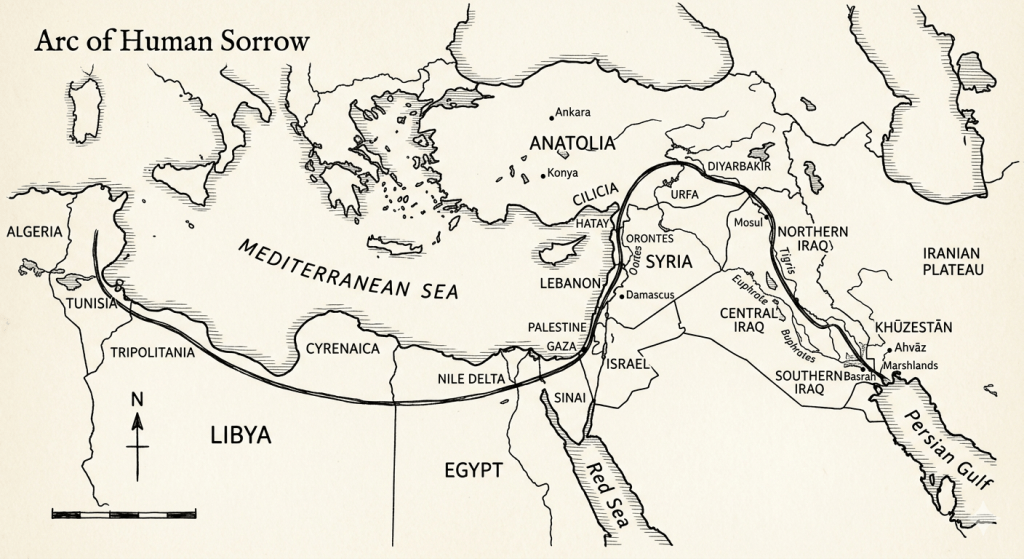
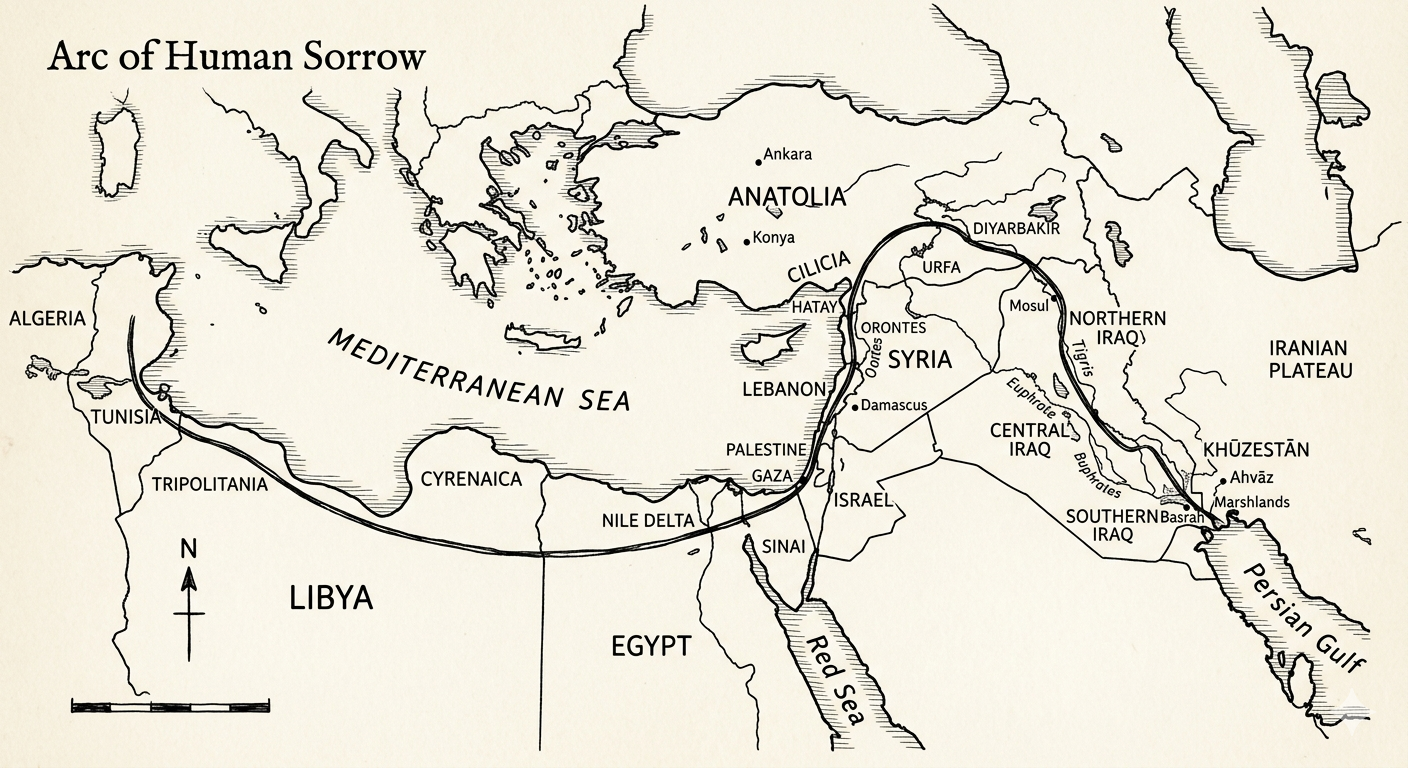
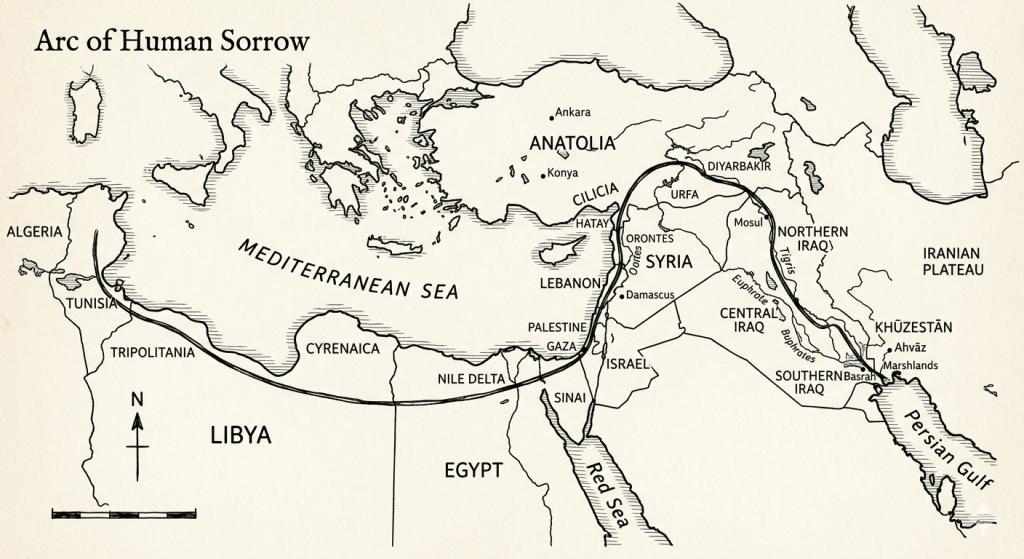
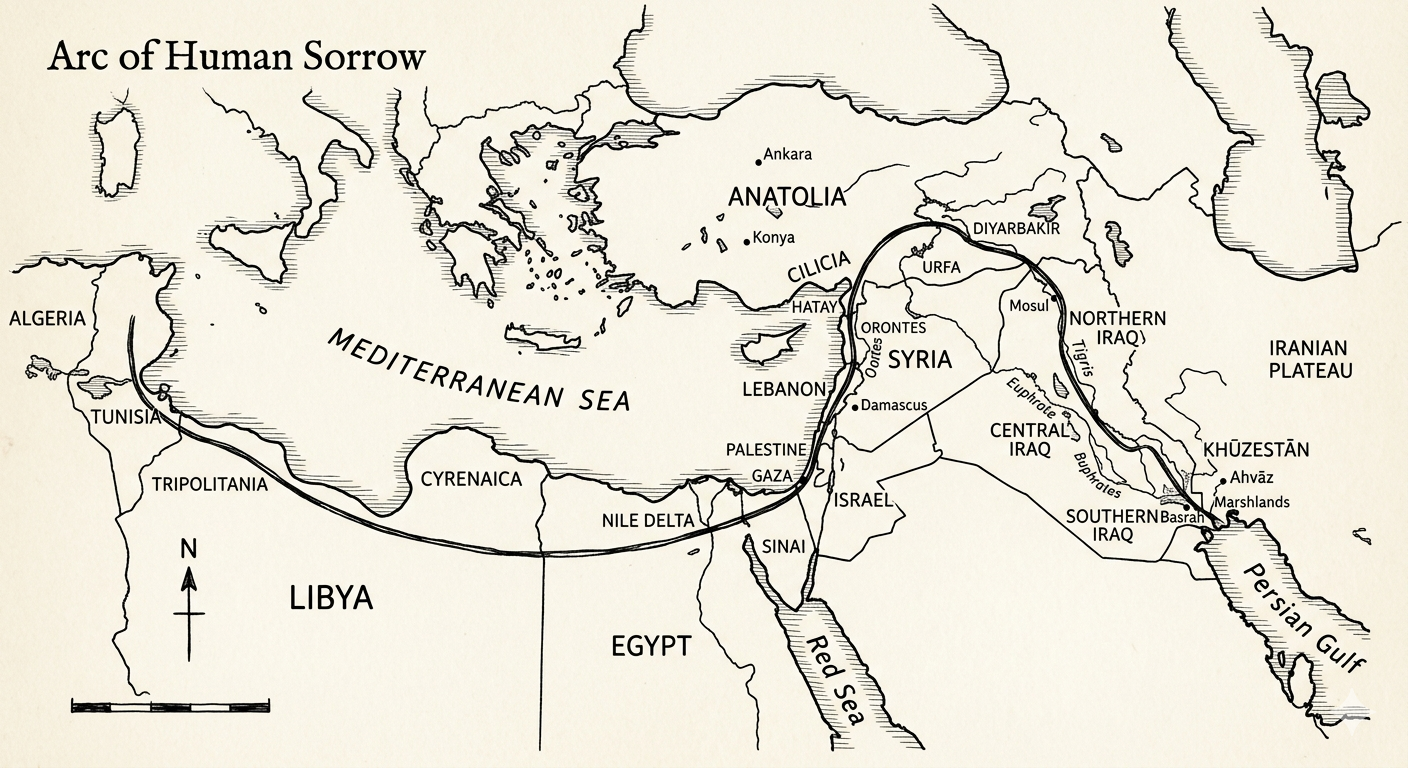
If one were to trace, on a single map, the heaviest concentration of war, pillage, and displacement across human history, the line would run from Libya through Anatolia, the Levant, Mesopotamia, and Persia—an arc that has, for millennia, been less a geographical accident than a structural fault‑line of empire.

From the dawn of recorded history, this corridor has served as the spinal column of empires: Assyrian, Babylonian, Persian, Macedonian, Roman, Byzantine, Islamic caliphal, Seljuk, Mongol, Ottoman, and, in the modern age, the overlapping regimes of European and American imperial power.

From at least the late Bronze Age onward, this corridor has been the main east–west corridor between the Mediterranean and the Iranian plateau, so it repeatedly became the spinal battlefield for competing empires. The Levant and Mesopotamia in particular were frontier zones between Mediterranean powers and Iranian‑heartland empires, so wars between Rome‑Byzantium and Persia, then between Ottoman and Safavid empires, passed repeatedly over the same towns and populations, amplifying cycles of pillage and displacement.

Each of these powers, in turn, has marched, bargained, and bled over the same towns, river‑crossings, and trade‑routes, repackaging the same hunger for territory, tribute, and control in new ideological cloaks.
What we might call the “Arc of Human Sorrow” is not merely a belt of suffering, but the visible imprint of a deeper pattern: the insatiable appetite of the powerful for strategic advantage and concentrated wealth.

When the Industrial Revolution equipped Western states with the technology and capital to project force across oceans, this arc became the primary theatre for resource‑driven expansion. The old prizes of silk, spices, and gold were gradually replaced by the far more potent magnets of oil, gas, and minerals. The arc did not suddenly become a zone of pain; it became the privileged zone where the logic of empire could be most lucratively enacted.

Thus, the wars of the last century—the two World Wars, the Cold‑War alignments, the post‑1979 upheavals, and the post‑2003 invasions and interventions—have all left their deepest scars precisely along this ancient spine of conflict.

To stand in this recognition as a historian is to see both tragedy and continuity: the same lands, repeatedly, have been conscripted not as protagonists in their own story, but as terrain for the ambitions of others. The arc is not a metaphysical curse, but the historical reward of possessing what others covet. And yet, because the coveters are always ready to fight among themselves, the arc becomes a perpetual battlefield, where the Nine‑Tenths of humanity—those who live, sow, build, and mourn within it—are left to experience the consequences of decisions made far beyond their borders.


The arc of sorrow is not only a record of physical violence; it is also a record of moral erosion. Over generations, a rhythm of empire, resistance, and intervention has hardened into a habit: the One‑Tenthers assume that force and manipulation are the only realistic tools of order, while the Nine‑Tenths learn two contradictory lessons—that resistance is often crushed, and that even survival depends on navigating the machinery of extraction. This is how the arc becomes, in effect, a training‑ground in resignation and cunning, a place where lofty ideals of peace, justice, and dignity are repeatedly tested against the cold calculus of power.

(To be Continued)

Sudarshan Madabushi

Sri Viśvaksēna, a divine puzzle in the Śrī‑Vaishnava Guru‑Paramparā: Revelation, Historicity, and Theological Function

At the outset, let me state that as a Sri Vaishnava, I deeply revere Sri Viśvaksēna as a nitya‑sūri and an Ācārya‑figure in the Śrī‑vaishnava paramparā. Let there be no doubt.

It is only philosophical‑hermeneutical curiosity that leads me to ask a few questions on this celestial Acharya in this brief essay:


— Why has our sampradāya specifically inscribed his ācārya‑status in the Guru‑Paramparā‑vṛkṣa when other Vedāntic traditions do not?

— Why is the literal śruti‑smṛti‑pramāṇam label for him is not as explicit?


— And, in recent or past times, whether any Śrī‑vaishnava Ācārya or Vedic scholar explicitly addressed this as a saṁśaya?

Introduction:
The figure of Viśvaksēna occupies a curiously unique position in Śrī Vaishnavism: he is venerated as a nitya‑sūri and senādhīpati of Viṣṇu, yet not merely as a kaimkārin in the heavenly host—Śrī‑vaishnava guruparamparai‑texts inscribe him as an Ācārya‑figure, the third node in the Guru‑Paramparā‑vṛkṣa, placed between Śrī Lakṣmī and Nammāḻvār.

This insertion raises a series of intertwining questions:

— is there Vedāntic‑pramāṇam for treating him as an Ācārya;
— why is he elevated above other nitya‑süris such as Garuda in the sampradāya‑vṛkṣa;
— and how does the anādi (beginningless) revelation claim of the Guru‑Paramparā withstand historically sensitive scrutiny?

This essay below explores the theological‑function, scriptural‑reception, and socio‑historical‑construction of Viśvaksēna in Śrī Vaishnavism, mapping the Viśvaksēna‑puzzle from Vedas‑to‑Purāṇas‑to‑Pāñcarātra‑Āgama‑to‑guruparamparā‑literature, and situating it within the broader Vedāntic and Vaishnava landscape.

Abstract

This essay below examines the theological status of Viśvaksēna in the Guru‑Paramparā‑vṛkṣa of Śrī Vaishnavism (Viśiṣṭadvaita).
It addresses the following questions:
Why is Viśvaksēna—a nitya‑sūri and senādhīpati of Viṣṇu—inserted as an Ācārya‑figure in the Śrī‑vaishnava lineage when he is absent from the Vedas and not counted as an Ācārya in Advaita, Dvaita, or Gauḍīya‑Caitanya paramparās?
This essay analyses the scriptural‑pramāṇa‑status of his upadeśa, the Lakṣmī‑Tantram and Pāñcarātra‑reception, the Vāḍakalai‑Teṅkalai‑consensus‑on‑the‑vṛkṣa, and the anādi‑revelation‑question. It argues that the Guru‑Paramparā narrative is best understood as revelatory‑cum‑historically shaped: the content of the rahasya‑upadeśa stems from Sriman Nārāyaṇa (via Śrī Lakṣmī and nitya‑süris), while the institutional‑form of the vṛkṣa is codified by embodied Ācāryas (Nāthamuni, Yāmuna, Rāmānuja, Deśika, etc.), and accepted as paramparā‑pramāṇam in the sampradāya.
  1. Introduction: The Viśvaksēna‑Puzzle in Śrī Vaishnavism
    In Śrī Vaishnavism, the Guru‑Paramparā‑vṛkṣa (Ācārya‑lineage) is not merely a genealogical record but a theological‑symbolic structure. The sampradāya accounts the vṛkṣa as:
    • Anādi (beginningless):
    Sriman Nārāyaṇa → Śrī Lakṣmī → Viśvaksēna → Nammāḻvār → Nāthamuni → Yāmunācārya → Rāmānuja → later Ācāryas.
    • Revelatory:
    The rahasya‑upadeśa‑flow from Nārāyaṇa to Śrī Lakṣmī to Viśvaksēna to Nammāḻvār and Nāthamuni is regarded as paramparā‑pramāṇam.
  2. At the same time, several historical and hermeneutical puzzles emerge:
    • Viśvaksēna appears in Purāṇic‑Pāñcarātra‑circles as the nitya‑sūri and senādhīpati of Viṣṇu, but not explicitly in the Vedic Saṁhitās;
    • There is no Vedic‑Gāyatrī mantra to him, and no Śruti‑verse that directly states Lakṣmī imparted upadeśa to him;
    • Other Vedāntic traditions (Advaita, Dvaita‑Madhva, Gauḍīya‑Caitanya, Rāmānandi) do not include him as an Ācārya in their guru‑paramparās;
  3. Some scholars privately or peripherally ask:
    “Why is Viśvaksēna in the Śrī‑vaishnava vṛkṣa if the structural‑pramāṇam‑for‑him is not as explicit as in other saints and Ācāryas?”
  4. This essay tackles the Viśvaksēna‑puzzle from three angles:
    Source‑theology: Is the Guru‑Paramparā‑vṛkṣa revealed; and, if so, whose revelation? Historiography‑cum‑hagiography: How did this vṛkṣa‑narrative come to be formulated?
  5. Comparative‑siddhānta: Why is Viśvaksēna treated as an Ācārya in Śrī Vaishnavism alone, and not in other Vedāntic schools?
  6. Viśvaksēna: Nitya‑Sūri, Senādhīpati, and Ācārya‑Figure
    Viśvaksēna in Purāṇic‑Āgamic‑Vaishnava Literature

    Viśvaksēna (Vishvaksena) is identified in Purāṇa‑ and Pāñcarātra‑Āgama‑traditions as:
    • The eternal commander‑in‑chief (senādhīpati) of Viṣṇu’s army,
    • Gatekeeper and chamberlain of Vaikuṇṭa,
    • An emanation of Viṣṇu’s suddha‑sattva‑śakti who safeguards the kaimkaryam of the heavenly hosts.
    He is also linked to the transmission of Vishṇu‑dharma: in Pāñcarātra‑style texts, he is portrayed as the custodian of Viṣṇu’s tantras and dharmas in the Kali‑yuga.
Thus, Viśvaksēna emerges in broader Vaishnava circles as a nitya‑kaimkāri and administrative‑cosmic‑functionary of Viṣṇu, but not primarily as a guru‑to‑mortal Ācārya in the Śrī‑vaishnava sense.


7. Within Śrī Vaishnavism, Viśvaksēna is explicitly placed in the Guru‑Paramparā‑vṛkṣa as:


• The third foremost Ācārya in the Orāṇ‑Vazhi and Desika-sampradaya genealogy:
• Sriman Nārāyaṇa (first Ācārya),
• Śrī Lakṣmī (Periya‑Pirāṭṭi; second Ācārya),
• Viśvaksēna (third),
• A nitya‑sūri and “Ācārya‑in‑Vaikuṇṭa”, who mediates Bhagavat‑icchā and rahasya‑upadeśa between Śrī Lakṣmī and Nammāḻvār.

In Śrī‑vaishnava liturgy (e.g., Orāṇ‑vazhi‑pūjās), Viśvaksēna is invoked before Ganeśa‑pūjā as the senādhīpati who removes obstacles in kaimkaryam‑rituals; this is ritually grounded in Pāñcarātra‑texts and guruparamparā practise‑notes.

8. Viśvaksēna vs. Garuda: The Vedas‑Garuda‑Gayatrī‑Vishvaksēna Gap

• There is Vedic and post‑Vedic‑ritual symbolism of an pakṣi‑/śyena‑bird carrying the sacrificial fire; later Purāṇic‑Mahābhārata‑literature identifies this as Garuda, Viṣṇu’s vāhana and Vedasvarūpi.
• There are Garuda‑Gayatrī‑mantras in Smartha‑Vaishnava‑circles, but no Vedic‑Saṁhitā‑mantra named “Garuda‑Gayatrī” in the strictly Rig‑Vedic sense.
• In contrast, Viśvaksēna has no Vedic‑Saṁhitā‑mention and no Vedic‑Gayatrī‑mantra;
his name, nitya‑sūri‑status, and Ācārya‑position are known mainly from Pāñcarātra‑Āgama‑texts and later Śrī‑vaishnava‑hagiography.


Thus, Garuda has a stronger Vedic symbolic basis, while Viśvaksēna has a stronger Pāñcarātra‑Purāṇic hagiographical basis, yet the Śrī‑vaishnava guru‑paramparā awards the Ācārya‑node‑position to Viśvaksēna in the vṛkṣa, and not to Garuda. This asymmetry is a key hermeneutical question.

9. Source‑Theology: “Whose Revelation?”


The Anādi Claim
The Śrī‑vaishnava sampradāya treats the Guru‑Paramparā‑vṛkṣa as anādi (beginningless) in the sense that the original rahasya‑knowledge stems directly from Sriman Nārāyaṇa. This is paralleled by the trayī‑mantra‑and‑Dvayam revelation‑narratives:


• Thirumantra‑revelation to Nara‑Nārāyaṇa as the first Ācārya;
• Dvayam‑mantra‑revelation in Vaikuṇṭa as knowledge given by Sriman Nārāyaṇa to Śrī Lakṣmī;
• Tiruvāymoḻi‑style bhakti‑transmissions through nitya‑kaimkāris to humans (Nammāḻvār, Nāthamuni, etc.).


So, the ultimate reveler of the content of the Guru‑Paramparā is:

Sriman Nārāyaṇa Himself, the svatantra‑svāmī, whose kripā and svayam‑jñāna flow downward through śeṣas.

10. Immediate Conduit: Śrī Lakṣmī and Viśvaksēna


The Śrī Vaishnava texts (e.g., Rahasyatraya‑Sāram, Sri Vaishnava‑guruparamparā‑narratives) elaborate:


• Śrī Lakṣmī receives the dvaya‑rahasyam from Sriman Nārāyaṇa in Vaikuṇṭa;
• She, as samayam‑śakti, passes it on to Viśvaksēna, who then prepares the nitya‑kaimkaryam‑vibhūti for the future descent of the prapanna‑mantra‑line into the saṁsāra‑world.

There is no Vedic or Purāṇic śruti‑smṛti‑pramāṇam that explicitly states that Lakṣmī imparted upadeśa to Viśvaksēna. The idea that Lakṣmī → Viśvaksēna → Nammāḻvār → Nāthamuni → … is a succession of upadeśa is found only in Śrī‑vaishnava Āgama‑Pāñcarātra‑paramparā literature and later sampradāya‑narratives, not in a clear verse in the Vedas or major Purāṇas.


Nonetheless, the direct channel of the revelatory‑link between Nārāyaṇa and the mortal‑Ācāryas (via Nammāḻvār and Nāthamuni) is held to be:


Śrī Lakṣmī → Viśvaksēna → Nammāḻvār → Nāthamuni → Yāmunācārya → Rāmānuja → later Ācāryas.


Viśvaksēna here functions as the cosmic‑administrator‑and‑rahasya mediator: he is not independent, but an empowered agent of Viṣṇu’s icchā, embodying seśatva and dāsabhūtattva.

The encounter between Viśvaksēna and Nammāḻvār is not a dramatic meeting‑narrative in the Vedas or core Śrīmad Bhāgavatam‑style; it is primarily found in Śrī‑vaishnava hagiography and Āḻvār‑tradition, and usually described in later sthala‑purāṇas, guru‑paramparā‑contextual notes, and Ācārya‑commentaries more than in one fixed “chapter.”


Nevertheless, the sampradāya story‑line runs like this:

  1. Setting:
    Nammāḻvār, as a child, withdrew into deep samādhi under the tamarind tree in Tirukurughūr (Alwar Tirunagari) and remained in ātma‑anubhava, not speaking or moving for twelve years. The gopīkā‑nivasam (his parents’ household) was helpless; no ordinary guru could awaken him.
  2. Role of Viśvaksēna:
    The nitya‑sūri Śrī Viśvaksēna, on the command of Bhagavān, descended to Tirukurughūr to awaken Nammāḻvār’s inner realisation and, in a sense, to function as his rahasya‑upadēśaka‑figure (esoteric‑instructor).
    He approached the boy under the tree and addressed him, shaking him gently from his internal absorption without destroying the bhakti‑anubhava.
  3. Spiritual ‑ not worldly ‑ instruction:
    Viśvaksēna did not give him a list of rules or mantras in the way a Pāñcarātra‑guru gives pañca‑saṁskāra;
    rather, he opened the inner flood‑gates of Divya‑Kṛṣṇa‑bhakti and the rahasya‑artha of nāma‑guṇa‑līlā‑Kṛṣṇa‑Viṣṇu, which then spontaneously flowed out as the Tiruvāymoḻi compositions of Nammāḻvār.
    This encounter is not in the Ṛg‑Veda or Mahābhārata; it is preserved in Śrī‑vaishnava tradition through (a) Ācārya‑literature and guruparamparā‑vṛkṣam texts that mention how Viśvaksēna initiated Nammāḻvār into rahasya‑siddhi (esoteric realisation)
    (b) Local Tirukurughūr‑purāṇa / sthala‑purāṇa accounts and (c) Āḻvār‑kōvils’ traditional stories that recount the “Viśvaksēna’s awakening of Nammāḻvār” event.
    Some Ācārya‑speech‑transcripts and Sri Vaishnava‑lecture‑notes also record Ācāryas narratives on how Viśvaksēna caused the dvayam‑level bhakti to emerge in Nammāḻvār, who then delivered Tiruvāymoḻi.

11. Historical‑Embodied Codifiers:

Nāthamuni, Yāmuna, Rāmānuja, Deśika

While the theology insists on anādi‑revelation, scholars and Ācāryas also recognise that:


• The written and institutional form of the Guru‑Paramparā‑vṛkṣa was shaped historically between the 10th–14th centuries.


• Nāthamuni: Recovered the Nālāyira‑Divya‑Prabandham; Integrated Alvar‑Tamil‑bhakti with Sanskrit‑Vedāntic‑siddhānta, and thus became the first identifiable Ācārya around whom the Śrī‑vaishnava‑guru‑vṛkṣa begins to look “institutional”.


• Yāmunācārya and Rāmānuja: Structured Viśiṣṭadvaita doctrine; and wrote Śrī‑Bhāṣya‑and‑Gītā‑Bhāṣya‑level commentaries; and were the nodes around whom the paramparā‑narrative acquires authoritative‑theological hegemony.


• Vedānta Deśika and Manavāla‑Māmunigal: Further systematised prapatti, mokṣa, nitya‑kainkaryam‑doctrines; restated the Guru‑Paramparā‑vṛkṣa in Thanian‑style verses and ācārya‑vandana‑praktise, which later mutts (Andavan, Parakala, Ahobila, etc.) institutionalised.


In this way, the revelation is from Bhagavān (via Śrī Lakṣmī and Viśvaksēna), but the institutional‑narrative of the vṛkṣa is formulated by the embodied Ācāryas.

12. Historiography and Hagiography: How the Vṛkṣa Came to Be Formulated

Scholars and Śrī‑vaishnava guruparamparai writers argue that the Guru‑Paramparā‑vṛkṣa‑narrative is not a chronological record, but a theologically‑and‑historically‑shaped genealogy. Their key observations include:

— Nāthamuni as the Prathama‑Pratyakṣa‑Ācārya‑Node:
No living Śrī‑vaishnava academic‑scholar will deny the anādi‑theology; many, however, admit that the historical story of the lineage begins to look concrete with Nāthamuni, who recovered the Divya‑Prabandham and unified Tamil‑Alvar and Sanskrit‑Vedāntic streams.

— Rāmānuja as the Canoniser of the Vṛkṣa: Rāmānuja received the siddhānta from Mahāpūrṇa‑Peria‑Nambi and Yāmunācārya; wrote Śrī‑Bhāṣya‑ and Gītā‑Bhāṣya‑level works; and institutionally stabilised, finally, the Viśiṣṭadvaita acharya lineage into a clear guru‑paramparā.

CONCLUDED

Sudarshan Madabushi

If Pakistan wants to fish in troubled waters, it’s really none of India’s business….

https://www.eurasiareview.com/26042026-trumps-pakistan-pivot-power-optics-and-the-quiet-channels-of-diplomacy-oped/

Pakistan’s emergence as an intermediary between the United States and Iran is a calculated attempt to position itself as an indispensable middle power, though this strategy carries profound geopolitical and internal risks. By leveraging its unique connections to both Tehran and Washington, Islamabad aims to offset regional strategic pressures and enhance its global standing, even as it navigates a narrow path between competing alliances.


Geopolitical Risks and Balancing Acts

Pakistan’s mediation effort is not a naive pursuit of “angelic” diplomacy but a strategic maneuver to exploit the current regional vacuum and establish itself as a necessary interlocutor. However, this positioning exposes the nation to significant hazards:


• Exposure to Conflict: If regional tensions escalate beyond the current threshold, Pakistan faces immense pressure to abandon its neutrality and align more closely with Saudi Arabia, risking kinetic retaliation from Iran.


• Great Power Entanglement: Pakistan is caught in the crossfire of broader rivalries between the United States and China, as well as the hardening blocs involving Israel, the UAE, and Iran. Balancing these competing demands limits Islamabad’s maneuverability and complicates its security architecture.


• Domestic Sectarian Fragility: The most volatile risk lies internally, where Middle Eastern geopolitical rivalries have historically sharpened sectarian identities. Proxy dynamics, particularly regarding the Saudi-Iran rivalry, have exacerbated Sunni-Shia tensions within Pakistan, threatening the nation’s own stability.


The Mediator’s Dilemma


While Pakistan has managed to facilitate communication channels, its role remains highly contingent on the shifting whims of the primary belligerents. President Trump’s recent decision to cancel an envoy trip to Islamabad highlights the fragility of this mediation, demonstrating that while Pakistan may provide a valuable platform for backchannel diplomacy, its influence is often secondary to the strategic calculations of Washington and Tehran. Pakistan’s policy is essentially a high-stakes balancing act; success offers a pathway to regional prominence, but failure risks drawing the country deeper into conflicts it is poorly equipped to manage.

Ramifications for India if Pakistan succeeds or fails

If Pakistan succeeds, what ramifications will be felt by India and South Asia ? And if it fails what could be the fallout for India ? Is India in a geopolitical Catch 22 situation?

The potential outcomes of Pakistan’s mediation efforts in the U.S.-Iran conflict present a complex strategic landscape for India, where the distinction between “winning” and “losing” is mediated by the broader regional need for stability.


The implications for India depend on the degree of success or failure of these diplomatic initiatives:


• If Mediation Succeeds: A successful stabilization of the region would be a net positive for India, even if it enhances Pakistan’s diplomatic prestige. Reduced tensions in West Asia translate to more secure energy transit routes, protection for the Indian diaspora, and a less combustible neighborhood, all of which align with India’s core strategic interests.


• If Mediation Fails: The fallout for India would be largely characterized by the regional consequences of a failed peace process rather than the failure of the mediator itself. A collapse of these talks, followed by escalated hostilities, would increase energy price volatility, threaten maritime trade in the Gulf, and potentially destabilize India’s border regions through a surge in sectarian or militant activity.


The Geopolitical Catch-22

India is not necessarily in a traditional “Catch-22,” but it is navigating a sophisticated strategic paradox:


• Constraint vs. Opportunity: India faces the challenge of being a major regional player while remaining largely absent from the primary mediation framework, which risks perceived marginalization. However, this restraint allows New Delhi to maintain its principled, neutral stance, preserving its ability to engage with all stakeholders (Israel, Iran, the UAE, and the U.S.) without becoming an explicit party to a volatile, high-stakes negotiation.


• Strategic Autonomy: While critics suggest India’s absence from the mediation frame reflects a loss of influence, New Delhi’s proactive crisis management—such as the evacuation of its citizens and high-level engagement with regional leaders—underscores its preference for pragmatic, bilateral diplomacy over the high-risk, high-visibility mediation path chosen by Pakistan.


In essence, India’s approach is a calculated effort to insulate itself from the immediate volatility of the U.S.-Iran conflict while ensuring its national interests—economic security and the welfare of its citizens—are protected through independent, state-level diplomacy.

If Pakistan wants to fish in troubled waters, it’s really none of India’s business. When the fish is finally hauled out of the West Asian trawler now out there in the perilous high seas , and the catch is brought home somehow to market, India will, of course, be there, all ready and eager to buy it.

Sudarshan Madabushi

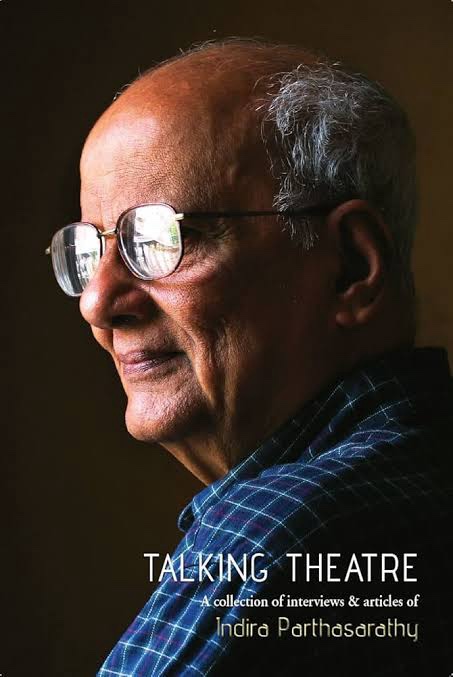
WhatsApp conversation with “Eepa”(Sri Indira Parthasarathy) on Samuel Beckett’s famous stage-play, “Waiting for Godot”

On the intriguing subject of “finding meaning in life”,  last week on a WhatsApp exchange of messages, back and forth, with Sri Eepa (Indira Parthasarathy, now 96 years old, who lives alone in Athulya Assisted Living Home), we had a very interesting conversation which I take the liberty of sharing here with you . Eepa, the doyen of Tamil literature, has a mind as sharp and percipient as ever and it is what won him accolades for several of his published novels and the dozens of his stage plays. ((Last year I translated into English his novel “வேதபுரத்து வியாபாரிகள்” — “The Middlemen of Vedapura” (Blue Rose Publishers) available online on Amazon and FlipKart)).

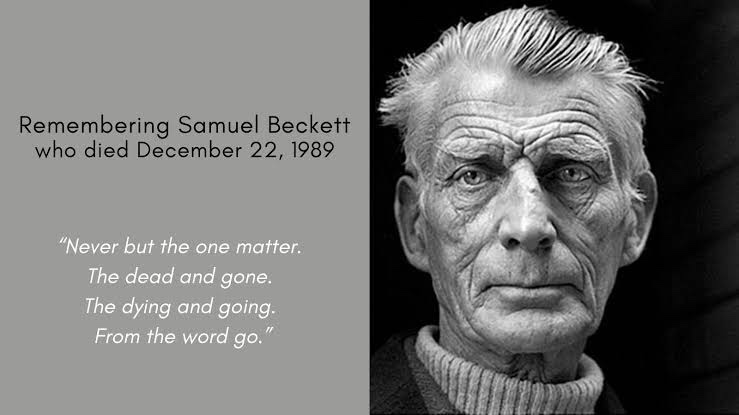
Our conversation started off when I asked Eepa what he thought about the English avant-garde play “Waiting For Godot” by Samuel Beckett . I forwarded to him the below short critique of the play and asked him to comment:

*Waiting for Godot* by Samuel Beckett, 1953 – the play where “nothing happens, twice.”

### *Plot in 30 seconds*

Two tramps, *Vladimir (Didi)* and *Estragon (Gogo)*, wait by a tree on a country road for a guy named *Godot*. He never comes. 

*Act 1*: They wait. Talk nonsense. Consider hanging themselves. Meet *Pozzo* and his slave *Lucky*. A boy arrives: “Mr. Godot can’t come today but surely tomorrow.” 

*Act 2*: Basically Act 1 again. Same tree, same wait, same Pozzo & Lucky but now Pozzo is blind. Same boy: “Mr. Godot can’t come today but surely tomorrow.” They don’t leave. Curtain.

### *Who/what is Godot?*

Beckett refused to say. When asked, he replied: “If I knew, I would have said so in the play.” 

Popular interpretations:

1. *God* – Go + dot = God. Didi/Gogo = disciples waiting for salvation that never arrives.

2. *Death* – The only certainty, but it’s always “tomorrow.”

3. *Meaning/Purpose* – We wait for life to explain itself, but it won’t.

4. *Nothing* – Godot is just a name they invented to pass time. The point is the waiting itself.

### *Core themes*

Theme How it shows up

**The Absurd** Life is repetitive, illogical, and purposeless. They wait for meaning that never comes, but keep waiting. Pure Camus vibes.

**Time & Memory** “Nothing happens, nobody comes, nobody goes, it’s awful.” They can’t remember yesterday. Was it the same boy? Did Pozzo come before? Time is a loop.

**Language fails** They talk constantly to fill silence. Dialogue is circular, full of non-sequiturs. Words don’t connect to action.

**Dependency** Didi & Gogo can’t leave each other, even though they drive each other nuts. Pozzo & Lucky are master/slave, but both trapped. We need others, even when it’s hell.

**Hope as torture** “Let’s go.” “We can’t. We’re waiting for Godot.” Hope keeps them stuck. If Godot came, the play would end.

### *Key moments*

1. *The tree*: Act 1 it’s barren. Act 2 it has 4-5 leaves. Only sign time passed. Or did it?

2. *Lucky’s speech*: The one time Lucky speaks, it’s a 3-page word-salad about God, academia, and tennis. 

Shows language/knowledge as total noise.

3. *The boots*: Gogo struggles with his boots the whole play. Small, pointless suffering that fills time.

4. *”Let’s go.” / “We can’t.” / “Why not?” / “We’re waiting for Godot.”* – Ends both acts. Nothing changes.

### *Why it matters*

It’s the defining *Theatre of the Absurd* play. 

Beckett stripped drama of plot, character development, and resolution to show human existence raw: we wait, we suffer, we distract ourselves, we die. 

Critics hated it at first. Then it became the most important play of the 20th century. Prisoners at San Quentin reportedly understood it instantly: “That’s what it’s like, waiting.”

### *Beckett’s stage directions are law*

1. Two men, desolate road, one tree.

2. Must be funny. Beckett called it a tragicomedy. Vaudeville meets philosophy.

3. Gogo and Didi are not clowns, but they wear bowler hats and act like them.

*Camus connection*: Albert Camus said Sisyphus is happy. Beckett shows us Sisyphus _while_ he’s rolling the rock. No conclusion, just the endless, ridiculous effort.

*1-line takeaway*: We’re all waiting for our Godot — a job, love, death, meaning — and the waiting _is_ the play.

************

I asked Eepa : Sir, is the above a correct critique of Waiting For Godot ? 

And his reply was : Waiting for a non-existent god to give life its meaning. Begins as such:

‘One is saved’.

‘Fifty Fifty’.

One thief praising condemned Jesus gets salvation and the one abusing Jesus does’nt. ‘Fifty Fifty’.

You are broadly correct.

Again I pressed him : Sir, philosophically , how do you, as a playwright yourself, view Beckett’s Waiting for Godot? Does it differ from how you view it now as an avowed Sri Vaishnava?

Eepa replied : I don’t know. When I read it in its pale Irish prose, it didn’t convey anything. But I saw the play in Delhi when once it was done by a British troupe . It made sense —- that we all need to give life its meaning drawn from our own experiences. 

So, I posed Eepa yet another question: Sir, “finding meaning” is thus not a passive act, like just “waiting” in life …. twiddling our thumbs, so to say, right?

In Sri Vaishnava philosophy , finding meaning is at the very core of the doctrine of Artha Panchakam. 

The play’s protagonists’ futile wait for the absent Godot mirrors a misguided form of upasana—lacking surrender, ritual, or divine assurance—highlighting existential absurdity absent in Vaishnava certainty.

The “meaning” we all search for in life cannot be the absurd  “waiting” for Godot . Meaning cannot arise from absurdity. Nor can Meaning ever arise from the void. 

Sri Vaishnava Siddhantham posits the concept of Sath … that which exists always (Tat Tvam asi) and is never absurd but is in fact verily the Meaning that must be relentlessly sought.

Eepa wrote back at once: Convincing. Yes, we all need to ourselves find and give our life a meaning. 

That terse yet profound confirmation coming as it did from a physically frail 96-year old but very strong intellect, assured me that Waiting for Godot actually is but a distant echo of the poetic lines below that end with the word “Wait” :

THE PSALM OF LIFE : Henry Wandsworth Longfellow

Tell me not, in mournful numbers, 

   Life is but an empty dream! 

For the soul is dead that slumbers, 

   And things are not what they seem. 

Life is real! Life is earnest! 

   And the grave is not its goal; 

Dust thou art, to dust returnest, 

   Was not spoken of the soul. 

Not enjoyment, and not sorrow, 

   Is our destined end or way; 

But to act, that each to-morrow 

   Find us farther than to-day. 

Art is long, and Time is fleeting, 

   And our hearts, though stout and brave, 

Still, like muffled drums, are beating 

   Funeral marches to the grave. 

In the world’s broad field of battle, 

   In the bivouac of Life, 

Be not like dumb, driven cattle! 

   Be a hero in the strife! 

Trust no Future, howe’er pleasant! 

   Let the dead Past bury its dead! 

Act,— act in the living Present! 

   Heart within, and God o’erhead! 

Lives of great men all remind us 

   We can make our lives sublime, 

And, departing, leave behind us 

   Footprints on the sands of time; 

Footprints, that perhaps another, 

   Sailing o’er life’s solemn main, 

A forlorn and shipwrecked brother, 

   Seeing, shall take heart again. 

Let us, then, be up and doing, 

   With a heart for any fate; 

Still achieving, still pursuing, 

   Learn to labor and to wait.

************

End of the conversation. 

Sudarshan Madabushi

Has Donald Trump lost his marbles… and gone so far doolaly that he now needs a White House nanny to be his minder?

Upon learning two US airmen were missing after their F-15 was downed in Iran on Good Friday (April 3, 2026), Trump screamed at aides for hours, fixating on gas prices ($4.09/gallon), absent European support, and fears of a 1979-style hostage fiasco. He demanded instant rescues despite terrain challenges unused by US forces since the 1970s, hindering real-time updates from the field.

The Wall Street Journal reported on President Trump’s intense reaction that happened in the White House Situation Room on April 3, 2026, during ongoing US-Israeli strikes that began February 28.

Trump screamed at aides for hours in a “frenzied state,” fixating on gas prices at $4.09 and lack of European ally support, becoming such a terrible distraction that White House aides were forced to ask that he be barred from the Situation Room and only to be briefed intermittently. The White House Press Spokeswoman however denied this, with Press Secretary Karoline Leavitt spinning it all as the behaviour of a “steady leader.”

Thankfully, one airman was rescued quickly, the second after over 24 hours in a high-risk operation that saw America lose quite a few military assets like helicopters and armoured getaway vehicles. Trump then posted expletive-laden Truth Social threats demanding Iran reopen the Strait of Hormuz, including praising “Allah” on Easter … all of which seemed “unstable,” alarming lawmakers and his own voter base.

**********

The fact of the matter was however that it was Trumps aides that day who bravely managed to stem the damage that POTUS could have otherwise caused in the Situation Room, given the his state of mind that had lapsed into uncontrollable rage — a mental state called “losing ones’s marbles” or “going doolaly”.

Aides barred Trump from the Situation Room during the crisis, briefing him only intermittently to avoid disruption from his hours-long screaming fits. This decisive action shows they prioritized operational control over deference to his rage. Chief of Staff, Susie Wiles, barred him out of the Situation Room to enable the rest of the team to focus on operations, briefing him intermittently by phone instead; she deemed his “impatience” counterproductive.

Wiles coordinated, briefing him by phone intermittently rather than allowing disruption. Reports name no others explicitly, but context points to national security principals like Gen. Dan Caine or deputies who physically escorted him out.

Wiles earned Trump’s trust through disciplined campaign management, positioning her to override his impulses without backlash. This inner circle—trusted from 2024 election wins—repeatedly contains his volatility, as in prior war room exclusions, ensuring rescues proceeded despite his rage.

Trump’s outbursts have long led to public putdowns and firings of cabinet members like Jeff Sessions and Scott Pruitt, fostering fear of humiliation more than intimidation. Recent reports indicate ongoing purges of advisers he deems disloyal, suggesting his temper drives turnover rather than compliance. In this Iran incident,, thank God! his staff contained his frenzy despite White House denials of exclusion, revealing a team experienced in navigating his volatility without being cowed.

**********

US media often treats WSJ leaks as insider drama amid broader Iran strikes, pilot rescues, and ceasefire talks, diluting focus; conservative outlets downplay it while liberals amplify for 25th Amendment calls without sustained traction. Internationally, Times of India and Hindustan Times referenced it briefly in context of US exclusion from the war room, but it’s overshadowed by Pakistan mediation and Strait disruptions.

If I were an American citizen I’d be really more than merely anxious over the fact that My President — who promised to make America great again — has to be bridled in by a nanny whenever he throws a fit anytime things go wrong for him! And yet the American people seem to be blithely indifferent to the mental composure or condition of their sovereign!

Many remain blithe due to fatigue from years of Trump scrutiny—verbal slips, outbursts, and “nanny” management are normalized as his style, not disqualifiers, especially with successes like the pilot rescues from Iran. Media framing thus splits along partisan lines and dilutes outrage, while war fatigue and economic woes overshadow fitness debates; no mass 25th Amendment push has materialized despite biographer warnings of a “civil emergency.”

This public tolerance or apathy risks complacency, as unchecked, Trump’s “fits” during a likely nuclear-armed standoffs, only echo critics’ fears of unfit leadership, while voters yet prioritize perceived strength over composure. America’s sovereignty today rests with an electorate split by loyalty over alarm.

*********

Prof. John Mearsheimer asks pertinently: “Can you imagine what would have happened to the world if during the Bay of Pigs crisis, Kennedy had behaved like Trump?” And all that I can do is just wonder .

In April 1961, Kennedy authorized a CIA-backed exile invasion of Cuba that disastrously failed, killing over 100 and capturing 1,200, due to poor planning and no US air support—yet he accepted full responsibility publicly, firing CIA Director Allen Dulles and firing no aides, which fortified his resolve for the 1962 Missile Crisis.


A Trump-like tantrum—screaming for hours, fixating on optics like gas prices, and demanding rash rescues as in the Iran F-15 incident—would have derailed containment of Khrushchev, likely provoking Soviet escalation or airstrikes on US assets. Kennedy’s aides never sidelined him; Trump’s team, led by nanny, Susie Wiles, physically barred him from the Situation Room to avert disruption, a “nanny” dynamic absent in JFK administration.


Kennedy’s composure averted nuclear war by negotiating missile withdrawal via backchannels; Trump’s “frenzied” style amid Iran strikes risks miscalculation with Russia or China, where aides’ bridling succeeds tactically (e.g., pilot rescues) but signals systemic fragility. Mearsheimer implies such volatility could cascade into superpower clash, unlike JFK’s pivot to de-escalation.

John Mearsheimer’s analogy sharply underscores the peril of impulsive leadership in nuclear-age crises, contrasting Kennedy’s measured restraint with Trump’s recent volatility.

Addled thinking or bravado ?

President Trump’s Iran strategy—launched with Netanyahu’s backing via strikes starting February 28, 2026, aiming for regime decapitation and collapse—has faltered very badly, as Iran’s leadership endured the loss of Khamenei without internal implosion, instead gearing for attrition warfare.


Trump nonetheless persists in his strategy due to sunk-cost commitment and Netanyahu’s pressure, overriding U.S. advisors like Rubio and Caine who deemed regime-change “bullshit” from the start. Strikes failed to destroy nuclear assets or force surrender, yielding only two fragile April ceasefires amid Strait disruptions, yet he doubles down on “maximum pressure” sanctions rather than pivot.


Pakistan Mediation Humiliation

Pakistan’s role as mediator for U.S.-Iran talks in Islamabad marks a stark reversal; Trump once branded both nations “terrorist regimes” in 2019-2020 rhetoric tying them to militancy.

Iran now resists Pakistan’s facilitation over trust issues, underscoring the mess: Trump, needing any off-ramp, relies on a former foe despite prior disdain.


If this isn’t addled thinking on Trump’s part, it then is hallmark Trump: bravado masking adaptability gaps, where loyalty to allies like Netanyahu have had him trapped him in escalation loops. Outcomes like pilot rescues succeeded because of staff intervention, but broader quagmire risks echo past patterns, which only heaped humiliation on America as a great power — amplifying it through improvised threats as Iran now has conjured up in the Hormuz.

If it is only God Almighty who can and must now save the world, first he’s got to make Americans must first save themselves by removing from office a POTUS gone doolaly and has clearly lost his marbles.

Sudarshan Madabushi

(A Chennai-based keen observer of contemporary geopolitics; also, student of classical Indic traditions calling himself “Unknown Sri Vaishnava”)