
by M. K. Sudarshan July 1, 2026: Chennai, India “A satirical yet in-depth exploration of the 300-year-old Vadakalai vs. Tenkalai sectarian feud at Kanchipuram’s Varadaraja Perumal Temple and the legal stalemate that keeps it alive.” Introduction If you ever find yourself weary of standard political theater, pack your bags and head to the ancient pilgrimContinue reading “Kicking the Can to Heaven: Why the Supreme Court Will Never Solve the Temples of Tamil Nadu”
Tag Archives: Unknown Sri Vaishnava
“The Unknown Sri Vaishnava” website at WordPress crosses the 100,000 views mark

The age-old Vedic ritual traditions (“yajna”) that I’ve been so utterly ignorant of for so long …
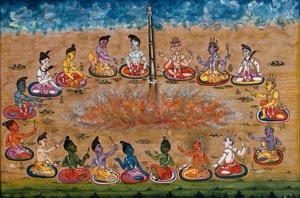
The story of the Hindu yajna tradition in modern India is not merely the story of a ritual form in decline. It is the story of a civilizational inheritance that has gradually lost its centrality in the public religious imagination even while retaining immense scriptural prestige. The older Vedic world placed yajna at the heartContinue reading “The age-old Vedic ritual traditions (“yajna”) that I’ve been so utterly ignorant of for so long …”
How Manu Smriti Served Liberal Historians and Social Anthropologists as a Handy Tool to Stigmatise Indian “Patriarchy” as Misogynistic (Part 3 & 4) Concluded

By M.K.Sudarshan Chennai, India : June 22, 2026 Part III: How Liberal Historians Perpetuated the Colonial MythThe Continuation of Orientalist Narrative Post-independence, liberal historians and social anthropologists continued the British Orientalist narrative rather than correcting it: Key Figures: • Dr. B.R. Ambedkar (1920s–1950s): Blamed Manu for caste oppression; burned Manu copies (1927)• Uma Chakravarti: “BrahmanicalContinue reading “How Manu Smriti Served Liberal Historians and Social Anthropologists as a Handy Tool to Stigmatise Indian “Patriarchy” as Misogynistic (Part 3 & 4) Concluded”
How Manu Smriti Served Liberal Historians and Social Anthropologists as a Handy Tool to Stigmatise Indian “Patriarchy” as Misogynistic (Part 2 of 4)

By M.K.Sudarshan Chennai, India : June 22, 2026 Part II: How British Colonial Orientalism Made Manu “Canonical”The British Imperial Purpose The elevation of Manu Smriti to “preeminent Hindu law” was not accidental—it was a calculated imperial strategy serving three purposes: Purpose #1: Simplify Governance• British administrators needed a “single code” for Hindu law• Manu providedContinue reading “How Manu Smriti Served Liberal Historians and Social Anthropologists as a Handy Tool to Stigmatise Indian “Patriarchy” as Misogynistic (Part 2 of 4)”
How Manu Smriti Served Liberal Historians and Social Anthropologists as a Handy Tool to Stigmatise Indian “Patriarchy” as Misogynistic (Part 1 of 4)

By M.K.Sudarshan Chennai, India : June 22, 2026 Introduction: The Manu Smriti Smokescreen In contemporary Indian discourse, the Manu Smriti has become the whipping boy for every alleged social ill in Hindu society. From temple entry bans to women’s reservation debates to caste discrimination, Manu is invoked as the preeminent symbol of “Brahminical patriarchy” andContinue reading “How Manu Smriti Served Liberal Historians and Social Anthropologists as a Handy Tool to Stigmatise Indian “Patriarchy” as Misogynistic (Part 1 of 4)”
Self-Knowledge on Credit: The Dangerous Appeal of Instant Enlightenment
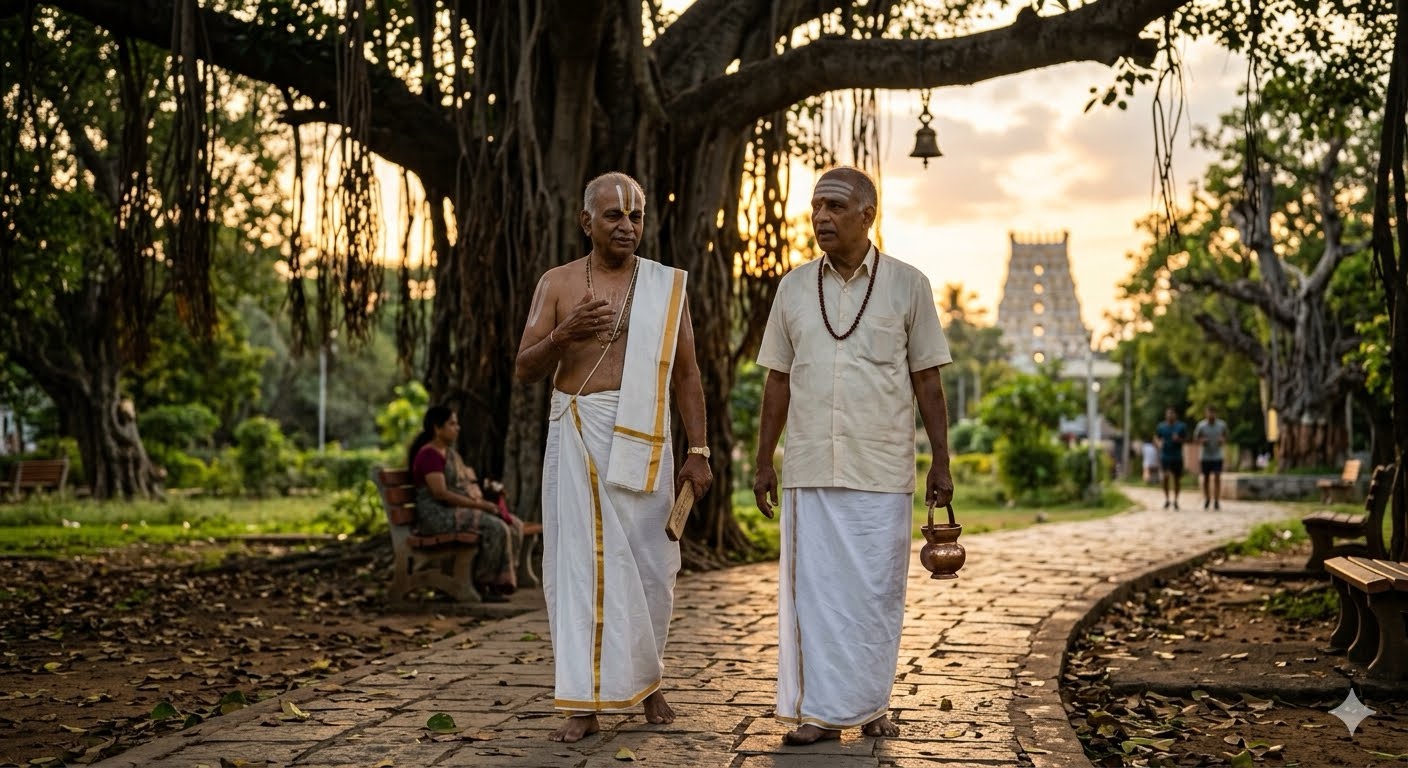
How retirees buy consolation instead of doing the work of the Self By M.K. Sudarshan Chennai , India : June 21, 2026 “Another cool evening,” Raghunathan said, drawing his shawl tighter as they rounded the old banyan. “The park’s the only place these days where people don’t ask you for your net worth or yourContinue reading “Self-Knowledge on Credit: The Dangerous Appeal of Instant Enlightenment”
““Eureka” at Srirangam: The Shared Dawn of Viśiṣṭādvaita””
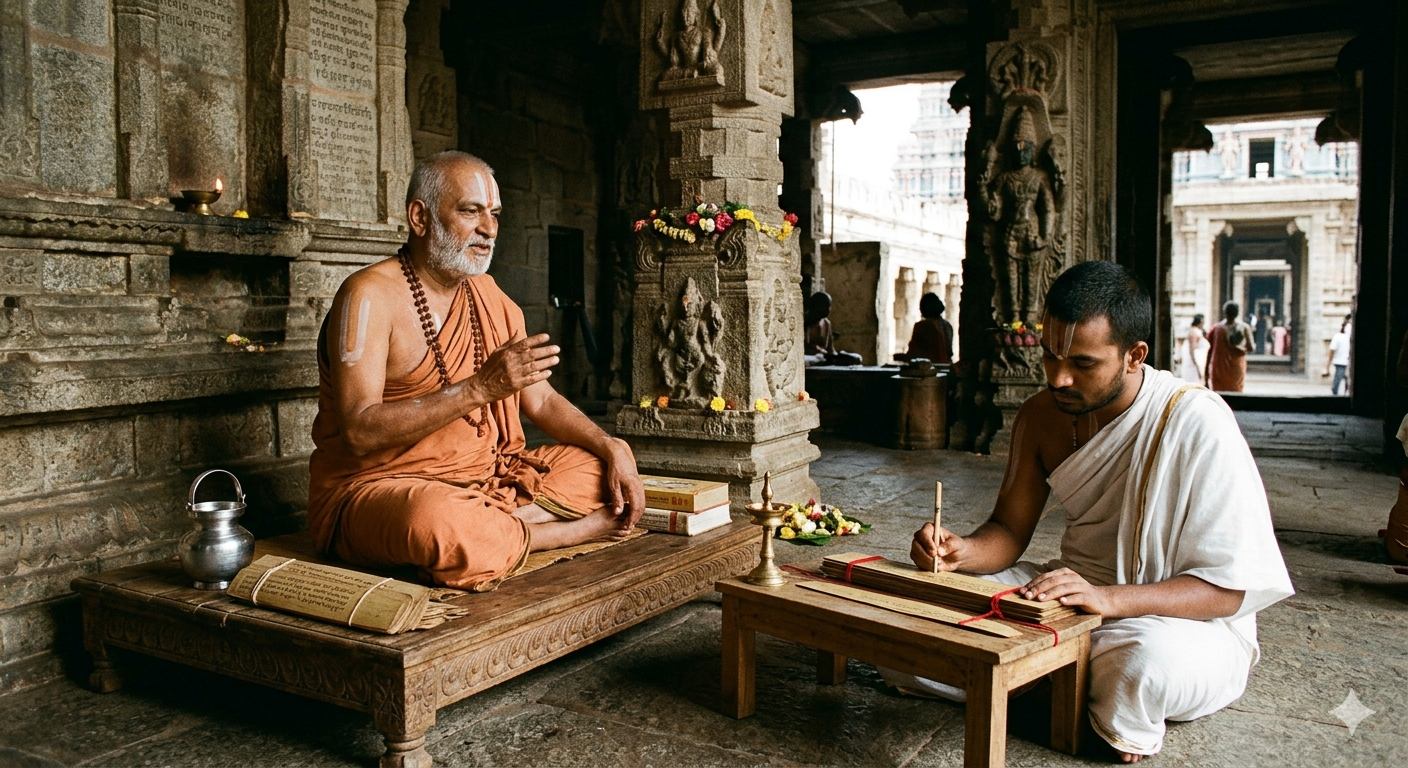
“When the teacher and his faithful disciple together beheld the soul and the world as truly real, and the living truth of Viśiṣṭādvaita dawned.” by M.K. Sudarshan ______________________________ I. The teacher and the disciple: setting and relationship In the great temple-town of Śrī Ranganātha, where the tidal hush of devotion meets the disciplined flame ofContinue reading “““Eureka” at Srirangam: The Shared Dawn of Viśiṣṭādvaita”””
A moving “shloka” from Vedanta Desika’s “Hamsa-Sandesham” offers solace to the human heart burdened with suffering: Thoopul Sri. Satagopa Thathachariar explains
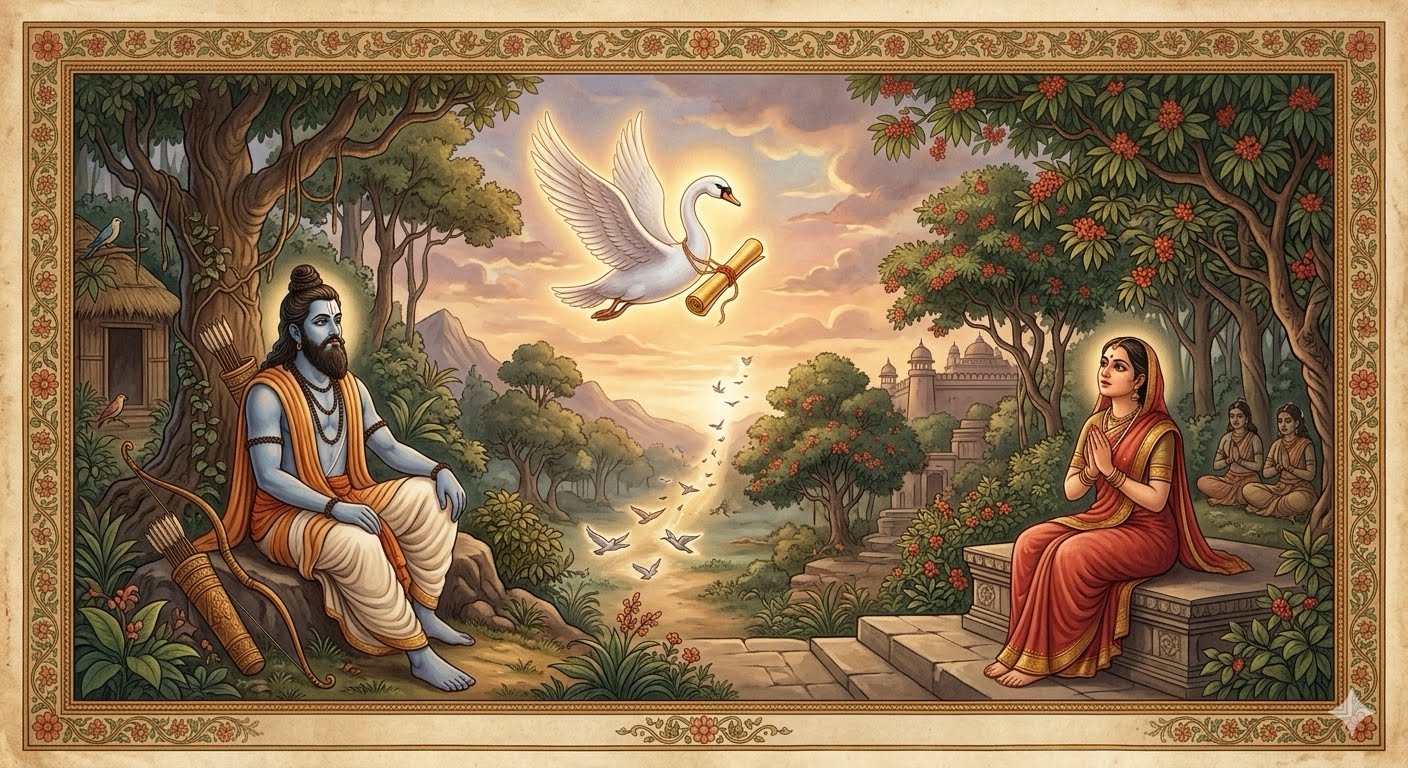
शच्या: क्लेशं क्वचनसमये तादृशं चिन्तयित्वास्मृत्वा देवीमचलतनयाम् विप्रयुक्ताम् शिवेन।रक्षात्मानं कथमपि शुभे जीवितालम्बनं मेपत्युश्छन्दात् व्यसनमपि हि श्लाघनीयं वधूनाम्।। Here is an English translation of the brief Tamil talk on the above Sanskrit shloka in an audio message sent to me today by Thoopul U.Ve. Sriman Satagopa Thathachariar who is Professor in Sanskrit and Nyaya Sastra at theContinue reading “A moving “shloka” from Vedanta Desika’s “Hamsa-Sandesham” offers solace to the human heart burdened with suffering: Thoopul Sri. Satagopa Thathachariar explains”
Why the West Sees Satan But India Sees Balance: How Different Views of Evil Built Different Empires

by M. K. Sudarshan 15 Jun 2026 Preamble: What You Will Read This essay in 4-Parts explores the profound ontological divergence between Abrahamic and Dharmic civilizational frameworks. At its core lies a fundamental question: how does each tradition conceive Evil? Abrahamic religions personify evil as Satan—a singular entity of pure malevolence engaged in cosmic dualismContinue reading “Why the West Sees Satan But India Sees Balance: How Different Views of Evil Built Different Empires”