
by M. K. Sudarshan 15 Jun 2026 Preamble: What You Will Read This essay in 4-Parts explores the profound ontological divergence between Abrahamic and Dharmic civilizational frameworks. At its core lies a fundamental question: how does each tradition conceive Evil? Abrahamic religions personify evil as Satan—a singular entity of pure malevolence engaged in cosmic dualismContinue reading “Why the West Sees Satan But India Sees Balance: How Different Views of Evil Built Different Empires”
Category Archives: philosophy
கார்ப்பண்யம், கார்ப்பண்ய-தோஷம், மற்றும் பிரபத்தி ஆய்வு: ரஹஸ்ய த்ரய ஸாரம் நூலை அதன் உரிய உபதேசச் சுற்றுவட்டத்தில் வாசிப்பது
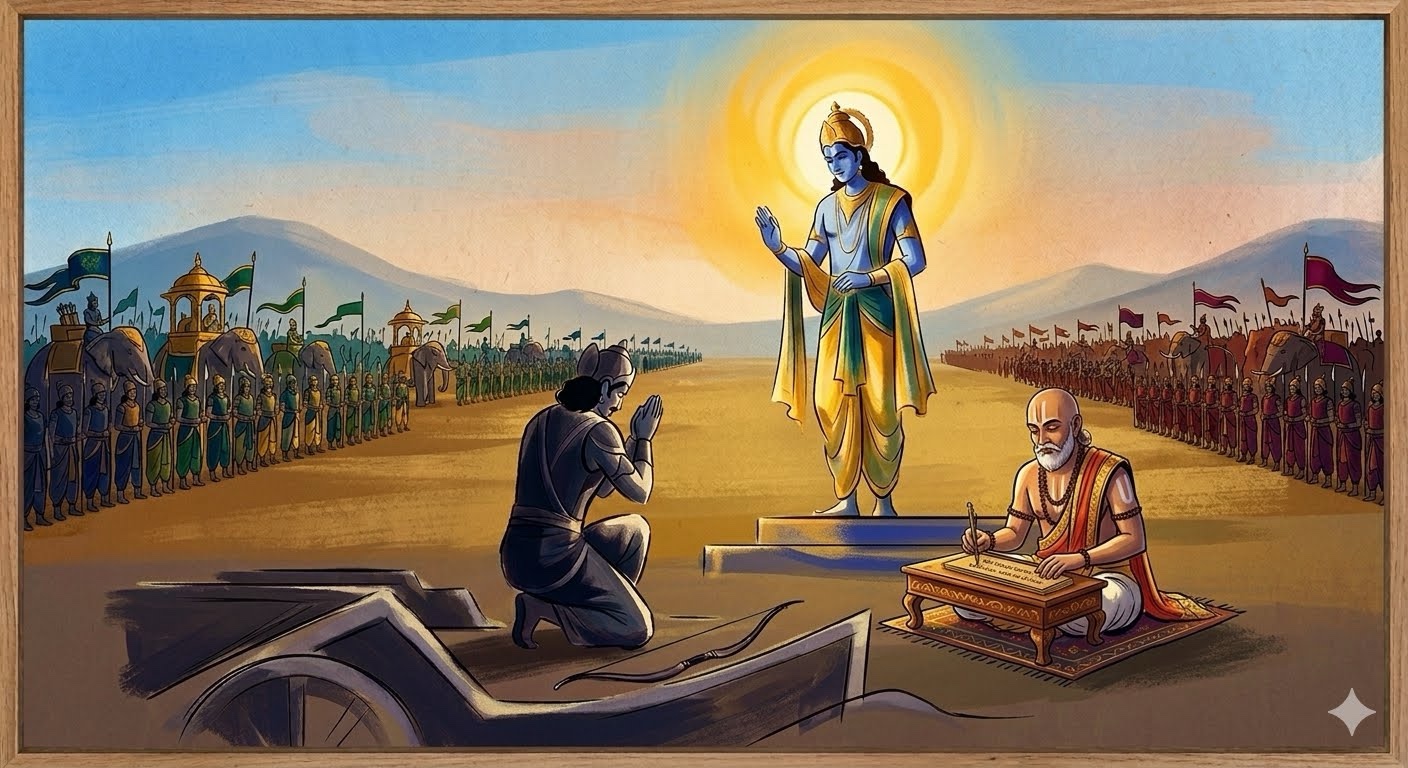
श्रीमान् वेङ्कटनाथार्यः कवितार्किककेसरी ।वेदान्ताचार्यवर्यो मे सन्निधत्तां सदा हृदि ॥ முன்னோக்கு பிரபத்திக்கான மிக வல்லுநரான சாஸ்திர முன்னுரையைக் காண வேண்டுமெனில் அது யாகசாலைச் சூழலில் அல்ல; தன் சொந்த விவேகத்தின் சுமையைத் தாங்க முடியாமல் முறியடையும் மனிதனின் நிலைமையில், போர்க்களத்தின் நடுவில்தான் அது விளங்குகிறது. பகவத்கீதையின் தொடக்கத்தில் அர்ஜுனன் வெறும் துக்கமுற்றவனாகத் தோன்றுவதில்லை; அவன் தர்மத்தில் திகைத்தவனாகவும், மனத்தால் சோர்ந்தவனாகவும், செயல் மேற்கொள்ள முடியாதவனாகவும் நிற்கிறான். 2.7-ஆம் ஸ்லோகத்தில், தன் இயல்பு கார்ப்பண்ய-தோஷம் காரணமாகContinue reading “கார்ப்பண்யம், கார்ப்பண்ய-தோஷம், மற்றும் பிரபத்தி ஆய்வு: ரஹஸ்ய த்ரய ஸாரம் நூலை அதன் உரிய உபதேசச் சுற்றுவட்டத்தில் வாசிப்பது”
Kārpaṇyam, Kārpaṇya-doṣham, and the Study of Prapatti: Reading Rahasya Traya Sāram in its Proper Pedagogical Constellation

श्रीमान् वेङ्कटनाथार्यः कवितार्किककेसरी ।वेदान्ताचार्यवर्यो मे सन्निधत्तां सदा हृदि ॥ Śrīmān veṅkaṭanāthāryaḥ kavitārkikakesarī |Vedāntācāryavaryo me sannidhattāṁ sadā hṛdi || Meaning: May the glorious Venkatanatha, the lion among poets and logicians, and the supreme master of Vedanta, always reside in my heart. Overview The most compelling scriptural prelude to the doctrine of prapatti is found not in aContinue reading “Kārpaṇyam, Kārpaṇya-doṣham, and the Study of Prapatti: Reading Rahasya Traya Sāram in its Proper Pedagogical Constellation”
Entrepreneurship is the Virtue-Signalling of Modern Corporate Capitalism (aka. “the new world order”)

Overview In contemporary political economy, entrepreneurship is often presented as a morally elevated force of innovation, risk-bearing, and social progress. Yet the structure of the modern corporate economy suggests a different interpretation: entrepreneurship functions largely as the legitimating language through which capital organizes production, appropriates profits, and normalizes an unequal distribution of national wealth. AcrossContinue reading “Entrepreneurship is the Virtue-Signalling of Modern Corporate Capitalism (aka. “the new world order”)”
Vidura, Birth, and Bhakti: A Tension in Reading and interpreting the Mahabharata

Author’s Note: The quotation discussed here in this essay below appears in Vedanta Desikan’s Rahasya Traya Saram, where a Mahabharata episode is re-read within a later Sri Vaishnava interpretive framework. The essay is merely an observation — neutral , non-judgmental and wholly academic. The writer’s purpose in penning the essay is solely to invite religiousContinue reading “Vidura, Birth, and Bhakti: A Tension in Reading and interpreting the Mahabharata”
Ruins of the “Thanian War”: A Dialogue at Mahabalipuram”

Prologue Mahabalipuram is where the past becomes a touristic afterthought. The Pallava‑era rock cavities, the carved monoliths, the half‑ruined shrines—all stand serene under the coastal sky, admired for their stone, not their sacrament. Visitors pass by, take photographs, sip tea outside the temple, and move on. The devotion that once gave these stones life isContinue reading “Ruins of the “Thanian War”: A Dialogue at Mahabalipuram””
Tamil Iyengars’s Quixotic squabbles

A note on the 500 years old Thenkalai Vadakalai wars of Southern India A Substack blog post on “Amaruvi Aphorisms“ is copied here below ⬇️ Sudarshan Madabushi https://mylapore.substack.com/p/tamil-iyengarss-quixotic-squabbles AMARUVI DEVANATHAN MAY 23, 2026 Subscriber Note Let me begin with a personal note. I belong to the Vadakalai school of thought. When I had sought toContinue reading “Tamil Iyengars’s Quixotic squabbles “
Amaruvi Devanathan’s Book Review: “A Tale of Two Cities: the decline and fall of the ‘Ubaya-vedantins” – The History of the Sri Vaishnavas of Tamil Nadu that was never told”
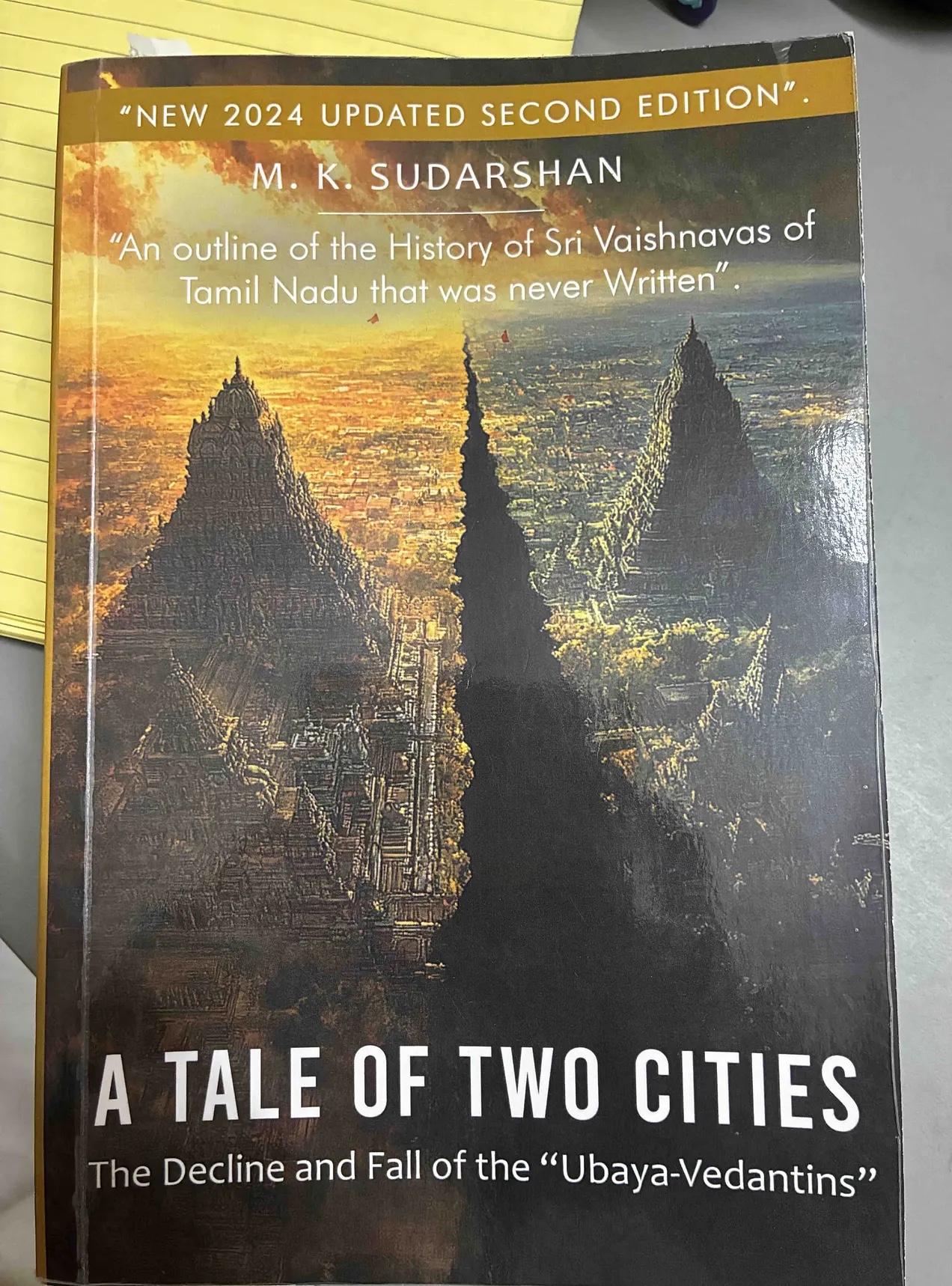
Amaruvi Devanathan is an Indian author, public speaker, and professional banking technologist. He frequently describes himself with the catchphrase “a banker by day and blogger by night,” balancing a corporate career in data architecture with a prominent role in the Tamil and English literary circuits. Professional Background Literary & Public Work Published Books He has written several notable worksContinue reading “Amaruvi Devanathan’s Book Review: “A Tale of Two Cities: the decline and fall of the ‘Ubaya-vedantins” – The History of the Sri Vaishnavas of Tamil Nadu that was never told””
How the “Law of Diminishing Marginal Utility”, “Moore’s Law” and “Jevon’s Paradox” teach us all the true Meaning of Life (Part 3 Concluded)
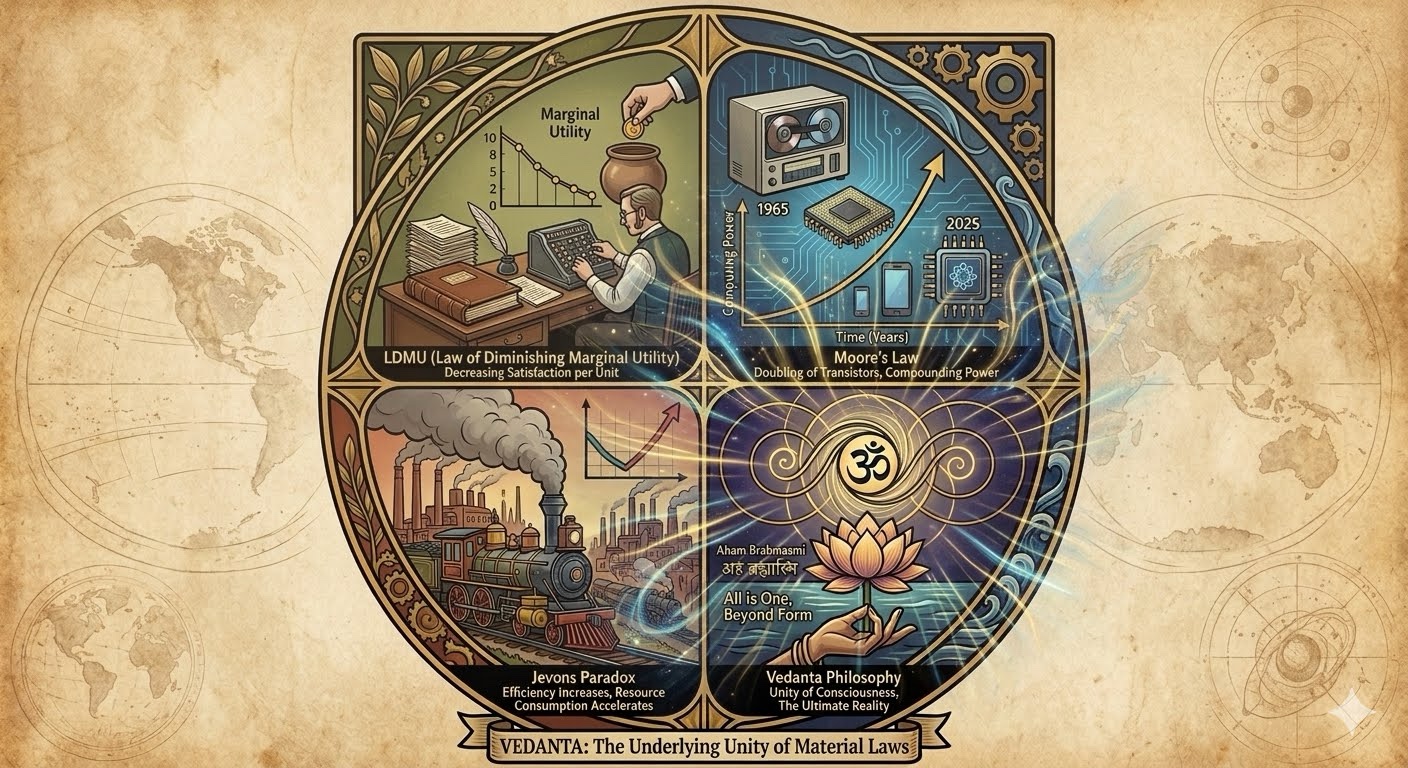
Human Nature, LDMU, and the Search for “Parama Puruṣārtha” Yet that sequence cannot go on forever. For all the empirical power of Moore’s Law and of Jevons’ Paradox, there is a deeper, more stubborn constant: human nature itself. And human nature, as the law of diminishing marginal utility suggests, is wired for satiation, for aContinue reading “How the “Law of Diminishing Marginal Utility”, “Moore’s Law” and “Jevon’s Paradox” teach us all the true Meaning of Life (Part 3 Concluded)”
How the “Law of Diminishing Marginal Utility”, “Moore’s Law” and “Jevon’s Paradox” teach us all the true Meaning of Life (Part 2 of 3)
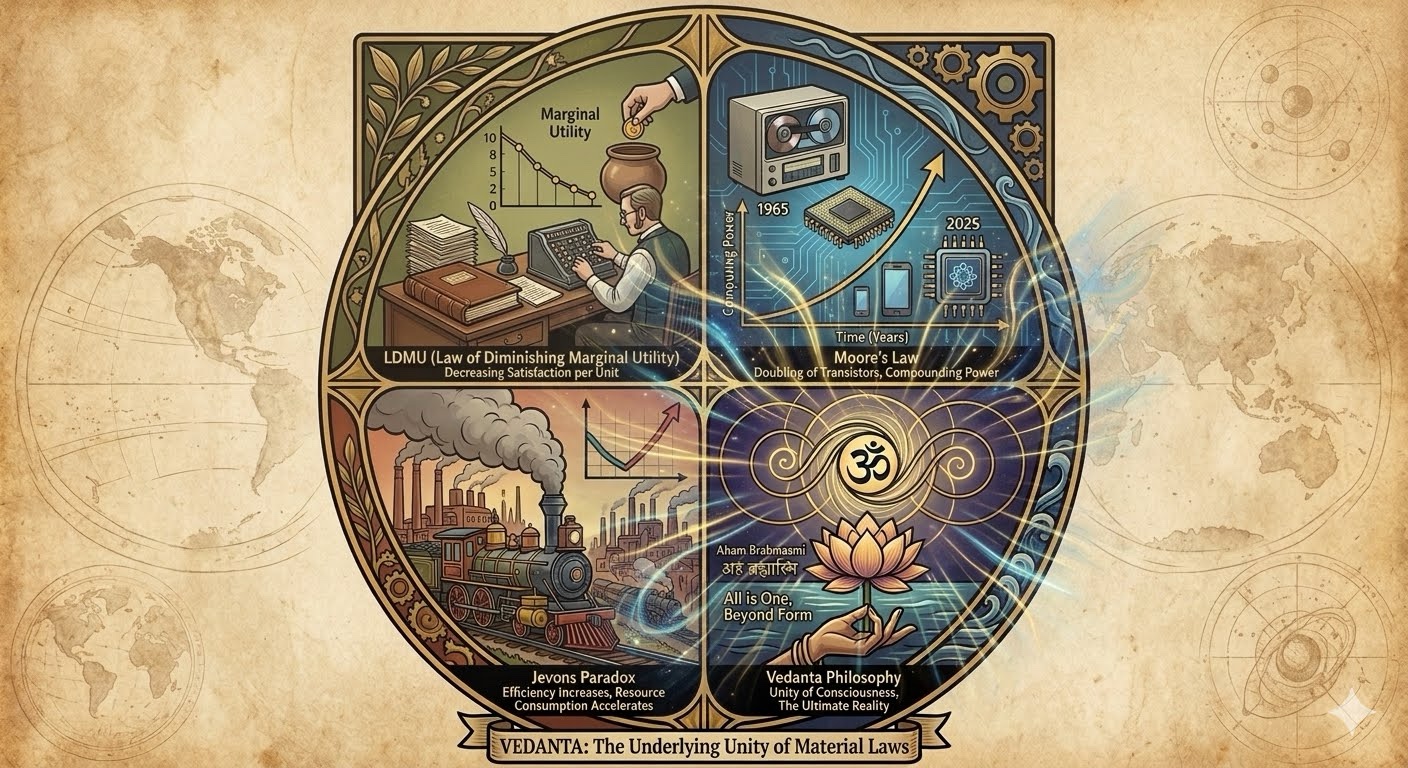
– Part 2 – How One Blends into the Other At first sight, Jevons’ Paradox and Moore’s Law seem to march in tandem while the law of diminishing marginal utility trails behind, like a conservative chorus whispering, “Beware of excess.” But the deeper one looks, the more the three form a subtle choreography. Start withContinue reading “How the “Law of Diminishing Marginal Utility”, “Moore’s Law” and “Jevon’s Paradox” teach us all the true Meaning of Life (Part 2 of 3)”