
By M.K.Sudarshan Chennai, India : June 22, 2026 Part II: How British Colonial Orientalism Made Manu “Canonical”The British Imperial Purpose The elevation of Manu Smriti to “preeminent Hindu law” was not accidental—it was a calculated imperial strategy serving three purposes: Purpose #1: Simplify Governance• British administrators needed a “single code” for Hindu law• Manu providedContinue reading “How Manu Smriti Served Liberal Historians and Social Anthropologists as a Handy Tool to Stigmatise Indian “Patriarchy” as Misogynistic (Part 2 of 4)”
Tag Archives: Religion
How Manu Smriti Served Liberal Historians and Social Anthropologists as a Handy Tool to Stigmatise Indian “Patriarchy” as Misogynistic (Part 1 of 4)

By M.K.Sudarshan Chennai, India : June 22, 2026 Introduction: The Manu Smriti Smokescreen In contemporary Indian discourse, the Manu Smriti has become the whipping boy for every alleged social ill in Hindu society. From temple entry bans to women’s reservation debates to caste discrimination, Manu is invoked as the preeminent symbol of “Brahminical patriarchy” andContinue reading “How Manu Smriti Served Liberal Historians and Social Anthropologists as a Handy Tool to Stigmatise Indian “Patriarchy” as Misogynistic (Part 1 of 4)”
Self-Knowledge on Credit: The Dangerous Appeal of Instant Enlightenment
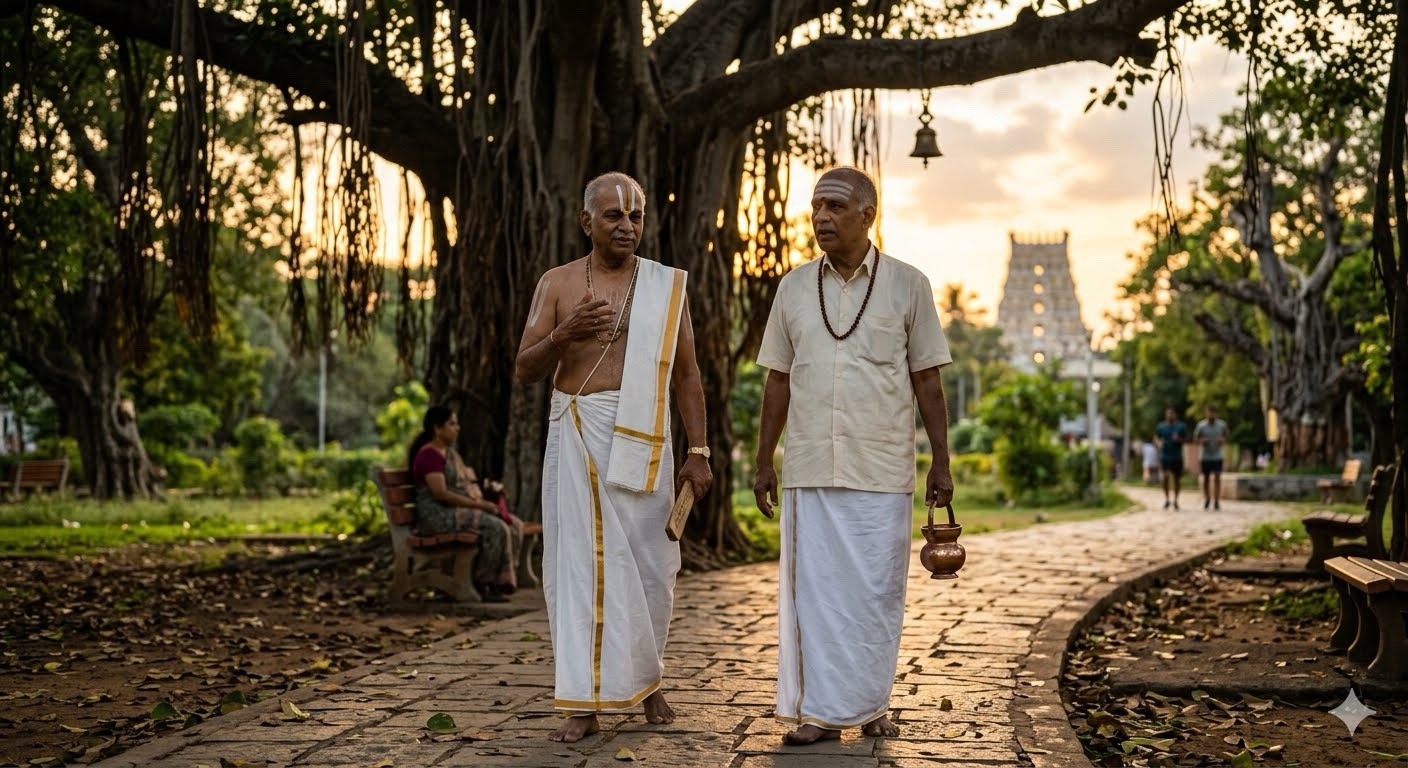
How retirees buy consolation instead of doing the work of the Self By M.K. Sudarshan Chennai , India : June 21, 2026 “Another cool evening,” Raghunathan said, drawing his shawl tighter as they rounded the old banyan. “The park’s the only place these days where people don’t ask you for your net worth or yourContinue reading “Self-Knowledge on Credit: The Dangerous Appeal of Instant Enlightenment”
A moving “shloka” from Vedanta Desika’s “Hamsa-Sandesham” offers solace to the human heart burdened with suffering: Thoopul Sri. Satagopa Thathachariar explains
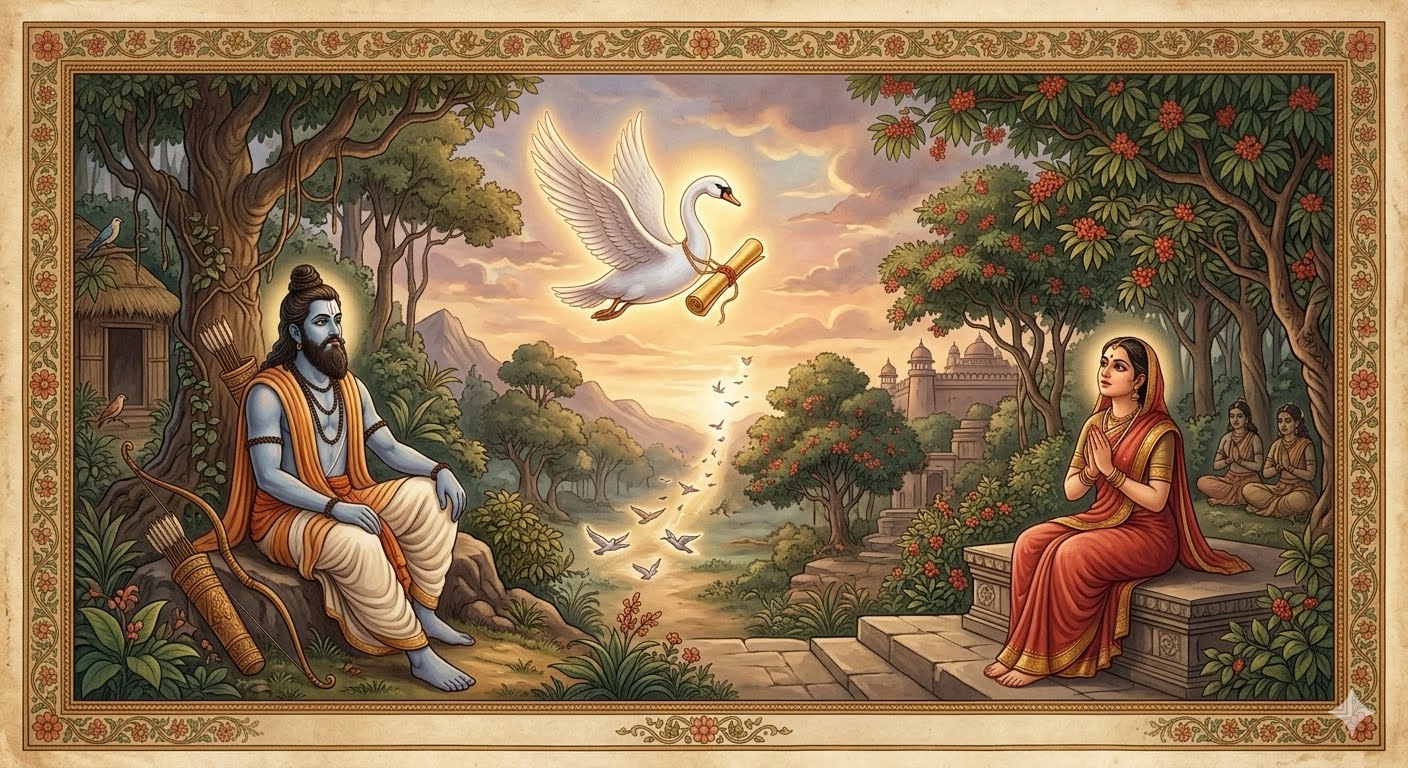
शच्या: क्लेशं क्वचनसमये तादृशं चिन्तयित्वास्मृत्वा देवीमचलतनयाम् विप्रयुक्ताम् शिवेन।रक्षात्मानं कथमपि शुभे जीवितालम्बनं मेपत्युश्छन्दात् व्यसनमपि हि श्लाघनीयं वधूनाम्।। Here is an English translation of the brief Tamil talk on the above Sanskrit shloka in an audio message sent to me today by Thoopul U.Ve. Sriman Satagopa Thathachariar who is Professor in Sanskrit and Nyaya Sastra at theContinue reading “A moving “shloka” from Vedanta Desika’s “Hamsa-Sandesham” offers solace to the human heart burdened with suffering: Thoopul Sri. Satagopa Thathachariar explains”
The Sacred Thread That Politicians Have Torn: How the Sutra Has Been Weaponized in Tamil Nadu

By Sudarshan Madabushi In Hindu ritualism, the thread—or sutra—carries deep significance and emotive value that transcends mere symbolism. The Mangalya Sutra solemnizes the wedding vow, binding two souls in eternal union. The Yajñopavītam (janeu) inaugurates a young brahmacharin into the study of the Veda and the pursuit of Brahma-gnyāna. Our most sacred philosophical texts—the BrahmaContinue reading “The Sacred Thread That Politicians Have Torn: How the Sutra Has Been Weaponized in Tamil Nadu”
Why the West Sees Satan But India Sees Balance: How Different Views of Evil Built Different Empires

by M. K. Sudarshan 15 Jun 2026 Preamble: What You Will Read This essay in 4-Parts explores the profound ontological divergence between Abrahamic and Dharmic civilizational frameworks. At its core lies a fundamental question: how does each tradition conceive Evil? Abrahamic religions personify evil as Satan—a singular entity of pure malevolence engaged in cosmic dualismContinue reading “Why the West Sees Satan But India Sees Balance: How Different Views of Evil Built Different Empires”
Kārpaṇyam, Kārpaṇya-doṣham, and the Study of Prapatti: Reading Rahasya Traya Sāram in its Proper Pedagogical Constellation

श्रीमान् वेङ्कटनाथार्यः कवितार्किककेसरी ।वेदान्ताचार्यवर्यो मे सन्निधत्तां सदा हृदि ॥ Śrīmān veṅkaṭanāthāryaḥ kavitārkikakesarī |Vedāntācāryavaryo me sannidhattāṁ sadā hṛdi || Meaning: May the glorious Venkatanatha, the lion among poets and logicians, and the supreme master of Vedanta, always reside in my heart. Overview The most compelling scriptural prelude to the doctrine of prapatti is found not in aContinue reading “Kārpaṇyam, Kārpaṇya-doṣham, and the Study of Prapatti: Reading Rahasya Traya Sāram in its Proper Pedagogical Constellation”
Arvindan Neelakandan applies broad-brush stroke on Tiruvalluvar
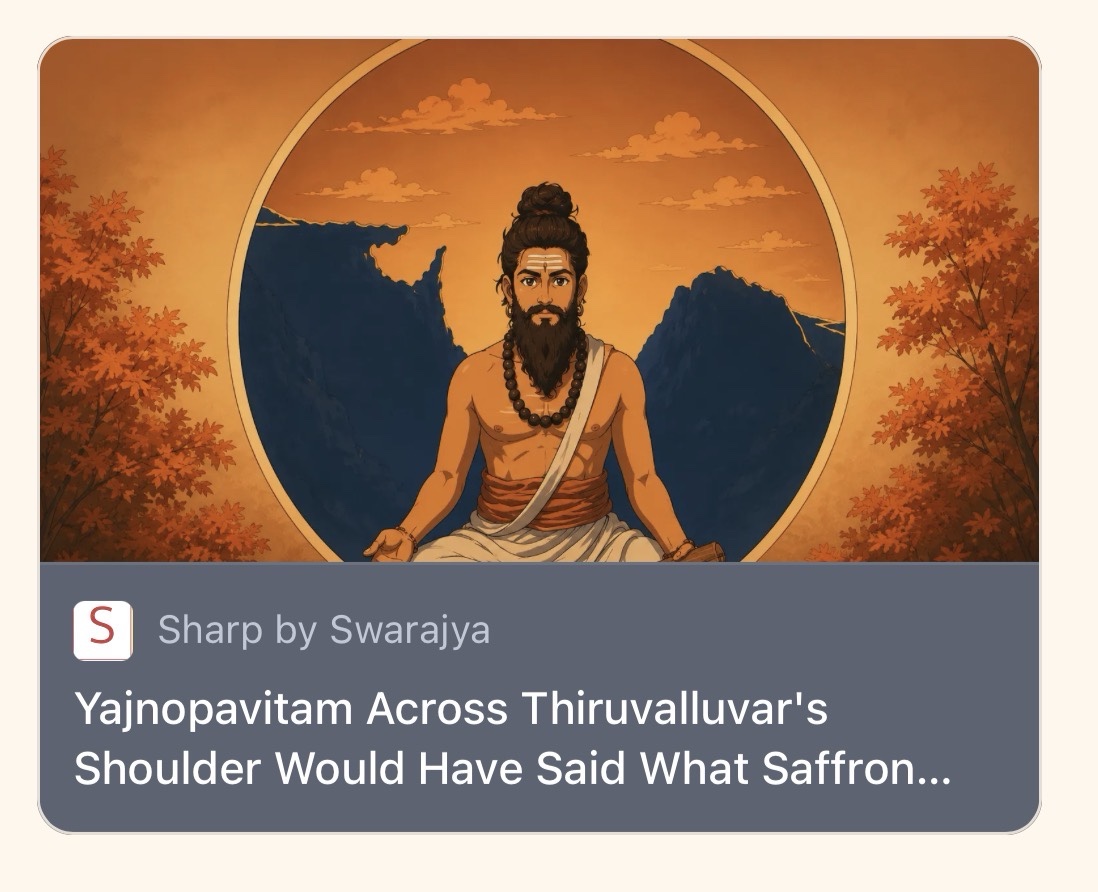
https://open.substack.com/pub/sharpbyswarajya/p/yajnopavitam-across-thiruvalluvars?r=xbjdy&utm_campaign=post&utm_medium=email QUOTE: “The honest reclamation is available, and far more powerful. Tamil tradition holds that Valluvar belonged to the Paraiyar community, and that Valluvar itself designated the priestly and astrological lineage within it. Gustav Oppert documented in 1893 that the Valluvar Purohits wore the yajnopavitam by right, performed Sanskrit ceremonies at Paraiyar and Pallar weddings, and were respectfully consultedContinue reading “Arvindan Neelakandan applies broad-brush stroke on Tiruvalluvar”
Vidura, Birth, and Bhakti: A Tension in Reading and interpreting the Mahabharata

Author’s Note: The quotation discussed here in this essay below appears in Vedanta Desikan’s Rahasya Traya Saram, where a Mahabharata episode is re-read within a later Sri Vaishnava interpretive framework. The essay is merely an observation — neutral , non-judgmental and wholly academic. The writer’s purpose in penning the essay is solely to invite religiousContinue reading “Vidura, Birth, and Bhakti: A Tension in Reading and interpreting the Mahabharata”
“What Do We Do With Surplus Temple Funds?”- The Fig Leaf of Sovereign Guarantee: (A Supplementary post)

Below is supplemental sequel to my earlier subject blogpost (https://mksudarshans.blog/2026/05/30/the-fig-leaf-of-sovereign-guarantee-tamil-nadus-temple-fund-dilemma-and-a-path-to-justice/). It addresses the critical question: What do we do with surplus temple funds? Temple funds must be invested, not hoarded. But the government’s solution—coercing investment in state NBFCs—is wrong. Multiple safe alternatives exist, and trustees—not the government—must decide.” M.K.Sudarshan (Temple Worshipper, Author, Historian, Observer-Commentator onContinue reading ““What Do We Do With Surplus Temple Funds?”- The Fig Leaf of Sovereign Guarantee: (A Supplementary post)”