
Mind your language, please !
Category Archives: Essays & Reflections
“Tabula Occulta”: Intentional Reciprocity in the Bhagavad-gītā, Viśiṣṭādvaita, and the Phenomenology of Divine Revelation

🕉️ New Essay: “Intentional Reciprocity”
What if Bhagavad-gītā 4.11 is not just a theological promise—but a metaphysical principle about the structure of consciousness itself?
Kṛṣṇa says: “In whatever way one worships Me, I reciprocate accordingly.”
Read through the lens of Edmond Husserl’s phenomenology and Rāmānuja’s Viśiṣṭādvaita, this verse reveals a profound truth:
✅ Consciousness is never ex nihilo—it’s eternally self-luminous.
✅ But its intentional reach (dharma-bhūta-jñāna) expands or contracts according to karma.
✅ Divine manifestation is proportional to the karmically shaped intentionality of the devotee.
✅ The real risk isn’t ex nihilo; it’s ex occulto—Bhagavān present but unrevealed.
For readers who love comparative philosophy, Vedānta, phenomenology, and the metaphysics of bhakti.
Canonisation of the Divya Prabandhams through Maṇipravāḷam: A Double-Edged Sword?

The canonisation of the Āḻvār hymns as the Nālāyira Divya Prabandham preserved an extraordinary body of Tamil devotional poetry, sustained its temple life, and generated the sophisticated bilingual tradition of Maṇipravāḷam.
Yet the same process also placed the hymns within a specialised theological interpretive grammar, limiting their wider circulation as literature.
This essay examines that double-edged legacy and asks how the Divya Prabandham might be restored to the broader Tamil literary imagination without diminishing its Śrīvaiṣṇava identity.
“Mr. Gandhi, what do you think of Western Civilisation?” — Part II of 2
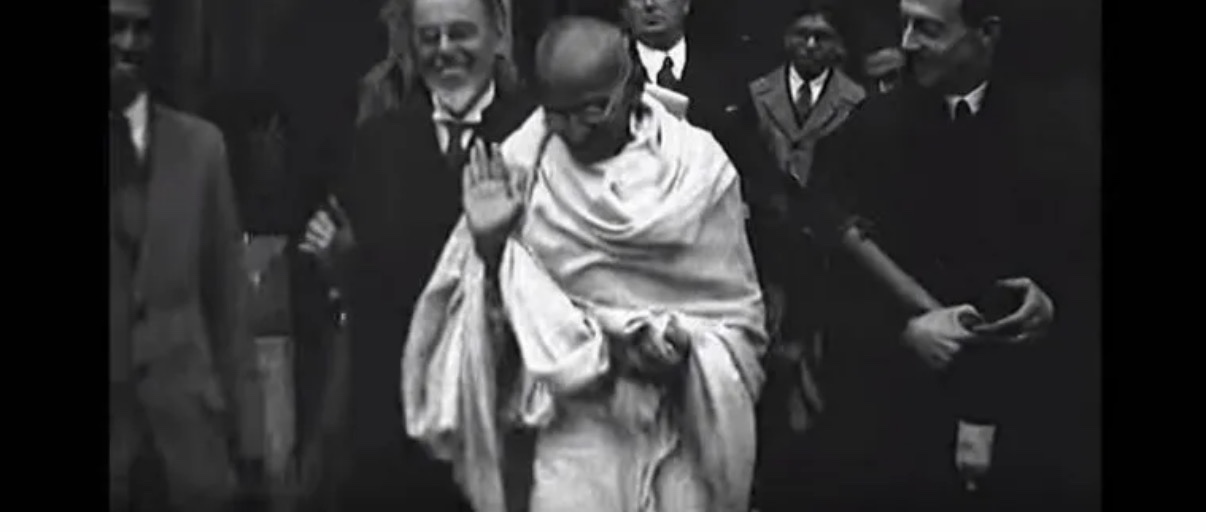
“Mr. Gandhi, what do you think of Western Civilisation?”“I think it’s a good idea.”
A century after Mahatma Gandhi delivered his famously sharp retort to a condescending British press, the global architecture he challenged faces an unprecedented twilight.In this new two-part long-form essay, I take a bird’s-eye view of the last 500 years of global history.
From the violent internal fractures of pre-industrial Europe to the cold, zero-sum geopolitical chessboards of Sir Halford Mackinder, the essay explores how Western Civilisation successfully turned its localized concepts into a global monoculture—often by ruthlessly marginalizing alternative frameworks.
Today, as the ten great ideological pillars of this half-millennium framework face systematic collapse, the world is stepping into a profound ideological void.📖 Read the full deep dive here:
“Mr. Gandhi, what do you think of Western Civilisation?” — Part I of 2
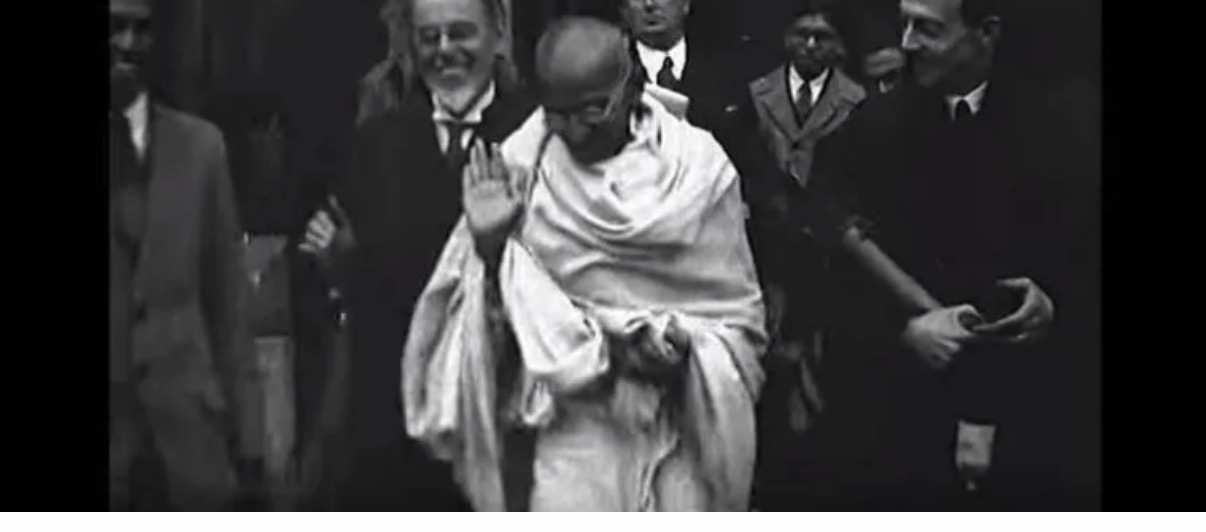
A century after Mahatma Gandhi delivered his famously sardonic critique of Western Civilisation, the global monoculture he challenged faces an unprecedented twilight.
Spanning the volatile centuries before the Industrial Revolution to the cold, zero-sum geopolitical chessboards of Halford Mackinder, this two-part long-form essay traces how the West exported its systems through military and financial might while aggressively silencing alternative ideas. As the ten great ideological pillars of this 500-year-old framework face systemic collapse, humanity now steps into an ideological void.
Explore a bird’s-eye view of history, the inquisitional nature of institutional orthodoxy, and why Gandhi’s inscrutable retort remains the ultimate epitaph for an empire in retreat.
Poor you, Mr T.M.Krishna ! You are to be pitied not pilloried.

T M Krishna , the perennial Peter Pan and “enfant terrible” of the Carnatic Music world.
Sound as the Beginning—and End—of Vedic Metaphysics: A Modern Recapitulation offered by Sundar Sarukkai

The Veda calls itself the breath of the Veda-Puruṣa, creation a continuum of sound—yet the Upaniṣad says, “from which words turn back with the mind.”
Is this a contradiction?
This essay moves from Sundar Sarukkai’s modern restatement to the Gītā, Taittirīya Śikṣā and Ānanda Valli, and the Viṣṇu Sūkta, showing how Advaita reads the end as silent awareness and Viśiṣṭādvaita as eternal praise in Vaikuṇṭha.
When Ideology Blinds Us to Beauty: In Defence of “Sangha Tamizh”

By Sudarshan MadabushiSeptember 10, 2026, Chennai, India “நீ ப்ரணதார்த்திஹரனோடா? நீ ப்ரணதார்த்திகரனாக்கும்.”“Are you with the Lord who removes devotees’ distress?No—you’re the one who causes distress to those around you!” This was a Sanskrit teacher’s favourite way of reprimanding a naughty classmate while tweaking the boy’s ears — And the incident was narrated to me with nostalgicContinue reading “When Ideology Blinds Us to Beauty: In Defence of “Sangha Tamizh””
“By Order of the Hoodwink Syndicate”: Why the Media Industry Can Never Tell the Truth
📌 Executive Summary
This Op-Ed exposes the deeply structural, compromised nature of the global media architecture. Using the recent escalation between the U.S. and Iran as a lens, it strips away the illusion of journalism as an independent public service. The piece illustrates how both state-owned propaganda organs and privately-owned corporate media cartels are structurally incapable of reporting objective truth.Tracing historical parallels from the engineered intelligence failures of the 2003 Iraq War to modern conflicts in Ukraine and the Persian Gulf, the essay charts how corporate news networks, clandestine intelligence syndicates, and modern technocratic billionaire monopolies (such as X and Starlink) work in tandem. The public is deliberately fed a curated diet of manufactured fear, tribalism, and false binary certainty.
Grounded in Karl Popper’s framework, the piece defines these new data gatekeepers as the absolute enemies of an Open Society, concluding that modern mainstream news operates purely as a multi-billion-dollar hoodwinking enterprise—the ultimate opium of the masses.
When Footnotes Pretend to Be History:
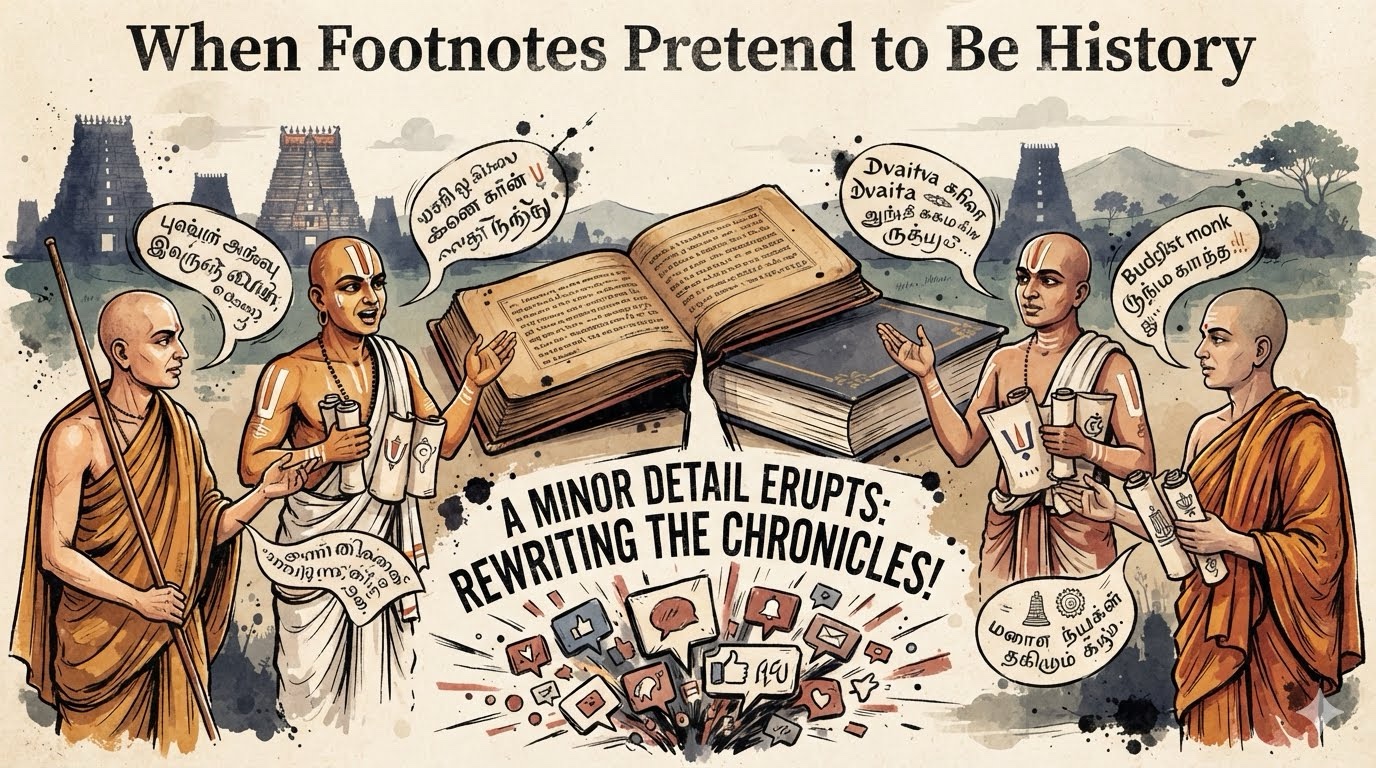
When Footnotes Pretend to Be History
Hindu philosophical traditions did not develop in a climate of uninterrupted harmony. Advaitins, Viśiṣṭādvaitins, Dvaitins, Buddhists, Jains, Śaivas, and Mīmāṃsakas often engaged in fierce—and sometimes deeply personal—polemics.
But a sectarian insult is not the whole history of a philosopher. A hostile hagiography is not a neutral biography. And a provocative footnote should not be presented as though it were a major chapter in the history of Indian thought.
From Śaṅkara and Rāmānuja to Vedānta Deśika and Madhva, the record reveals both acrimonious conflict and extraordinary intellectual creativity.
The real danger today is not that these old polemics are discussed. It is that social media detaches them from context, magnifies them, and turns historical trivia into historical truth.
When does a footnote become a distortion of history?